
Pest Control in Lawrence: What's Actually Different Here?
Is Lawrence pest control actually different?
The verdict on Lawrence
something real, and documented
a real but minor factor
pests don't read town lines
Lawrence is genuinely different — but for the housing and the jurisdiction, not for the bugs. It's the Manchester story, more so, across a state line.
The real difference
The specific, sourced local factor that changes the answer here — and what a homeowner should actually do about it.
That Lawrence has its own unique local pest species — a different city, a different state even, so surely a different bug problem that needs a Lawrence specialist.
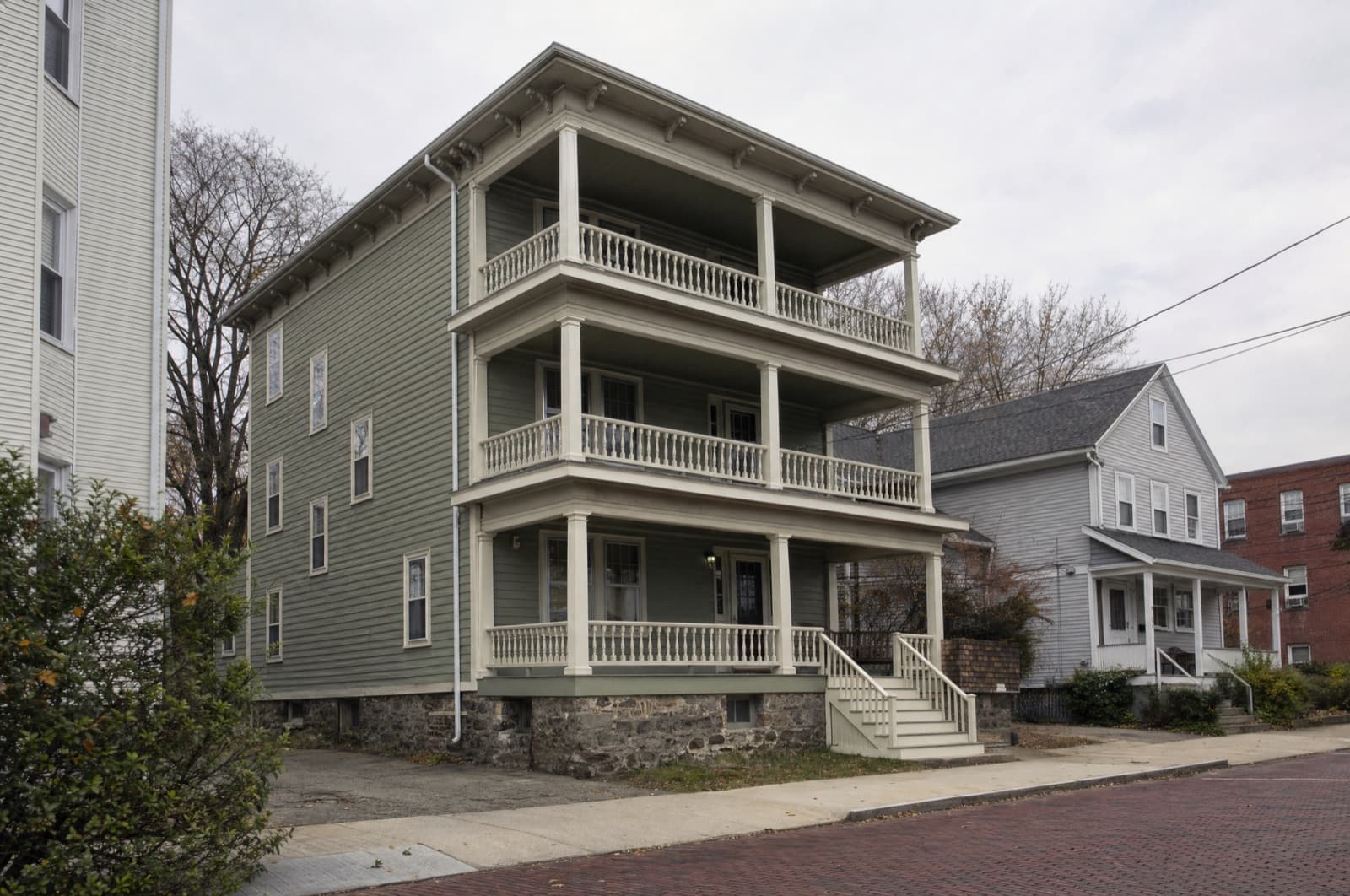
The pest species in Lawrence are the same regional set found throughout southern New England — the state line doesn't change biology. What genuinely differs is density and housing age, and the jurisdiction itself. Lawrence was built in the 1840s as the nation's first fully planned industrial city, and its housing stock reflects that: roughly half of units predate 1940 (US Census / ACS housing-age data), making it some of the oldest housing stock in the entire area we cover, and duplex or converted-apartment units are the single most common housing type, with the large majority of residents renting rather than owning.
Dense, pre-1940, mill-era multifamily and converted-apartment housing stock — Lawrence's own planned-city origins as one of the country's first textile-mill communities, with more than a million square feet of former mill space converted to housing and commercial use over time.
In buildings this old and this tightly packed, the interior partitions are riddled with the gaps that a century of settling, retrofits and converted mill floors leave behind — and German cockroaches and bed bugs use them to spread from apartment to apartment. Peer-reviewed multifamily-housing research documents the outcome as a building-wide dynamic, not a single-apartment one. Treating one unit in an infested building generally fails, because the population re-establishes from neighboring units. The honest instruction for a Lawrence renter is the same one we give in Manchester, more urgently: this is often a building-wide problem, and the first call may need to be your landlord or property manager, not just a pest control company.
Source: HUD USER case study — Lawrence mill-to-housing conversion (huduser.gov); City of Lawrence, About the City (cityoflawrence.com); Wang et al. 2019, Journal of Integrated Pest Management 10(1):33 (Rutgers) — building-wide cockroach/bed bug transmission in multifamily housing
Most of what shapes a home's pest pressure isn't the town line — it's the house and its surroundings:
The honest town profile
Census housing age, density and geography — the fields that genuinely predict pest pressure. Only documented facts appear.
Essex, MASSACHUSETTS
Among the oldest housing stock in our entire coverage area — roughly half of units predate 1940 (US Census / ACS housing-age data). Duplex and converted-apartment housing is the single most common housing type, with a large majority of units renter-occupied.
Dense, mill-era multifamily — comparable to or exceeding Manchester's density.
A former textile-mill city on the Merrimack River, built in the 1840s as one of the nation's first fully planned industrial communities.
Dense, pre-1940 multifamily housing predicts the same structural driver that makes Manchester genuinely different: building-wide cockroach and bed bug transmission through shared walls, and a leakier old envelope that lets rodents in. What it does not predict is a different species list — those are the ordinary regional set shared with the rest of southern New England.
HUD USER — Lawrence mill-to-housing case study (huduser.gov) · City of Lawrence — About the City (cityoflawrence.com)
The pests actually here
The real Southern-NH species picture — we name them and link the full profiles rather than re-teach identification, and we correct the ones that don't live here at all.
This is the same regional species set found across southern New Hampshire and northeastern Massachusetts, not a Lawrence-specific list. What changes here is the building, not the bug.
- German cockroachThe multifamily building pest — in Lawrence's dense, pre-1940 stock, it is a building-wide problem, not a unit problem.Related guide
- Bed bugSame structural story as the German cockroach: it works its way from apartment to apartment through the gapped old partitions of Lawrence's mill-era stock.Related guide
- House mouse and Norway ratAn older, leakier envelope than almost anywhere else in our coverage area is easier for rodents to enter.Species profile
- Fall invaders — cluster flies, stink bugs, lady beetlesThe regional autumn arrival at sun-warmed walls, present across the whole region, not particular to Lawrence.Related guide
Our service area — including when it's not us
Lawrence is about 30 minutes south of our Manchester office, just across the Massachusetts line.
Where our Massachusetts licensing is confirmed, the same structural pest work we do in New Hampshire — exterior perimeter treatment, rodent exclusion, and coordinated multifamily programs suited to Lawrence's dense mill-era buildings.
If you rent in a Lawrence multifamily building and the problem is German cockroaches or bed bugs, treating your unit alone very often will not hold — the evidence on shared-wall buildings is unambiguous that reinfestation comes from untreated neighboring units. Your first call should be your landlord or property manager, to get a coordinated, building-wide program in place. We're glad to be part of that. We won't sell you the version that's likely to fail.
Service Area Map
Southern New Hampshire
The answer
Why Lawrence gets its own honest page instead of a swapped-in name
Our old Lawrence page was built the same way as our old Manchester and Loudon pages: the same species text with the town name changed, and four spiders shuffled at random to look local — including species that aren't established anywhere near New England. That format couldn't tell you anything true about Lawrence, because it wasn't built to. It was built to rank.
Lawrence deserves a real answer, because it genuinely is one of the few towns in our coverage area where the honest answer changes. Not because the bugs are different — they're the same regional species as everywhere else we cover — but because of two specific, sourced facts: which state Lawrence is in, and what its housing looks like.
The jurisdiction: Lawrence is Massachusetts, not New Hampshire
Lawrence sits in Essex County, Massachusetts. Anchor's pest control license — NH commercial applicator #782664, category F1, under RSA 430 — is a New Hampshire credential, issued by the NH Department of Agriculture, Markets & Food. It doesn't cover Massachusetts.
Massachusetts licenses pesticide applicators and businesses through a completely separate system: the Massachusetts Department of Agricultural Resources (MDAR), under the state's Pesticide Control Act, administered through the state's ePLACE portal. A company generally needs its own Massachusetts Pesticide Business License, with at least one Massachusetts Certified Applicator on staff, and an out-of-state license does not automatically transfer — Massachusetts does allow case-by-case reciprocity review, but that's a specific process, not an assumption. We won't invent a Massachusetts license number or imply one we can't back up. Anchor Pest Services is New Hampshire–licensed (#782664); Massachusetts service availability varies, so contact us to confirm coverage in Lawrence — an unusual thing for a page like this to admit, and exactly why we're admitting it.
The housing: the Manchester story, more so
Lawrence was built in the 1840s as one of the nation's first fully planned industrial cities, purpose-built around its textile mills on the Merrimack River. That history left behind an unusually old, unusually dense housing stock: roughly half of Lawrence's housing units predate 1940 (US Census / ACS housing-age data), among the oldest we've documented anywhere in our coverage area, and duplex or converted-apartment units — not single-family homes — are the single most common housing type, with most residents renting rather than owning. More than a million square feet of former mill space has been converted into housing and commercial use over the decades.
That combination — old and dense — is exactly the mechanism documented in Manchester, and Lawrence's aging partitions make it worse: German cockroaches and bed bugs exploit the settling cracks, retrofit gaps and converted mill floors that connect one apartment to the next, and peer-reviewed research on multifamily housing shows that a single treated unit generally re-infests from its untreated neighbors. Given that Lawrence's housing stock is, if anything, older and denser than Manchester's, the honest expectation is that this building-wide dynamic applies here at least as strongly. For a Lawrence renter, that means the effective first call for a shared-wall roach or bed bug problem is often the landlord or property manager — coordinating the whole building, not just one apartment.
Key takeaways
- Lawrence is genuinely different for two sourced reasons: it's in Massachusetts (separate MDAR licensing), and it has some of the oldest, densest mill-era housing we cover.
- The pest species themselves are the ordinary regional set — nothing unique to Lawrence.
- Anchor's NH license (#782664) doesn't cover Massachusetts work; Massachusetts service availability varies, so contact us to confirm coverage — and we will never invent a number.
- In Lawrence's dense multifamily buildings, German cockroach and bed bug problems are building-wide — your first call may be your landlord.
Lawrence's real story is its buildings and its border.
Old, dense mill-era housing means shared-wall roach and bed bug problems — and Massachusetts licenses this work separately from New Hampshire. We'll tell you honestly where things stand.
Frequently asked
Sources & further reading(5)
- [1]HUD USER — Lawrence mill-to-housing case study
Lawrence's mill-era origins and conversion of former mill space to housing and commercial use
govverified 2026-07-16 - [2]City of Lawrence — About the City
Lawrence's history as a planned 1840s industrial mill city on the Merrimack River
govverified 2026-07-16 - [3]Massachusetts Dept. of Agricultural Resources — Pesticide Examination and Licensing
Massachusetts licenses pesticide applicators and businesses separately from New Hampshire, through MDAR
stateverified 2026-07-16 - [4]Massachusetts Dept. of Agricultural Resources — Applying for Pesticide Exams, Licenses, and Renewals
MA Pesticide Business License and Certified Applicator requirements; out-of-state reciprocity is case-by-case, not automatic
stateverified 2026-07-16 - [5]Wang et al. 2019 — Journal of Integrated Pest Management 10(1):33 (Rutgers)
German cockroach and bed bug infestations are building-wide dynamics in shared-wall multifamily housing; single-unit treatment generally fails
academicverified 2026-07-16
Written & reviewed by
VerifiedDaniel Brady
NH-Licensed Pesticide Applicator · License #782664 (NHDAMF, RSA 430)
Daniel Brady is the New Hampshire–licensed applicator behind Anchor Pest Services, a family-owned pest control company serving the Manchester area since 2017.
Last updated July 2026
Compare a neighbor
Same honest instrument, town by town — most read “not different,” and that's the point.
Honest pest help for the Merrimack Valley
Lawrence Is Different — For Reasons We'll Actually Name
Some of the oldest, densest housing we cover, a separate Massachusetts licensing framework, and a building-wide roach and bed bug story we won't sugarcoat. Family-owned since 2017, NH license #782664, based at 700 Harvey Rd in Manchester.
- We'll tell you when the effective call is your landlord, not us
- We won't invent a Massachusetts license number we haven't been given
- Family-owned, serving the Merrimack Valley since 2017
NH License #782664 · No obligation · We answer in person