
Pest Control in Salem: What's Actually Different Here?
Is Salem pest control actually different?
The verdict on Salem
something real, and documented
a real but minor factor
pests don't read town lines
Salem is not different: the Massachusetts border on your GPS means nothing to the pests in your walls.
The honest town profile
Census housing age, density and geography — the fields that genuinely predict pest pressure. Only documented facts appear.
Rockingham
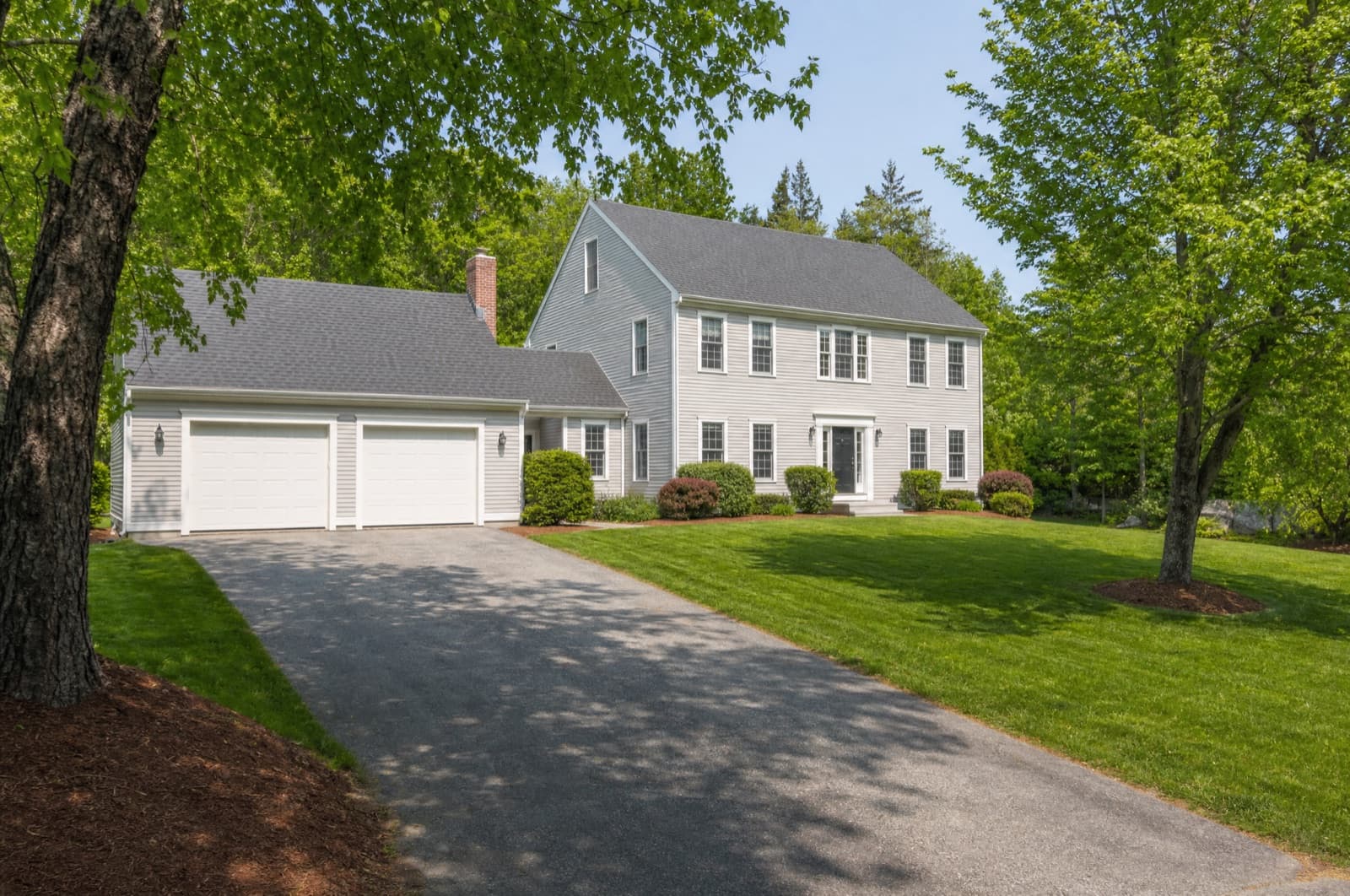
Roughly 70% single-family homes among about 13,031 total housing units (Salem 2025 Master Plan).
77.2% owner-occupied — a conventional suburban profile, not the dense rental stock that changes the answer elsewhere in this hub.
Ordinary suburban single-family stock predicts the ordinary regional pest picture — nothing that justifies a 'Salem is different' page. Its limit: an individual lot at a wooded edge, or an older house on it, still carries the usual house-level risks anyone in the region carries.
Salem 2025 Master Plan — salemnh.gov
The pests actually here
The real Southern-NH species picture — we name them and link the full profiles rather than re-teach identification, and we correct the ones that don't live here at all.
This is the southern New Hampshire regional picture, not a Salem picture — the same species set you'd meet in Manchester or Derry.
- Carpenter antsThe region's leading wood-destroying pest, regardless of which side of the state line a house sits on.Related guide
- House mouse and Norway ratOlder envelopes let them in through dime-sized gaps — true everywhere in the region, not particular to Salem.Species profile
- Blacklegged tickRockingham County has some of the state's highest tick-borne disease rates — a regional risk, not a Salem-specific one.Related guide
- Fall invaders — cluster flies, stink bugs, lady beetlesThey arrive at sun-warmed walls every October across the whole region, timed to the first frost, not the town line.Related guide
Our service area — including when it's not us
Salem is about 25 minutes south of our Manchester office off I-93 — squarely inside our core Rockingham County service area.
Ordinary structural pest control — ants, rodents, seasonal invaders, ticks — the same work we do throughout southern New Hampshire.
Service Area Map
Southern New Hampshire
The answer
Why we tested 'border town' as a hypothesis — and dropped it
Salem sits on the Massachusetts line, and the obvious story to tell is that commuter traffic or cross-border proximity gives the town its own pest problem. We checked. Salem's 2025 Master Plan describes an ordinary suburban town — about 70% single-family homes, 77.2% owner-occupied, roughly 13,031 housing units. That is not a distinct housing profile; it's the profile of dozens of towns in this hub. Nothing in it explains a 'Salem pest' any differently than a 'Manchester pest' would need explaining.
The honest reason so many local pest-control pages lean on landmarks and commuter culture is that there's nothing else to say once you take species biology off the table — ants, mice and ticks don't recognize state lines. What actually predicts a Salem homeowner's risk is the same thing that predicts it everywhere in this hub: the age of the house, whether it backs up to woods, and how much moisture collects around the foundation. Those are worth checking on your own property. The town you live in is not.
Salem's pest problem isn't unique. Neither is our fix.
Ordinary suburban housing, the ordinary southern NH pest set — and the same careful, sourced service we run across the region.
Frequently asked
Sources & further reading(2)
- [1]Salem 2025 Master Plan
Salem housing stock: ~70% single-family, 77.2% owner-occupied, ~13,031 housing units
govverified 2026-07-16 - [2]UNH Extension — Biology and Management of Ticks in New Hampshire
Blacklegged tick regional distribution and abundance in southeastern NH counties including Rockingham
extensionverified 2026-07-16
Written & reviewed by
VerifiedDaniel Brady
NH-Licensed Pesticide Applicator · License #782664 (NHDAMF, RSA 430)
Daniel Brady is the New Hampshire–licensed applicator behind Anchor Pest Services, a family-owned pest control company serving the Manchester area since 2017.
Last updated July 2026
Compare a neighbor
Same honest instrument, town by town — most read “not different,” and that's the point.
Honest pest help for New Hampshire homes
Salem Isn't Special — And That's Fine
We could invent a 'Salem border town pest' story. We'd rather tell you the truth: your house, not your zip code, drives your risk. Family-owned since 2017, NH license #782664, based at 700 Harvey Rd in Manchester.
- NH-licensed applicators (#782664) — free inspection, same-day service
- We'll tell you when a town claim is marketing, not fact
- Serving Rockingham County and southern New Hampshire since 2017
NH License #782664 · No obligation · We answer in person