
Skip to content
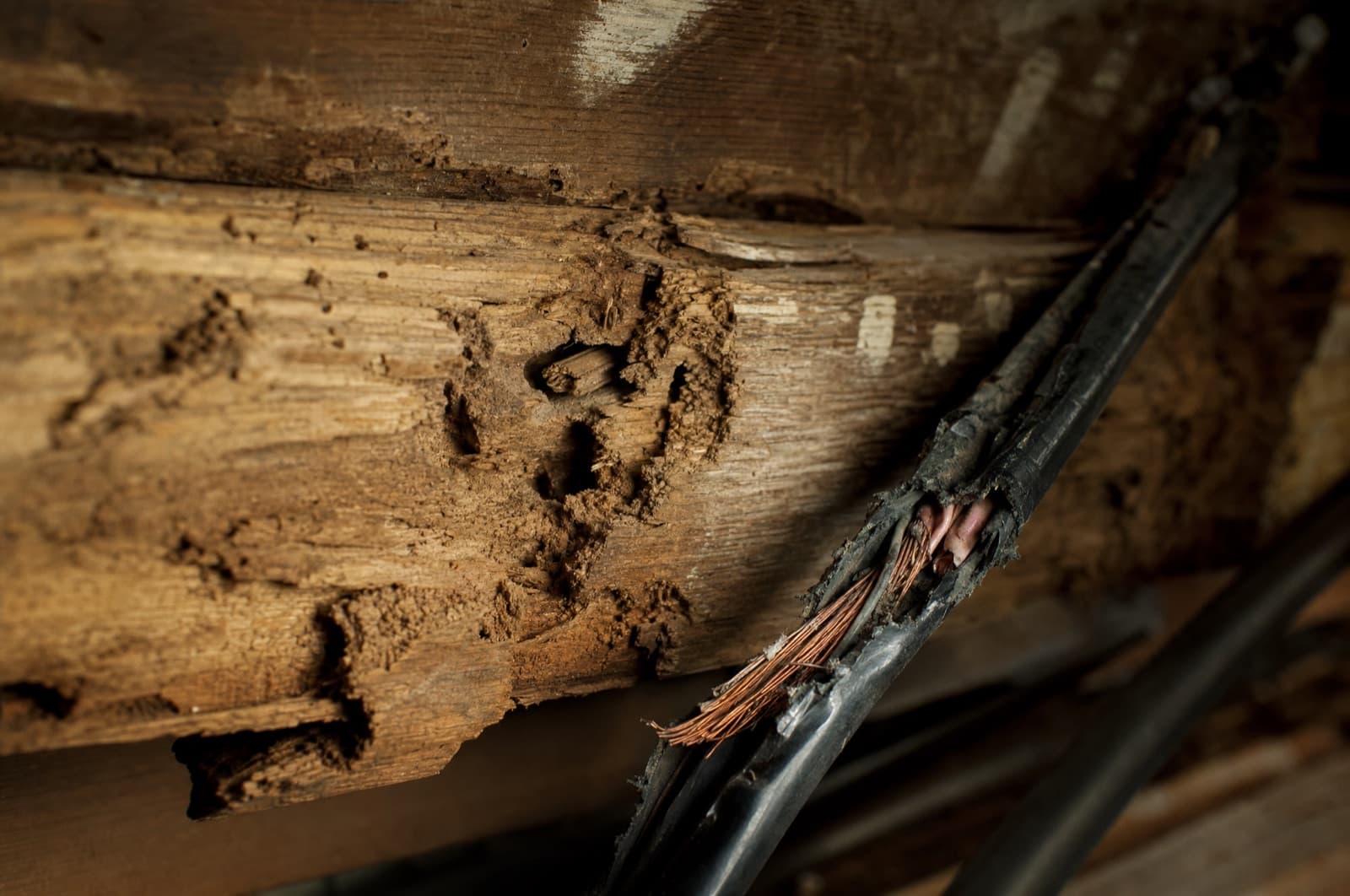
Pest damage evidence — a gnawed structural beam and a chewed electrical wire
Daniel Brady · NH-Licensed Pesticide Applicator · License #782664
Reviewed by Daniel Brady

Can old-house borers damage framing lumber?

Structural — genuinely, but bounded by moisture and modern lumber
Yes, in the right conditions, and this is a genuinely earned structural concern, not an overblown one. Old-house borers (Hylotrupes bajulus) attack seasoned softwood framing — pine, spruce, and fir — and are unusual among wood-boring beetles in that they can reinfest structural lumber already in place, given enough moisture. But modern kiln-drying (heating lumber to roughly 125 to 140°F) kills existing larvae and eggs, and the beetles need wood moisture of about 10 to 12 percent or higher to develop well. In a typical modern New Hampshire home with dry, well-ventilated, kiln-dried framing, that combination makes a serious, ongoing infestation uncommon and often self-limiting on its own.

At a glance

  • Can it?: Yes, but
  • How common: Uncommon
  • Hype: Overstated
  • Evidence: Plausible, under-documented
  • 125 to 140°F

    Kiln-drying temperature that kills existing old-house borer larvae and eggs before lumber is framed

    Mississippi State Extension — Old House Borer (Bugs Eye View, Vol. 6 No. 30)

  • 10 to 12 percent

    Minimum wood-moisture level old-house borers need to develop — modern framing sits well below this

    University of Kentucky Entomology — Old House Borer (EF653)

The honest answer

The short of it

The verdict
Structural — genuinely, but bounded by moisture and modern lumber

Yes, old-house borers attack seasoned softwood framing and, unusually among wood borers, can reinfest lumber already built into a structure — but kiln-dried modern framing and low wood moisture make a serious New Hampshire infestation uncommon and typically self-limiting.

The correction

What they claim vs. what the evidence supports

One shared severity track, two markers. The span between them is the hype delta — named out loud.

The claim — old-house borers (Hylotrupes bajulus) attacking home framing lumber

That old-house borers are one of the most destructive wood-boring insects a home can have, implying any softwood-framed New Hampshire house carries meaningful, ongoing risk of serious structural loss.

Where the claim comes from: Pest-control marketing and older extension bulletins that lead with the beetle's reputation — 'one of the most injurious wood-boring insects' — without noting how narrow the modern practical risk actually is.

Severity, 0–100
Hype says75
45Evidence says
Hype delta30point gapPlausible, under-documented
The evidence

The destructive potential is genuinely real under the right conditions — softwood framing with elevated moisture, especially older or log construction. Old-house borers are the rare wood borer that can reinfest lumber already built into a structure. But Mississippi State and University of Kentucky Extension both note kiln-drying kills existing larvae and eggs, the beetles need roughly 10 to 12 percent wood moisture or higher to develop, and infestations in dry, well-ventilated modern framing tend to be self-limiting rather than progressive.

The gap

The species' reputation is earned in the conditions it needs — damp softwood framing, often older or log construction. In a typical modern New Hampshire home with kiln-dried lumber and dry, ventilated framing, the practical risk is meaningfully lower than the 'most injurious wood borer' framing suggests.

Damage assessment

What is actually harmed

Damage verdict
Structural — genuinely, but bounded by moisture and modern lumber
StructuralCan it?Yes, but
The specimen
Pest
Old-house borer (Hylotrupes bajulus)
What is in question
Softwood framing lumber — pine, spruce, and fir studs, joists, and beams; log-home construction
How common
Uncommon
Evidence
Well documented
Mechanism

Larvae bore extensively through seasoned softwood for two to ten years before emerging as adults, following the grain and often concentrating just beneath the surface — which is why heavily tunneled wood can look sound from outside until probed. Larger larvae make an audible rasping sound as they feed. Unlike most wood-boring beetles, which typically arrive already inside lumber before construction and cannot restart a new generation in dry framing, old-house borers can uniquely reinfest seasoned structural wood already in place, but only where moisture conditions allow it — roughly 10 to 12 percent wood moisture or higher.

Actually at risk3
  • Softwood studs, joists, and beams — pine, spruce, fir — especially in older, damp, or poorly ventilated framing
  • Log-home construction, where this beetle's activity is best documented
  • Framing near a chronic moisture source, such as a persistent roof or plumbing leak
Not at risk — despite the myth4
  • Hardwood framing components — old-house borers do not attack oak, ash, or maple
  • Painted or varnished wood surfaces, where the beetle cannot find bare wood to lay eggs in
  • Kiln-dried, low-moisture modern framing lumber — the kiln-drying process (125 to 140°F) kills existing larvae and eggs, and dry wood is a poor host for new development
  • Furniture or finished woodwork — this is specifically a framing-lumber pest, not a furniture pest
Worst realistic case
Serious weakening of large softwood timbers in a persistently damp, older, or log structure after repeated, undetected infestation cycles — genuinely worth professional assessment. In a typical modern, dry-framed New Hampshire home, this is not the expected outcome.

Assessed from: Penn State Extension old-house borer; Mississippi State Extension old-house borer bulletin; University of Maryland Extension old-house borer; University of Kentucky Entomology EF653

The compounding clock

Does it get worse if you ignore it?

Over time
Compounds slowly

Compounds slowly — and only where moisture keeps feeding it; dry framing brings the clock to a stop on its own.

The timeline
3 stages
  1. MonthsReversible

    Eggs are laid in surface checks of bare, damp softwood; early larval tunneling begins just beneath the surface with no visible or structural sign.

  2. YearsReversible

    Larvae continue boring for two to ten years per generation; in wood that stays damp, tunneling can become extensive, and audible rasping may become noticeable.

  3. DecadesReversible

    Repeated reinfestation cycles in chronically damp, older, or log framing can seriously weaken large timbers — the genuine ceiling for this pest, and still uncommon in modern construction.

What stops the clock
Drying the wood below roughly 10 percent moisture, sealing bare surfaces with paint or varnish so females can't lay eggs, or a borate or fumigation treatment for an active infestation. Kiln-dried framing already resists the cycle from the start.
Repair scope

Who actually fixes this

Scope, not dollars — the honest answer to “how expensive is it,” routed to the right trade.

Who fixes it
Pest pro first
Effort
A project

An active infestation needs professional assessment to distinguish it from old, inactive damage, and any treatment needs to happen before structural repair is worth doing.

The right order
  1. 1
    Confirm the infestation is active, not old exit holes from years past
  2. 2
    Treat active infestations — borate application or fumigation, depending on scope
  3. 3
    Address the moisture source keeping the wood vulnerable
  4. 4
    Bring in a contractor to replace any timbers that are structurally compromised
Route by symptom
  • Licensed contractorRepeated infestation cycles have measurably weakened a load-bearing softwood timber
Do not
  • Don't assume old, dusty exit holes automatically mean an active infestation — inactive damage needs no treatment
  • Don't paint over or seal wood you suspect is actively infested without a professional assessment first
Where we help — and where we don't

Anchor can assess and treat an active old-house borer infestation. Replacing or reinforcing a weakened timber is a licensed contractor's job, and we'll say so rather than quote you for carpentry.

In depth

The full picture

01

What makes old-house borers different from other wood-boring beetles

Most wood-boring beetles that end up in a home — powderpost beetles among them — arrive already living inside lumber before it's ever built into a structure, and once that wood dries out, a new generation typically can't get established in it again. Old-house borers are the exception: Penn State Extension describes them as capable of reinfesting seasoned structural lumber that's already in place, given the right moisture conditions. That's a genuinely unusual trait among wood borers, and it's the reason this species has a reputation for being especially serious.

02

Why modern New Hampshire framing is a poor host

The reputation, though, comes with an important qualifier that's easy to miss in pest-marketing copy. Mississippi State Extension and University of Kentucky Entomology both note that kiln-drying — heating lumber to roughly 125 to 140°F during processing — kills any existing larvae and eggs before the wood is ever framed into a house. On top of that, old-house borers need wood moisture of about 10 to 12 percent or higher to develop successfully, and typical modern framing, properly ventilated, sits well below that threshold most of the year. That combination is precisely why serious, ongoing infestations in modern New Hampshire construction are uncommon rather than routine.

03

What genuinely still puts framing at risk

The real risk concentrates in specific, identifiable conditions: older homes with original, non-kiln-dried framing; log-home construction, where University of Maryland Extension notes this species' activity is best documented; and any framing near a chronic moisture source — a persistent roof leak, poor crawlspace ventilation, or a long-unaddressed plumbing problem. In those conditions, larvae can bore for two to ten years per generation, and repeated cycles in wood that never dries out can genuinely weaken a large timber. Outside those specific conditions, the practical risk to a typical, well-built modern home is considerably lower than the beetle's reputation implies.

04

How this compares to termites and powderpost beetles

Within this cluster's genuinely structural pests, old-house borers sit in a similar category to powderpost beetles: real, well-documented, but moisture-gated and slower-moving than subterranean termites, which forage continuously from an underground colony rather than depending on a single infested piece of wood. The honest ranking is that all three deserve professional attention when active, but none of them justify the 'silent destroyer' framing more accurately applied, with real evidence, to termites alone.

Key takeaways
5 points
  • Old-house borers genuinely damage seasoned softwood framing — pine, spruce, and fir — especially in older or log construction.
  • Unlike most wood borers, they can uniquely reinfest structural lumber already in place, but only where moisture allows it.
  • Kiln-drying kills existing larvae and eggs, and the beetles need roughly 10 to 12 percent wood moisture or higher to develop.
  • A serious infestation in typical modern, dry-framed New Hampshire construction is uncommon.
  • The repair path is professional assessment and treatment first, then a contractor for any timber that's actually been weakened.
New Hampshire context

What this looks like in New Hampshire homes

Anchor sees old-house borer activity far more often in New Hampshire's older housing stock and in log-home construction than in modern, kiln-dried, code-built framing. A persistent roof or plumbing leak that's kept a section of framing damp for years is the classic local setup for an active infestation; a typical, dry, well-ventilated modern home rarely provides the sustained moisture this beetle needs to establish at all.

  • NH-licensed #782664

    Southern New Hampshire

  • Family-owned

    Since 2017

  • Honest routing

    Even when it isn’t us

We serve these communities

ManchesterNashuaConcordDerryBedfordSalemHudsonAmherstAuburnGoffstownHooksettLitchfieldLoudonMilfordBristol

Service Area Map

Southern New Hampshire

BristolPop. 3,200LoudonPop. 5,500ConcordPop. 43,900HooksettPop. 14,800GoffstownPop. 18,000AuburnPop. 5,700ManchesterPop. 115,600BedfordPop. 23,300LitchfieldPop. 8,500AmherstPop. 11,300DerryPop. 34,500MilfordPop. 15,700HudsonPop. 25,600NashuaPop. 91,100SalemPop. 30,000HQCityHover for info

Rasping in a beam? Rule out an active infestation before assuming the worst.

Anchor assesses and treats active old-house borer infestations — and tells you honestly when kiln-dried framing means it's not a concern at all.

Follow-up questions

Frequently asked

Sources & citations(4)
  1. Penn State Extension — Old House Borer

    Old-house borer reputation as one of the most injurious wood-boring insects, and its unique ability to reinfest seasoned structural lumber

    extensionverified 2026-07-16
  2. Mississippi State Extension — Old House Borer (Bugs Eye View, Vol. 6 No. 30)

    Reinfestation of seasoned lumber, moisture threshold of roughly 10-12%, kiln-drying kills existing larvae

    extensionverified 2026-07-16
  3. University of Maryland Extension — Old House Borer

    Softwood-only attack pattern; kiln-dry lumber resistance; log-home documentation

    extensionverified 2026-07-16
  4. University of Kentucky Entomology — Old House Borer (EF653)

    Softwood-only host range; kiln-drying kills existing infestation stages

    extensionverified 2026-07-16

Written & reviewed by

Verified

Daniel Brady

NH-Licensed Pesticide Applicator · License #782664 (NHDAMF, RSA 430)

Daniel Brady is the New Hampshire–licensed applicator behind Anchor Pest Services, a family-owned pest control company serving the Manchester area since 2017.

Verify license

Last updated Jul 2026

Honest pest help for New Hampshire homes

We Confirm It's Active Before We Treat Anything.

Old-house borers are a real, earned concern in damp, older, or log-framed structures — and a much smaller one in typical modern, kiln-dried New Hampshire framing. Anchor Pest Services assesses and treats genuinely active infestations; replacing a weakened timber is a licensed contractor's job, and we'll tell you when that's the case. Family-owned since 2017, NH license #782664, serving Manchester, Nashua, Concord and nearby towns.

  • Honest advice — we distinguish active infestations from old, harmless damage
  • NH-licensed applicators (#782664) — free inspection, same-day service
  • Wood-boring beetle assessment and treatment across southern and central New Hampshire

NH License #782664 · No obligation · We answer in person