
How to Prevent Dust Mites in a Basement Bedroom or Below-Grade Room
A basement bedroom's dust-mite problem is really a humidity problem — below-grade rooms trend damp, and that dampness is what lets the mite population and its allergen build up.
You can make a below-grade bedroom genuinely low-allergen. It just takes a dehumidifier and encasements before it takes anything else.
At a glance
- What it is: An allergen
- The driver: Below-grade humidity feeding the allergen reservoir
- Who fixes it: You can handle this
A basement bedroom's dust-mite problem is really a humidity problem — below-grade rooms trend damp, and that dampness is what lets the mite population and its allergen build up.
You can make a below-grade bedroom genuinely low-allergen. It just takes a dehumidifier and encasements before it takes anything else.
Pull the right lever, not the sprayer
The organism is downstream of one condition. Remove that condition and it has no foothold — which is why prevention here is rarely a pesticide.
The driver
Below-grade humidity feeding the allergen reservoir
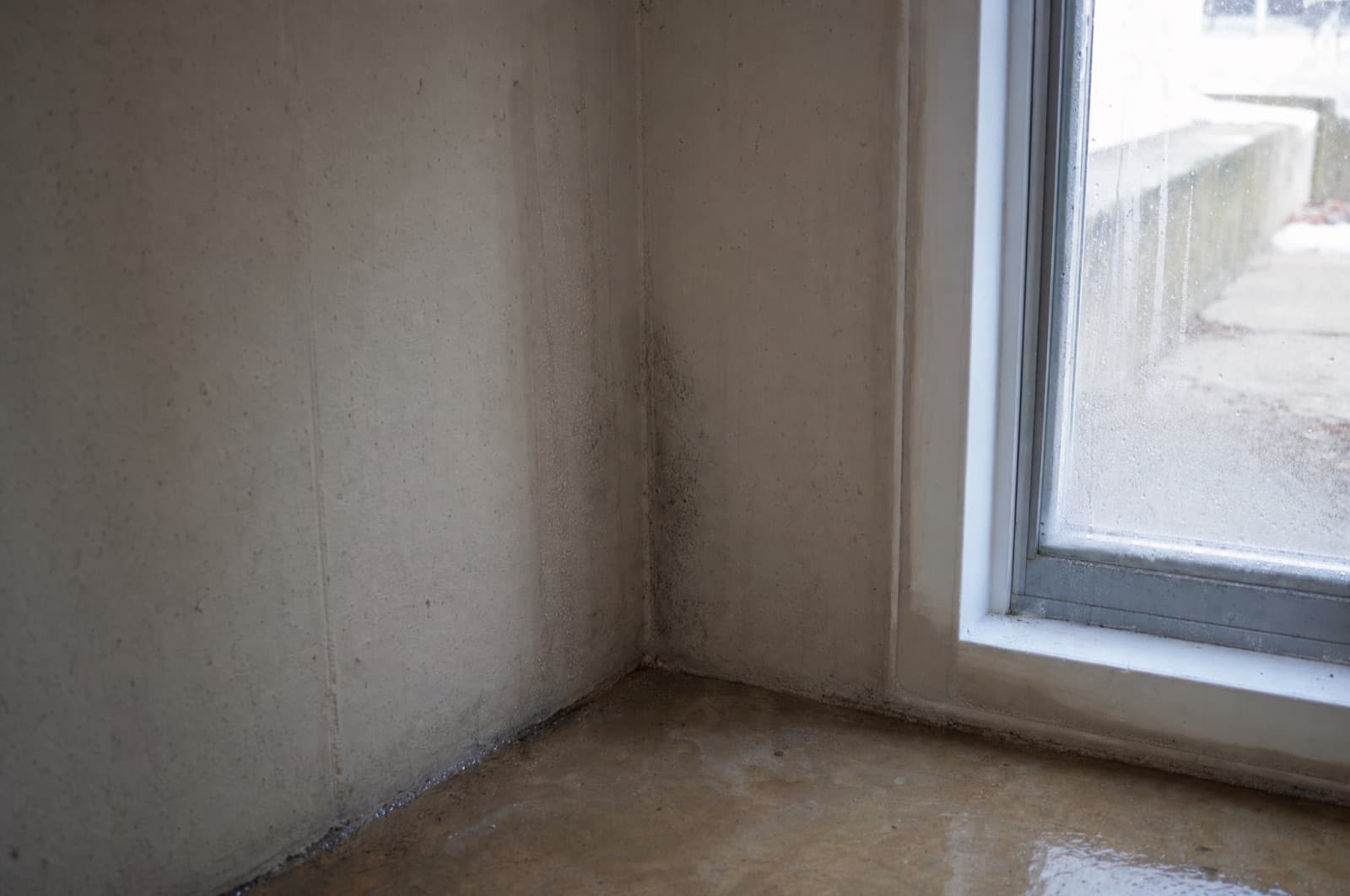
Basements and other below-grade rooms hold moisture more readily than upper floors because they sit against cool earth and get less airflow. Dust mites have no mechanism to drink water — they absorb it directly from humid air — so a room that stays above roughly 50% relative humidity can sustain a much larger mite population and allergen load than a dry room upstairs.
Source:EPA— A Brief Guide to Mold, Moisture and Your Home
This isn't a spray-the-bug problem
A miticide sprayed into a humid basement bedroom does nothing about the humidity that let the population build up in the first place, and it puts chemical residue in a room people sleep in. The mites will simply repopulate once the spray breaks down, because the condition that supports them is untouched.
The right tool instead: Dehumidification is the actual acaricide here — hold the room under 50% RH and the mite population collapses on its own, alongside encasements and hot-washed bedding for the reservoir that already exists.
4 levers, honestly ranked
Sorted by what actually moves the driver — primary first, theatre last. Effort is graded so you know what's a five-minute fix and what's a real project.
- Primary — moves the driverWeekend project
Run a dehumidifier sized for the room and verify with a hygrometer
Basements need active dehumidification more often than upper floors because of their proximity to damp earth and limited airflow. Size the unit to the square footage, empty or plumb the reservoir so it runs continuously, and confirm performance with a simple hygrometer rather than assuming the unit is keeping up.
- Primary — moves the driverQuick DIY
Encase the mattress, box spring, and pillows; hot-wash bedding weekly
Zip allergen-proof covers onto every sleep surface in the room and wash the bedding weekly in hot water, drying fully on high heat. This closes off the existing reservoir while the humidity fix takes hold — skipping either step leaves a path for exposure to continue.
- SupportingWeekend project
Choose hard flooring over carpet in a below-grade bedroom
Carpet in a naturally humid room becomes an oversized reservoir that traps moisture and organic debris. Where replacement is practical, hard flooring with washable area rugs limits how much allergen the room can accumulate long-term.
- SupportingHire a pro
Address bulk water intrusion if walls show condensation or dampness
If the basement shows condensation on walls or a persistent musty smell beyond what a dehumidifier resolves, the underlying issue is bulk moisture — grading, gutters, or waterproofing — not something a room dehumidifier can outrun on its own.
Whose job is this, really?
Who actually fixes it
You can handle this
Dehumidifying, encasing bedding, and choosing flooring are homeowner-level fixes. A moisture or building professional only enters the picture if there's active water intrusion the dehumidifier can't keep up with.
Persistent allergy symptoms despite dry, encased conditions call for a doctor or allergist; standing water, wall condensation, or a musty odor that dehumidification doesn't resolve calls for a moisture or building professional.
How this calibrates for NH
EPA specifically notes that basements in the Northeast are prone to condensation on cool, below-grade slabs and walls, especially in summer when warm, humid outdoor air meets cooler foundation surfaces — a scenario that describes most New Hampshire basements. That's the seasonal window when a below-grade bedroom needs the most dehumidification attention.
NH-licensed applicator #782664 (NHDAMF, RSA 430) · NEPMA member · family-owned since 2017.
Frequently asked
Sources(4)
- [1]EPA
A Brief Guide to Mold, Moisture and Your Home
- [2]EPA
Mold Course Chapter 2 — humidity targets
- [3]Asthma and Allergy Foundation of America (AAFA)
Dust mite allergy — bedroom exposure and control
- [4]University of Kentucky Entomology
House Dust Mites (EF646)
Written & reviewed by
VerifiedDaniel Brady
NH-Licensed Pesticide Applicator · License #782664 (NHDAMF, RSA 430)
Daniel Brady is the New Hampshire–licensed applicator behind Anchor Pest Services, a family-owned pest control company serving the Manchester area since 2017.
Anchor Pest Services
Have a different pest question?
This one may not be a pesticide job — but if you're facing something that is, we serve Southern New Hampshire with a free inspection and same-day service.
- NH-licensed applicator
- Same-day service
- Pet & family-conscious
NH License #782664 · No obligation · We answer in person