
Skip to content
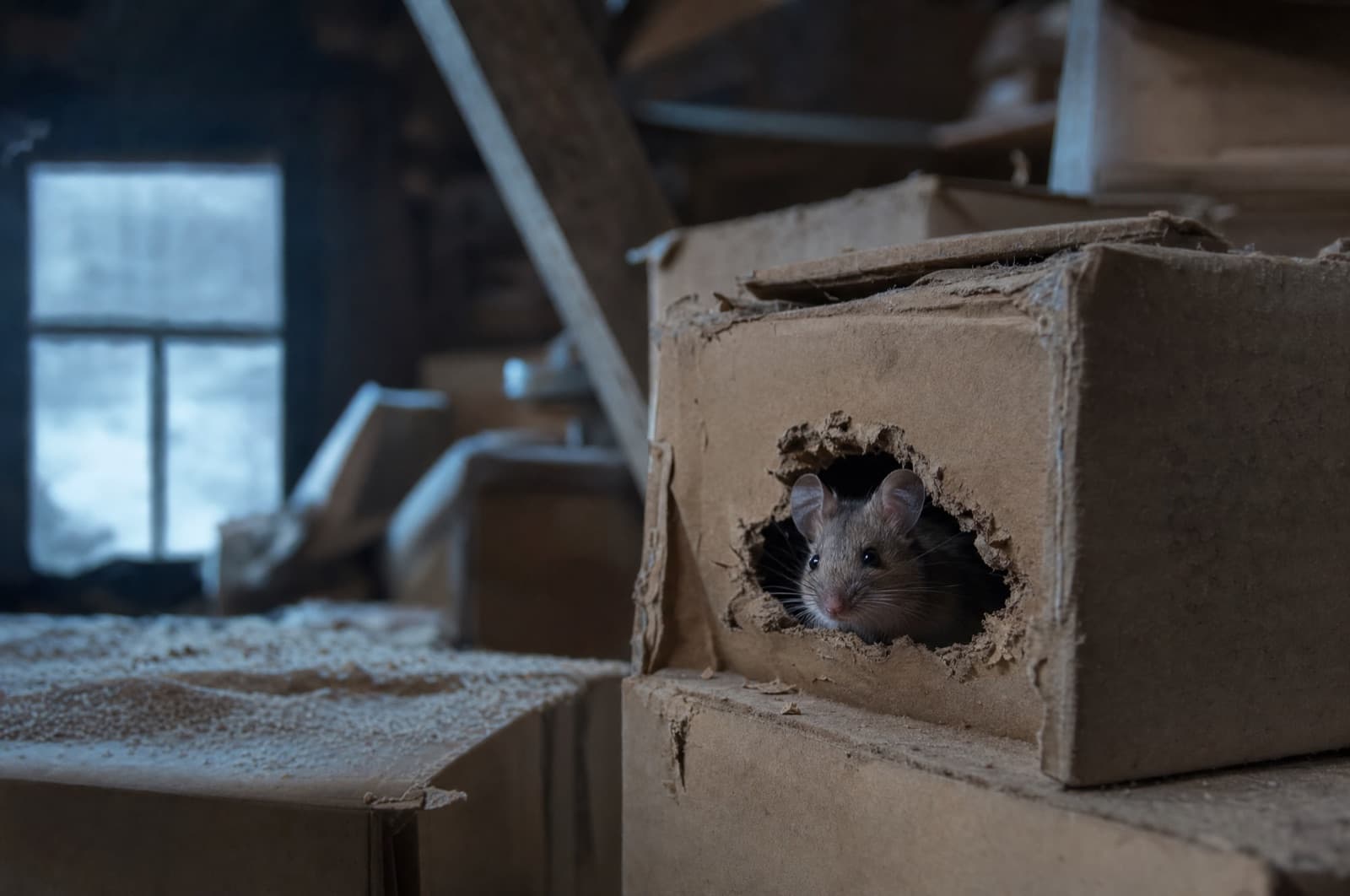
A house mouse in a gnawed cardboard storage box in a cold New Hampshire attic
Daniel Brady · NH-Licensed Pesticide Applicator · License #782664
Reviewed by Daniel Brady

Are cluster flies a winter pest problem?

Yes — a nuisance problem, not a damage or health one
Yes. Cluster flies, sometimes called "attic flies," invade New Hampshire homes in fall specifically to overwinter, then become active on unusually warm winter days, finding their way into living spaces through window frames and light fixtures. What matters for the winter question specifically: they do not breed indoors — their larvae are parasites of earthworms outdoors, so the attic aggregation is a roost, not a nursery — and they cause no structural or health damage. This is a real, sourced nuisance problem, not a scare, and the fix is exclusion, not treatment.

At a glance

  • The verdict: Yes — a nuisance problem, not a damage or health one
The honest answer

The short of it

The verdict
Yes — a nuisance problem, not a damage or health one

Yes, cluster flies overwinter inside New Hampshire walls and attics in large numbers and buzz to life on warm winter days. They are a genuine nuisance, but they don't breed indoors and don't damage the structure.

What actually happens

The busted assumption

Yes

What people assume

"There must be more of them every day because they're breeding indoors." They aren't. Cluster fly larvae are parasites of earthworms and complete that part of their life cycle outdoors in soil, not in your walls. What you're seeing indoors in winter are adults that entered in fall and are simply emerging from where they've been sheltering — the numbers can look like they're multiplying, but it's the same aggregation becoming more visible as it stirs.

What actually happens

UNH Cooperative Extension confirms cluster flies often invade New Hampshire homes in fall and become wintertime pests, entering through gaps around window frames, siding, and light fixtures to reach the wall voids and attic spaces where they cluster for the season. They're described as "only using your home as a place to spend winter," and extension guidance is explicit that they cause no damage to buildings or their occupants. On warm winter days, especially when sunlight warms a south- or west-facing wall, sheltering flies become active and often find their way into living areas through light fixtures, window frames, or small gaps around trim.

What it means for you
Vacuum or swat the active ones as they appear; don't fog or spray insecticide into the wall voids where they're clustered, because dead flies inside a void become a food source that draws scavenger beetles. The genuine prevention move — sealing entry points before fall — is timing-dependent and belongs earlier in the year, roughly by early-to-mid September for New Hampshire. For winter itself, the honest answer is patience and a vacuum, not a treatment plan.

Established from: UNH Cooperative Extension; Colorado State University Extension

In depth

The full picture

01

Why cluster flies specifically target New Hampshire homes in fall

Cluster flies, primarily in the genus Pollenia, are a genuine and well-documented seasonal pest across the northern United States, and UNH Cooperative Extension treats them as a routine fall-and-winter concern for New Hampshire homeowners. In fall, adult flies seek sheltered overwintering sites and often converge on the sunny, south- or west-facing sides of buildings before working their way in through gaps around siding, window frames, soffits, and light fixtures.

Once inside, they settle into wall voids, attic spaces, and other undisturbed cavities for the winter — which is exactly why they're sometimes called "attic flies." This isn't accidental or random; it's the same overwintering-shelter-seeking pattern seen in other fall invaders covered elsewhere in this hub, just with a fly instead of a beetle or a stink bug.

02

The roost-not-nursery distinction, and why it matters

It's worth being precise here because the assumption people reach for — "there are more every day, so they must be breeding in there" — is understandable but wrong for this species. Cluster fly larvae are parasites of earthworms, and that part of the life cycle happens outdoors in soil, not inside a house. The wall void or attic a cluster fly population occupies over winter is a roost, not a nursery — no eggs are being laid and no larvae are developing inside your walls.

What actually happens is that a population that entered in fall in genuinely large numbers becomes gradually more visible as individual flies stir from dormancy, drawn out by warmth from sunlight on an exterior wall or heat escaping around a light fixture. It can look like growth. It's dispersal from an existing, fixed population instead.

03

What actually helps, and what makes it worse

For flies that are already active indoors on a given winter day, vacuuming or swatting is the practical, effective response — it removes them without any downstream problem. What UNH Extension and similar guidance specifically caution against is fogging or spraying insecticide into the wall voids where a cluster fly population is sheltering. Doing that kills flies in place inside the void, and the resulting carcasses become a food source for scavenger beetles, which can then become their own secondary indoor pest.

The actual prevention step — sealing the gaps around siding, window frames, and light fixtures that let flies in during their fall entry window — is a timing-dependent job best done in late summer before the flies start searching for shelter, not once they're already established for winter. This page's honest job is the winter verdict; the sealing timing itself is squarely a fall-entry question.

Key takeaways
5 points
  • Yes, cluster flies are a genuine winter nuisance in New Hampshire homes — UNH Extension documents this pattern directly.
  • They enter in fall to overwinter and become active again on warm winter days, especially near sun-warmed walls.
  • They do not breed indoors — larvae parasitize earthworms outdoors, so the indoor aggregation is a roost, not a nursery.
  • They cause no structural or health damage; the concern is purely nuisance-level.
  • Vacuum active flies; never fog or spray wall voids, since dead flies there attract scavenger beetles.
New Hampshire context

Why this ranks poorly but matters locally

UNH Cooperative Extension treats cluster flies as a routine, well-known seasonal issue for New Hampshire homes, which makes this one of the more locally well-documented pests in this entire hub. Manchester's first hard frost around October 19 to 29 (NOAA) roughly brackets the tail end of the fall entry window; extension guidance generally recommends sealing exterior gaps by early-to-mid September, well ahead of that frost, to beat the flies' shelter-seeking behavior.

Once winter has set in and a population is established in a wall void or attic, there's no local remedy beyond vacuuming flies as they appear on warm days. The prevention work belongs to next year's late-summer sealing window, not to anything done mid-winter.

  • NH-licensed #782664

    Southern New Hampshire

  • Family-owned

    Since 2017

  • Honest routing

    Even when it isn’t us

We serve these communities

ManchesterNashuaConcordDerryBedfordSalemHudsonAmherst

Cluster flies already inside just need a vacuum and patience.

Next fall's sealing work is the real prevention, timed to early-to-mid September. An exterior gap inspection is where we're actually useful.

Follow-up questions

Frequently asked

Sources & citations(3)
  1. UNH Cooperative Extension — Cluster Flies fact sheet

    Cluster flies invading NH homes in fall, overwintering behavior, no structural or health damage, sealing timing

    extensionverified 2026-07-16
  2. Colorado State University Extension — Cluster Flies and other Winter Flies

    Diapause behavior, warm-day activity, spring emergence

    extensionverified 2026-07-16
  3. Penn State Extension — Cluster Flies

    Cluster flies carry no diseases of medical importance to humans

    extensionverified 2026-07-16

Written & reviewed by

Verified

Daniel Brady

NH-Licensed Pesticide Applicator · License #782664 (NHDAMF, RSA 430)

Daniel Brady is the New Hampshire–licensed applicator behind Anchor Pest Services, a family-owned pest control company serving the Manchester area since 2017.

Verify license

Last updated Jul 2026

Honest pest help for New Hampshire homes

We Won't Fog Your Wall Voids. That Just Feeds Beetles.

Spraying insecticide into an attic full of cluster flies creates a secondary beetle problem — vacuuming the active ones is the honest winter fix. Where we really help is sealing the fall entry points before next year's cluster shows up. Family-owned since 2017, NH license #782664, serving Manchester, Nashua, Concord and nearby towns.

  • Honest advice — we won't recommend fogging a wall void
  • NH-licensed applicators (#782664) — free inspection, same-day service
  • Exterior sealing and exclusion across southern and central New Hampshire

NH License #782664 · No obligation · We answer in person