
Skip to content
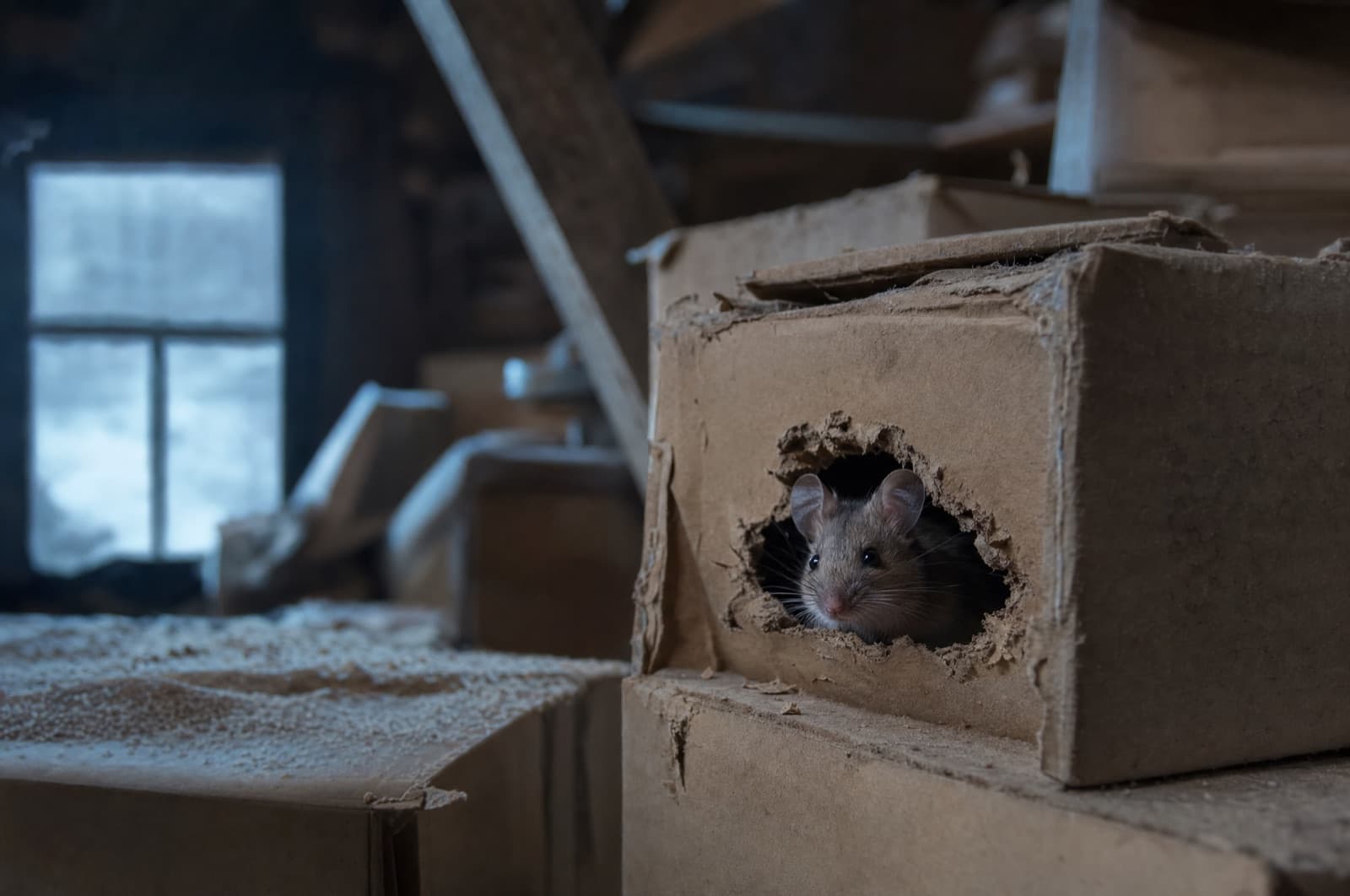
A house mouse in a gnawed cardboard storage box in a cold New Hampshire attic
Daniel Brady · NH-Licensed Pesticide Applicator · License #782664
Reviewed by Daniel Brady

Can cold-weather pests damage insulation or wiring in homes?

Yes — specifically rodents, and it's a real mechanism
Yes — but specifically rodents, not winter pests as a group.Because their incisors never stop growing, mice and rats gnaw compulsively on hard materials, including electrical wiring insulation and structural components, and they shred fibrous insulation for nesting. Overwintering insects like cluster flies, lady beetles and stink bugs do not damage wiring or insulation at all — they shelter passively. The gnawing mechanism itself is well documented; a specific statistic you may have seen about how many house fires rodents cause does not trace back to a verifiable primary source, so we won't repeat it here.

At a glance

  • The verdict: Yes — specifically rodents, and it's a real mechanism
The honest answer

The short of it

The verdict
Yes — specifically rodents, and it's a real mechanism

Rodent incisors grow continuously and must be worn down by gnawing, which is why mice and rats — not overwintering insects — damage wiring and insulation; the biology is real even where the numbers you've heard aren't.

What actually happens

The busted assumption

Yes

What people assume

That wire-chewing fire risk from rodents is purely a scare tactic invented to sell pest control. It isn't — the underlying gnawing biology is real, documented independently of any marketing, and the winter concentration of rodents indoors is exactly what turns a year-round behavior into a seasonal concern. What is fair to be skeptical of is a specific, frequently repeated statistic about the share of house fires rodents supposedly cause: it circulates widely online but does not trace back to a verifiable primary fire-safety authority, so we treat it as unconfirmed and don't repeat it — the mechanism stands on its own without needing an invented number to support it.

What actually happens

Rodent incisors grow continuously throughout the animal's life and must be worn down through gnawing, or they cause pain and eventually prevent normal feeding (Internet Center for Wildlife Damage Management). Michigan State University Extension documents that rodents "use their incisors to gnaw through wood, plastic, lead, aluminum siding, glass, and cinder blocks," and that their teeth are harder than aluminum, copper and iron. That combination — a compulsory behavior and exceptionally hard teeth — means insulation-clad wiring and fibrous insulation are well within reach. Overwintering insects in this hub (cluster flies, Asian lady beetles, stink bugs, boxelder bugs) shelter passively in wall voids and attics and do not chew wiring or insulation at all.

What it means for you
Treat rodent exclusion as protective maintenance rather than an optional upsell — the biology behind the concern is genuine. If you find gnaw marks near wiring, take it seriously: have an electrician inspect any exposed or damaged wiring rather than simply covering it, and address the rodent entry point separately. The damage class, fire-risk framing and repair scope in full belong to /faq-pest-damage-and-risks, which owns that material — this page's job is the short winter verdict.
In depth

The full picture

01

Why rodents specifically, and not the other winter pests

It's worth being precise about which pests this actually applies to, because "cold-weather pests" covers a mixed group with very different behaviors. Rodents are the exception that does real, physical damage: their incisors are rootless and grow continuously, so gnawing is obligate maintenance, not appetite-driven choice, and Michigan State University Extension documents that this drive is strong enough to chew through wood, plastic, lead, aluminum siding, glass and even cinder block, with tooth enamel harder than aluminum, copper or iron.

The overwintering insects covered elsewhere in this hub — Asian lady beetles, cluster flies, stink bugs, boxelder bugs — do not have any comparable mechanism. They shelter passively in wall voids and attics for the winter and cause no structural damage of any kind. If you're trying to figure out whether a specific winter visitor is a wiring or insulation risk, the answer in practice is almost always "only if it's a rodent."

02

The number you've probably heard — and why we won't repeat it

A specific statistic about the share of house fires rodents are responsible for circulates widely across pest-industry marketing and blog content. We looked for a credible primary source for that figure — a fire-safety authority publishing verified data — and didn't find one; it appears to trace back to an uncited industry article rather than a documented federal fire-statistics source. Because we can't verify it, we're not printing it here, and you should treat any version of that statistic you encounter elsewhere with the same skepticism.

What we can say with confidence, independent of that unverified number, is that the underlying mechanism is real: rodents do gnaw on wiring, gnawing on energized wiring is a genuine ignition hazard in principle, and the behavior is well documented by extension and wildlife-damage sources without needing an invented statistic to make the point. Holding both of these at once — real mechanism, unverified number — is the honest position.

03

What this means for your house this winter

If you find chewed insulation or a gnawed wire, the practical response has two separate tracks. The electrical side is not a pest-control job: have a licensed electrician inspect any wiring with visible damage before it's used or re-energized, since the safety question is theirs to answer, not a pest company's. The rodent side is ours in the sense that this hub covers it — exclusion (sealing the entry points rodents used) and trapping any animals already inside are the appropriate response, and winter is genuinely the season when this work matters most.

For the fuller picture — what damage class this falls into, what a repair actually involves, and how to think about it without prices — that depth belongs to /faq-pest-damage-and-risks, which owns the materials-science and repair-scope side of this question across the whole site. This page's purpose is the short, honest winter verdict, not a rebuild of that hub's instruments.

Key takeaways
5 points
  • Rodents — not overwintering insects — are the pests capable of damaging wiring and insulation; the mechanism is continuously growing incisors that must be worn down by gnawing.
  • Rodent teeth are documented as harder than aluminum, copper and iron, so wiring insulation and fibrous insulation are well within reach.
  • A widely repeated statistic about rodents and house fires does not trace to a verifiable primary source — we don't repeat it, even though the gnawing mechanism itself is real.
  • If you find gnawed wiring, have an electrician inspect it — that's a safety question, not a pest-control one.
  • Damage class and repair scope belong to /faq-pest-damage-and-risks; this page gives only the short winter verdict.
New Hampshire context

Which NH rodents are doing the gnawing, and when

In New Hampshire, the wiring and insulation risk traces to two mice. The house mouse (Mus musculus) is the year-round commensal that ICWDM notes is most likely to invade structures as temperatures cool in the fall -- the classic culprit inside Manchester, Nashua and Concord homes. On the wooded and rural lots that ring those towns, the native white-footed mouse (Peromyscus leucopus) also moves indoors; ICWDM notes Peromyscus doesn't hibernate but may become torpid for a few days when winter weather turns severe. Both share the continuously growing incisors that drive gnawing on wire insulation and structural fibers.

Timing makes this seasonal here. NOAA data puts Manchester's first hard frost around October 19-29, and that cold snap is what concentrates these rodents indoors, turning a year-round gnawing behavior into a winter concern for NH wiring and insulation. Sealing entry points ahead of that frost window is the practical protection.

  • NH-licensed #782664

    Southern New Hampshire

  • Family-owned

    Since 2017

  • Honest routing

    Even when it isn’t us

We serve these communities

ManchesterNashuaConcordDerryBedfordSalemHudsonAmherst

The gnawing is real. The scary number isn't.

Have an electrician check any gnawed wiring, and address the rodent entry point. Exclusion and trapping are the genuine winter job for us.

Follow-up questions

Frequently asked

Sources & citations(2)
  1. Internet Center for Wildlife Damage Management — House Mice

    Rodent incisors grow continuously and require constant gnawing to wear down

    academicverified 2026-07-16
  2. Michigan State University Extension — Rodent Fact Sheet

    Rodents gnaw through wood, plastic, lead, aluminum siding, glass and cinder block; teeth harder than aluminum, copper, iron

    extensionverified 2026-07-16

Written & reviewed by

Verified

Daniel Brady

NH-Licensed Pesticide Applicator · License #782664 (NHDAMF, RSA 430)

Daniel Brady is the New Hampshire–licensed applicator behind Anchor Pest Services, a family-owned pest control company serving the Manchester area since 2017.

Verify license

Last updated Jul 2026

Honest pest help for New Hampshire homes

We Won't Repeat a Number We Can't Verify.

The gnawing mechanism behind rodent wiring damage is real and documented; a widely repeated fire-risk statistic isn't something we could verify, so we don't use it. Anchor Pest Services handles the rodent side honestly — exclusion and trapping. Family-owned since 2017, NH license #782664, serving Manchester, Nashua, Concord and nearby towns.

  • Honest sourcing — we don't repeat statistics we can't verify
  • NH-licensed applicators (#782664) — free inspection, same-day service
  • Rodent exclusion and winter pest control across southern and central New Hampshire

NH License #782664 · No obligation · We answer in person