
Skip to content
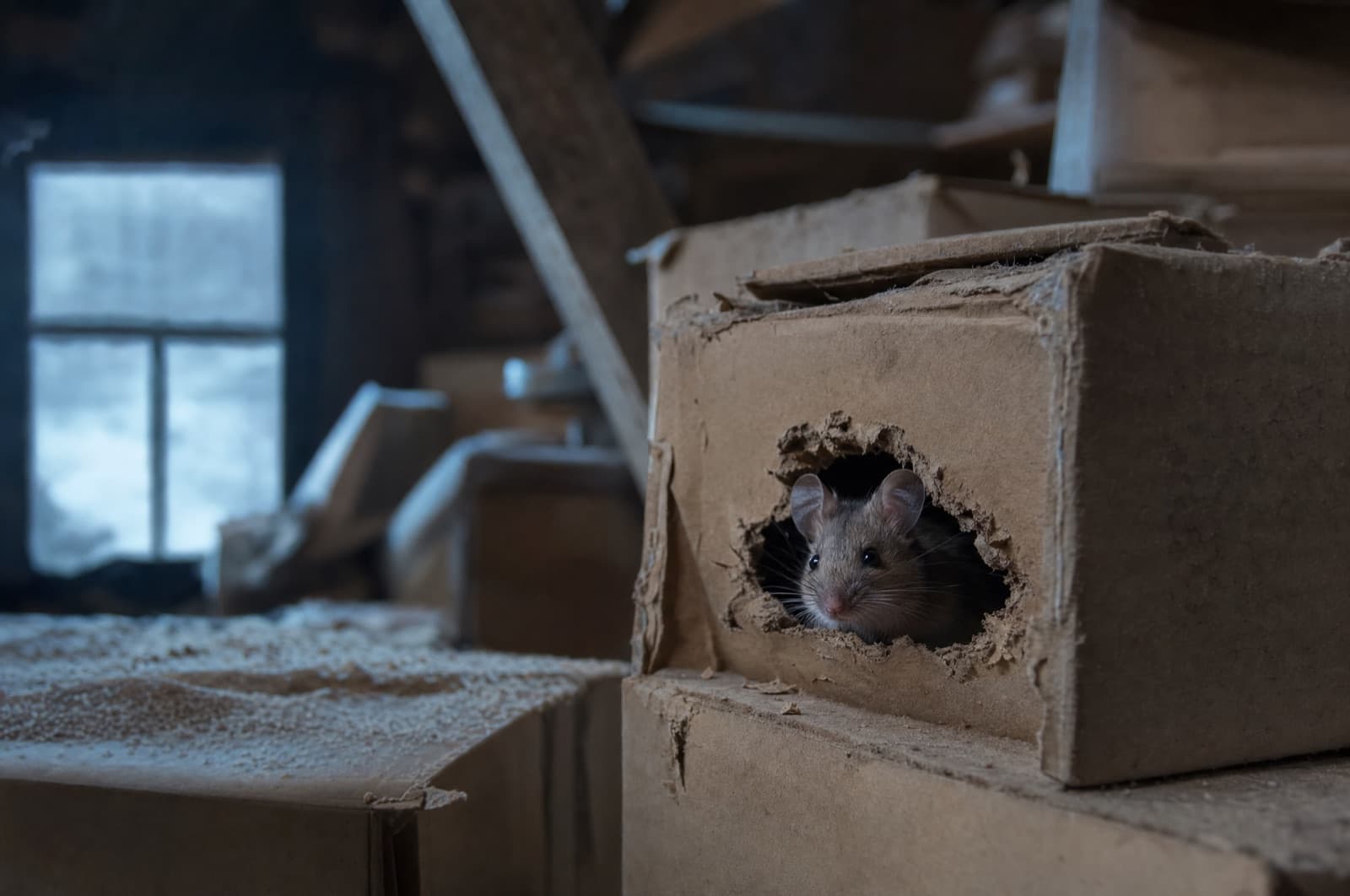
A house mouse in a gnawed cardboard storage box in a cold New Hampshire attic
Daniel Brady · NH-Licensed Pesticide Applicator · License #782664
Reviewed by Daniel Brady

Can firewood stored against a house attract pests?

Major risk factor — and one you fully control
Yes, and this is a major risk factor, not a minor one.Firewood stacked directly against the foundation or siding shelters carpenter ants, wood-boring beetles, spiders, and — critically for a New Hampshire winter — mice and rats, and it puts all of them in direct physical contact with your house. Extension entomologists from Purdue to Cornell independently converge on the same fix: keep the pile well off the structure, elevate it, and cover only the top. It's one of the cheapest, fastest corrections on the entire winter list.

At a glance

  • The verdict: Major risk factor — and one you fully control
The honest answer

The short of it

The verdict
Major risk factor — and one you fully control

Yes — a woodpile against the foundation is one of the best-documented, most fixable pest risks a homeowner can create, and moving it costs nothing.

Why your house

How much this factor matters

Firewood stacked directly against the foundation or exterior sidingMajor factor
Why

Purdue Extension states firewood "can serve as a hiding place or overwintering area for a variety of other arthropod pests," and that wood-boring beetles already living in stacked logs emerge indoors once the wood is stored somewhere warm. The winter-specific problem is separate from any bugs riding in the bark: a woodpile against the house is a covered, wind-sheltered runway that puts mice and rats in direct contact with your siding and foundation seams, exactly when they're searching hardest for a way in. Nebraska Extension is specific about the fix — keeping firewood at least 30 feet from the home measurably reduces the odds that rodents move from the pile into the structure. Purdue, Michigan State, and Cornell Cooperative Extension each independently warn against stacking against the house or storing wood indoors, which is unusual convergence for pest advice.

Yes — you can change this
Move the pile at least a few car-lengths from the house — Nebraska Extension's benchmark is roughly 30 feet — and elevate it off bare ground on a rack or pallets so it isn't sitting in soil moisture. Cover only the top of the stack so air keeps moving through it; a fully tarped pile stays damp and attracts more insects, not fewer. Bring in only what you'll burn within a day or two rather than staging a week's supply on the porch or in the garage. Do not spray the woodpile with insecticide before burning it — several extensions flag this explicitly, because burning treated wood releases the chemical into your home's air as smoke.

Assessed from: Purdue Extension E-67; Nebraska Extension (Lancaster County)

In depth

The full picture

01

Why a woodpile against the house is worse than it looks

It isn't just that bugs live in bark, though they do. Stacked wood is genuine overwintering habitat for carpenter ants, wood-boring beetles, and spiders, and when that pile sits against a warm wall, insects already sheltering in it can move indoors through the same gaps the wood is touching. That's a real but secondary risk.

The bigger issue in a New Hampshire winter is what the pile does for rodents. A woodpile against the foundation is a sheltered, wind-blocked corridor that a mouse or rat can use to explore your foundation and siding for days without ever being exposed. It's staging ground, not just habitat — and staging ground located inches from your sill plate is exactly the wrong kind of convenient.

02

What actually works — and what doesn't

The fix here is almost entirely physical, and it's free. Distance and elevation matter more than any product: extension guidance consistently lands on keeping the pile roughly 30 feet from the structure and off the ground on a rack, pallets, or rails.

Covering the pile only on top — not wrapping it — keeps rain and snow off without trapping moisture inside the stack, since a damp, fully tarped pile becomes more attractive to insects, not less. And don't reach for insecticide as a shortcut: spraying firewood before burning it releases the chemical as smoke inside your home, which several extensions call out directly as a real hazard rather than a fix.

03

Why this belongs at the top of the winter list

This risk factor earns its major grade for a simple reason: it's rare to find a pest-prevention step that's this well-documented, this cheap, and this entirely within a homeowner's control. Unlike your home's age or its distance from woods and water, nobody has to hire anyone or spend anything to fix a woodpile — it just has to get moved.

That combination — real, sourced risk plus a free, same-afternoon fix — is why extension literature returns to it again and again, and why it's worth doing before the ground freezes rather than after.

Key takeaways
5 points
  • Firewood against the foundation shelters carpenter ants, wood-boring beetles and — most importantly for winter — mice and rats in direct contact with your house.
  • Nebraska Extension's benchmark is roughly 30 feet from the structure; multiple land-grant extensions independently agree never to stack against the house.
  • Elevate the pile off the ground and cover only the top — a fully tarped pile traps moisture and attracts more insects, not fewer.
  • Never spray firewood with insecticide before burning it; the smoke carries the chemical indoors.
  • This is a free, same-afternoon fix fully within homeowner control — one of the cheapest corrections on the entire winter list.
New Hampshire context

Why this matters before Manchester's first frost

Manchester's first hard frost typically lands between October 19 and October 29 (NOAA), which is roughly when most New Hampshire households are stacking their winter wood supply — often right against the garage or the house, for convenience. That timing is exactly backwards from what extension guidance recommends.

If your woodpile has been against the house all season, don't wait for spring to move it. Relocate it now, elevate it, and treat any chewed logs or rodent droppings near the pile as a sign that something has already been using it as a staging area.

  • NH-licensed #782664

    Southern New Hampshire

  • Family-owned

    Since 2017

  • Honest routing

    Even when it isn’t us

We serve these communities

ManchesterNashuaConcordDerryBedfordSalemHudsonAmherst

Moved the woodpile and still seeing activity near the foundation?

The woodpile fix is yours, free. If something's already using the old staging area to probe your foundation, that's the part worth a professional look.

Follow-up questions

Frequently asked

Sources & citations(5)
  1. Purdue Extension — E-67 Insects in Firewood

    Firewood as overwintering habitat for arthropod pests; borers emerge indoors when wood is stored somewhere warm; never stack against the house

    extensionverified 2026-07-16
  2. Michigan State University Extension — Use Firewood Wisely and Keep Out Unwanted Pests

    Powderpost beetles and other pests moving from firewood to structural wood; never stack against house or garage

    extensionverified 2026-07-16
  3. Nebraska Extension (Lancaster County) — Don't Create a Firewood Haven for Rodents and Insects

    Keeping firewood at least 30 feet from the home reduces the potential for rodents to become a problem

    extensionverified 2026-07-16
  4. Cornell Cooperative Extension (Rockland) — Insects and Firewood

    Store firewood away from the building; bring in only what will be burned; never spray with insecticide

    extensionverified 2026-07-16
  5. NOAA — Manchester, NH freeze climatology

    Manchester first hard frost typically ~Oct 19-29 — the seasonal anchor for when firewood gets stacked

    govverified 2026-07-16

Written & reviewed by

Verified

Daniel Brady

NH-Licensed Pesticide Applicator · License #782664 (NHDAMF, RSA 430)

Daniel Brady is the New Hampshire–licensed applicator behind Anchor Pest Services, a family-owned pest control company serving the Manchester area since 2017.

Verify license

Last updated Jul 2026

Honest pest help for New Hampshire homes

We'd Rather You Move the Woodpile Than Call Us About It

This fix costs nothing and takes an afternoon — we'll tell you that plainly rather than sell a service around it. Where Anchor Pest Services is genuinely worth calling is when rodents or insects have already found their way into the structure, and winter is peak season for exactly that. Family-owned since 2017, NH license #782664, serving Manchester, Nashua, Concord and nearby towns.

  • Honest advice — we'll tell you when a free fix beats a service call
  • NH-licensed applicators (#782664) — free inspection, same-day service
  • Rodent exclusion and winter pest control across southern and central New Hampshire

NH License #782664 · No obligation · We answer in person