
Skip to content
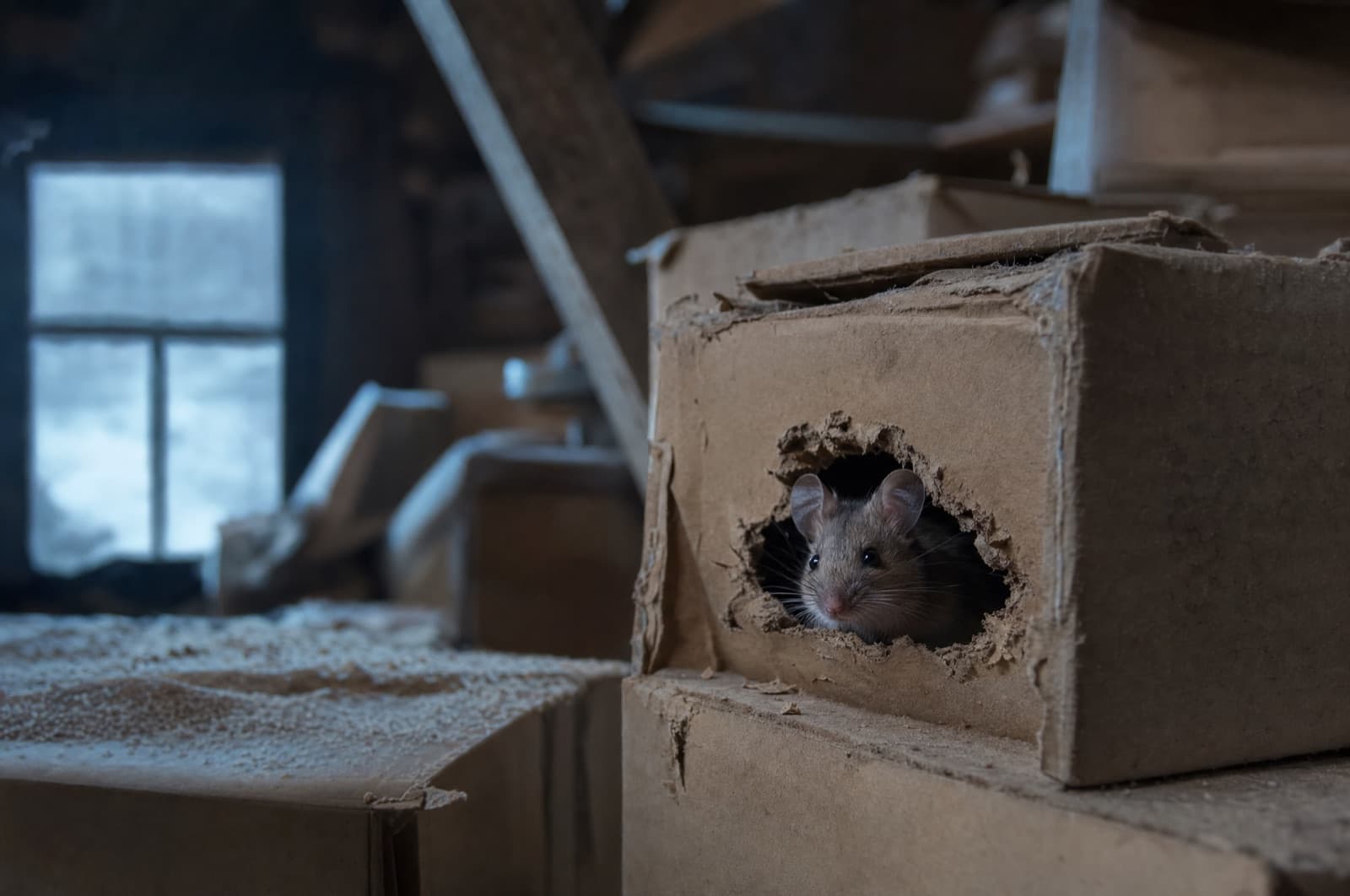
A house mouse in a gnawed cardboard storage box in a cold New Hampshire attic
Daniel Brady · NH-Licensed Pesticide Applicator · License #782664
Reviewed by Daniel Brady

Can gutter cleanup reduce pest risks for the winter?

Worth doing — but the payoff is wood-rot prevention, not a pest barrier
Worth doing, honestly graded as a secondary benefit rather than a headline fix.Clogged gutters cause overflow that saturates fascia, soffit, and roof sheathing, creating exactly the damp, decaying wood that carpenter ants and, in warmer seasons, termites seek out, while leaf debris in the gutter itself becomes nesting material for rodents at the roofline. The mosquito-breeding angle people associate with gutters is a warm-season concern, not a New Hampshire winter one, so the honest winter case rests on moisture and wood-rot prevention. It's a real, worthwhile ladder job — just don't expect it to function as a direct pest treatment.

At a glance

  • Verdict: Worth doing
  • Who does it: You, with a ladder
  • Effort: An afternoon
  • Payoff: Moderate
The honest answer

The short of it

The verdict
Worth doing — but the payoff is wood-rot prevention, not a pest barrier

Clean gutters are real pest prevention — the winter payoff is about the damp, decaying wood that draws carpenter ants, and the nest sites at your roofline, not a mosquito or direct pest barrier.

The one question under all of them

Is this actually worth doing?

Every winter job lands somewhere on one honest scale — from what genuinely matters to what our own industry is selling you. Here is where this one lands.

The job being graded
Worth doing

Clearing gutters and downspouts of leaf debris, typically once in fall and again in spring

The scale
Who does it
You, with a ladder
Effort
An afternoon
Payoff
Moderate
What it actually does

Clearing debris restores proper drainage, which stops overflow from saturating fascia, soffit, and roof sheathing — the damp, slowly decaying wood that carpenter ants and wood-rot organisms specifically seek out, and that termites can exploit in warmer months. Separately, the leaf litter and debris that accumulate in a clogged gutter become nesting material for rodents and roaches operating near the roofline, an entry zone that's easy to overlook because attention naturally goes to ground-level gaps. Neither of these is a direct pest barrier — clearing a gutter doesn't repel or kill anything — it removes two specific conditions (damp wood, roofline debris) that make a structure more attractive to particular pests.

Do this instead
If ladder access to your roofline is truly difficult or unsafe, a licensed gutter or handyman trade can do this in the same afternoon for less risk than a homeowner on an extension ladder in cold weather. Pair the cleanout with a visual check of the fascia and soffit for soft, discolored, or spongy wood — that's the sign the moisture damage has already started, and it's worth noting even if you're not ready to repair it yet.
The line

A clogged gutter doesn't bite you — it rots the wood that carpenter ants move into and builds a rodent nest at your roofline.

Our honest lane

Anchor treats pests, but gutter cleaning is honest homeowner maintenance we don't need to sell you — do it yourself with a ladder or hire a gutter or handyman trade. Where we're useful is flagging moisture-damaged fascia or soffit during a pest inspection, since that's exactly the kind of wood carpenter ants are drawn to, and telling you plainly if what you're looking at is a moisture problem rather than an active infestation.

In depth

The full picture

01

What gutter cleaning actually prevents — and what it doesn't

It's easy to hear "gutters and pests" and think of mosquitoes breeding in standing water, which is a real summer concern in many parts of the country but not the relevant winter mechanism in New Hampshire. The honest winter case for gutter cleaning is entirely about moisture and wood condition.

Overflow from a clogged gutter saturates fascia, soffit, and the edge of the roof sheathing repeatedly through fall and winter storms. That sustained dampness creates exactly the slowly decaying wood carpenter ants are drawn to establish colonies in, and that termites exploit once temperatures warm again. Clean gutters don't repel carpenter ants directly — they remove the damp-wood condition that draws them.

02

The roofline nesting angle

Separate from moisture, a gutter full of leaf litter and debris is simply comfortable nesting material sitting at a part of the house most homeowners never inspect. Rodents and roaches operating near a roofline can use that debris as harborage in a spot that's rarely checked compared to ground-level entry points.

Clearing the debris removes that specific nesting opportunity. It's a modest, secondary benefit compared to the moisture case, but it's real, and it costs nothing beyond the labor of the cleanout itself.

03

Why this earns 'worth doing' rather than 'do this first'

This job is well worth doing, but it's honestly secondary to the sealing and moisture-control work that carries the highest documented payoff in this hub. Gutter cleaning prevents a specific downstream condition — rotting fascia and soffit wood — rather than addressing entry points or attractants directly, which is why it lands as worth doing rather than do this first.

That doesn't make it optional. Wood-rot conditions, once established, are considerably more work to repair than a gutter cleanout, and the roofline nesting risk is easy to overlook precisely because it's out of sight. Doing this once or twice a year is a reasonable, modest-effort complement to the higher-priority work elsewhere in this hub.

Key takeaways
5 points
  • The winter pest case for gutter cleaning is moisture and wood-rot prevention, not a mosquito or direct pest barrier — that angle is a warm-season concern.
  • Overflow from clogged gutters saturates fascia and soffit, creating the damp, decaying wood carpenter ants specifically seek.
  • Leaf debris in a clogged gutter is nesting material for rodents and roaches at the roofline, an entry zone that's easy to overlook.
  • This is a you_with_ladder or a_trade job, an afternoon of effort, with a moderate but genuine payoff.
  • It's secondary to sealing and moisture control, not a replacement for either — do it as a complement, not instead.
New Hampshire context

Gutter timing for a New Hampshire house

Fall leaf drop across New Hampshire typically finishes not long before Manchester's first hard frost, which lands around October 19 to 29 in a typical year (NOAA), making a fall gutter cleanout well-timed to catch debris before winter storms start testing drainage. A spring cleanout after snowmelt catches whatever accumulated over the winter and checks for any ice-related damage to the gutter system itself.

Ice dams are a related but separate winter mechanism covered elsewhere in this hub — clean gutters help drainage generally, but ice-dam prevention involves attic insulation and ventilation as much as gutter condition.

  • NH-licensed #782664

    Southern New Hampshire

  • Family-owned

    Since 2017

  • Honest routing

    Even when it isn’t us

We serve these communities

ManchesterNashuaConcordDerryBedfordSalemHudsonAmherst

Clean gutters yourself. Call us if the wood's already soft.

Gutter cleaning is genuinely a DIY-or-trade job. If you find damp, decaying fascia or soffit, that's worth a pest inspection.

Follow-up questions

Frequently asked

Sources & citations(3)
  1. EPA — Indoor airPLUS Technical Bulletin: Pest Entry Prevention

    Moisture control and dry building materials as pest-exclusion strategy, including the carpenter-ant/wood-decay link

    govverified 2026-07-16
  2. DOE Building America Solution Center (PNNL) — Reduce Pest Intrusion

    Constructing and maintaining a building envelope so it stays dry, or dries quickly, as pest prevention

    govverified 2026-07-16
  3. NOAA — Manchester, NH freeze climatology

    Manchester first hard frost typically ~Oct 19-29 — the seasonal window for a fall gutter cleanout

    govverified 2026-07-16

Written & reviewed by

Verified

Daniel Brady

NH-Licensed Pesticide Applicator · License #782664 (NHDAMF, RSA 430)

Daniel Brady is the New Hampshire–licensed applicator behind Anchor Pest Services, a family-owned pest control company serving the Manchester area since 2017.

Verify license

Last updated Jul 2026

Honest pest help for New Hampshire homes

We Don't Clean Gutters. We Check What They've Rotted.

Gutter cleaning is a ladder-and-an-afternoon job that doesn't need a pest company — we'll say that plainly. What Anchor Pest Services does is spot moisture damage during an inspection and tell you honestly whether it's a carpenter-ant risk or just wear, and handle it if it's real. Family-owned since 2017, NH license #782664, serving Manchester, Nashua, Concord and nearby towns.

  • Honest advice — we'll tell you when the fix is a ladder, not a service call
  • NH-licensed applicators (#782664) — free inspection, same-day service
  • Rodent and moisture-pest inspection across southern and central New Hampshire

NH License #782664 · No obligation · We answer in person