
Skip to content
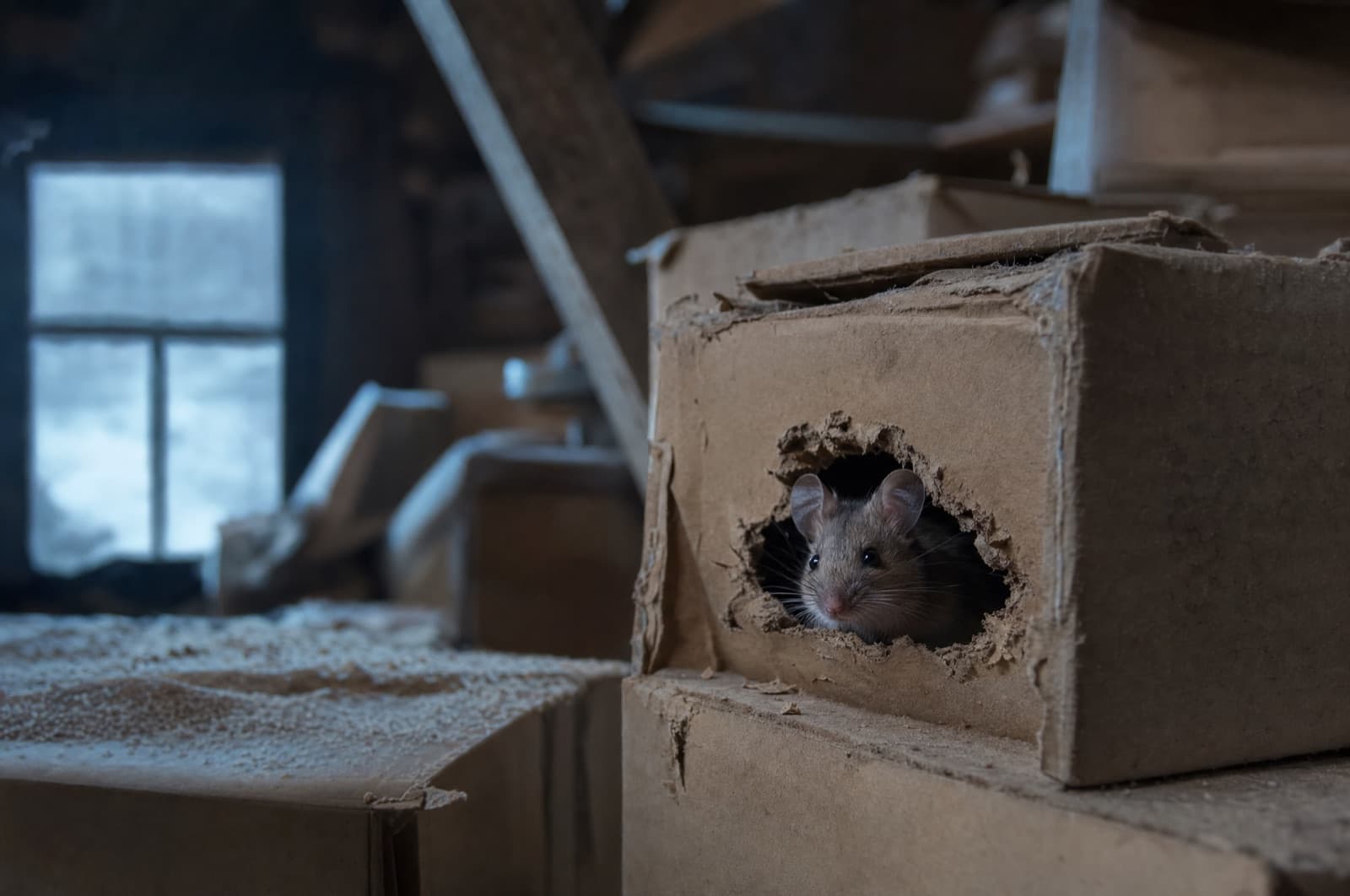
A house mouse in a gnawed cardboard storage box in a cold New Hampshire attic
Daniel Brady · NH-Licensed Pesticide Applicator · License #782664
Reviewed by Daniel Brady

Can pest-made holes in homes let in cold air or drafts?

Yes
Yes. Holes rodents gnaw or enlarge, along with the insulation they compress and shred while nesting, are genuine air-leakage and heat-loss paths, not just a pest issue. Air leakage typically accounts for a large share of a home's heating and cooling energy use, and rodent damage to insulation is documented to raise heating bills, though few homeowners connect the two. Sealing pest entries and repairing chewed insulation does double duty — fewer pests and a warmer, cheaper-to-heat house from the same afternoon of work.

At a glance

  • The verdict: Yes
The honest answer

The short of it

The verdict
Yes

The caulk gun and the heating bill are on the same errand — the hole a mouse made is a hole your heat is using too.

What actually happens

The busted assumption

Yes

What people assume

That a pest-made hole is only a pest problem — homeowners routinely treat the mouse and the draft as two separate issues requiring two separate fixes. They aren't separate. The same physical opening that lets an animal in is, by definition, also a path for conditioned air to leave and outside air to enter, and the insulation damage that often accompanies an active rodent presence compounds the energy loss well beyond the hole itself.

What actually happens

Rodents gnaw openings to create or enlarge entry points, and once inside walls or attics they tunnel through and compress insulation while nesting, which lowers its effective insulating value well beyond the size of the hole itself. University of Nebraska–Lincoln Extension notes plainly that few property owners are aware of how rodent damage to insulation raises heating and cooling bills. Separately, and consistent with that finding, ENERGY STAR's air-sealing guidance states that air leakage accounts for roughly twenty-five to forty percent of the energy used for heating and cooling in a typical residence, and the EPA estimates homeowners can save an average of fifteen percent on heating and cooling costs, or about eleven percent on total energy costs, by air sealing their homes and adding insulation in attics, floors over crawl spaces, and basements.

What it means for you
Sealing for pest exclusion is also weatherizing your home, so there's no tradeoff between the two goals — the caulk gun and the utility bill are on the same errand. The one thing not to skip: if you find a gnawed or compressed section of insulation, replace or repair it rather than simply covering the hole, since the insulation's own effectiveness is part of what was damaged, not just the opening behind it. For the fuller materials-and-repair-scope picture of pest damage generally, see our sibling Damage Ledger hub.

Established from: ENERGY STAR — Why Seal and Insulate; University of Nebraska–Lincoln Extension — Rodent-Proof Construction (G1530)

In depth

The full picture

01

Why the connection is easy to miss

A drafty spot near a baseboard and a mouse problem in the same general area of the house read, to most homeowners, as two unrelated complaints — one goes to a home-improvement task list, the other goes to a pest-control task list. The physical reality doesn't respect that split: an opening a rodent gnawed or enlarged doesn't stop being an opening once the rodent moves on, and it keeps leaking air for as long as it stays unsealed. The insulation compression that often comes with an active nest compounds this, because compressed fiberglass or cellulose loses much of its rated insulating value even where the vapor barrier or surface still looks intact.

02

How much this actually costs in energy terms

The scale here isn't marginal. ENERGY STAR's air-sealing guidance puts air leakage at roughly twenty-five to forty percent of a typical home's heating and cooling energy use, and separately estimates an average fifteen percent savings on heating and cooling costs from a combination of air sealing and adding insulation. Rodent-made and rodent-enlarged gaps are a subset of the air-leakage sources that guidance addresses — not a separate category — which is why the same sealing work that stops pest entry also contributes directly to that documented savings range.

03

Don't just cover the hole — fix the insulation too

The most common incomplete fix is sealing the visible opening while leaving compressed or shredded insulation behind it untouched. That closes the pest entry but leaves the energy-loss problem partially unresolved, since damaged insulation continues to underperform even once the hole itself is sealed. The complete version of this job checks the insulation immediately around any pest-related opening and repairs or replaces it where it's been compressed, soiled, or torn, not just the gap in the wall or soffit. For the broader question of what pest damage does to insulation and wiring performance specifically, and what repair scope that implies, our sibling Damage Ledger hub covers the materials-science depth this page doesn't rebuild.

Key takeaways
5 points
  • Yes — pest-made holes and the insulation damage that often comes with them are a genuine, documented energy-loss path.
  • Air leakage accounts for roughly 25-40% of a typical home's heating/cooling energy use (ENERGY STAR).
  • Rodent damage to insulation is separately documented to raise heating bills — few homeowners connect the two.
  • Sealing for pests and sealing for energy loss are the same task, not two competing priorities.
  • Fix the insulation, not just the hole — compressed or shredded insulation keeps underperforming even after the opening is sealed.
New Hampshire context

Why this matters more in a New Hampshire winter

Manchester's first hard frost typically arrives between October 19 and 29 (NOAA), and the heating season that follows runs long and cold enough that energy-loss paths matter more here than in milder climates — every unsealed gap is working against your furnace for months, not weeks. Sealing pest entries before frost, as covered on our page about sealing gaps around windows and doors, does the weatherizing work at the same time as the exclusion work.

If you're dealing with an active rodent presence rather than an old, already-vacated gap, expect the insulation damage to be more extensive than the visible hole suggests — check a wider area around any known entry point before assuming the repair is complete.

  • NH-licensed #782664

    Southern New Hampshire

  • Family-owned

    Since 2017

  • Honest routing

    Even when it isn’t us

We serve these communities

ManchesterNashuaConcordDerryBedfordSalemHudsonAmherst

Found a chewed hole and don't know how much insulation is affected?

A free inspection checks the area around it honestly — sometimes it's a quick patch, sometimes it's more.

Follow-up questions

Frequently asked

Sources & citations(4)
  1. ENERGY STAR — Why Seal and Insulate

    Average 15% heating/cooling savings from air sealing and insulation

    govverified 2026-07-16
  2. ENERGY STAR — Air Sealing Fact Sheet

    Air leakage accounting for 25-40% of heating/cooling energy use

    govverified 2026-07-16
  3. University of Nebraska–Lincoln Extension — Rodent-Proof Construction (G1530)

    Rodent damage to insulation raising heating and cooling bills

    extensionverified 2026-07-16
  4. NOAA — Manchester, NH freeze climatology

    Manchester first hard frost timing — the heating-season context for energy loss

    govverified 2026-07-16

Written & reviewed by

Verified

Daniel Brady

NH-Licensed Pesticide Applicator · License #782664 (NHDAMF, RSA 430)

Daniel Brady is the New Hampshire–licensed applicator behind Anchor Pest Services, a family-owned pest control company serving the Manchester area since 2017.

Verify license

Last updated Jul 2026

Honest pest help for New Hampshire homes

Sealing the Hole Is Yours. We'll Tell You If More Is Damaged.

Most pest-made holes are a homeowner's caulk-and-mesh fix, and we'd rather say so than sell a visit for a simple patch. Anchor Pest Services can assess whether insulation around an entry point needs more than a cover-up, honestly, before recommending anything further. Family-owned since 2017, NH license #782664, serving Manchester, Nashua, Concord and nearby towns.

  • Honest advice — we'll tell you when a simple seal is enough
  • NH-licensed applicators (#782664) — free inspection, same-day service
  • Pest and insulation-damage inspections across southern and central New Hampshire

NH License #782664 · No obligation · We answer in person