
Skip to content
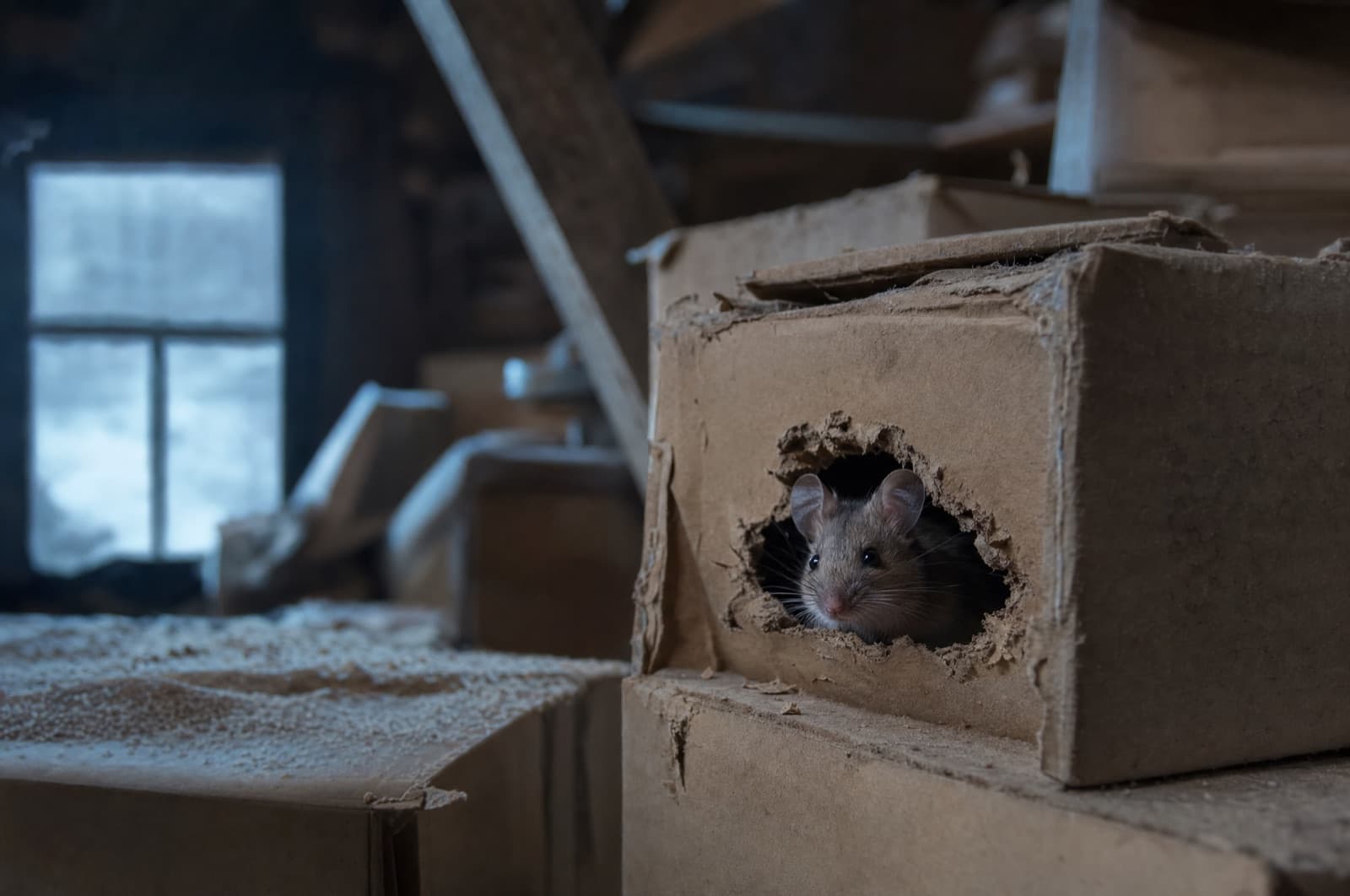
A house mouse in a gnawed cardboard storage box in a cold New Hampshire attic
Daniel Brady · NH-Licensed Pesticide Applicator · License #782664
Reviewed by Daniel Brady

Do homes with basements face higher pest risk in winter?

Moderate risk factor — and the real driver is moisture, not the basement
Moderately, and the honest reframe matters more than the yes-or-no answer: a basement per se isn't what attracts pests, the moisture, low light, and ground-level utility penetrations typical of basements are.Damp basements draw moisture-dependent invaders like camel crickets, millipedes, sowbugs, and house centipedes, and they're the first entry zone for mice moving in through sill-plate gaps and pipe penetrations near grade. Fix the moisture and seal the penetrations, and most of a basement's added risk goes with it — you don't need to eliminate the basement, just the conditions inside it.

At a glance

  • The verdict: Moderate risk factor — and the real driver is moisture, not the basement
The honest answer

The short of it

The verdict
Moderate risk factor — and the real driver is moisture, not the basement

Moderately — a basement itself isn't the risk; the moisture, darkness and utility penetrations that typically come with one are, and those are fixable.

Why your house

How much this factor matters

Basement moisture, darkness, and below-grade utility penetrationsModerate factor
Why

The insects that specifically colonize damp basements have biology that explains the pattern directly: sowbugs and pillbugs lack a closing device for their respiratory system and require sustained high moisture to survive, which is why they show up reliably in damp basements and die out quickly in dry ones. Camel crickets follow the same logic and are sometimes described as living moisture indicators — a basement with a lot of them is telling you something about its dampness, not just its bug population. Separately from moisture, basements sit at or below grade, which puts them physically closer to subterranean rodent activity and gives mice a shorter, more direct route in through foundation-sill gaps and pipe penetrations than an upper floor would offer.

Partly
You can't remove the basement, but essentially everything that makes a basement risky is fixable: run a dehumidifier to bring humidity down, fix any grading or drainage issues that let water pool against the foundation, and seal sill-plate and pipe penetrations with hardware cloth or steel wool backed by sealant rather than foam or caulk alone, since foam alone doesn't stop gnawing rodents. Reducing floor clutter also helps, both by removing harborage and by making it easier to spot activity early. This is a moisture and sealing project, not a single spray.

Assessed from: General moisture-ecology principles for basement-dwelling arthropods, cross-referenced with CDC and EPA exclusion guidance

In depth

The full picture

01

The reframe that matters more than the yes/no answer

It's tempting to treat "having a basement" as the risk factor, but that framing leads to the wrong fix. Nobody is going to fill in their basement. The actual driver is what basements tend to have — sustained moisture, low light, and utility penetrations near ground level — and every one of those is independently fixable without touching the basement's existence at all.

This distinction matters because it changes what "fixing it" looks like. A dry, well-sealed basement carries much less of this risk than a damp one, even though both are still, definitionally, basements.

02

Why moisture-dependent pests show up specifically here

Sowbugs, pillbugs, and camel crickets aren't opportunists that show up anywhere convenient — their biology ties them to moisture in a fairly literal way. Sowbugs and pillbugs need consistently high humidity because they lack the ability to close off their respiratory system the way many insects can, so a basement that stays damp is one of the few indoor environments that can actually sustain them.

That's also why their presence is diagnostically useful: a lot of camel crickets in a basement is a signal worth acting on, not just a nuisance to spray away. It's telling you the space is damp enough to need attention.

03

The mouse angle is separate, and it's about geometry

Set moisture aside for a moment, and basements still carry an independent, geometry-based risk: they sit at or below grade, which is exactly where a mouse is already traveling along a foundation looking for a gap. Sill-plate seams and pipe penetrations at that level are shorter, more direct routes indoors than anything on an upper floor.

That's why the fix for the rodent half of this risk factor is straightforwardly about sealing — hardware cloth and steel wool at every visible penetration, backed with sealant, checked and maintained each fall before the ground freezes.

Key takeaways
5 points
  • The basement itself isn't the risk — moisture, darkness, and below-grade utility penetrations are, and all three are fixable.
  • Sowbugs, pillbugs, and camel crickets require sustained high moisture to survive; a lot of them is a moisture signal, not just a bug problem.
  • Basements sit at or below grade, giving mice a shorter, more direct route in through sill-plate and pipe gaps.
  • Dehumidifying, fixing grading/drainage, and sealing penetrations with hardware cloth or steel wool address most of the added risk.
  • This is a moisture-control and sealing project, not a single treatment — and it doesn't require eliminating the basement.
New Hampshire context

Basements in a New Hampshire winter

Southern and central New Hampshire's older housing stock leans heavily on basements and partial basements, many with fieldstone or block foundations that were never fully waterproofed to modern standards. Combine that with Manchester's first hard frost around October 19 to 29 (NOAA) pushing outdoor rodent activity toward any available shelter, and a damp, unsealed basement becomes one of the more consequential risk factors a homeowner can address before winter.

A fall check — dehumidifier running, sill plate and pipe penetrations inspected, any standing water or grading issue addressed — is worth doing before the ground freezes and access gets harder.

  • NH-licensed #782664

    Southern New Hampshire

  • Family-owned

    Since 2017

  • Honest routing

    Even when it isn’t us

We serve these communities

ManchesterNashuaConcordDerryBedfordSalemHudsonAmherst

Dry basement, sealed penetrations — that's the fix.

Moisture control is a DIY-and-a-trade project. If mice have already found the gaps, that's where a professional inspection earns its keep.

Follow-up questions

Frequently asked

Sources & citations(4)
  1. CDC — How to Seal Up to Prevent Rodents

    Quarter-inch gap standard for mouse exclusion; sealing sill-plate and pipe penetrations with steel wool/hardware cloth

    govverified 2026-07-16
  2. EPA — Indoor airPLUS Technical Bulletin: Pest Entry Prevention

    Rodents chew foam, wood, and some plastics — hardware cloth/steel materials needed for genuine exclusion at below-grade penetrations

    govverified 2026-07-16
  3. DOE Building America Solution Center (PNNL) — Reduce Pest Intrusion

    Moisture control and air-sealing the envelope as pest exclusion strategy

    govverified 2026-07-16
  4. NOAA — Manchester, NH freeze climatology

    Manchester first hard frost typically ~Oct 19-29 — the seasonal window for a fall basement check

    govverified 2026-07-16

Written & reviewed by

Verified

Daniel Brady

NH-Licensed Pesticide Applicator · License #782664 (NHDAMF, RSA 430)

Daniel Brady is the New Hampshire–licensed applicator behind Anchor Pest Services, a family-owned pest control company serving the Manchester area since 2017.

Verify license

Last updated Jul 2026

Honest pest help for New Hampshire homes

We Don't Sell Dehumidifiers. We Stop What Gets Past Them.

The moisture fix is yours — a dehumidifier and some grading work. Where Anchor Pest Services really helps is inspecting and sealing the sill-plate and pipe penetrations mice use to get into a basement, and identifying an active problem before it spreads upstairs. Family-owned since 2017, NH license #782664, serving Manchester, Nashua, Concord and nearby towns.

  • Honest advice — we'll tell you when the fix is a dehumidifier, not a service plan
  • NH-licensed applicators (#782664) — free inspection, same-day service
  • Rodent exclusion and winter pest control across southern and central New Hampshire

NH License #782664 · No obligation · We answer in person