
Skip to content
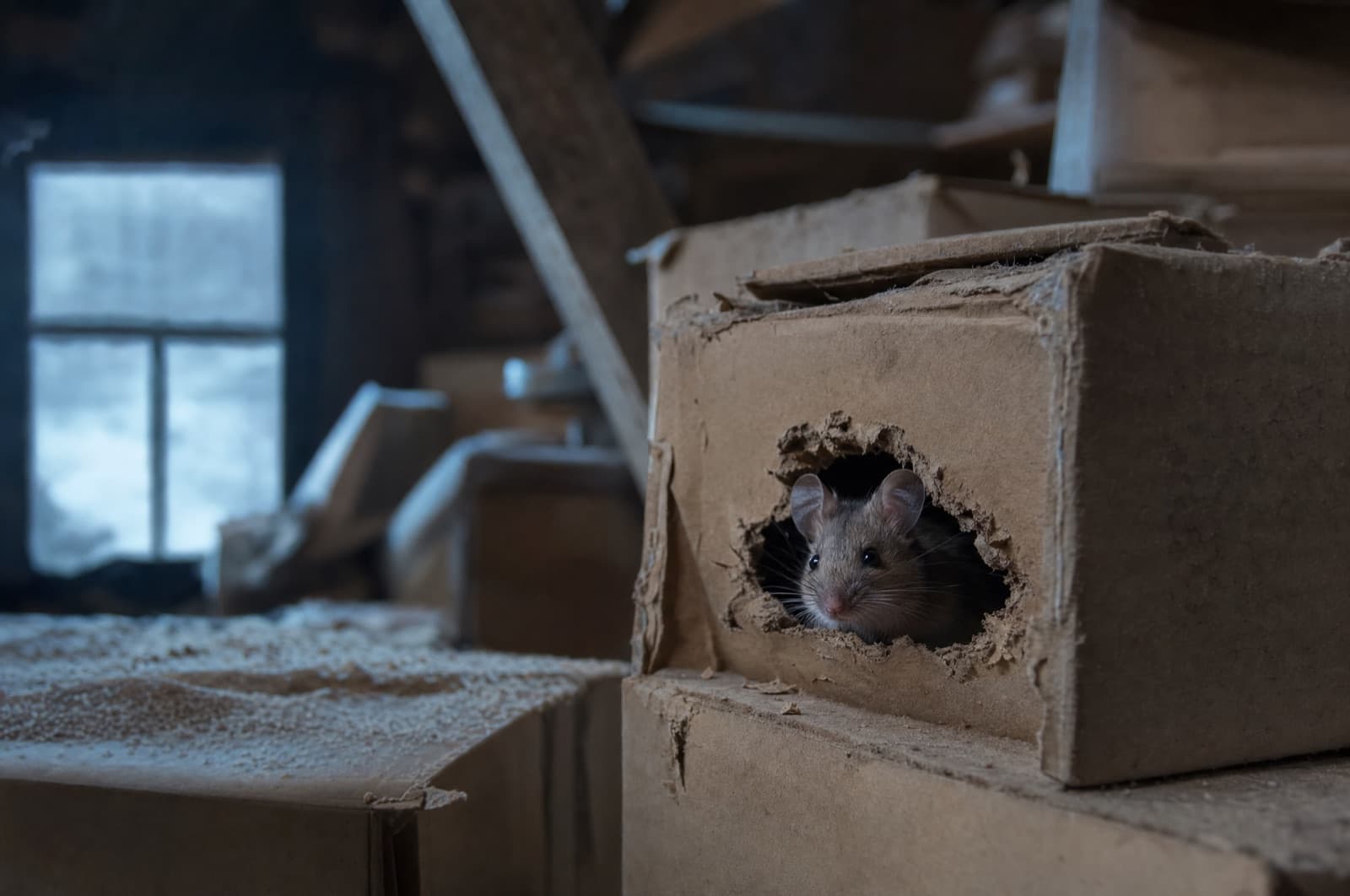
A house mouse in a gnawed cardboard storage box in a cold New Hampshire attic
Daniel Brady · NH-Licensed Pesticide Applicator · License #782664
Reviewed by Daniel Brady

Do rodents cause more damage in winter compared to summer?

Yes — but not because rodents change
Yes, functionally, though the mechanism is worth being precise about.Rodents don't hibernate and their incisors grow continuously, so gnawing is a constant, year-round behavior rather than something that ramps up seasonally. What changes in winter is location: cold and thinning outdoor food push rodents indoors, where the same compulsory gnawing lands on your wiring, insulation, and stored goods instead of on tree bark or fence posts outside. This page gives the short winter verdict; the full damage-class and repair-scope detail belongs to our pest damage guide.

At a glance

  • The verdict: Yes — but not because rodents change
The honest answer

The short of it

The verdict
Yes — but not because rodents change

Yes, functionally. Rodents don't gnaw harder in winter — winter just moves the same year-round chewing indoors, onto your wiring, insulation and stored food.

What actually happens

The busted assumption

Yes

What people assume

"Rodents slow down in winter the way insects do." They don't, and this is a meaningful distinction from most of the other pests in this hub. Overwintering insects genuinely go dormant; rodents remain fully active all winter and simply relocate the same destructive behavior indoors, which is why the damage risk doesn't ease up with the temperature the way it does for insects.

What actually happens

A rodent's incisors grow continuously throughout its life, and gnawing is obligate maintenance behavior rather than optional or food-driven — an animal that doesn't wear its teeth down develops painful, eventually fatal dental problems. That means rodents gnaw on hard materials essentially every day, indoors or out. Land-grant extension confirms rodents gnaw through wood, plastic, and even soft metals like lead and aluminum siding wherever they're living. Winter's contribution is concentration: cold weather and dwindling outdoor food drive rodents toward and into structures, so behavior that was previously distributed across a yard or field becomes concentrated on the materials inside your walls.

What it means for you
Winter is the season to act on a rodent problem, not wait it out — there's no seasonal lull coming that reduces the risk. If you find gnaw marks on wiring, insulation, or stored goods, treat it as an active, ongoing problem rather than residual damage from earlier in the year. The specific damage classes, what's actually at risk versus what isn't, and realistic repair scope are covered in depth in our pest damage guide; the honest short answer here is that winter concentrates the same gnawing, it doesn't intensify it.

Established from: Internet Center for Wildlife Damage Management; Michigan State University Extension; CDC

In depth

The full picture

01

Why the premise ("rodents get worse in winter") is slightly wrong

It's tempting to imagine rodents chewing more aggressively once the weather turns, the way some animals eat more before winter or slow down entirely. Rodents do neither. Their incisors are rootless and grow continuously for life, so gnawing isn't seasonal appetite-driven behavior — it's compulsory wear maintenance that happens at roughly the same rate year-round, whatever the calendar says.

That means the honest framing isn't "rodents cause more damage in winter" so much as "rodent damage becomes more concentrated where you'll notice it in winter." The behavior itself — chewing on hard materials to keep incisors worn down — doesn't change; what changes is where it happens.

02

Why winter concentrates the damage indoors

Cold temperatures and thinning outdoor food both push rodent populations toward the most stable, best-provisioned structure they can find, and for most New Hampshire properties that's the house or an attached garage. A rodent that spent summer gnawing on fence posts, tree bark, or outdoor debris spends winter gnawing on wiring insulation, structural wood, stored boxes, and anything else it encounters indoors — because that's simply where it now lives.

That relocation is what makes winter feel like a worse season for rodent damage even though the underlying gnawing rate hasn't increased. The damage was always happening; winter just moves the target from something you don't see daily (a fence post) to something you do (your attic insulation or a chewed extension cord).

03

What this changes about what to do

Because the driver is concentration, not an increase in destructiveness, the fix is the same one this hub returns to repeatedly: exclusion before the concentration happens. Sealing quarter-inch-plus gaps at the foundation, sill plate, and utility penetrations before the first hard frost keeps the same year-round gnawing behavior outside, where it costs you nothing.

If rodents are already indoors, the honest next step is trapping and continued exclusion, not a special "winter treatment" — there's no seasonal product or method that addresses winter rodent damage differently from any other time of year. What's truly different about winter is the urgency: waiting doesn't buy you a seasonal reprieve, because nothing about the rodent's behavior is going to ease up until it either leaves or is removed.

Key takeaways
5 points
  • Yes, functionally — but rodents don't gnaw harder in winter, they just gnaw indoors instead of outdoors.
  • Constant gnawing is obligate incisor maintenance, not appetite or season-driven behavior.
  • Cold and thinning outdoor food concentrate rodents (and their gnawing) inside structures over winter.
  • There is no seasonal lull to wait out — the exclusion-before-frost approach is the real fix.
  • Full damage-class and repair-scope detail is covered in our pest damage guide; this page gives the short winter verdict.
New Hampshire context

Why this matters before a Manchester winter specifically

Manchester's first hard frost typically arrives October 19 to 29 (NOAA), and that window is roughly when outdoor rodent populations start concentrating toward structures in earnest. A New Hampshire home that gets a rodent problem in November is looking at roughly five months of an active, gnawing occupant before conditions outside improve enough to reduce the pressure — there's no mid-winter pause to rely on.

That's the practical case for treating fall as the inspection window rather than waiting for visible damage. Sealing gaps before the frost keeps rodents (and their constant gnawing) outside for the season; finding them already inside means active control, not patience, is the right response.

  • NH-licensed #782664

    Southern New Hampshire

  • Family-owned

    Since 2017

  • Honest routing

    Even when it isn’t us

We serve these communities

ManchesterNashuaConcordDerryBedfordSalemHudsonAmherst

The gnawing doesn't get worse. It just moves indoors.

Sealing gaps before the frost keeps that constant chewing outside where it costs nothing. If it's already inside, exclusion and trapping are the honest fix.

Follow-up questions

Frequently asked

Sources & citations(3)
  1. Internet Center for Wildlife Damage Management — House Mice

    Rodent incisors grow continuously and require constant gnawing to wear down

    academicverified 2026-07-16
  2. Michigan State University Extension — Rodent fact sheet

    Rodents gnaw through wood, plastic, lead and aluminum siding

    extensionverified 2026-07-16
  3. CDC — Hantavirus Prevention

    Cold weather concentrates rodents near and inside structures

    govverified 2026-07-16

Written & reviewed by

Verified

Daniel Brady

NH-Licensed Pesticide Applicator · License #782664 (NHDAMF, RSA 430)

Daniel Brady is the New Hampshire–licensed applicator behind Anchor Pest Services, a family-owned pest control company serving the Manchester area since 2017.

Verify license

Last updated Jul 2026

Honest pest help for New Hampshire homes

No Special Winter Rodenticide. Just the Work That Actually Stops It.

There's no seasonal rodent treatment that beats sealing the entry points and trapping what's already in. We'll tell you the truth about what's worth doing before we sell anything, and winter is far and away the season we're busiest for exactly this reason. Family-owned since 2017, NH license #782664, serving Manchester, Nashua, Concord and nearby towns.

  • Honest advice — no such thing as a winter-specific rodenticide
  • NH-licensed applicators (#782664) — free inspection, same-day service
  • Rodent exclusion and trapping across southern and central New Hampshire

NH License #782664 · No obligation · We answer in person