
Skip to content
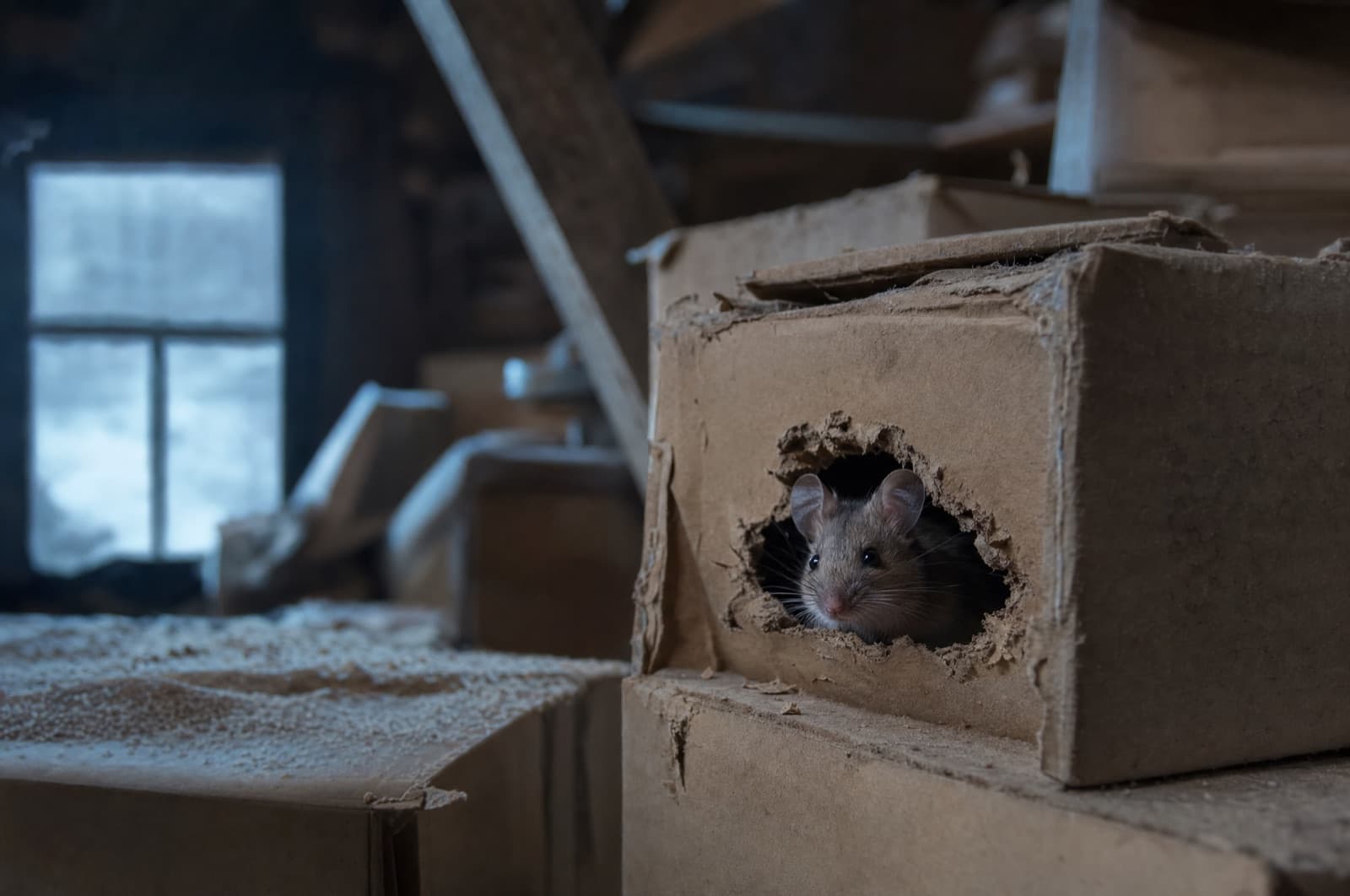
A house mouse in a gnawed cardboard storage box in a cold New Hampshire attic
Daniel Brady · NH-Licensed Pesticide Applicator · License #782664
Reviewed by Daniel Brady

Do rodents or insects damage insulation performance in winter?

Yes — primarily rodents, and it's a real performance loss
Yes, but primarily rodents rather than insects.Mice and rats tear insulation apart for nesting material and contaminate what's left with urine and droppings; shredded, compressed, soiled insulation loses the loft that gives it thermal performance in the first place. Overwintering insects — lady beetles, stink bugs, cluster flies — shelter in insulation and wall voids for the winter, but they don't chew, compress or otherwise meaningfully degrade the material, so the honest answer narrows almost entirely to what rodents do once they're inside.

At a glance

  • The verdict: Yes — primarily rodents, and it's a real performance loss
The honest answer

The short of it

The verdict
Yes — primarily rodents, and it's a real performance loss

Mice and rats shred and compress insulation for nesting and contaminate it with urine and droppings; overwintering insects shelter in it but don't meaningfully degrade it.

What actually happens

The busted assumption

Yes

What people assume

"Bugs in the attic are ruining my insulation." That's misplaced blame. Insects sheltering in an attic or wall void are a nuisance and, at most, a sign that a space is undisturbed and accessible — they aren't the source of any actual thermal-performance loss. Rodents are the real degraders, and the two shouldn't be lumped together just because both show up in the same winter spaces.

What actually happens

Purdue Extension documents that rodents damage structures through gnawing and nest-building, and use fibrous material — including insulation — as nesting material once they're established inside a wall, attic or crawlspace. That process tears apart the batting, compresses fill insulation, and contaminates the surrounding material with urine and droppings; Purdue Extension also notes rodent urine may act as an asthma trigger, which is a separate but related health note. Overwintering insects, by contrast, occupy the same general spaces (attics, wall voids) purely for shelter and do not shred, compress or otherwise physically alter insulation.

What it means for you
If you find nesting material, tunneling, or soiled insulation in your attic or walls, the fix is rodent exclusion first — sealing the entry points and removing the animals — followed by, where the insulation is clearly contaminated or torn up, safe cleanup or replacement of the affected material. The damage-class and repair-scope detail for that cleanup and replacement work belongs to /faq-pest-damage-and-risks, which owns that framework across the site; this page's job is the short winter verdict on whether insulation performance is actually affected.
In depth

The full picture

01

Rodents vs insects: two very different relationships with your insulation

It's worth separating these two groups clearly, because they interact with insulation in fundamentally different ways. Rodents treat insulation as a resource: Purdue Extension documents that mice and rats actively shred fibrous insulation to build nests, tearing apart batting and compressing loose-fill material in the process, and contaminating what remains with urine and droppings as they live in it through the winter.

Overwintering insects — Asian lady beetles, stink bugs, cluster flies, boxelder bugs — use the same general spaces for an entirely different reason. They're looking for a dark, undisturbed, insulated cavity to wait out the winter in, and they largely just sit there. There's no chewing, no nest-building, no compression. An attic full of dormant lady beetles is a nuisance; an attic with an active mouse nest is a material-performance problem.

02

Why shredded, compressed insulation actually underperforms

Insulation performance depends heavily on loft — the trapped air within fluffy, undisturbed fiberglass or cellulose is what actually resists heat transfer, not the raw material weight. When a rodent tears insulation apart to build a nest, it compresses and displaces that fill, physically reducing the loft in the affected area. Add urine and droppings, which can further mat and degrade fibrous material over time, and the insulation in a nested area functions noticeably worse than the surrounding undisturbed material, even though the rest of the attic or wall cavity may be entirely unaffected.

This is a localized effect around active or former nest sites rather than a whole-house insulation failure from a single mouse, but it compounds the longer a rodent problem goes unaddressed, since new nesting activity continues to spread the damage.

03

What to do about it

The order of operations matters here. Rodent exclusion — sealing the entry points that let mice or rats reach the insulation in the first place — comes first, since replacing or repairing insulation before closing off access simply invites the same damage to happen again. Once entry is addressed, contaminated or torn insulation can be assessed for cleanup or replacement.

The specifics of that cleanup and replacement — what scope of work is involved, how to think about it without price figures, and how it's classified as a repair — belong to /faq-pest-damage-and-risks, which owns that fuller framework across this site. This page's role is simply the honest winter verdict: yes, insulation performance really is affected, and the cause is almost entirely rodents rather than the insects sharing the same space.

Key takeaways
5 points
  • Rodents shred, compress and contaminate insulation for nesting, genuinely reducing its thermal performance in affected areas.
  • Overwintering insects (lady beetles, stink bugs, cluster flies) shelter in the same spaces but don't chew, compress or otherwise degrade insulation.
  • Insulation loft — not raw material weight — is what resists heat transfer, and that's exactly what rodent nesting destroys.
  • Rodent urine in contaminated insulation may also act as an asthma trigger, a related but separate health note.
  • Address rodent exclusion first, then assess insulation for cleanup or replacement — bridge to /faq-pest-damage-and-risks for that scope.
New Hampshire context

How this plays out in New Hampshire attics and walls

In southern and central NH, the rodents doing this damage are two species. The house mouse (Mus musculus) is the classic structure-invading commensal that ICWDM notes is active year-round and most likely to move indoors as temperatures cool in the fall. On wooded and rural lots -- common around Manchester, Bedford and the towns north of it -- the native white-footed mouse (Peromyscus leucopus) also moves in; ICWDM notes Peromyscus doesn't hibernate but may go torpid for a few days in severe cold. Both readily shred attic and wall-cavity insulation for nesting.

The timing is predictable here. NOAA data puts Manchester's first hard frost around October 19-29, and that cold snap is what pushes both species toward the warm cavities where your insulation lives. Sealing entry points before that frost window is the single most effective move -- once mice are nesting inside NH insulation over the winter, the loft loss and contamination are already underway.

  • NH-licensed #782664

    Southern New Hampshire

  • Family-owned

    Since 2017

  • Honest routing

    Even when it isn’t us

We serve these communities

ManchesterNashuaConcordDerryBedfordSalemHudsonAmherst

Insects are a nuisance in your attic. Rodents are the real degraders.

Seal the entry points first, then assess the insulation. If rodents are already nesting, exclusion and trapping are the real winter job for us.

Follow-up questions

Frequently asked

Sources & citations(2)
  1. Purdue Extension — The House Mouse

    Rodents shred/nest in fibrous insulation; urine as an asthma trigger

    extensionverified 2026-07-16
  2. US EPA — Asthma Triggers: Gain Control

    Rodent and cockroach allergens as documented asthma triggers

    govverified 2026-07-16

Written & reviewed by

Verified

Daniel Brady

NH-Licensed Pesticide Applicator · License #782664 (NHDAMF, RSA 430)

Daniel Brady is the New Hampshire–licensed applicator behind Anchor Pest Services, a family-owned pest control company serving the Manchester area since 2017.

Verify license

Last updated Jul 2026

Honest pest help for New Hampshire homes

We'll Tell You Which Pest Actually Matters Here.

Overwintering insects don't hurt your insulation. Rodents really do, and Anchor Pest Services' winter exclusion and trapping work stops that damage at the source. Family-owned since 2017, NH license #782664, serving Manchester, Nashua, Concord and nearby towns.

  • Honest advice — we name the actual cause, not every pest sharing the space
  • NH-licensed applicators (#782664) — free inspection, same-day service
  • Rodent exclusion and winter pest control across southern and central New Hampshire

NH License #782664 · No obligation · We answer in person