
Skip to content
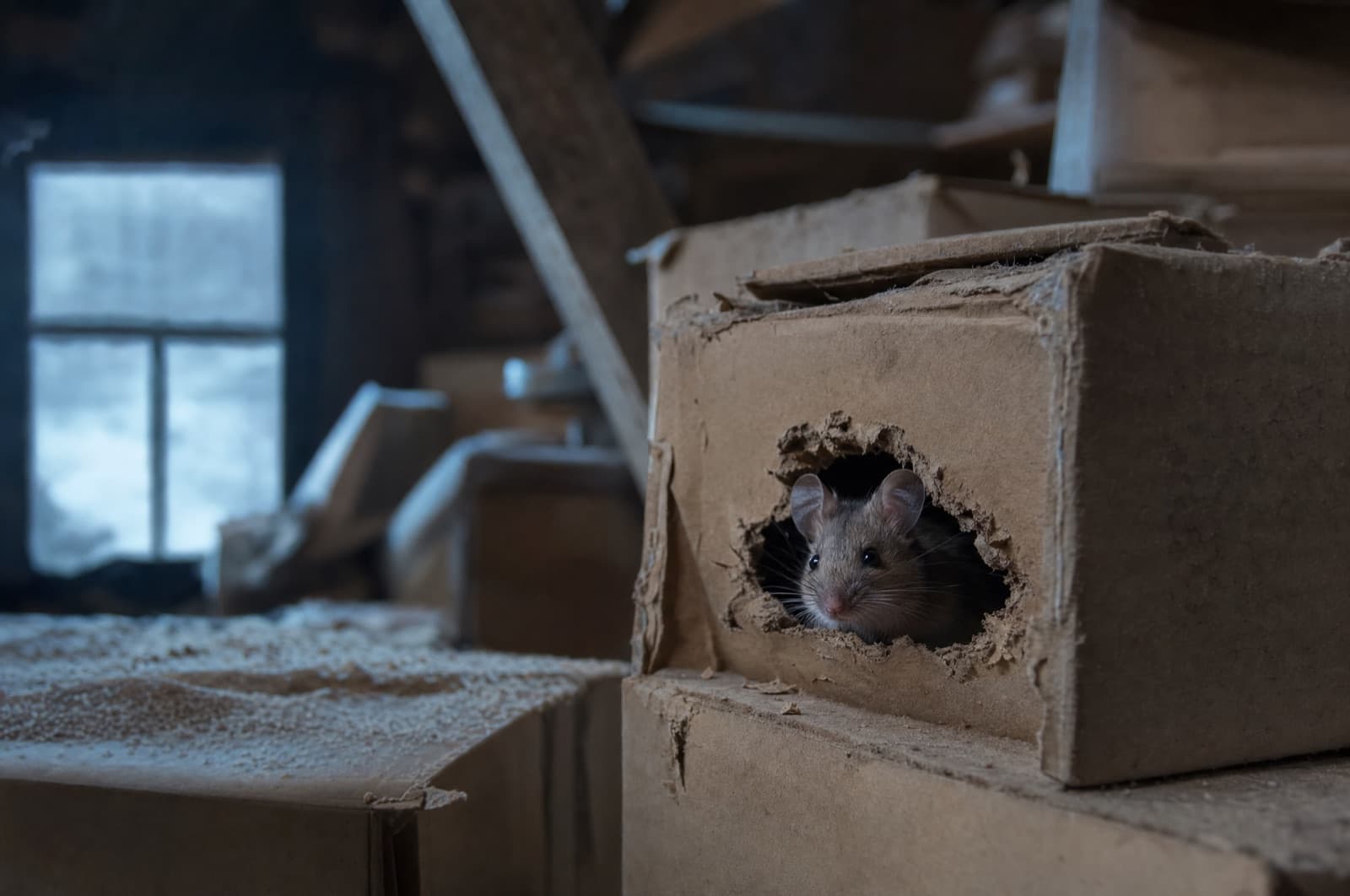
A house mouse in a gnawed cardboard storage box in a cold New Hampshire attic
Daniel Brady · NH-Licensed Pesticide Applicator · License #782664
Reviewed by Daniel Brady

How can homeowners monitor pest activity without professional service?

Worth doing
Homeowners can monitor pest activity effectively without hiring anyone, and this is worth doing on its own, not just as a stopgap.Non-toxic monitoring bait blocks in tamper-resistant stations, snap traps used as sentinels, and simple track detection, footprints or droppings on a dusty surface, or a light dusting of flour along a suspected runway, all reveal whether rodents are active and roughly where. A paper plug loosely placed in a suspected hole tells you whether that specific opening is still in use. This is genuine integrated pest management, not a lesser substitute for calling a professional.

At a glance

  • Verdict: Worth doing
  • Who does it: You
  • Effort: An afternoon
  • Payoff: Moderate
The honest answer

The short of it

The verdict
Worth doing

A flashlight, a dusty floor, and a snap trap monitor rodent activity as well as anything sold to you -- this is genuine, free, do-it-yourself pest management.

The one question under all of them

Is this actually worth doing?

Every winter job lands somewhere on one honest scale — from what genuinely matters to what our own industry is selling you. Here is where this one lands.

The job being graded
Worth doing

Setting up DIY monitoring -- sentinel snap traps, non-toxic monitoring bait blocks, track detection, and a paper-plug test on suspected entry holes

The scale
Who does it
You
Effort
An afternoon
Payoff
Moderate
What it actually does

Texas A&M School IPM's Action Plan for Rodents recommends placing "nontoxic monitoring bait blocks in tamper-resistant stations" and checking them regularly for feeding activity, which tells you where rodents are actually active without introducing anything toxic. UC IPM notes that "tracks or footprints can also indicate their presence," and recommends looking for droppings, gnaw marks, and tracks in areas of suspected activity. ICWDM's guidance adds that tracks and droppings show up clearly "on dusty surfaces," and that plugging holes with paper and checking a day or two later tells you which specific openings are still being used. A non-toxic bait-choice test, placing a few different non-toxic baits about a foot apart and checking over several days, identifies what the local population is actually drawn to before you commit to a trapping approach.

The line

Monitoring is just paying attention on a schedule -- the mouse tells you where it lives if you give it a dusty floor and a week.

Our honest lane

This page honestly routes work away from Anchor, and it should. DIY monitoring is the right call until escalating activity, persistent signs after sealing and trapping, in-wall or large infestations, or simply not wanting to handle droppings and the associated hantavirus precautions make it the wrong tool. Saying that plainly is what earns the credibility to also say 'call us in November' when rodent exclusion genuinely is the job.

In depth

The full picture

01

The monitoring toolkit that costs nothing but time

Non-toxic monitoring bait blocks, placed in tamper-resistant stations and checked on a schedule, tell you where feeding activity is concentrated without introducing any toxic product into the equation -- Texas A&M's School IPM program recommends exactly this as a monitoring step, distinct from control. Sentinel snap traps, set and checked regularly in likely runways, serve a similar purpose while also removing any animal they catch.

Track detection is the cheapest tool of all: a light dusting of flour or unscented talc along a suspected runway, or simply watching for footprints and droppings on an already-dusty surface, reveals activity within a day or two. ICWDM's guidance is direct that tracks and droppings show up clearly on dusty surfaces, which makes this a truly useful, zero-cost detection method rather than a folk remedy.

02

The paper-plug test and the bait-choice test

Two simple tests round out the DIY monitoring routine. Loosely plugging a suspected entry hole with paper and checking it a day or two later tells you whether that specific opening is currently in active use -- a disturbed or removed plug means yes, an undisturbed one means that hole, at least, isn't the current problem.

A non-toxic bait-choice test takes this a step further: placing several different non-toxic bait types a foot or so apart and checking over a few days shows you what the local rodent population actually prefers, which is useful information if you're about to set traps and want to bait them with something that will actually draw activity in.

03

Why this counts as worth doing, not busywork

It would be easy to dismiss DIY monitoring as a placeholder until you call a professional, but that undersells it. This is standard integrated pest management practice, recommended by extension and IPM programs specifically for homeowners, and it gives you real, actionable information: whether activity is present, roughly where, and whether it's increasing or decreasing over time. That's not nothing -- it's the same information a paid monitoring visit would give you, just gathered on your own schedule.

Where it stops being sufficient is when the information itself tells you the problem has outgrown a homeowner's tools: activity that keeps escalating despite trapping, signs in multiple rooms or walls at once, or a scale of infestation you don't want to handle the disposal and cleanup for yourself.

Key takeaways
5 points
  • Non-toxic monitoring bait blocks in tamper-resistant stations show you where feeding activity is concentrated without introducing anything toxic.
  • A light dusting of flour or talc along a suspected runway, or watching an already-dusty surface, reveals tracks and droppings within a day or two.
  • A paper plug loosely placed in a suspected hole tells you whether that specific opening is currently in active use.
  • A non-toxic bait-choice test reveals what the local rodent population actually prefers before you commit to a trapping approach.
  • This is genuine, extension-recommended integrated pest management -- not a lesser stand-in for professional service, and it routes work away from a pest company honestly.
New Hampshire context

DIY monitoring through a New Hampshire winter

Once the first sustained cold hits Manchester, typically in the weeks around the first hard frost of October 19 to 29, indoor rodent activity tends to climb, which makes this the season where a weekly monitoring routine pays off most. Checking bait stations, sentinel traps, and dusted runways on a consistent schedule through the winter catches an increase in activity early, while it's still a small, manageable problem.

If monitoring shows activity holding steady or increasing despite consistent trapping over a couple of weeks, that pattern -- not a single bad week -- is the honest signal that it's time to bring in a professional inspection rather than continue monitoring alone.

  • NH-licensed #782664

    Southern New Hampshire

  • Family-owned

    Since 2017

  • Honest routing

    Even when it isn’t us

We serve these communities

ManchesterNashuaConcordDerryBedfordSalemHudsonAmherst

Monitoring shows activity that isn't slowing down?

That pattern -- not a single bad week -- is the honest signal it's time for a professional inspection rather than more monitoring alone.

Follow-up questions

Frequently asked

Sources & citations(4)
  1. Texas A&M AgriLife School IPM — IPM Action Plan for Rodents

    Non-toxic monitoring bait blocks in tamper-resistant stations as standard IPM monitoring practice

    extensionverified 2026-07-16
  2. UC Statewide IPM Program — House Mouse

    Tracks, droppings and gnaw marks as sign-based detection methods homeowners can use

    extensionverified 2026-07-16
  3. ICWDM — Norway Rat Damage Prevention and Control Methods

    Track detection on dusty surfaces; paper-plug and bait-choice tests

    extensionverified 2026-07-16
  4. UNH Extension — How Can I Get Rid of the Mice in My House?

    Homeowner-level sign identification and sealing guidance for New Hampshire

    extensionverified 2026-07-16

Written & reviewed by

Verified

Daniel Brady

NH-Licensed Pesticide Applicator · License #782664 (NHDAMF, RSA 430)

Daniel Brady is the New Hampshire–licensed applicator behind Anchor Pest Services, a family-owned pest control company serving the Manchester area since 2017.

Verify license

Last updated Jul 2026

Honest pest help for New Hampshire homes

Monitor It Yourself. We're Here When the Pattern Changes.

DIY monitoring really works, and we'd rather tell you how to do it free than sell you a monitoring visit for something a dusted floor and a sentinel trap already tell you. Anchor Pest Services is worth calling when your own monitoring shows activity isn't slowing down. Family-owned since 2017, NH license #782664, serving Manchester, Nashua, Concord and nearby towns.

  • Honest advice — we'll tell you when DIY monitoring is truly enough
  • NH-licensed applicators (#782664) — free inspection, same-day service
  • Rodent inspection and exclusion across southern and central New Hampshire

NH License #782664 · No obligation · We answer in person