
Skip to content
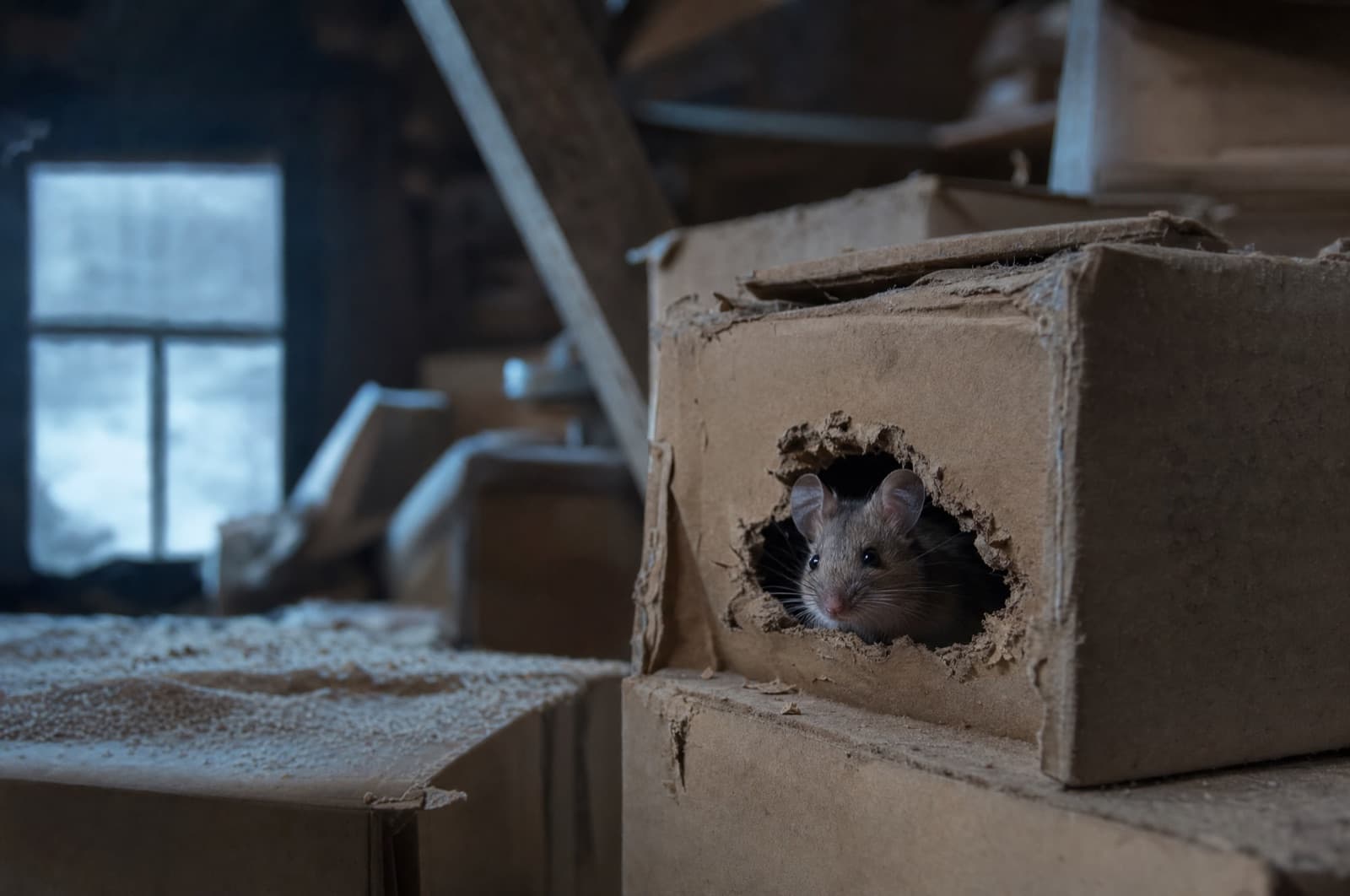
A house mouse in a gnawed cardboard storage box in a cold New Hampshire attic
Daniel Brady · NH-Licensed Pesticide Applicator · License #782664
Reviewed by Daniel Brady

How can I keep pests from entering through chimneys in winter?

Worth doing
Worth doing. An open chimney is a genuine winter entry point for raccoons, squirrels, birds and bats, and the fix — a properly sized, mesh-sided stainless chimney cap — is highly effective and long-lasting. But there's a real safety limit: never cover a flue itself with plain hardware cloth, which can ice over or rust and block carbon monoxide from escaping, especially on gas appliances. This is usually a you-with-a-ladder or chimney-sweep job, not a pesticide one, and it's narrower in scope than sealing the roofline or foundation.

At a glance

  • Verdict: Worth doing
  • Who does it: A trade
  • Effort: A service visit
  • Payoff: Moderate
The honest answer

The short of it

The verdict
Worth doing

A chimney without a cap is a hollow tree with a fireplace attached — and something will move in.

The one question under all of them

Is this actually worth doing?

Every winter job lands somewhere on one honest scale — from what genuinely matters to what our own industry is selling you. Here is where this one lands.

The job being graded
Worth doing

Installing or repairing a correctly sized, mesh-sided stainless steel chimney cap

The scale
Who does it
A trade
Effort
A service visit
Payoff
Moderate
What it actually does

It blocks animal entry while still venting combustion gases safely, which is a narrower engineering problem than it sounds. Raccoons climb flues looking for a denning site, and swifts, squirrels and bats treat an open flue as a ready-made cavity. A properly sized cap with mesh sides excludes all of them (extension.org). The critical caveat, flagged directly by wildlife-damage authorities: do not cover the flue opening itself with plain hardware cloth — it can rust, catch snow and ice, and block carbon monoxide from venting, which is a life-safety issue on any appliance and especially on gas systems.

The line

A chimney without a cap is a hollow tree with a fireplace attached — and something will move in.

Our honest lane

Chimney caps, and anything already living down the flue, are chimney-sweep and wildlife territory, not a pesticide job, and we'll say so and route you rather than try to sell a treatment for it. If there's a dead animal or an active nest in the flue, that's a removal-and-cleaning job first.

In depth

The full picture

01

What actually uses a chimney to get in

An uncapped chimney reads to wildlife the way a hollow tree does — dark, sheltered, vertical, and offering a warm updraft from the house below. Raccoons climb flues specifically to den, often in a chimney attached to an active fireplace; birds, notably chimney swifts, nest inside flues as a matter of course; and squirrels and bats will use an open flue opportunistically. None of this is unique to winter — it happens year-round — but winter raises the stakes, because an animal that gets down the flue and can't get back out is now trapped inside a wall of your house.

02

The fix, and the safety limit that matters more than the fix

A correctly sized chimney cap with mesh sides — not a solid cap, which would block the chimney's function entirely — excludes animals while letting smoke and gases vent normally. This is the standard, extension-endorsed answer, and it's durable once installed correctly.

The part worth being careful about: some guidance suggests covering an open flue with ordinary hardware cloth as a stopgap. Wildlife-damage authorities warn against this specifically, because hardware cloth over a flue opening can rust, ice over in a New Hampshire winter, and block the venting of carbon monoxide and other combustion byproducts — a genuine safety hazard, not a hypothetical one, particularly on gas-fired appliances that vent through the same flue. A purpose-built cap, sized and installed correctly, avoids this entirely. This is not a place to improvise with materials meant for a foundation vent.

Key takeaways
5 points
  • An open chimney is a real winter entry for raccoons (denning), birds including chimney swifts (nesting), squirrels and bats.
  • A properly sized, mesh-sided stainless chimney cap is the standard, durable fix — extension-endorsed and long-lasting.
  • Never cover a flue with plain hardware cloth — it can ice over, rust, and block carbon monoxide venting, a genuine safety risk especially on gas systems.
  • This is usually a you-with-a-ladder or chimney-sweep job, not a pesticide treatment.
  • A dead animal or active nest already in the flue needs removal and cleaning before or alongside capping.
New Hampshire context

Chimneys through a New Hampshire winter

Manchester's first hard frost typically lands between October 19 and 29 (NOAA), and that's also roughly when raccoons and other wildlife start prioritizing denning sites with reliable warmth — an active chimney flue qualifies. A cap installed before the season starts prevents the problem outright; one installed after an animal is already denned inside means removal has to happen first.

Ice is the added New Hampshire-specific risk: a flue covered with the wrong material, or a cap that isn't properly vented, can ice over during a hard freeze in a way it wouldn't in a milder climate, which is exactly why the hardware-cloth-on-the-flue shortcut is a genuine hazard here, not just elsewhere.

  • NH-licensed #782664

    Southern New Hampshire

  • Family-owned

    Since 2017

  • Honest routing

    Even when it isn’t us

We serve these communities

ManchesterNashuaConcordDerryBedfordSalemHudsonAmherst

Already have something denning in the flue?

That's a removal-and-cleaning job first, cap second. We'll tell you honestly which parts we handle and which need a chimney sweep.

Follow-up questions

Frequently asked

Sources & citations(3)
  1. ICWDM (Internet Center for Wildlife Damage Management) — Chimney Cap

    Chimney cap sizing and mesh; warning against hardware cloth over an active flue (carbon monoxide/ice risk)

    academicverified 2026-07-16
  2. extension.org (Wildlife Damage Management) — Rodent Exclusion Methods

    Chimney and vent cover guidance as part of structural exclusion

    extensionverified 2026-07-16
  3. NOAA — Manchester, NH freeze climatology

    Manchester first hard frost timing — the seasonal anchor for denning behavior and icing risk

    govverified 2026-07-16

Written & reviewed by

Verified

Daniel Brady

NH-Licensed Pesticide Applicator · License #782664 (NHDAMF, RSA 430)

Daniel Brady is the New Hampshire–licensed applicator behind Anchor Pest Services, a family-owned pest control company serving the Manchester area since 2017.

Verify license

Last updated Jul 2026

Honest pest help for New Hampshire homes

We'll Route You to a Chimney Sweep, Not Sell You a Treatment.

A chimney cap is a chimney sweep's job, and we'd rather tell you that than pretend it's ours. Anchor Pest Services genuinely helps when something is already denned or nesting in the flue and needs safe removal. Family-owned since 2017, NH license #782664, serving Manchester, Nashua, Concord and nearby towns.

  • Honest advice — we'll tell you when the job belongs to a chimney sweep, not us
  • NH-licensed applicators (#782664) — free inspection, same-day service
  • Wildlife removal and inspection across southern and central New Hampshire

NH License #782664 · No obligation · We answer in person