
Skip to content
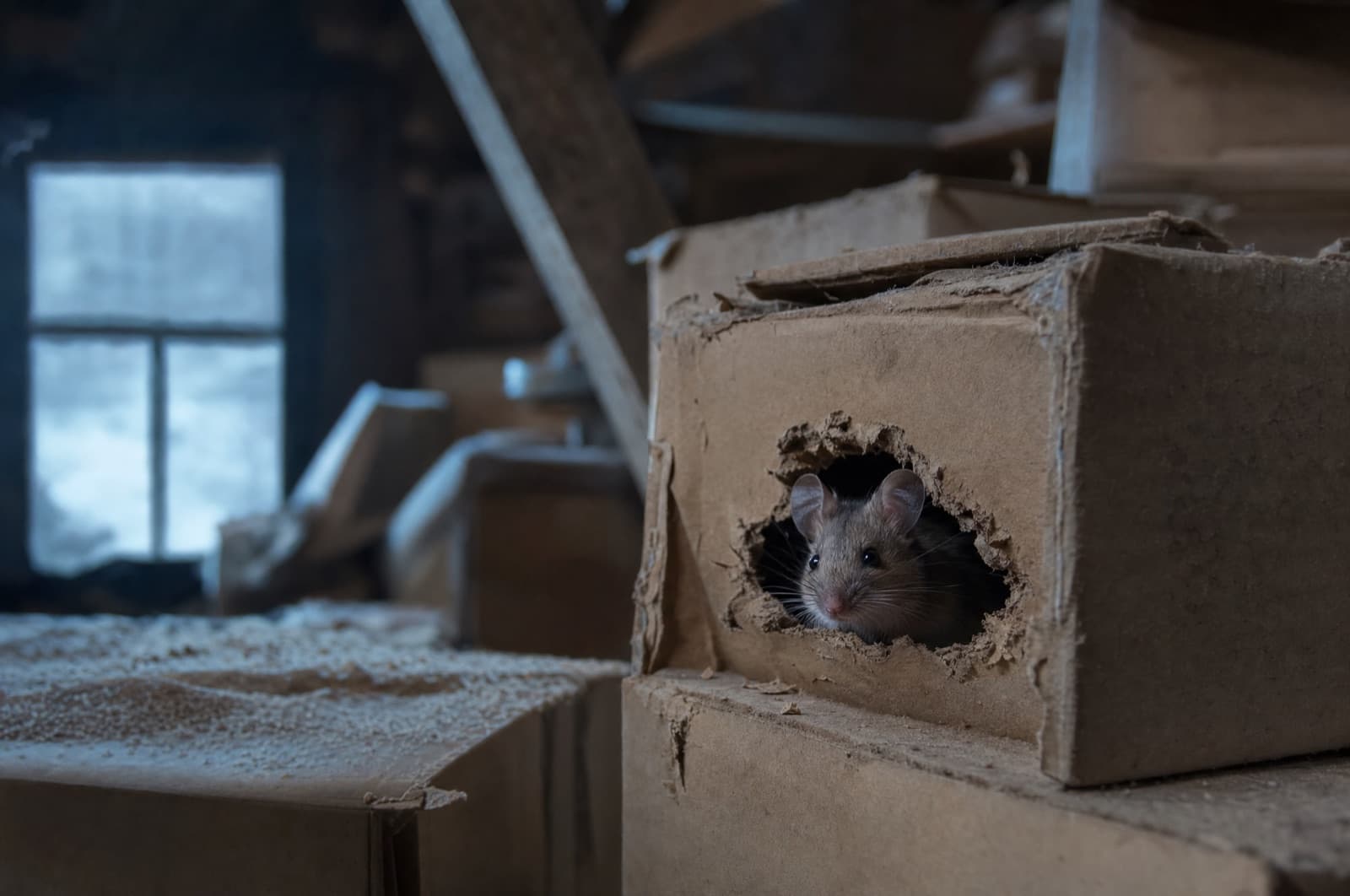
A house mouse in a gnawed cardboard storage box in a cold New Hampshire attic
Daniel Brady · NH-Licensed Pesticide Applicator · License #782664
Reviewed by Daniel Brady

How do I evaluate a pest service for winter prevention?

Do this first
Do this first. Evaluate a winter pest service on three verifiable things: the NH applicator license number and category (general household work should fall under F1), whether they'll produce a WRITTEN inspection report naming specific entry points, and whether the plan includes sealing those points rather than only a recurring spray. EPA's own consumer guidance warns that no government agency endorses any pest control company and that pesticides shouldn't be applied unless pests are actually present — so treat vague "certified" or "guaranteed" marketing skeptically and ask for the specifics instead.

At a glance

  • Verdict: Do this first
  • Who does it: You
  • Effort: An afternoon
  • Payoff: High
The honest answer

The short of it

The verdict
Do this first

Ask for the license number and category, a written inspection, and an exclusion plan — those three questions separate real prevention from a recurring bill.

The one question under all of them

Is this actually worth doing?

Every winter job lands somewhere on one honest scale — from what genuinely matters to what our own industry is selling you. Here is where this one lands.

The job being graded
Do this first

Vetting a pest control company before hiring for winter prevention

The scale
Who does it
You
Effort
An afternoon
Payoff
High
What it actually does

It confirms three things that actually determine whether you get real prevention or a recurring bill: legal authorization (the license and category), documentation of the actual problem (a written inspection identifying entry points), and whether the fix addresses entry — the durable variable — rather than only knocking down whatever's currently active. EPA's consumer guidance for hiring a pest control service directly recommends checking licensing and getting a written agreement before work begins; none of that requires trusting marketing language, because all three are things you can verify yourself in an afternoon.

The line

Prevention is a sealed gap and a written report — not a monthly spray on a calendar.

Our honest lane

Anchor invites this exact scrutiny: our license is NH #782664, category F1 under RSA 430, checkable through the state's Division of Pesticide Control, and every winter visit produces a written finding of entry points plus a sealing recommendation, not just a spray log. If a company can't answer these three questions plainly and immediately, that's the actual red flag — more informative than any award badge or five-star claim on their homepage.

In depth

The full picture

01

Check one: the license number and category

Ask directly for the NH applicator license number and category before discussing anything else. New Hampshire licenses commercial pesticide applicators by category under RSA 430 and the Pes 100–1100 rules; general household and structural pest work — including winter rodent exclusion — falls under category F1. A legitimate company answers this instantly, because it's a matter of public regulatory record, not a trade secret. A company that answers with reassurance about "certified technicians" instead of a number and category is answering a different, easier question.

02

Check two: a written inspection, not a verbal impression

Ask whether the visit produces a written inspection report identifying specific entry points, evidence found, and the conditions driving pressure — clutter, food storage, moisture, exterior firewood or vegetation against the foundation. A verbal "looks like you've got some activity" is not documentation; it can't support a warranty claim, an insurance question, or a second opinion. New Hampshire actually requires applicators to keep an application record under Pes 901.02 with seven specific items including product, EPA registration number, and date — asking for a copy of that, plus the inspection findings, costs nothing and gives you something to hold onto.

03

Check three: does the plan seal, or does it only spray

Ask directly whether the proposed plan includes physically sealing identified entry points, or whether it's recurring pesticide application on a calendar regardless of findings. This is the single most consequential question on the list, because exclusion — sealing gaps with durable materials — is what actually stops rodents from re-entering; a spray schedule alone knocks down the current population and lets the next one back in through the same unclosed hole. EPA's guidance is explicit that pesticides "should not be applied unless the pests are actually present" — a plan built entirely around a recurring spray, with no sealing component, is optimized for repeat visits, not for prevention.

Key takeaways
5 points
  • Check three verifiable things: license number and category, a written inspection report, and whether the plan seals entry points or only sprays.
  • NH's category F1 covers general structural/household pest work — ask for it by name.
  • A written inspection report, not a verbal impression, is what supports a warranty claim or a second opinion later.
  • A plan built only around recurring pesticide, with no sealing component, is optimized for repeat visits rather than prevention.
  • EPA's own consumer guidance recommends checking licensing directly, since no government agency endorses any pest control company.
New Hampshire context

Evaluating a service ahead of a Manchester-area winter

Manchester's first hard frost lands around October 19 to 29 in a typical year (NOAA) — the point at which commensal rodents start pushing toward heated structures in earnest. That makes September into early October the window to be running this evaluation, not January after activity has already shown up. A company that can produce its license and category, walk your foundation and attic access points, and hand you a written list of what needs sealing before the frost is doing the job; one that offers only a calendar-based spray schedule is offering something else.

  • NH-licensed #782664

    Southern New Hampshire

  • Family-owned

    Since 2017

  • Honest routing

    Even when it isn’t us

We serve these communities

ManchesterNashuaConcordDerryBedfordSalemHudsonAmherst

Ask us the three questions first.

License number and category, a written inspection, and an exclusion plan — we'll answer all three before you decide anything.

Follow-up questions

Frequently asked

Sources & citations(4)
  1. U.S. EPA — Tips for Selecting a Pest Control Service

    Check licensing directly; no government agency endorses any pest control company; pesticides should be applied only when pests are present

    govverified 2026-07-16
  2. NH Dept. of Agriculture, Markets & Food — Pesticide Licensing

    NH commercial applicator licensing framework and category system

    stateverified 2026-07-16
  3. NH Pes 901.02 — Daily Record Keeping

    NH's 7 required application record items and 2-year retention requirement

    stateverified 2026-07-16
  4. UC IPM — House Mouse

    Exclusion (sealing entry points) as the most successful and permanent form of rodent control

    extensionverified 2026-07-16

Written & reviewed by

Verified

Daniel Brady

NH-Licensed Pesticide Applicator · License #782664 (NHDAMF, RSA 430)

Daniel Brady is the New Hampshire–licensed applicator behind Anchor Pest Services, a family-owned pest control company serving the Manchester area since 2017.

Verify license

Last updated Jul 2026

Honest pest help for New Hampshire homes

Evaluate Us the Same Way — We'll Pass.

License number and category: NH #782664, F1. Written inspection: every winter visit produces one, naming actual entry points. Exclusion, not just spray: our plans are built to seal, not to keep you on a recurring bill. Ask us the same three questions you'd ask anyone else. Family-owned since 2017.

  • NH license #782664, category F1 (RSA 430, NHDAMF) — verifiable on request
  • Written inspection findings on every winter visit, not a verbal impression
  • Exclusion-first plans across southern and central New Hampshire

NH License #782664 · No obligation · We answer in person