
Skip to content
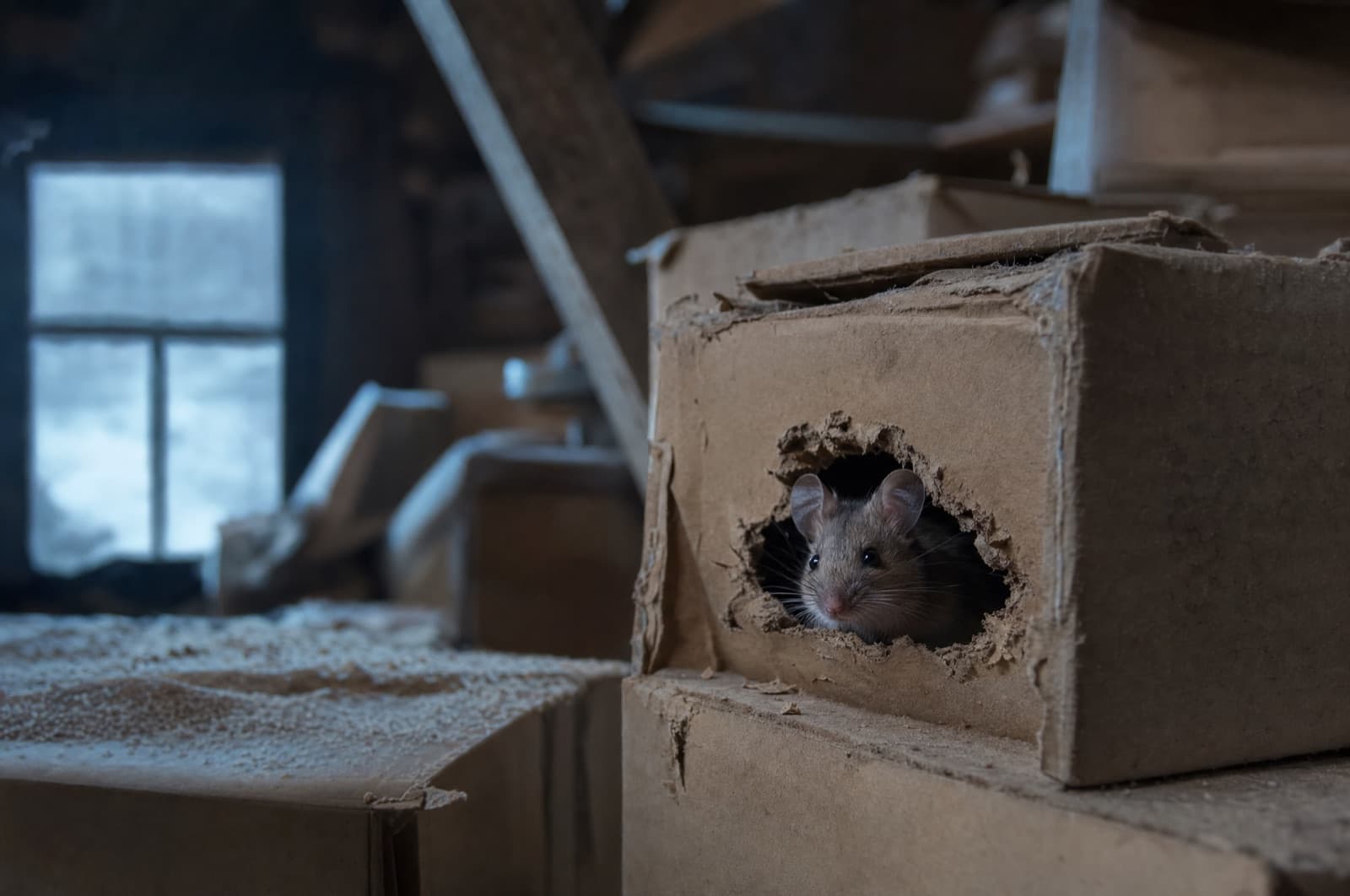
A house mouse in a gnawed cardboard storage box in a cold New Hampshire attic
Daniel Brady · NH-Licensed Pesticide Applicator · License #782664
Reviewed by Daniel Brady

How do I seal gaps around windows and doors to stop pest entry in winter?

Do this first
Do this first. A mouse can squeeze through a gap as small as a quarter inch — about the width of a pencil — and a rat through a half inch, so any daylight around a window frame or under a door is an open door (CDC). The fix is a caulk gun for cracks around frames, a proper door sweep at the threshold, and copper or steel mesh backed by sealant for larger gaps — an ordinary afternoon, no contractor required. It also cuts your heating bill, because the same gap that lets a mouse in lets your furnace's heat out.

At a glance

  • Verdict: Do this first
  • Who does it: You
  • Effort: An afternoon
  • Payoff: High
The honest answer

The short of it

The verdict
Do this first

A mouse doesn't pick your lock — it walks through the gap you never sealed, and that gap is the width of a pencil.

The one question under all of them

Is this actually worth doing?

Every winter job lands somewhere on one honest scale — from what genuinely matters to what our own industry is selling you. Here is where this one lands.

The job being graded
Do this first

Sealing gaps at window frames, door thresholds and utility penetrations with caulk, backer rod, weatherstripping, door sweeps, and metal mesh for anything wider than a pencil

The scale
Who does it
You
Effort
An afternoon
Payoff
High
What it actually does

It removes the physical opening, and the physical opening is the whole game: a mouse's skull is the limiting factor, so any gap a quarter inch or wider is a functioning door regardless of what's on either side of it (CDC; UNL Extension). Caulk and expanding foam alone are a partial fix, not a durable one — both are soft enough that a rodent under pressure gnaws straight through them. The durable version packs copper or stainless steel mesh into the gap first, then seals over it, so there's nothing soft left to chew.

The line

A mouse doesn't pick your lock — it walks through the gap you never sealed, and that gap is the width of a pencil.

Our honest lane

This is a DIY job through and through, and we'll say so plainly: a caulk gun, a door sweep and an afternoon closes almost everything a homeowner can see. Anchor is worth calling when you've sealed everything you can find and pests are still getting in — that almost always means a hidden entry point (behind a service panel, under the sill plate, at the roofline) that takes a professional inspection to locate, not more caulk.

In depth

The full picture

01

Why a pencil-width gap is a functioning door

It's tempting to treat a small gap as a small problem. It isn't, because the constraint on a mouse isn't willingness — it's skeletal. House mice can flatten and pass through any opening roughly a quarter inch across, and rats manage a half inch, because their skulls, not their bodies, set the limit (CDC). A crack under a door frame, a gap where trim meets siding, a worn weatherstrip letting daylight through — all of it reads to a mouse the same way an open door reads to you.

That's also why this cluster ranks the sealing job above almost everything else in the house: windows and doors sit at ground level, in high numbers, and most homes have several failing simultaneously without anyone noticing, because nobody inspects a door threshold looking for a mouse-sized gap. You inspect it looking for a draft.

02

The materials that actually hold

The honest fix has two layers, and skipping the first one is the most common mistake. Caulk (silicone or polyurethane) and quality weatherstripping close small gaps and cracks around frames — that's layer one, and it's genuinely effective against drafts and small openings. But caulk and expanding foam are both soft, and a motivated rodent gnaws through soft material the same way it gnaws through a plastic tote (UNL Extension). For any gap wide enough to matter — around utility penetrations, larger trim gaps, anywhere you can see actual daylight — pack copper mesh or stainless steel wool into the opening first, then caulk over it. The metal is what a rodent can't defeat; the caulk just finishes the job cosmetically.

At doors, a solid door sweep with no corner gaps closes the single most common failure point. Corners fail first because the sweep compresses unevenly against an uneven threshold — check them specifically, not just the middle of the door.

03

Why this job ranks poorly online even though it matters most

This exact question currently ranks on page two of search results despite carrying more search volume than any other page in this cluster — a sign the existing answers online are generic enough that people don't trust them, not that the advice is wrong. The honest reason to trust this one: it's the same short list of materials (caulk, backer rod, door sweep, metal mesh) recommended by CDC and land-grant extension services for controlling indoor rodents generally, not a seasonal product. Winter just adds the deadline — do it before the first hard frost pushes mice toward your house looking for exactly this kind of gap.

04

The energy-bill bonus nobody mentions

Sealing for pests and sealing for heat loss are the same errand, not two separate ones. Air leakage typically accounts for a large share of a home's heating and cooling energy use, and the EPA estimates homeowners save an average of 15% on heating and cooling costs by air sealing and adding insulation (ENERGY STAR). A gap wide enough for a mouse is also a gap wide enough for warm air to leave and cold air to enter — so this afternoon of work pays twice. We cover the full energy-loss mechanism and repair scope, rather than pest entry specifically, on our page about pest-made holes and drafts.

Key takeaways
6 points
  • Mice need only a quarter-inch gap; rats need a half inch — that's the CDC threshold, and it's a functioning door, not a nuisance.
  • Caulk and expanding foam alone are a partial fix — both are soft enough for a rodent to gnaw through under pressure.
  • The durable fix is metal first (copper mesh or steel wool), sealant second — that's what a rodent actually can't defeat.
  • Door sweep corners fail before the middle does; check them specifically.
  • This is homeowner work in an afternoon, and it also lowers your heating bill by closing the same gaps that leak air.
  • Call a pro only once you've sealed everything visible and pests are still getting in — that means a hidden entry point.
New Hampshire context

Timing it to a New Hampshire winter

Manchester's first hard frost typically lands between October 19 and 29 (NOAA), and that date is the real deadline for this job — not a marketing one. As outdoor temperatures drop and food gets scarce, rodents actively search for exactly this kind of gap, and a house that was fine in August can have new arrivals within weeks of the first cold snap.

If you're reading this after frost has already hit, the job doesn't change — seal what you find now, because a sealed-in population is worse than an open gap. Just expect that if you already hear activity indoors, sealing alone won't remove what's already inside; that's a trapping question, not a sealing one.

  • NH-licensed #782664

    Southern New Hampshire

  • Family-owned

    Since 2017

  • Honest routing

    Even when it isn’t us

We serve these communities

ManchesterNashuaConcordDerryBedfordSalemHudsonAmherst

Sealed everything you can see and still hearing scratching?

That means a hidden entry point — roofline, behind a service panel, under the sill plate. That's the part worth a professional inspection.

Follow-up questions

Frequently asked

Sources & citations(5)
  1. CDC — Seal Up! Rodent control and exclusion

    Quarter-inch mouse / half-inch rat entry threshold; sealing materials; door gap guidance

    govverified 2026-07-16
  2. University of Nebraska–Lincoln Extension — Controlling House Mice (G1105)

    Rodent gnawing behavior defeating caulk/foam; exclusion materials

    extensionverified 2026-07-16
  3. extension.org (Wildlife Damage Management) — Rodent Exclusion Methods

    Metal mesh backing for durable exclusion at gaps and penetrations

    extensionverified 2026-07-16
  4. ENERGY STAR — Why Seal and Insulate

    Average 15% heating/cooling savings from air sealing and insulation

    govverified 2026-07-16
  5. NOAA — Manchester, NH freeze climatology

    Manchester first hard frost typically ~Oct 19-29 — the seasonal deadline for sealing

    govverified 2026-07-16

Written & reviewed by

Verified

Daniel Brady

NH-Licensed Pesticide Applicator · License #782664 (NHDAMF, RSA 430)

Daniel Brady is the New Hampshire–licensed applicator behind Anchor Pest Services, a family-owned pest control company serving the Manchester area since 2017.

Verify license

Last updated Jul 2026

Honest pest help for New Hampshire homes

We'll Tell You When a Caulk Gun Beats a Service Call.

Sealing windows and doors is a homeowner job, plain and simple, and we'd rather say so than sell a visit for it. Anchor Pest Services is worth calling when you've done the sealing and something's still getting in — that's a hidden entry point, and winter is peak season for finding out the hard way. Family-owned since 2017, NH license #782664, serving Manchester, Nashua, Concord and nearby towns.

  • Honest advice — we'll tell you when the fix is a hardware-store trip, not a service call
  • NH-licensed applicators (#782664) — free inspection, same-day service
  • Rodent exclusion and winter pest inspections across southern and central New Hampshire

NH License #782664 · No obligation · We answer in person