
Skip to content
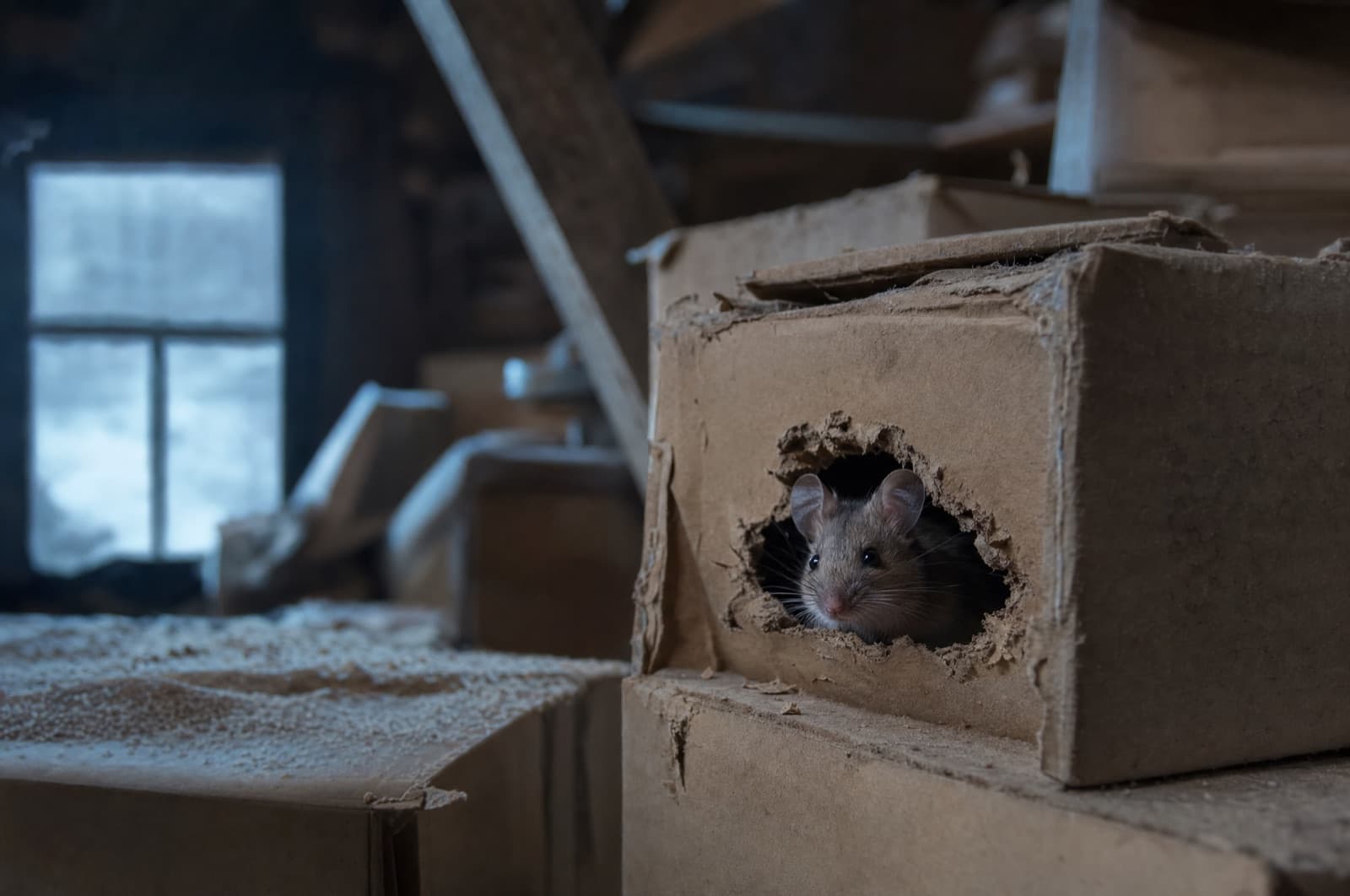
A house mouse in a gnawed cardboard storage box in a cold New Hampshire attic
Daniel Brady · NH-Licensed Pesticide Applicator · License #782664
Reviewed by Daniel Brady

How do I tell if pest damage happened during winter?

Limited picture
You can estimate whether damage is recent, by fresh, light-colored gnaw marks and glossy droppings, versus old, by gray, crumbly droppings and darkened, oxidized gnaw marks.But confirming that damage happened specifically during winter is limited, and a large share of winter home damage isn't pests at all. Ice dams, attic condensation, and roof leaks produce water stains and rot that closely mimic or coincide with pest damage, and mistaking one for the other is a common and costly error.

At a glance

  • The verdict: Limited picture
The honest answer

The short of it

The verdict
Limited picture

You can estimate whether damage is recent versus old -- but pinning it to winter specifically, and telling it apart from ice-dam or condensation damage, is inherently limited.

What you would actually see

The signs — and the honest limit

How much warning you get
Limited warning
  • Fresh versus aged droppings and gnaw marks

    Late

    Fresh sign is dark, moist-looking, glossy, and cuts into wood cleanly and lightly. Old sign is gray, dry, crumbly, and any exposed wood has darkened. This dates activity roughly to recent versus not-recent, which is useful, but it does not pin an exact calendar date or season.

    Easily confused with

    Damage from a prior owner or tenant, which can look freshly aged rather than truly current if you're not familiar with how quickly droppings and gnaw marks change appearance.

  • Water stains, darkened or rotting sheathing, rusted roofing nails in the attic

    Already established

    This is the critical honest flag on this page. These are classic ice-dam or condensation signs, not pest damage. UMN Extension notes ice-dam meltwater "finds cracks and openings in the exterior roof covering and flows into the attic space," sometimes reaching walls or ceiling finishes. Building science research documents the same pattern from attic air leakage and condensation.

    Easily confused with

    This is the confusable item itself -- these signs are frequently billed as pest damage when the actual cause is moisture. Do not let anyone attribute a water stain to rodents or insects without ruling out ice dams and condensation first.

  • Chewed wiring or insulation

    Already established

    Clearly pest-caused damage, distinct from moisture damage -- rodent gnawing on wiring insulation is a documented risk with real fire-safety implications.

    Easily confused with

    Heat or age-related degradation of insulation, or marks left by a prior electrical repair unrelated to any pest activity.

What you cannot see
3
  • You cannot see the exact moment damage occurred, and you cannot see inside walls or under a slab to trace when gnawing started.
  • A stain that grows visibly during or after rain points toward a leak; staining that appears mainly after cold, dry nights or shows widespread attic frost points toward condensation -- but distinguishing the two conclusively often requires a building-science-informed look, not a glance.
  • Dating pest damage to a specific season is an estimate based on freshness, not a certainty, and no visual inspection can confirm the exact month damage began.
How often to actually look
Inspect the attic and ceilings after the first freeze-thaw cycles and again after any heavy snow load. Photograph stains with dates, and track whether they grow after rain (a leak) or appear mainly after a cold snap (condensation) -- that pattern over a few weeks tells you more than a single look ever will.
In depth

The full picture

01

What freshness can tell you, honestly

Freshness is a real, usable signal. Fresh gnaw marks are light-colored and cut cleanly into the wood grain; over time, exposed wood darkens and the edges of the cut soften. Fresh droppings are dark and glossy; aged droppings dry out to gray and crumbly. Comparing sign across a few different spots in the same area -- some clearly fresh, some clearly old -- gives you a rough read on whether activity is ongoing or has stopped.

What this cannot do is give you a calendar date. "Recent" might mean this week or it might mean sometime in the last month or two, and there's no reliable way to narrow that further from appearance alone.

02

The mistake that costs homeowners the most: blaming moisture on pests

This is the single most important thing on this page, because it's a mistake that leads to spending money on the wrong fix. Water stains, darkened or rotting roof sheathing, and rusted roofing nails in an attic are classic signatures of ice dams and condensation, not pest activity. UMN Extension describes how ice-dam meltwater backs up under roof shingles and "flows into the attic space," sometimes reaching exterior walls or ceiling finishes. Building science research independently documents attic air leakage causing the same kind of condensation and staining.

A company or a homeowner that attributes this kind of staining to rodents or insects without first ruling out ice dams and condensation is very likely making the wrong call -- and it's an easy mistake to make, because both problems can produce dark staining and softened wood in the same attic spaces.

03

Telling the two apart, and what to do with the answer

The practical test is pattern over time, not a single look. A stain that visibly grows after rain, or that appears right after a heavy snowmelt, points toward a leak or ice-dam mechanism. Staining that shows up mainly after a hard, dry cold snap, especially alongside visible attic frost, points toward condensation from air leakage rather than water intrusion from outside.

Once you've separated genuine pest damage -- chewed wiring, gnaw marks in wood, nesting material -- from moisture damage, the response differs meaningfully. Pest damage routes to cleanup, a patch, or a professional inspection depending on scope; moisture damage routes to a roofer or an insulation contractor addressing the ice-dam or air-sealing problem at its source, which pest control cannot fix.

Key takeaways
5 points
  • Fresh sign (dark, glossy droppings; light-colored gnaw marks) versus old sign (gray, crumbly; darkened wood) tells you recent versus not-recent, not an exact date.
  • A large share of winter attic and ceiling damage is ice dams and condensation, not pests -- and the two produce very similar-looking stains.
  • A stain that grows after rain points to a leak; staining after cold, dry nights with attic frost points to condensation.
  • Chewed wiring and gnaw marks in wood are clearly pest-caused; water stains and rotting sheathing usually are not.
  • Repair scope, not a dollar figure, answers the cost question: cleanup, a DIY patch, a trade visit for insulation or wiring, or a contractor project for structural or moisture remediation.
New Hampshire context

Reading winter damage in a New Hampshire attic

New Hampshire's freeze-thaw cycles and heavy snow loads make ice dams and attic condensation a routine winter event, not a rare one -- which is exactly why this page's honest limit matters here specifically. Inspecting the attic and ceilings after the first freeze-thaw cycles, and again after any significant snow load, catches both moisture damage and pest damage while they're still relatively fresh and easier to distinguish.

Standard homeowners insurance policies generally exclude rodent and insect damage as preventable maintenance, which is a separate reason to get the diagnosis right before assuming a repair is either covered or pest-related. Whatever the finding, the repair scope ranges from a wipe-up cleanup to a DIY patch, to a trade visit for insulation or wiring, to a licensed contractor project for structural or moisture remediation -- there's no flat cost here, only scope.

  • NH-licensed #782664

    Southern New Hampshire

  • Family-owned

    Since 2017

  • Honest routing

    Even when it isn’t us

We serve these communities

ManchesterNashuaConcordDerryBedfordSalemHudsonAmherst

Not sure if that attic stain is pests or ice dams?

Getting the diagnosis right matters before any repair. We can tell you honestly which one you're looking at.

Follow-up questions

Frequently asked

Sources & citations(3)
  1. University of Minnesota Extension — Dealing with and Preventing Ice Dams

    Ice-dam meltwater mechanism causing attic and wall staining that mimics pest damage

    extensionverified 2026-07-16
  2. Building Science Corporation — BSD-135: Ice Dams

    Attic air leakage and condensation as a distinct cause of winter staining

    academicverified 2026-07-16
  3. University of Nebraska–Lincoln Extension — House Mouse (G1105)

    Freshness indicators for droppings and gnaw marks

    extensionverified 2026-07-16

Written & reviewed by

Verified

Daniel Brady

NH-Licensed Pesticide Applicator · License #782664 (NHDAMF, RSA 430)

Daniel Brady is the New Hampshire–licensed applicator behind Anchor Pest Services, a family-owned pest control company serving the Manchester area since 2017.

Verify license

Last updated Jul 2026

Honest pest help for New Hampshire homes

We'll Tell You When It Isn't Pests.

A lot of winter attic damage in New Hampshire is ice dams and condensation, not rodents or insects -- and we'd rather tell you that than treat a moisture problem pest control can't fix. Where Anchor Pest Services helps is confirming real pest damage and routing anything else to the right trade. Family-owned since 2017, NH license #782664, serving Manchester, Nashua, Concord and nearby towns.

  • Honest diagnosis — we'll say when it's moisture, not pests
  • NH-licensed applicators (#782664) — free inspection, same-day service
  • Pest damage assessment across southern and central New Hampshire

NH License #782664 · No obligation · We answer in person