
Skip to content
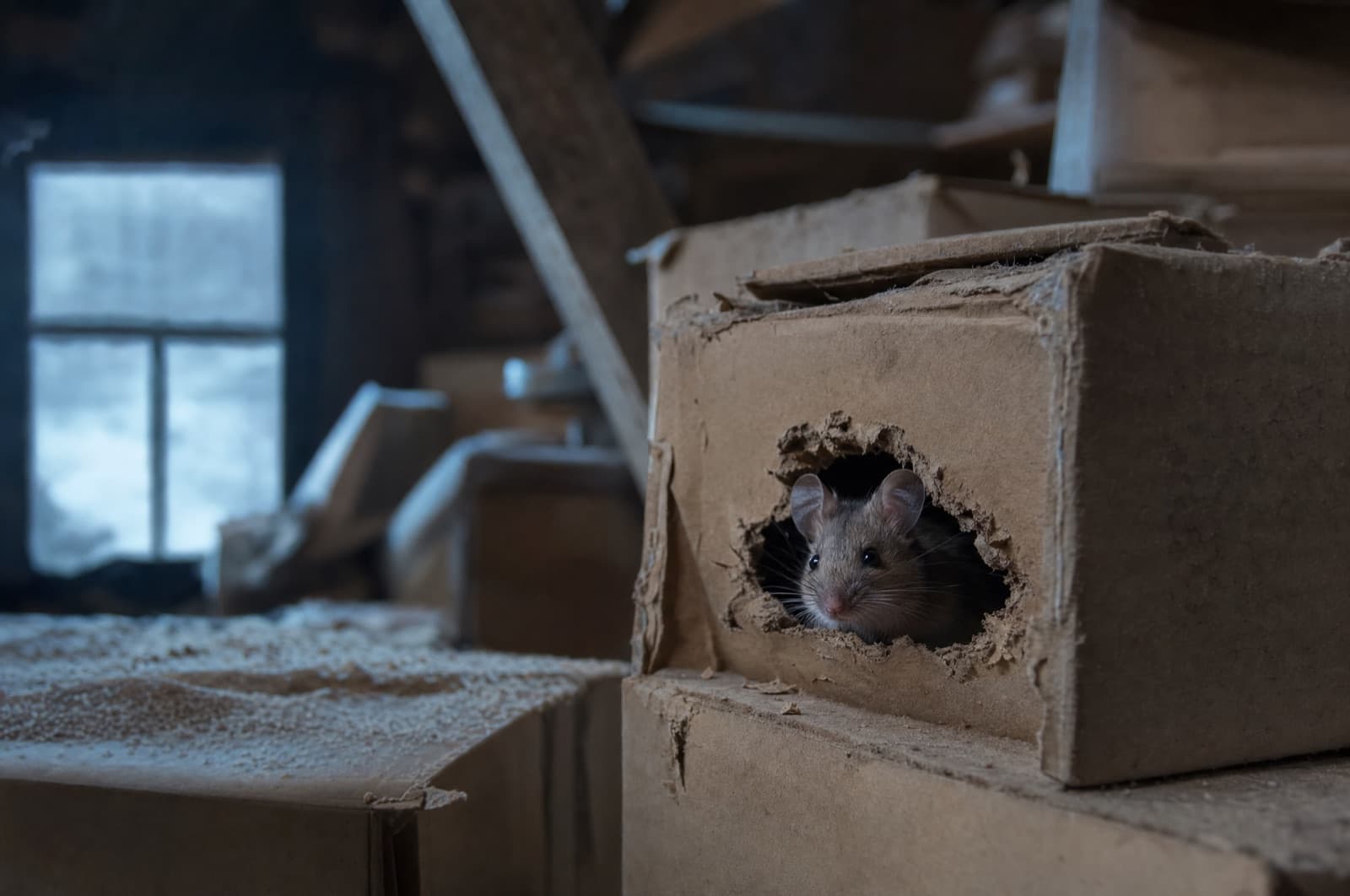
A house mouse in a gnawed cardboard storage box in a cold New Hampshire attic
Daniel Brady · NH-Licensed Pesticide Applicator · License #782664
Reviewed by Daniel Brady

How do I winter-proof my home against pests?

Ranked by evidence
Winter-proofing is the full plan: exclusion first, then storage, then a clean perimeter, then monitoring, done before Manchester's first hard frost (roughly October 19 to 29, NOAA).Ranked by payoff, sealing quarter-inch-plus gaps at the foundation, doors and vents comes first, followed by switching stored food to metal or glass, keeping a clean foundation buffer, and setting snap traps early where you see activity. Skip the repellents entirely — they're the one item on this list that doesn't work. Most of it is a homeowner with an afternoon; a professional is for active infestations and hidden entries you can't find yourself.

At a glance

  • The verdict: Ranked by evidence
The honest answer

The short of it

The verdict
Ranked by evidence

Winter-proofing is a caulk gun, metal containers and a fall afternoon — not a product you buy.

The roll-up

Ranked by what actually pays off

The full winter-prep action plan against pests — every category of task, ranked by payoff, not just entry-point locations. See our vulnerability-map page for WHERE to look, and our DIY-steps page for the homeowner-only subset of this same plan.

Ranked by
Evidence-backed payoff per unit of effort — what actually reduces winter pest risk the most, not what feels the most like 'doing something.'
RankItemGradeWho does itNote
01Seal quarter-inch-plus gaps at the foundation, sill plate, penetrations, doors and garage with metal mesh plus sealantDo firstYouThe core of the whole job — CDC and extension guidance are unanimous on this being the highest-leverage step.
02Screen vents (attic, crawl space, gable, soffit) with quarter-inch hardware clothDo firstYou + a ladderCloses the climber and crawl-space entries that ground-level sealing misses.
03Store food, including pet food, in metal or glass rather than plastic binsDo firstYouRemoves the attractant; rodents chew plastic easily, as our hub's #1 page documents in depth.
04Keep a clean, roughly three-foot weed- and debris-free buffer at the foundation; move woodpiles away from the houseWorth itYouRemoves harborage and nesting cover close to the structure.
05Set snap traps early wherever you see droppings or activityWorth itYouMonitoring and knockdown in one step; viewable results, no secondary-poisoning risk.
06Ultrasonic plug-ins and essential-oil repellentsSkip itNobodyNo reliable evidence of effectiveness; the FTC has a decades-long enforcement history against ultrasonic device claims.
What people get wrong
The expected answer to 'how do I winter-proof my home' is to buy something — a plug-in, a spray, a subscription box of repellents. The honest answer is that winter-proofing is unglamorous manual sealing and storage work, done in the fall, and the product aisle is mostly theater. The one truly time-sensitive point on this whole list is doing it before the first hard frost drives rodents indoors — everything else is important but not date-specific in the way sealing is.
In depth

The full picture

01

This is the full plan — here's how it differs from our other two overviews

Three overview pages in this cluster look similar and answer different questions on purpose. Our vulnerability-map page ranks physical locations on a house — the where. This page ranks the entire winter-prep action plan — sealing, storage, perimeter maintenance and monitoring together — the full what. Our DIY-steps page takes this same plan and narrows it down to only the steps a homeowner can do without hiring anyone. If you want the complete picture including the two vent-screening and gap-sealing tasks that sometimes need a ladder or a trade, you're in the right place.

02

Why sealing and storage outrank everything else

The first three items on this list — sealing gaps, screening vents, and switching to metal or glass storage — account for the large majority of the actual payoff, because they address the two things a rodent needs to establish itself: a way in, and a reason to stay. Sealing removes the way in. Metal and glass storage removes the food scent that makes staying worthwhile. Everything below rank three is real and worth doing, but it's secondary — a clean foundation buffer and early trapping matter more once the first three steps are already handled, not instead of them.

03

Why repellents sit at the bottom, not just low

Ultrasonic plug-in devices and essential-oil or scent-based repellents are the one category on this list with no reliable evidence behind them, and it isn't a new or contested finding — the FTC issued warning letters to more than sixty manufacturers and retailers of ultrasonic pest-control devices over their efficacy claims, and brought law enforcement actions against several companies for the same reason in the years before that (FTC). Rodents habituate to sound and generally are not repelled by scent in any durable way. This is the one item on the list that isn't 'lower priority' — it's the one that doesn't work, and money or effort spent here is money not spent on the sealing and storage that actually does.

Key takeaways
6 points
  • This is the FULL winter-prep plan — see the vulnerability map for WHERE and the DIY-steps page for the homeowner-only subset.
  • Sealing quarter-inch-plus gaps is the single highest-leverage step and should happen first.
  • Metal or glass food storage removes the attractant that makes an entry worth staying for.
  • A clean foundation buffer and early trapping are real, secondary steps once sealing and storage are handled.
  • Skip ultrasonic and scent-based repellents entirely — the FTC has enforced against ultrasonic device claims for decades.
  • The one truly date-sensitive step is sealing before the first hard frost; everything else matters but isn't as time-critical.
New Hampshire context

Timing the plan to a New Hampshire winter

Manchester's first hard frost typically arrives between October 19 and 29 (NOAA), and that date is the real deadline behind the whole plan — as outdoor temperatures drop, rodents actively search for exactly the kind of gaps and stored food this plan addresses. Working through the list in September or early October, rather than after the first snow, means sealing and storage are done before the search intensifies rather than during it.

If you're reading this mid-winter with an active problem already, the plan doesn't change, but the order does: address any active population with trapping first, then work down this list so it doesn't happen again next year.

  • NH-licensed #782664

    Southern New Hampshire

  • Family-owned

    Since 2017

  • Honest routing

    Even when it isn’t us

We serve these communities

ManchesterNashuaConcordDerryBedfordSalemHudsonAmherst

Worked through the plan and still finding activity?

That usually means a hidden entry point or an existing population — worth a free inspection before winter progresses further.

Follow-up questions

Frequently asked

Sources & citations(5)
  1. CDC — Seal Up! Rodent control and exclusion

    Sealing as the top-ranked winter-proofing step; storage guidance

    govverified 2026-07-16
  2. University of Nebraska–Lincoln Extension — Rodent-Proof Construction (G1530)

    Sealing materials and foundation buffer guidance

    extensionverified 2026-07-16
  3. UNH Cooperative Extension — How Can I Get Rid of the Mice in My House?

    New Hampshire-specific exclusion-first control framing

    extensionverified 2026-07-16
  4. FTC — FTC Warns Manufacturers, Retailers of Ultrasonic Pest-control Devices

    Enforcement history against unsupported ultrasonic device efficacy claims

    govverified 2026-07-16
  5. NOAA — Manchester, NH freeze climatology

    Manchester first hard frost timing — the deadline behind the whole plan

    govverified 2026-07-16

Written & reviewed by

Verified

Daniel Brady

NH-Licensed Pesticide Applicator · License #782664 (NHDAMF, RSA 430)

Daniel Brady is the New Hampshire–licensed applicator behind Anchor Pest Services, a family-owned pest control company serving the Manchester area since 2017.

Verify license

Last updated Jul 2026

Honest pest help for New Hampshire homes

Most of This Plan Is Yours. We're Here for What's Left.

Sealing, screening and storage are homeowner work, and we'd rather tell you that than sell a package around it. Anchor Pest Services is worth calling for the entries you can't find yourself or a population that's already established, and winter is peak season for exactly that. Family-owned since 2017, NH license #782664, serving Manchester, Nashua, Concord and nearby towns.

  • Honest advice — most of winter-proofing is a homeowner's afternoon, not a service call
  • NH-licensed applicators (#782664) — free inspection, same-day service
  • Full-home exclusion inspections across southern and central New Hampshire

NH License #782664 · No obligation · We answer in person