
Skip to content
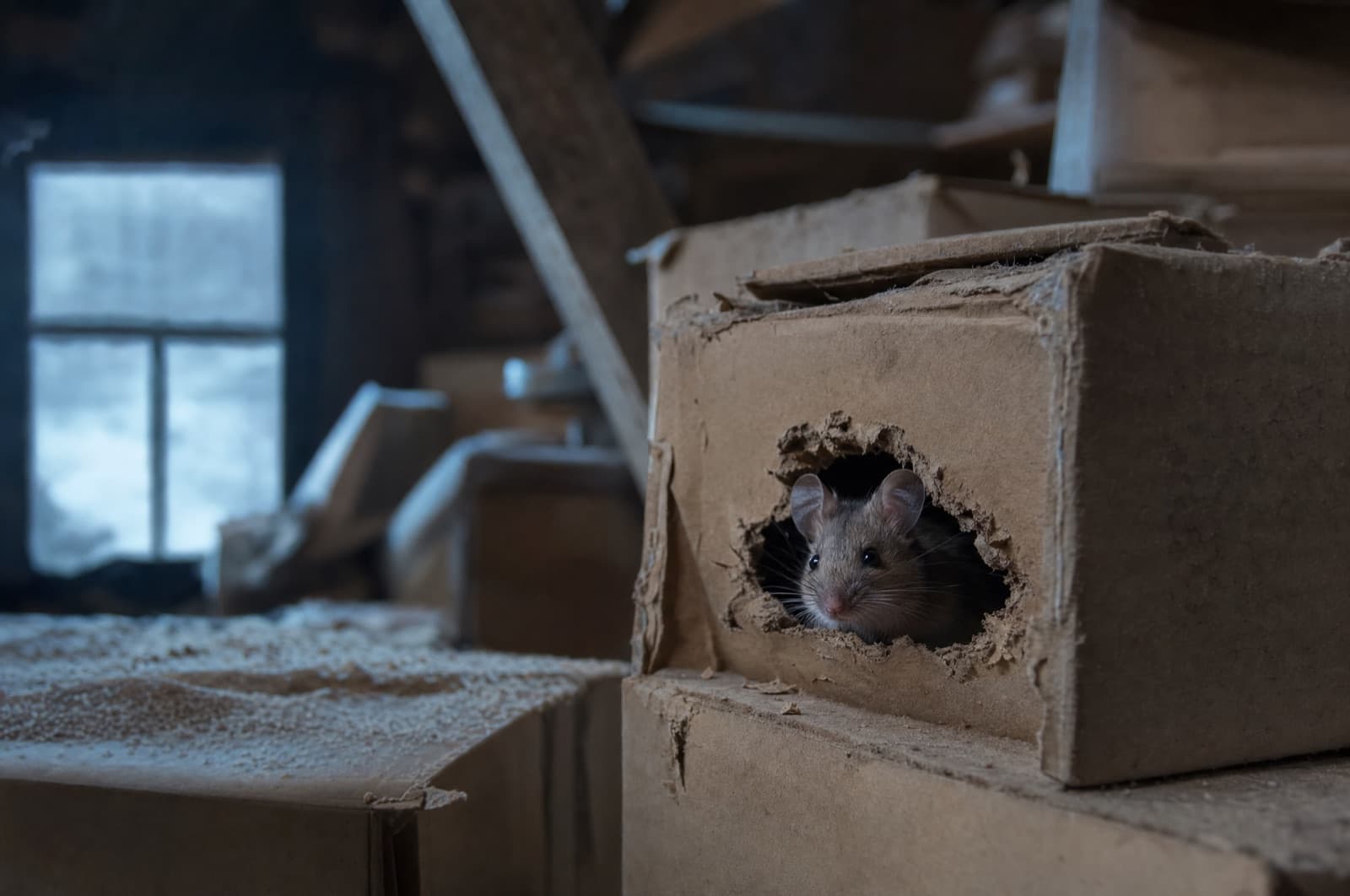
A house mouse in a gnawed cardboard storage box in a cold New Hampshire attic
Daniel Brady · NH-Licensed Pesticide Applicator · License #782664
Reviewed by Daniel Brady

How does foundation type in homes affect pest entry in winter?

Moderate factor
Moderate factor, and one you can't change but can fully manage.Foundation type shapes your entry-point profile: a vented crawl space or an older fieldstone or rubble foundation, common in older New Hampshire homes, offers far more quarter-inch-plus gaps than a poured concrete slab. But the honest finding is that this is 'partly changeable' in effect, even though you literally cannot rebuild your foundation — because nearly every opening any foundation type creates is sealable with mortar, hydraulic cement, hardware cloth and metal mesh. Foundation type multiplies or reduces the sealing work; it never eliminates the need for it.

At a glance

  • The verdict: Moderate factor
The honest answer

The short of it

The verdict
Moderate factor

Slab, crawl space or old fieldstone basement — foundation type sets how much sealing your house needs, not whether it needs any.

Why your house

How much this factor matters

Foundation type — poured concrete slab vs. vented crawl space vs. older fieldstone/rubble basementModerate factor
Why

Mice and rats enter low, at the sill plate, foundation cracks, and utility penetrations, so a foundation's construction directly sets how many of those openings exist. A vented crawl space adds an entire category of vent openings that a slab-on-grade house doesn't have. Older fieldstone or rubble foundations, common in pre-war New Hampshire construction, have mortar joints that soften and degrade with age, and softened mortar is both easier for rodents to enlarge and a poor anchor for later exclusion hardware (UNL Extension; extension.org). A newer poured-concrete foundation has far fewer natural openings by construction, but it isn't immune — it still has a sill plate, a door threshold, and utility penetrations, all of which are equally functional entry points regardless of what the foundation is made of.

No — you cannot change this
You can't change what your house was built on, and you don't need to. What matters is sealing what your specific foundation type actually has: mortar or hydraulic cement for cracks and degraded joints in an older masonry foundation, quarter-inch hardware cloth over every crawl-space vent, and metal mesh backed by sealant at every utility penetration regardless of foundation type. A clean, roughly three-foot buffer of gravel or bare ground around the foundation, free of weeds and debris, discourages burrowing and nesting near the structure (UNL Extension). None of this requires changing the foundation — it requires treating your foundation type as a checklist of where to look first.

Assessed from: University of Nebraska–Lincoln Extension — Rodent-Proof Construction (G1530)

In depth

The full picture

01

Why foundation type is a real factor, not a myth

It would be convenient if foundation type didn't matter, but it genuinely does — a vented crawl-space foundation simply has more physical openings by design than a poured slab, and older masonry has material properties (softening mortar) that a newer poured foundation doesn't share. This isn't superstition; it's construction. A house with a rubble or fieldstone foundation, common in older New Hampshire housing stock, has irregular joints that were never airtight to begin with and that loosen further with decades of freeze-thaw cycling.

02

The myth worth busting: 'slab homes are pest-proof'

The counter-mistake is assuming a poured concrete slab solves the problem entirely. It doesn't. A slab foundation has dramatically fewer natural gaps than a crawl space or an old rubble basement, but it still has a sill plate where the wood framing meets the concrete, a door threshold at every exterior entry, and utility penetrations for water, gas, electrical and HVAC lines — every one of which is exactly as functional an entry point on a slab home as on any other foundation type. 'Slab' reduces the count of vulnerabilities; it does not reduce any single vulnerability to zero.

03

Why 'no, you can't change it' doesn't mean you're stuck

The honest answer to whether you can change your foundation type is no — nobody replaces a foundation to solve a pest problem. But that's a narrower question than it sounds, because changing the foundation was never the fix. Every opening a foundation type creates, from a crawl-space vent to a crumbling mortar joint, is independently sealable with ordinary materials: hydraulic cement and mortar for masonry cracks, hardware cloth for vents, metal mesh and sealant for penetrations. The practical takeaway is that foundation type tells you where to concentrate your inspection and sealing effort, not that you need a structural remedy.

Key takeaways
6 points
  • Foundation type is a moderate, real risk factor — it sets your entry-point profile, not your fate.
  • Vented crawl spaces and older fieldstone/rubble foundations offer more quarter-inch-plus gaps than a poured slab.
  • Softened, aged mortar in older masonry foundations is easier for rodents to enlarge and harder to seal against permanently.
  • 'Slab homes are pest-proof' is a myth — every foundation type keeps its sill plate, door thresholds and utility penetrations.
  • You can't change your foundation type, but you can seal nearly every opening it creates with mortar, hydraulic cement, hardware cloth and metal mesh.
  • A clean, roughly three-foot buffer around the foundation, free of weeds and debris, discourages burrowing regardless of foundation type.
New Hampshire context

Foundation age in New Hampshire housing stock

Manchester's first hard frost typically arrives between October 19 and 29 (NOAA), and older New Hampshire homes — a meaningful share of the region's housing stock — are more likely to sit on fieldstone, rubble, or early poured foundations with decades of settling and mortar wear behind them. That doesn't make an older home a lost cause; it means the fall inspection should specifically include foundation joints and mortar condition, not just the obvious gaps around doors and windows.

If your home has a vented crawl space specifically, see our page on whether crawl spaces are major winter entry points for the vent-screening detail that applies regardless of the foundation's age.

  • NH-licensed #782664

    Southern New Hampshire

  • Family-owned

    Since 2017

  • Honest routing

    Even when it isn’t us

We serve these communities

ManchesterNashuaConcordDerryBedfordSalemHudsonAmherst

Not sure what your foundation type actually needs?

A free inspection identifies exactly which gaps your specific foundation creates — no need to guess or rebuild anything.

Follow-up questions

Frequently asked

Sources & citations(4)
  1. University of Nebraska–Lincoln Extension — Rodent-Proof Construction (G1530)

    Entry behavior at sill plate/foundation cracks; foundation buffer guidance; mortar condition

    extensionverified 2026-07-16
  2. extension.org (Wildlife Damage Management) — Rodent Exclusion Methods

    Foundation-type entry-point profiles and sealing materials by opening type

    extensionverified 2026-07-16
  3. CDC — Seal Up! Rodent control and exclusion

    Foundation gap sealing as core rodent exclusion guidance

    govverified 2026-07-16
  4. NOAA — Manchester, NH freeze climatology

    Manchester first hard frost timing — the seasonal anchor for foundation inspection

    govverified 2026-07-16

Written & reviewed by

Verified

Daniel Brady

NH-Licensed Pesticide Applicator · License #782664 (NHDAMF, RSA 430)

Daniel Brady is the New Hampshire–licensed applicator behind Anchor Pest Services, a family-owned pest control company serving the Manchester area since 2017.

Verify license

Last updated Jul 2026

Honest pest help for New Hampshire homes

Your Foundation Sets the Checklist. We'll Help You Read It.

You can't change your foundation type, and you don't need to — every opening it creates is sealable. Anchor Pest Services can walk an older New Hampshire foundation and flag exactly which mortar joints, vents or penetrations need attention. Family-owned since 2017, NH license #782664, serving Manchester, Nashua, Concord and nearby towns.

  • Honest advice — foundation type is a checklist, not a renovation
  • NH-licensed applicators (#782664) — free inspection, same-day service
  • Foundation and crawl-space rodent inspections across southern and central New Hampshire

NH License #782664 · No obligation · We answer in person