
Skip to content
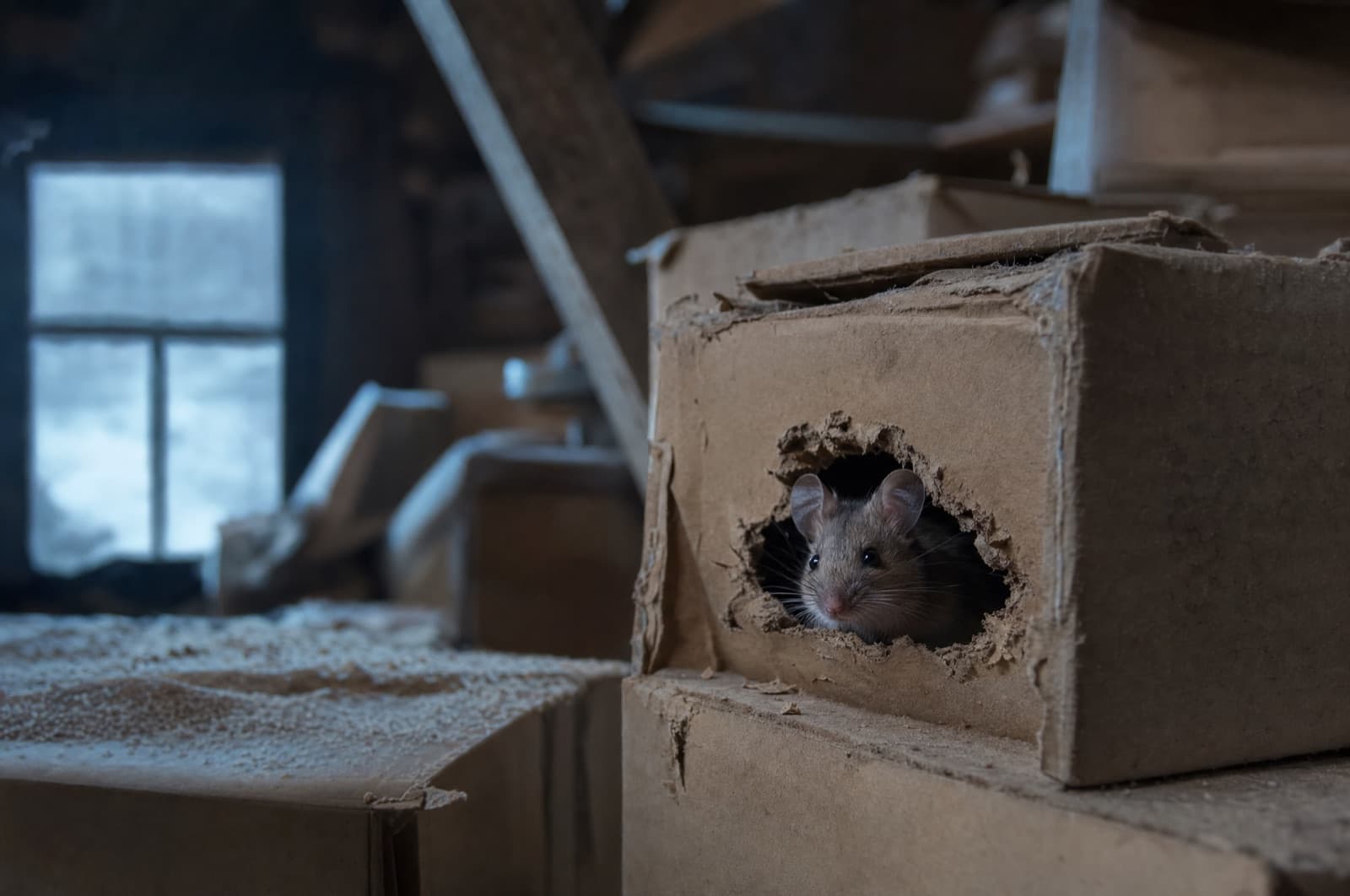
A house mouse in a gnawed cardboard storage box in a cold New Hampshire attic
Daniel Brady · NH-Licensed Pesticide Applicator · License #782664
Reviewed by Daniel Brady

How does snow or ice increase pest entry in homes?

It depends — and this is the cluster's most myth-prone question
It depends, and this is the question in this cluster where the honest answer matters most, because it's the one most often oversold.Snow and ice do not themselves create pest entry — pests enter through gaps that already exist, and the true drivers are the cold, which pushes pests indoors, and the freeze-thaw cycle, which slowly widens foundation cracks over a season. Snow does contribute indirectly: it provides concealed subnivean runways that let rodents reach a foundation unseen, and heavy snow can bank up against low entry points that would otherwise be visible and easy to check. But the actionable truth doesn't change — the entry point, not the weather, is the problem you can actually fix.

At a glance

  • The verdict: It depends — and this is the cluster's most myth-prone question
The honest answer

The short of it

The verdict
It depends — and this is the cluster's most myth-prone question

Snow and ice don't open a home to pests by themselves. They correlate with the cold that drives pests indoors and the freeze-thaw cycle that slowly widens existing gaps — but the entry point was always the real cause.

What actually happens

The busted assumption

It depends

What people assume

That snow or ice is an independent cause of 'increased entry' that a seasonal pest service specifically addresses. The weather is a correlate of the real drivers, not the mechanism itself: the actual cause is unsealed gaps combined with cold-driven pest behavior. Treating a snowy or icy winter as inherently more entry-prone than a mild one, independent of whether gaps have been sealed, overstates what the weather itself is doing.

What actually happens

Rodents exploit openings that already exist rather than creating new ones. CDC states a mouse fits through a gap about a quarter-inch wide, roughly pencil-width, and a rat through about half an inch, and recommends sealing with steel wool, caulk, hardware cloth, cement, or metal sheeting — materials rodents can't easily gnaw through. UNH Extension's core mouse-control advice is to keep rodents from getting inside 'to begin with,' by 'sealing up all exterior cracks around the house, paying special attention to the foundation and where pipes and utilities enter the home.' Snow's genuine contribution is concealment and reach, not creation of new openings: Penn State Extension notes 'under the cover of snow, meadow voles may travel safely into areas they would not normally venture,' and University of Nebraska–Lincoln Extension observes that 'voles from adjacent areas… may use the cover of snow to invade even the best manicured property.' Separately, freeze-thaw cycling really does widen existing cracks that water gets into — uncontested foundation physics, covered in more depth on this cluster's foundation-moisture page.

What it means for you
Treat 'snow and ice increase entry' as a reminder to seal existing gaps, not as a reason to buy a winter-specific spraying service that implies the weather itself is the problem. Walk the foundation and seal every gap a quarter-inch or larger with rodent-proof materials from CDC's list, fit door sweeps where daylight shows underneath exterior doors, and screen any open vents. Do this in fall, before snow banks up against low points and before the ground freezes, so you can still see and physically reach everything you're sealing.
In depth

The full picture

01

Why this question invites the most overselling in the cluster

Of all seven questions in this cluster, this is the one phrased in a way that most directly implies a chemical or seasonal-service answer — 'snow and ice increase entry' sounds like it's describing a new, weather-driven risk that requires a matching weather-driven response. The honest answer runs the other direction: nothing about snow or ice physically creates a new hole in your house. Every entry point a rodent or insect uses in winter was already there; the weather changes the pest's behavior and, in a couple of specific ways, changes what you can see, but it doesn't create the opening itself.

02

What snow and ice really do contribute

Two effects are real and worth taking seriously, both covered in more depth elsewhere in this cluster. First, snow cover creates the subnivean zone — a well-documented insulated space that lets small rodents travel across a yard hidden from predators and from view — and snow banked directly against a foundation plausibly extends that concealment right up to the exterior wall, letting rodents approach an existing gap without you ever seeing the approach. Second, freeze-thaw cycling from ice and meltwater genuinely widens existing cracks over a season, through the roughly 9% volume expansion water undergoes when it freezes; a hairline crack this fall can be a meaningfully larger crack by spring after repeated freeze-thaw cycles.

Both of these are real, sourced mechanisms — but notice that both work by acting on something that already existed: a gap, or a crack. Neither one manufactures an entry point from an otherwise sealed wall.

03

The unsealed gap is still the thing you can fix

This is the practical payoff of getting the mechanism right. If you believed snow and ice themselves caused increased pest entry, the natural response would be a seasonal treatment timed to snowfall — which doesn't actually intercept the mechanism at all. Understanding that the real drivers are cold-driven behavior and pre-existing gaps points you toward the thing that actually works: sealing gaps before the ground freezes and before meaningful snow accumulates, while you can still see, measure, and physically reach every quarter-inch opening around your foundation, utility penetrations, and low vents.

Key takeaways
6 points
  • Snow and ice don't create new pest entry points — every gap a pest uses in winter was already there before the weather changed.
  • The genuine drivers are cold-driven pest behavior and the freeze-thaw cycle, which gradually widens existing cracks.
  • Snow cover does provide real concealment for rodent movement toward a foundation via the subnivean zone.
  • CDC's quarter-inch (mouse) and half-inch (rat) entry thresholds define what actually needs sealing, regardless of season.
  • The fix is the same one this whole hub keeps returning to: seal gaps in fall, before frost and before snow accumulates.
  • Treat 'snow and ice increase entry' as a prompt to seal, not as a reason to buy a weather-specific pest treatment.
New Hampshire context

Sealing before a New Hampshire winter, not during it

Manchester's first hard frost lands roughly October 19 to 29 in a typical year (NOAA), and meaningful snow accumulation generally follows within weeks. That window — before frost, before snow — is the last practical chance to walk the foundation and see every gap clearly, since afterward the ground is frozen (making some sealing work harder) and snow cover can obscure low points against the foundation entirely.

A New Hampshire homeowner who seals in September or early October addresses this cluster's honest finding directly: by the time cold-driven pest pressure and snow cover both arrive, the entry points that would have been exploited are already closed.

  • NH-licensed #782664

    Southern New Hampshire

  • Family-owned

    Since 2017

  • Honest routing

    Even when it isn’t us

We serve these communities

ManchesterNashuaConcordDerryBedfordSalemHudsonAmherst

The weather isn't the cause. The unsealed gap is.

Sealing before frost and snow is a homeowner project with a caulk gun and hardware cloth. If you need help finding the gaps, that's where a professional inspection helps.

Follow-up questions

Frequently asked

Sources & citations(5)
  1. CDC — Seal Up! Rodent control and exclusion

    Quarter-inch mouse / half-inch rat entry threshold; rodent-proof sealing materials

    govverified 2026-07-16
  2. UNH Cooperative Extension — How Can I Get Rid of the Mice in My House?

    Sealing exterior cracks, especially at the foundation and utility penetrations, as the core exclusion strategy

    extensionverified 2026-07-16
  3. Penn State Extension — Voles

    Under cover of snow, meadow voles travel safely into areas they would not normally venture

    extensionverified 2026-07-16
  4. University of Nebraska–Lincoln Extension — Controlling Vole Damage (NebGuide G887)

    Voles use cover of snow to invade even well-maintained properties

    extensionverified 2026-07-16
  5. NOAA — Manchester, NH freeze climatology

    Manchester first hard frost typically ~Oct 19-29

    govverified 2026-07-16

Written & reviewed by

Verified

Daniel Brady

NH-Licensed Pesticide Applicator · License #782664 (NHDAMF, RSA 430)

Daniel Brady is the New Hampshire–licensed applicator behind Anchor Pest Services, a family-owned pest control company serving the Manchester area since 2017.

Verify license

Last updated Jul 2026

Honest pest help for New Hampshire homes

No Winter Weather Treatment. Just Sealed Gaps.

Snow and ice don't cause pest entry on their own — an unsealed gap does. Anchor Pest Services offers honest foundation inspection and exclusion, timed ahead of New Hampshire's winter pressure. Family-owned since 2017, NH license #782664, serving Manchester, Nashua, Concord and nearby towns.

  • Honest advice — we'll tell you when the weather isn't the real cause
  • NH-licensed applicators (#782664) — free inspection, same-day service
  • Rodent and overwintering-insect exclusion across southern and central New Hampshire

NH License #782664 · No obligation · We answer in person