
Skip to content
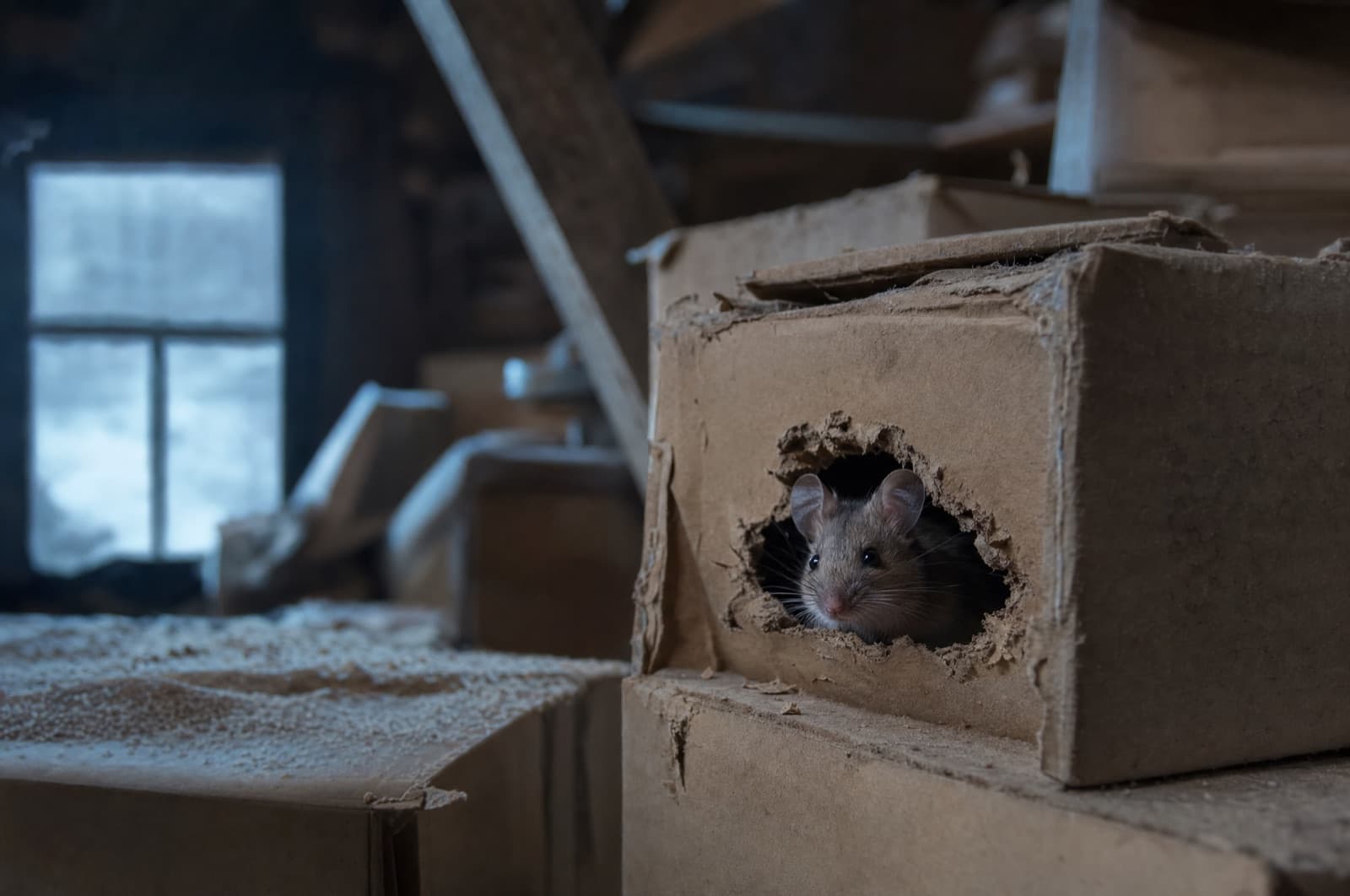
A house mouse in a gnawed cardboard storage box in a cold New Hampshire attic
Daniel Brady · NH-Licensed Pesticide Applicator · License #782664
Reviewed by Daniel Brady

How long after treatment should a home be pest-free in winter?

That's an upsell
That's an upsell dressed up as a timeline question.There is no honest number of days a home stays "pest-free" after treatment, because pesticide application and trapping alone don't stop new rodents from moving in from the surrounding population — extension research finds house mice rarely venture beyond about 50 feet from shelter and food, meaning any unsealed home sits inside a reservoir that keeps refilling it, and rats range even further. The durable fix is exclusion, which university IPM programs call the most successful and permanent form of house mouse control. A treatment lowers the current population; only sealing the entry points changes how long you actually stay clear.

At a glance

  • Verdict: That's an upsell
  • Who does it: A pest pro
  • Effort: A service visit
  • Payoff: Low
The honest answer

The short of it

The verdict
That's an upsell

Ask how long they'll seal it out, not how long the spray lasts.

The one question under all of them

Is this actually worth doing?

Every winter job lands somewhere on one honest scale — from what genuinely matters to what our own industry is selling you. Here is where this one lands.

The job being graded
That's an upsell

Expecting or asking how long a pesticide treatment will keep a home "pest-free"

The scale
Who does it
A pest pro
Effort
A service visit
Payoff
Low
What it actually does

A knock-down treatment reduces the population that's currently active inside the structure at the time of the visit. It does nothing to stop new rodents from the surrounding population — mice ranging within roughly 50 feet of a food source, rats ranging further — from finding the same unsealed entry point the previous occupants used. Without exclusion, the count simply rebounds as the neighborhood population continues pressing against the same gaps. Documented causes of rodent-control failure specifically include treating too small an area and permitting rodents to move back in from untreated surroundings — chemicals don't seal a building; only physical exclusion does.

What's being sold

Recurring treatments framed as what's needed to maintain a "pest-free" state, implying the spray itself is what keeps a home clear over time.

Why it doesn't hold up

Extension entomology is consistent that the durable variable is exclusion, not repeated chemical treatment. A structure with unsealed entry points sits inside a continuous rodent range and gets re-pressured regardless of how recently it was sprayed — the treatment addresses the population present at that moment, not the building's ongoing vulnerability.

Ask instead — word for word, on the phone

Which entry points did you find, and does my service include sealing them, or only re-spraying?

The line

Ask how long they'll seal it out, not how long the spray lasts.

Our honest lane — including on us

Anchor helps here by pairing any treatment with inspection and exclusion — sealing the specific gaps found, not just knocking down the current population and scheduling a return visit. This is exactly where an honest company has to implicate the "spray forever" model its own industry often runs on: a pest-free timeline promise is a claim about a building's ongoing vulnerability that pesticide alone can't make good on.

In depth

The full picture

01

Why there's no honest "pest-free" timeline

The premise of the question assumes a treatment creates a sealed bubble around a house for some fixed number of days or weeks. It doesn't, because the pests capable of re-entering aren't eliminated from the surrounding area by a single indoor treatment — they're eliminated (or reduced) only inside the structure at that moment. University of Nebraska-Lincoln Extension research on house mice finds they "seldom venture beyond 50 feet from their shelter and food supply," which means any home within that range of a viable food source and shelter sits inside a population that continues to exist and continues to probe for entry, whether or not a treatment happened last week. Rats range further still — Mississippi State Extension documents roughly 100-foot home ranges for Norway rats around structures.

So the honest answer to "how long will it stay pest-free" is: as long as the entry points stay sealed, and not meaningfully longer than that regardless of how recently pesticide was applied.

02

What actually determines how long a fix lasts

Exclusion — physically sealing gaps, particularly around foundations, utility penetrations, and roof lines — is what university IPM programs describe as the most successful and permanent form of rodent control, because it removes the mechanism of entry rather than temporarily reducing the population already inside. Missouri Extension's guidance on rat control specifically names "too small a control area, permitting rats to move in from untreated areas" as a documented cause of control failure — the treatment radius was too small, not too weak.

This reframes the useful question entirely. It isn't "how long does the spray last" — it's "how many of the entry points did you find and seal." A company that answers with a specific list of sealed gaps is answering the question that actually determines your outcome; a company that answers with a number of weeks is answering a question that doesn't have an honest number.

03

What a realistic expectation looks like

Expect some lag and occasional recurrence to be normal, not a sign of failure. A newly sealed home can still see activity for a short period afterward as any rodents already inside are trapped or work their way out, and a genuinely thorough exclusion job occasionally misses a gap that shows up later. The reasonable standard isn't zero activity forever — it's a company that responds to renewed activity by identifying and sealing whatever was missed, not by simply re-spraying and restarting the clock on the same unanswered question.

Key takeaways
5 points
  • There's no honest number of "pest-free" days after treatment — mice range roughly 50 feet from shelter and food, rats further, so an unsealed home sits inside a continuous population.
  • Exclusion — sealing entry points — is documented as the most permanent form of rodent control, not repeated pesticide application.
  • A common documented cause of control failure is too small a treatment area, letting rodents move back in from untreated surroundings.
  • The useful question is which entry points were found and sealed, not how long the spray lasts.
  • Some lag or occasional recurrence after sealing is normal — judge a company by whether it finds and seals the missed gap, not by whether activity ever recurs at all.
New Hampshire context

What this means for a Manchester-area winter

With Manchester's first hard frost arriving around October 19 to 29 (NOAA) and rodent pressure continuing through the winter months, a single fall treatment without exclusion sits against months of continued outdoor pressure from a population that hasn't gone anywhere. The realistic expectation for a New Hampshire home is that sealing done before or shortly after the frost, paired with monitoring through winter, is what determines how long a home stays clear — not the treatment date on its own.

  • NH-licensed #782664

    Southern New Hampshire

  • Family-owned

    Since 2017

  • Honest routing

    Even when it isn’t us

We serve these communities

ManchesterNashuaConcordDerryBedfordSalemHudsonAmherst

We answer with entry points, not a countdown.

Ask us which gaps we found and sealed — that's what actually determines how long you stay clear.

Follow-up questions

Frequently asked

Sources & citations(4)
  1. University of Nebraska-Lincoln Extension — Controlling House Mice (G1105)

    House mice seldom venture beyond about 50 feet from shelter and food supply

    extensionverified 2026-07-16
  2. UC IPM — House Mouse

    Exclusion as the most successful and permanent form of house mouse control

    extensionverified 2026-07-16
  3. Missouri Extension — Controlling Rats (G9446)

    Treating too small a control area, allowing reinvasion from untreated surroundings, as a documented control-failure cause

    extensionverified 2026-07-16
  4. Mississippi State Extension — Controlling Rodents on the Poultry Farm

    Norway rat home range extending roughly 100 feet from shelter

    extensionverified 2026-07-16

Written & reviewed by

Verified

Daniel Brady

NH-Licensed Pesticide Applicator · License #782664 (NHDAMF, RSA 430)

Daniel Brady is the New Hampshire–licensed applicator behind Anchor Pest Services, a family-owned pest control company serving the Manchester area since 2017.

Verify license

Last updated Jul 2026

Honest pest help for New Hampshire homes

We Won't Promise a Pest-Free Countdown.

No honest number of "pest-free days" exists after any treatment — the surrounding rodent population doesn't disappear. What we can promise is a specific list of the entry points we found and sealed, because that's the variable that actually determines your outcome. Family-owned since 2017, NH license #782664, serving Manchester, Nashua, Concord and nearby towns.

  • Exclusion-first treatment — sealing entry points, not just spraying
  • NH-licensed applicators (#782664) — free inspection, same-day service
  • Winter rodent exclusion across southern and central New Hampshire

NH License #782664 · No obligation · We answer in person