
Skip to content
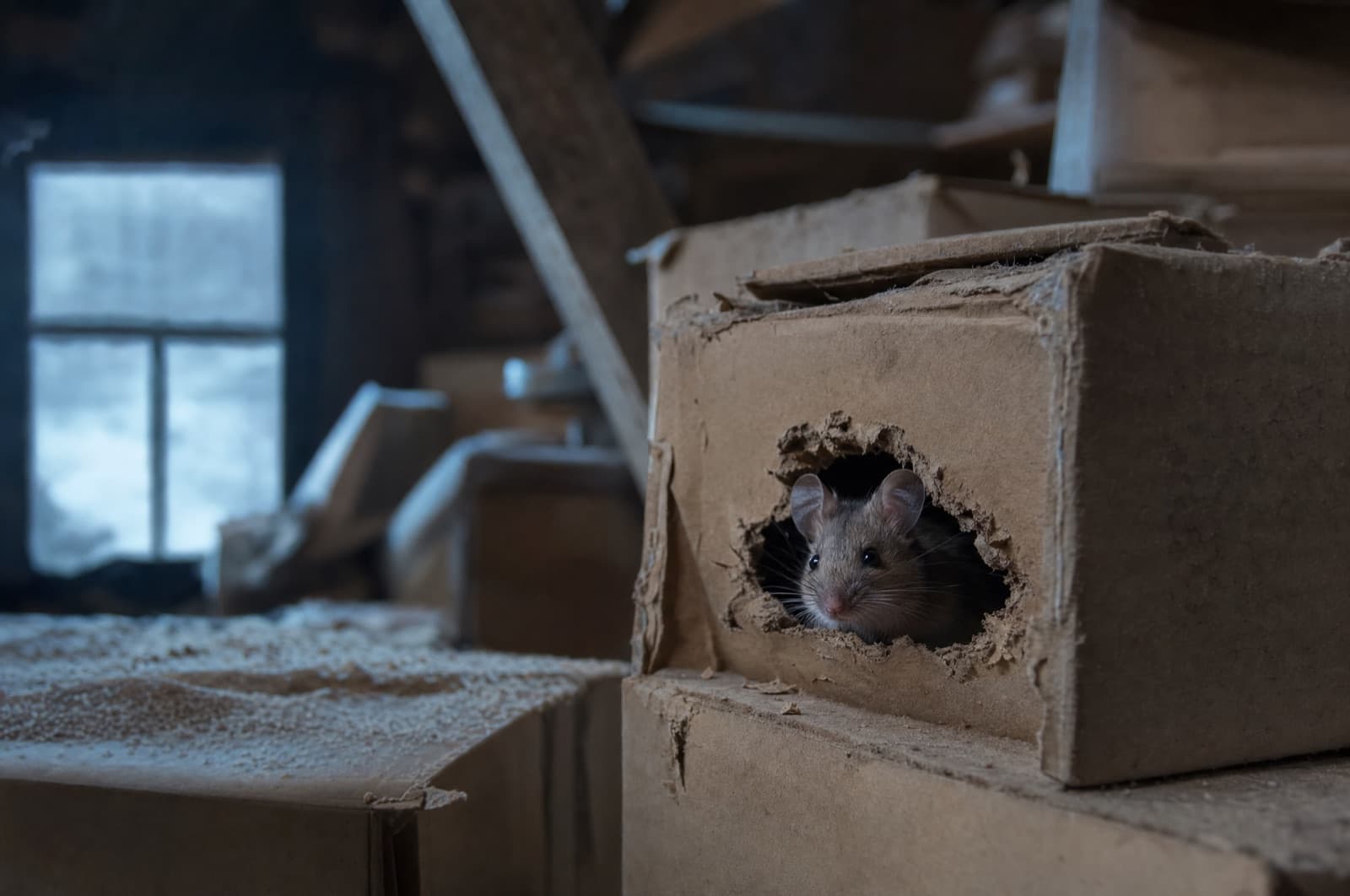
A house mouse in a gnawed cardboard storage box in a cold New Hampshire attic
Daniel Brady · NH-Licensed Pesticide Applicator · License #782664
Reviewed by Daniel Brady

What are the best lighting practices to avoid attracting pests in winter?

Worth doing — a genuine, low-effort fix with a modest, mostly warm-season payoff
Worth doing, but modestly, and the winter framing oversells what this fix accomplishes.The underlying science is real: insects are drawn to short-wavelength, UV-rich light because it disrupts a navigation reflex called the dorsal-light response, and warm-colored, low-UV bulbs read as effectively invisible to most night-flying insects by comparison. Swapping exterior bulbs is a genuine, permanent, minutes-long fix — it just mostly matters during warmer months, since the pests that plague a New Hampshire winter (mice, and insects already overwintering inside your walls) aren't drawn to porch lights at all.

At a glance

  • Verdict: Worth doing
  • Who does it: You
  • Effort: Minutes
  • Payoff: Moderate
The honest answer

The short of it

The verdict
Worth doing — a genuine, low-effort fix with a modest, mostly warm-season payoff

Worth doing, with an honest caveat: warm, low-UV bulbs really do draw fewer night-flying insects than bright white or blue-toned light — but that payoff is mostly a warm-weather one, and it does nothing about a New Hampshire winter's actual problem, which is mice.

The one question under all of them

Is this actually worth doing?

Every winter job lands somewhere on one honest scale — from what genuinely matters to what our own industry is selling you. Here is where this one lands.

The job being graded
Worth doing

Replacing bright-white or UV-rich exterior bulbs with warm, low-UV LED bulbs, and reducing unnecessary exterior lighting at night

The scale
Who does it
You
Effort
Minutes
Payoff
Moderate
What it actually does

Insects are most strongly attracted to short-wavelength, UV-rich light, not to heat as commonly assumed. Peer-reviewed research published in Nature Communications in 2024 established the actual mechanism: flying insects orient using a dorsal-light response, tilting their backs toward the brightest light source in their environment as a navigation reflex that normally keeps the open sky overhead. Bright, UV-heavy light sources disrupt that reflex and pull insects toward the fixture. Warm-colored, low-UV LED bulbs emit very little in the wavelength range that triggers this response, so they read as comparatively invisible to most night-flying insects, and a peer-reviewed residential-bulb comparison confirms LED and yellow-toned bulbs capture measurably fewer insects than bright white or blue-toned alternatives.

Do this instead
If your winter concern is truly about pest entry rather than nuisance insects at the porch light, the higher-payoff use of the same few minutes is checking that exterior light fixtures aren't illuminating an unsealed gap or vent, since light itself doesn't matter to a mouse but a nearby unsealed opening does.
The line

Bugs fly toward UV and blue light that looks like open sky; a warm amber bulb just doesn't show up on their radar.

Our honest lane

This is a DIY fix that takes minutes and requires no service visit — Anchor has no honest reason to sell you a lighting package. Where we're worth calling is exclusion and rodent work, which is the part of winter pest pressure that lighting choices don't touch at all. We'll say plainly when a 'winter' pitch oversells a fix that mostly matters in warmer months, including this one.

In depth

The full picture

01

The science, and why it's real

This isn't folk wisdom — the mechanism has been established in peer-reviewed research. A 2024 study published in Nature Communications identified the dorsal-light response as the actual reason insects gather at artificial light: flying insects instinctively tilt their backs toward the brightest light in view, a navigation reflex that, under natural conditions, keeps the sky (the brightest thing in the environment) oriented correctly overhead.

Bright, UV-rich, or blue-toned light sources hijack that reflex, pulling insects toward the fixture instead of the actual sky. Warm, amber-toned, low-UV bulbs simply don't trigger the response as strongly, which is why a peer-reviewed residential comparison found LED and yellow-toned bulbs captured measurably fewer insects than bright white alternatives.

02

Why the winter framing oversells the fix

Here's the honest part: this fix is real, but its payoff is concentrated in warmer months, when moths, beetles, and other night-flying insects are actually active outdoors and drawn to porch lights in meaningful numbers. In a New Hampshire winter, the insects most likely to be causing trouble — overwintering beetles, cluster flies, or lady beetles — are already inside your walls, having entered the previous fall. They're not out flying toward your porch light in January.

And the pest most homeowners actually worry about in a NH winter — mice — has nothing to do with light color at all. A warm bulb doesn't repel or attract a mouse in any documented way. Treating this as a winter-specific pest solution is where the framing goes wrong, even though the underlying bulb science is solid.

03

Why it's still worth doing

None of that makes the swap worthless. It's a permanent, minutes-long change that costs little to nothing beyond the bulb itself, and it measurably reduces night-flying insect activity around your house once warmer months return. There's no real downside to making the switch now rather than waiting.

The honest grade is worth doing, not do this first, precisely because the payoff doesn't match the winter framing the question implies. If your priority is actually reducing winter pest risk, the higher-value minutes go toward checking that exterior fixtures aren't illuminating an unsealed gap nearby — light doesn't matter to a mouse, but an open gap right next to a porch light is just as much of a problem in the dark as anywhere else.

Key takeaways
5 points
  • Insects are drawn to short-wavelength UV/blue light because it disrupts the dorsal-light response, a navigation reflex — not because of heat.
  • Warm, low-UV LED bulbs measurably reduce night-flying insect attraction compared to bright white or blue-toned bulbs, per peer-reviewed research.
  • The payoff is mostly a warm-season one; NH winter pests (overwintering insects already indoors, and mice) aren't influenced by porch light color at all.
  • This is a minutes-long, permanent, do-it-yourself fix with no real downside to making now.
  • If winter pest entry is the actual concern, checking for unsealed gaps near exterior fixtures is a higher-payoff use of the same few minutes.
New Hampshire context

Lighting choices ahead of a New Hampshire winter

Manchester's first hard frost typically arrives October 19 to 29 (NOAA), and by that point most of the insects a warm bulb would have deterred have already either died off or found their way indoors for the winter. That's the practical reason this fix, while worth doing, isn't a winter-specific solution — its best return comes in the months leading up to and following that window, not during the coldest stretch itself.

A reasonable approach is making the bulb swap whenever convenient and treating it as a standing improvement rather than a seasonal task tied to winter specifically.

  • NH-licensed #782664

    Southern New Hampshire

  • Family-owned

    Since 2017

  • Honest routing

    Even when it isn’t us

We serve these communities

ManchesterNashuaConcordDerryBedfordSalemHudsonAmherst

Swap the bulb yourself. Call us about what's already inside.

Bulb color is a minutes-long DIY fix. If mice or overwintering insects are already established, that's the part lighting can't solve.

Follow-up questions

Frequently asked

Sources & citations(3)
  1. Fabian, S.T. et al. (2024), "Why flying insects gather at artificial light," Nature Communications 15(1):689

    The dorsal-light-response mechanism explaining why UV/short-wavelength light attracts flying insects

    academicverified 2026-07-16
  2. Residential bulb-type insect attraction comparison (bioRxiv preprint)

    LED and yellow-toned residential bulbs measurably capture fewer insects than bright white or blue-toned bulbs

    academicverified 2026-07-16
  3. NOAA — Manchester, NH freeze climatology

    Manchester first hard frost typically ~Oct 19-29 — the seasonal window after which insects have mostly died off or entered structures for winter

    govverified 2026-07-16

Written & reviewed by

Verified

Daniel Brady

NH-Licensed Pesticide Applicator · License #782664 (NHDAMF, RSA 430)

Daniel Brady is the New Hampshire–licensed applicator behind Anchor Pest Services, a family-owned pest control company serving the Manchester area since 2017.

Verify license

Last updated Jul 2026

Honest pest help for New Hampshire homes

We Don't Sell Light Bulbs. We Handle What's Already Inside.

A warm-white bulb is a real, minutes-long fix you don't need us for — we'll say so rather than build a winter lighting package around it. What Anchor Pest Services actually helps with is the part lighting can't touch: rodent exclusion and overwintering insect activity already inside the structure. Family-owned since 2017, NH license #782664, serving Manchester, Nashua, Concord and nearby towns.

  • Honest advice — we'll tell you when a fix is a bulb swap, not a service visit
  • NH-licensed applicators (#782664) — free inspection, same-day service
  • Rodent exclusion and winter pest control across southern and central New Hampshire

NH License #782664 · No obligation · We answer in person