
Skip to content
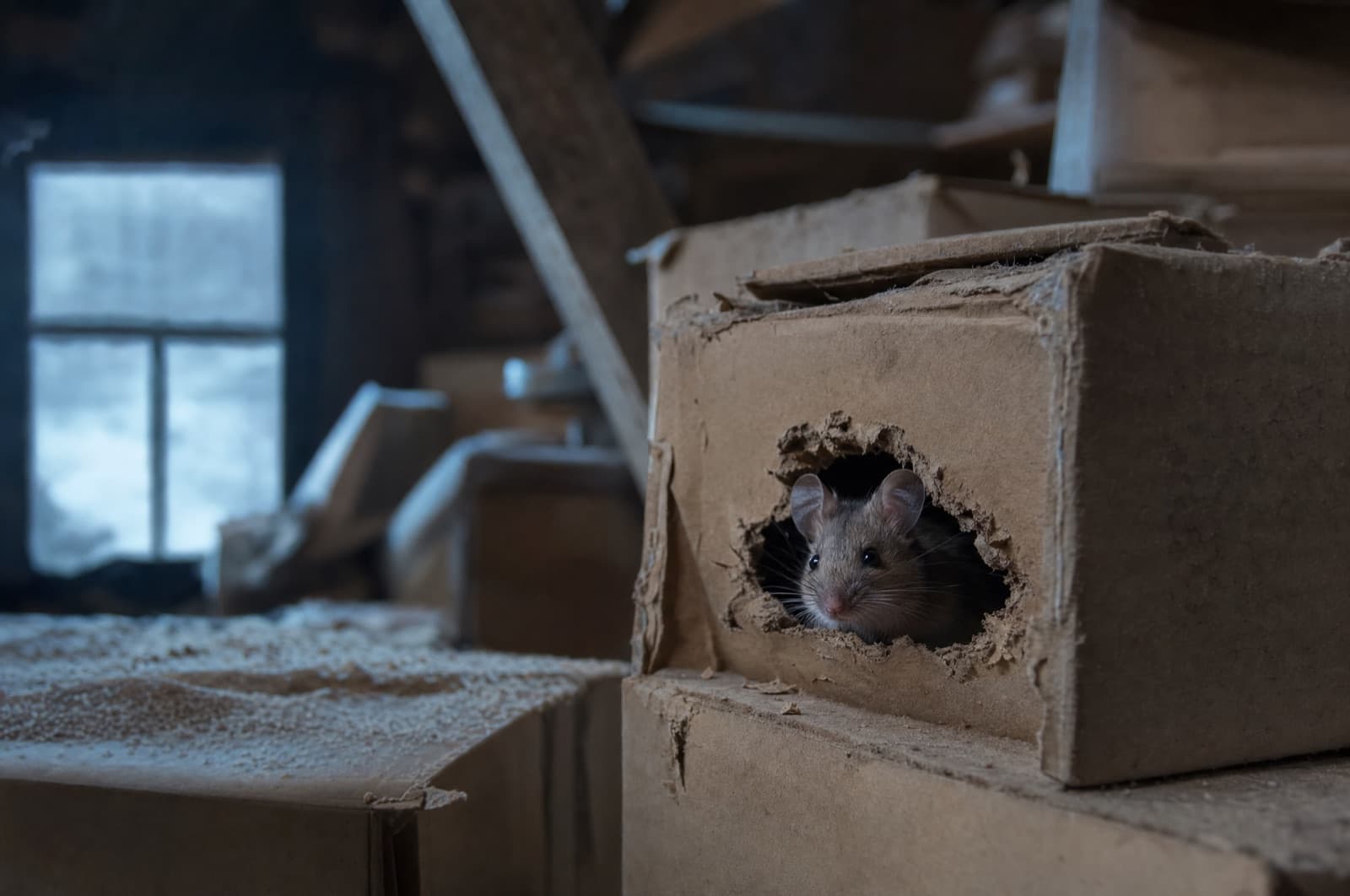
A house mouse in a gnawed cardboard storage box in a cold New Hampshire attic
Daniel Brady · NH-Licensed Pesticide Applicator · License #782664
Reviewed by Daniel Brady

What are the most costly winter pest problems in homes?

Documented
Ranked by the severity of what's actually damaged, not by any dollar total, the costliest winter pest problems in homes are dominated by rodents because they combine structural damage with a genuine health risk.In order of documented consequence: gnawed electrical wiring tops the list because it's a known fire pathway; next is contaminated or destroyed insulation and ductwork that may need full replacement; then chewed pipes and ruined stored food; and finally allergen and disease exposure, since rodent allergens are a documented asthma trigger and droppings can carry disease. Repair scope, not a figure, is what answers 'how bad' — and almost none of it falls under a standard homeowners policy.

At a glance

  • The verdict: Documented
The honest answer

The short of it

The verdict
Documented

Documented — ranked by structural consequence, gnawed electrical wiring tops the list because it's a fire pathway, and virtually none of it is covered by standard homeowners insurance.

Money without prices

What it actually costs you

Scope, not dollars — the honest answer to “how expensive is it,” and where the number is really just a talking point.

The honest framing
Documented cost
What is documented

CDC documents that rodents enter through gaps as small as a quarter inch and that droppings and urine can carry disease risk, including hantavirus from certain rodent species. Extension and building-science sources document rodents gnawing through electrical wiring, insulation and ductwork as a routine consequence of an unaddressed entry point, and public-health sources document rodent and cockroach allergens as recognized asthma triggers, particularly for children.

Just a talking point

Dramatic aggregate dollar totals and 'average damage' figures used mainly to create urgency and sell a contract, rather than to inform a specific homeowner about their specific risk. A structural ranking by actual consequence and repair scope is more honest and more useful than any total.

The scope of the repair
Ranked from least to most involved: a DIY patch (steel wool and caulk sealing a single found gap) handles most early cases; a trade visit (an electrician for gnawed wiring, an HVAC technician for chewed ductwork) is needed once a system has been reached; a licensed-contractor project (full insulation remediation) applies after heavy, sustained contamination. What drives the ranking up: which systems were reached, and how long the activity went undetected.
Insurance

As with individual pest-damage claims generally, standard homeowners policies exclude rodent and vermin damage as preventable maintenance; a state insurance regulator's consumer guidance states plainly that a policy won't pay for repairs if rodents or insects chew on the house. Only a secondary covered peril — most commonly a fire traced to gnawed wiring — may be covered, and even then only the fire damage, not the underlying rodent damage.

Framed from: CDC; UC ANR public health guidance; Texas Department of Insurance

In depth

The full picture

01

Ranked by consequence: what actually tops the list

First, gnawed electrical wiring — the one item on this list with an acute safety consequence, not just a repair bill, because it's a documented fire pathway. Second, contaminated or destroyed insulation and ductwork, which can require full replacement once contamination is heavy enough. Third, chewed pipes and ruined stored food — real, disruptive, but without the same immediate hazard as wiring. Fourth, allergen and disease exposure: rodent and cockroach allergens are documented asthma triggers, and rodent droppings can carry disease risk including hantavirus from certain species. Each tier traces back to the same root cause — an unaddressed entry point — which is why exclusion addresses all four at once.

02

Why wiring ranks first

Every other item on this list is a property-damage or health problem with a repair scope that scales with how long it went unnoticed. Gnawed wiring is different: it introduces an acute, time-sensitive safety hazard, because damaged insulation on a live wire is a documented electrical fire pathway. That's why it outranks insulation and ductwork loss, which are genuinely expensive to remediate but don't carry the same immediate danger, and it's why any inspection should specifically check accessible wiring runs, not just look for droppings.

03

The health tier, kept proportionate

Rodent and cockroach allergens are recognized, documented asthma triggers, particularly relevant for children in a home with sustained pest activity. Rodent droppings and urine can also carry disease risk, including hantavirus in certain rodent species, which is why CDC's cleanup guidance specifically calls for ventilating before cleaning and avoiding dry sweeping or vacuuming. This belongs on the list as a genuine, sourced consequence — not as a reason to treat an ordinary house-mouse sighting as an emergency.

04

What none of this changes about insurance

Every tier above shares the same insurance reality: standard homeowners policies exclude rodent and vermin damage as preventable maintenance, so none of it is a covered loss on its own. The one narrow exception, consistent across tiers, is a secondary covered peril — a fire caused by gnawed wiring may be a covered loss even though the wiring damage itself is not. The practical takeaway is the same at every tier: sealing the entry point is the lever a homeowner actually controls, because the repair bill for whatever gets damaged is very likely to be paid out of pocket.

New Hampshire context

Which rodent, and why it matters in New Hampshire

The costliest winter pest problems in a New Hampshire home almost always trace back to rodents, and which rodent you have shapes the risk. The house mouse (Mus musculus) is the classic structure-invading commensal rodent — active year-round and most likely to move indoors as temperatures cool in the fall (ICWDM). On woods-adjacent and rural NH properties, the native white-footed mouse (Peromyscus leucopus) also comes inside in the cold; it doesn't hibernate, though it may go torpid for a few days in severe weather. Both gnaw, and gnawing on wiring, insulation, and ductwork is where the real consequences start.

The distinction matters beyond damage: the Peromyscus group is the hantavirus-relevant genus in the Northeast (CDC), so in a home near the woods, contaminated droppings and nests should be ventilated and wet-cleaned rather than swept or vacuumed, which can aerosolize the virus. Practically, the exposure window opens with Manchester's first hard frost, typically October 19–29 (NOAA), which is the deadline for sealing before this activity begins.

  • NH-licensed #782664

    Southern New Hampshire

  • Family-owned

    Since 2017

  • Honest routing

    Even when it isn’t us

We serve these communities

ManchesterNashuaConcordDerryBedfordSalemHudsonAmherst

Ranked by consequence, not by dollars.

Gnawed wiring is a fire pathway; insulation and ductwork loss follows; then stored food and pipes; then allergen and disease exposure. None of it is insured — all of it starts at the same entry point.

Follow-up questions

Frequently asked

Sources & citations(4)
  1. CDC — Seal Up! Rodent control and exclusion

    Documented rodent entry, gnawing behavior, and quarter-inch entry threshold

    govverified 2026-07-16
  2. CDC — Hantavirus Prevention

    Disease risk from rodent droppings/urine and safe-cleanup guidance

    govverified 2026-07-16
  3. UC ANR — Cockroaches, Rodents, and Asthma

    Rodent and cockroach allergens as documented asthma triggers

    extensionverified 2026-07-16
  4. Texas Department of Insurance — "Five Things Your Home Policy Won't Cover"

    Standard homeowners policy exclusion for rodent/insect chewing damage

    stateverified 2026-07-16

Written & reviewed by

Verified

Daniel Brady

NH-Licensed Pesticide Applicator · License #782664 (NHDAMF, RSA 430)

Daniel Brady is the New Hampshire–licensed applicator behind Anchor Pest Services, a family-owned pest control company serving the Manchester area since 2017.

Verify license

Last updated Jul 2026

Honest pest help for New Hampshire homes

Wiring First. Everything Else Follows the Entry Point.

We rank by what's actually at risk and prioritize accordingly — exclusion first, because it's the one fix that addresses every tier of consequence at once. Family-owned since 2017, NH license #782664, serving Manchester, Nashua, Concord and nearby towns.

  • Honest advice — we'll tell you when a hardware-store fix or a phone question beats a service call
  • NH-licensed applicators (#782664) — free inspection, same-day service
  • Winter rodent exclusion across southern and central New Hampshire

NH License #782664 · No obligation · We answer in person