
Skip to content
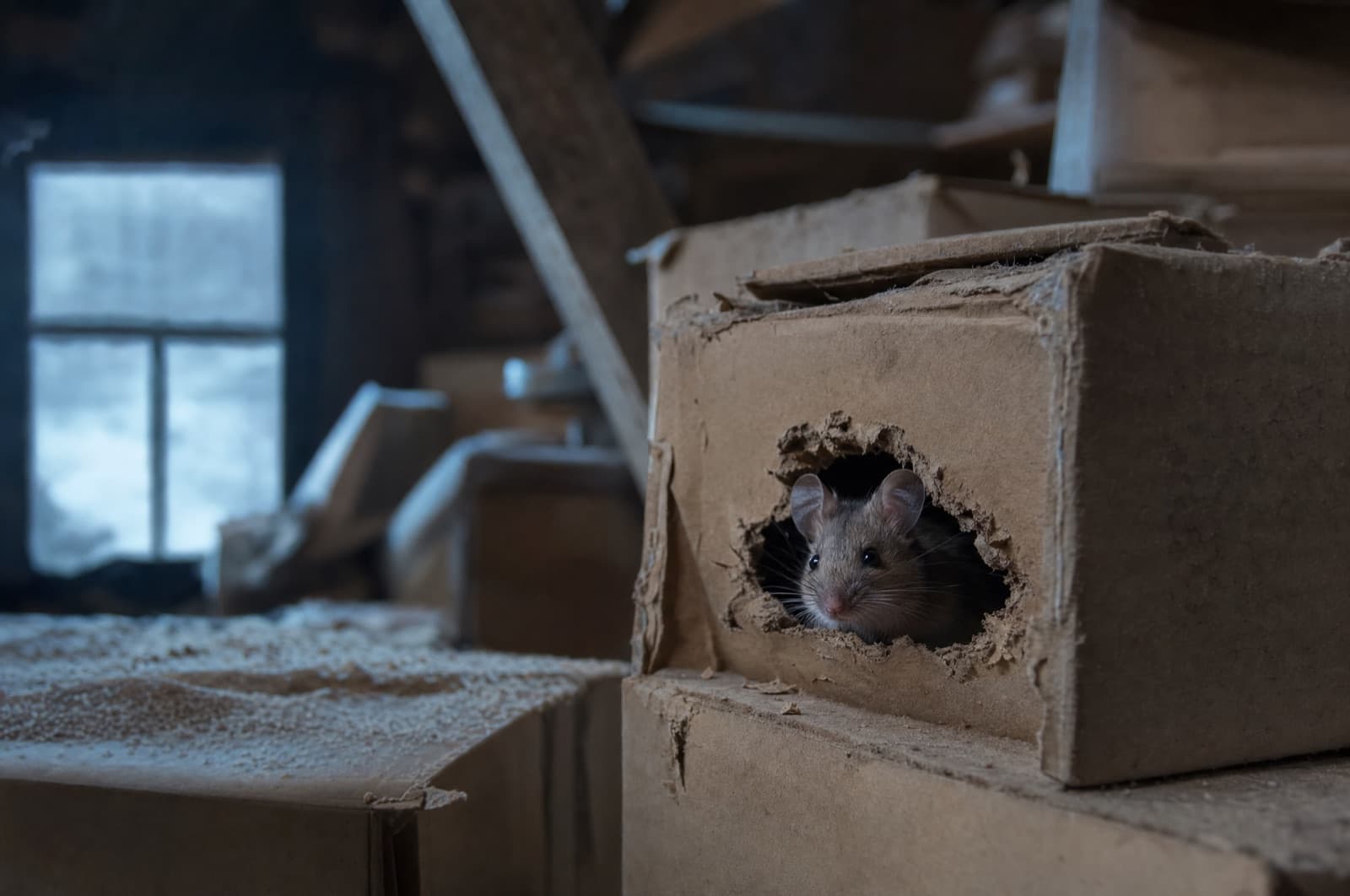
A house mouse in a gnawed cardboard storage box in a cold New Hampshire attic
Daniel Brady · NH-Licensed Pesticide Applicator · License #782664
Reviewed by Daniel Brady

What mistakes do homeowners make about winter pests?

Ranked list
Ranked by how much each mistake actually raises your risk, not by how alarming it sounds, the biggest homeowner mistakes are the boring ones: not sealing quarter-inch entry gaps before the first hard frost, and trusting plastic storage bins and electronic gadgets to do a job only metal, glass and physical sealing can do. The smallest-payoff 'mistakes' are exactly the ones marketing fixates on — scented repellents and ultrasonic devices — because they feel proactive without doing much. The honest ranking below runs from the highest-payoff fix to the lowest, using the same evidence used throughout this hub.

At a glance

  • The verdict: Ranked list
The honest answer

The short of it

The verdict
Ranked list

Ranked by evidence-backed payoff, not scariness: the two biggest mistakes are unglamorous — not sealing entry points before frost, and trusting plastic bins and gadgets over the boring fix that actually works.

The roll-up

Ranked by what actually pays off

The most common and consequential mistakes homeowners make about winter pests in a New Hampshire home, ranked from highest to lowest actual payoff if corrected.

Ranked by
Evidence-backed payoff — how much correcting each mistake actually reduces documented risk — not how alarming or dramatic the mistake sounds.
RankItemGradeWho does itNote
01Not sealing entry points before the first hard frostDo firstYou + a ladderThe single highest-payoff fix on this list. Mice can enter through gaps a quarter inch across, and federal and extension guidance both treat exclusion — physically closing those gaps — as the most effective and durable control available. Doing it before the first hard frost (roughly mid-to-late October in Manchester) beats doing it after.
02Storing food or pet food in plastic binsDo firstYouRodent incisors defeat plastic easily; extension and CDC guidance are consistent that only metal or glass containers with tight lids actually hold. A 'heavy-duty' tote buys time, not protection.
03Not keeping the written service or inspection recordWorth itYouReal, but secondary — it protects a warranty claim and provides insurance evidence if a secondary loss occurs, but it doesn't prevent anything by itself. New Hampshire separately requires the applicator to keep this record regardless of whether you ask.
04Relying on peppermint oil or other natural repellentsSkip itYouFeels proactive and smells pleasant, which is exactly why it persists, but extension sources find the repellency effect short-lived and unreliable against an established or determined rodent population.
05Buying ultrasonic or electronic pest repellersUpsellNobodyThe FTC has sent warning letters to dozens of manufacturers over unsupported efficacy claims and has brought enforcement actions against several companies selling these devices — a strong regulatory signal that the underlying claims don't hold up the way the products are marketed.
06Assuming homeowners insurance covers the damageWorth itYouNot a mistake in the 'skip this' sense, but a costly misunderstanding worth correcting: standard policies generally exclude rodent and vermin damage as preventable maintenance, so this is about resetting an expectation, not doing a task.
What people get wrong
The ranking people expect is topped by scary gadgets and 'natural' hacks, because that's the version of winter pest control that gets marketed hardest. The honest ranking, built on the same evidence used across this hub, is topped by sealing gaps and swapping plastic bins for metal or glass — unglamorous, inexpensive, and mostly done by the homeowner in an afternoon. The busywork that tops most people's mental list, repellents and gadgets, does the least; the boring things that actually matter get the least airtime.
In depth

The full picture

01

The two mistakes that actually matter most

Both land at the top for the same reason: they're about denying entry, not reacting after the fact. Sealing quarter-inch gaps before the first hard frost stops rodents from getting in at all, which extension and federal exclusion guidance treat as the most effective, durable control available — more effective than anything applied afterward. Swapping plastic storage bins for metal or glass removes the second common failure point, because rodent incisors defeat plastic easily but cannot defeat metal or glass. Neither costs much money, and both are typically homeowner-doable in an afternoon.

02

The one real gray area: documentation and insurance

Two items on this list aren't errors of omission so much as misunderstandings worth correcting. Not keeping a written service or inspection record is a real but secondary miss — useful for warranties and any insurance claim tied to a secondary loss, but it doesn't prevent anything by itself. Assuming homeowners insurance covers rodent damage is the costlier misunderstanding: standard policies generally treat this damage as preventable maintenance and exclude it, so the expectation itself needs resetting, not just the paperwork.

03

Why gadgets and 'natural' fixes rank at the bottom

Peppermint oil and similar repellents are cheap, pleasant to use, and give a genuine sense of having done something today — which is exactly why they're popular, and it's worth naming that honestly rather than mocking it. But the evidence shows the effect fades quickly and doesn't hold up against an established population. Ultrasonic and electronic repellers rank lower still: the FTC's own enforcement history against manufacturers making unsupported efficacy claims is a strong, independent signal that these products don't do what they're marketed to do.

New Hampshire context

The mistakes that bite hardest in New Hampshire

The most common NH timing mistake is sealing too late. NOAA data puts Manchester's first hard frost around October 19-29, and that cold snap is the trigger that pushes rodents indoors -- so waiting until you actually see a mouse means the exclusion work happens after the animals are already in the walls. Getting the gaps closed before that window is the single highest-payoff move for a New Hampshire home.

The second is a biology mistake: assuming there's only one kind of mouse to worry about. In NH the year-round house mouse (Mus musculus) is the classic structure invader that ICWDM notes moves indoors as fall temperatures drop, but on the wooded and rural lots common around Manchester the native white-footed mouse (Peromyscus leucopus) also comes in -- and ICWDM notes it doesn't hibernate, so a cold snap doesn't sideline it. Treating winter as a season when mice go dormant, rather than one when they concentrate indoors, is exactly the misread this page is built to correct.

  • NH-licensed #782664

    Southern New Hampshire

  • Family-owned

    Since 2017

  • Honest routing

    Even when it isn’t us

We serve these communities

ManchesterNashuaConcordDerryBedfordSalemHudsonAmherst

Ranked by what actually costs you.

Not sealing entry points before frost and trusting plastic bins are the two mistakes that matter most. Ultrasonic gadgets and 'natural' repellents matter least.

Follow-up questions

Frequently asked

Sources & citations(4)
  1. CDC — Seal Up! Rodent control and exclusion

    Quarter-inch entry threshold; metal/glass storage guidance

    govverified 2026-07-16
  2. UC IPM — House Mouse

    Exclusion as the most successful and permanent form of house-mouse control

    extensionverified 2026-07-16
  3. FTC — Warns Manufacturers/Retailers of Ultrasonic Pest-Control Devices

    Warning letters and enforcement actions against ultrasonic-device manufacturers over efficacy claims

    govverified 2026-07-16
  4. Texas Department of Insurance — "Five Things Your Home Policy Won't Cover"

    Standard homeowners policy exclusion for rodent/insect chewing damage

    stateverified 2026-07-16

Written & reviewed by

Verified

Daniel Brady

NH-Licensed Pesticide Applicator · License #782664 (NHDAMF, RSA 430)

Daniel Brady is the New Hampshire–licensed applicator behind Anchor Pest Services, a family-owned pest control company serving the Manchester area since 2017.

Verify license

Last updated Jul 2026

Honest pest help for New Hampshire homes

The Boring Fixes Are the Ones That Actually Work.

Sealing gaps and swapping plastic bins for metal or glass do more than any gadget on this list — and we'd rather tell you that than sell you the gadget. Family-owned since 2017, NH license #782664, serving Manchester, Nashua, Concord and nearby towns.

  • Honest advice — we'll tell you when a hardware-store fix or a phone question beats a service call
  • NH-licensed applicators (#782664) — free inspection, same-day service
  • Winter rodent exclusion across southern and central New Hampshire

NH License #782664 · No obligation · We answer in person