
Skip to content
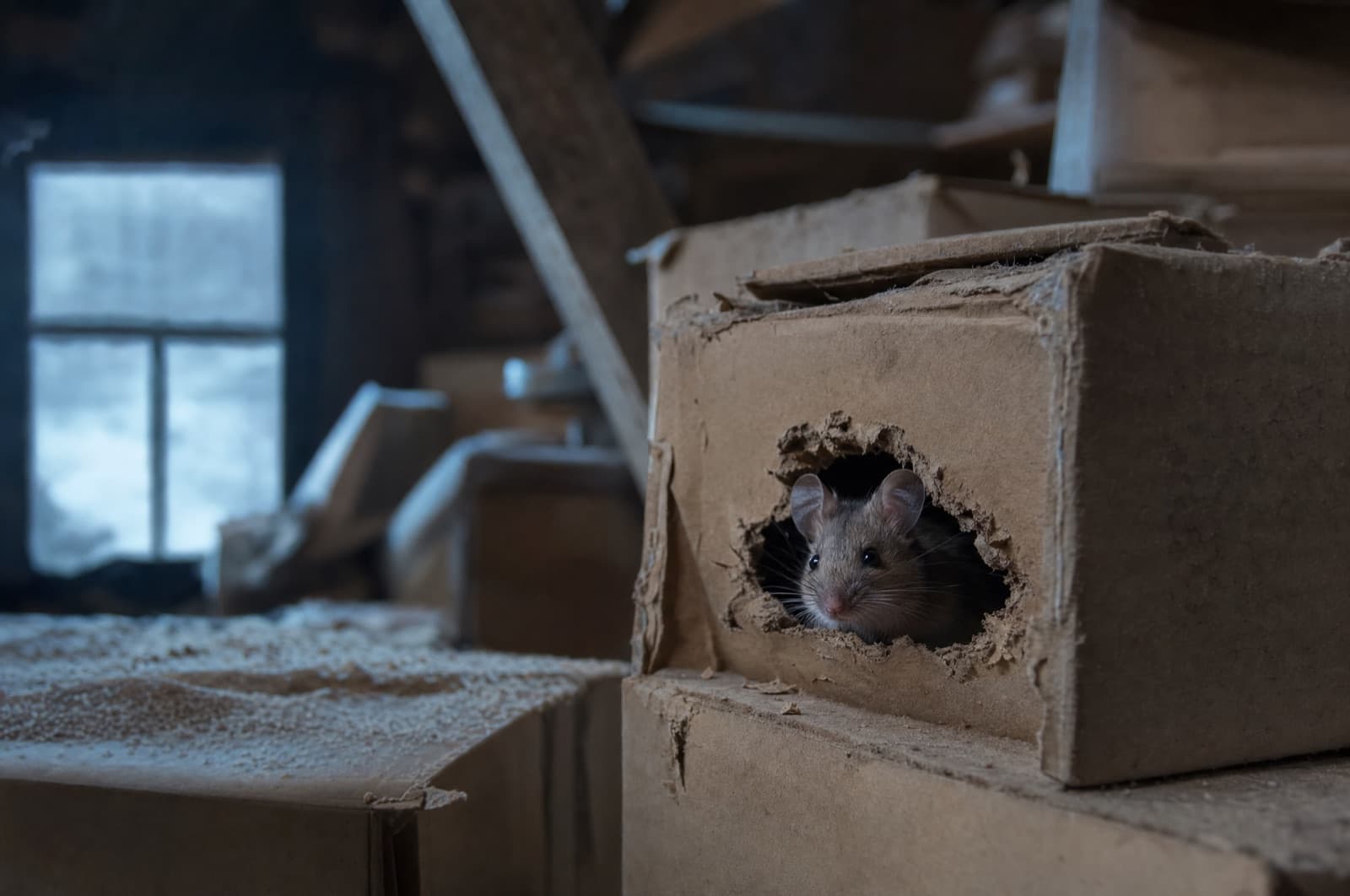
A house mouse in a gnawed cardboard storage box in a cold New Hampshire attic
Daniel Brady · NH-Licensed Pesticide Applicator · License #782664
Reviewed by Daniel Brady

What next-step services should homeowners plan after the first winter pests?

Worth doing
Worth doing, but in a specific order: after the first sign of winter pests, the genuinely productive next steps are a thorough inspection to find entry points, exclusion — sealing with metal or hardware cloth, not foam alone — safe cleanup of any droppings, and targeted trapping of what's already inside. Integrated pest management sequencing matters: control the active population first, then seal, so nothing gets trapped inside the walls. Escalating straight to a broader, recurring pesticide program is usually not the right next step; closing the entry point is.

At a glance

  • Verdict: Worth doing
  • Who does it: A pest pro
  • Effort: A project
  • Payoff: High
The honest answer

The short of it

The verdict
Worth doing

The right next step is an inspection, exclusion, and safe cleanup — not an escalating chemical program; real and worth doing, but secondary to sealing before frost and keeping the paperwork.

The one question under all of them

Is this actually worth doing?

Every winter job lands somewhere on one honest scale — from what genuinely matters to what our own industry is selling you. Here is where this one lands.

The job being graded
Worth doing

Planning the follow-up work after the first sign of winter pests — inspection, exclusion, safe cleanup, and targeted trapping, in that order

The scale
Who does it
A pest pro
Effort
A project
Payoff
High
What it actually does

It converts a one-time knockdown — a trap set or a single treatment — into durable prevention by finding and closing the actual entry point and removing what's attracting activity, rather than just reducing the population already inside. CDC cleanup guidance also matters here: don't dry-sweep or vacuum rodent droppings, ventilate the area first, and disinfect, because dry cleanup can send particles into the air that carry a real, if small, disease risk.

Do this instead
If a proposed 'next step' is simply a bigger recurring spray program rather than a plan tied to specific inspection findings, ask what entry points it addresses. The honest sequence is inspect, seal, then monitor — not escalate first and inspect later.
The line

The next step after a mouse isn't more spray — it's finding the hole it came through.

Our honest lane

Anchor's honest sequence is inspection, then exclusion, then targeted trapping — not an automatically escalating recurring-spray plan. We'll also tell you plainly when cleanup is heavy enough that CDC-safe methods, and if flu-like symptoms follow exposure, a doctor visit, matter more than another service call. This is graded worth_doing rather than do_this_first because it's the right move sequenced after the first hard frost sealing and the paperwork — not because it's optional.

In depth

The full picture

01

The order that actually works

Integrated pest management guidance treats this as a sequence, not a menu to pick from: inspect first to understand what's actually present and how it's getting in, then exclude by sealing the entry points with metal or hardware cloth (materials rodents can't gnaw through, unlike foam alone), then address anything already inside with targeted trapping. Doing exclusion before dealing with an active indoor population risks sealing animals into a wall cavity; doing trapping without exclusion means new arrivals just replace the ones you removed. The order is what makes each step actually pay off.

02

What 'next step' should not mean

It's worth being direct about the version of this answer the industry sometimes sells: escalating straight from one sighting to a broader, recurring, calendar-based pesticide program. That's not what the evidence supports as the next step — a mouse getting in tells you there's an entry point to find and close, not that the whole property needs ongoing broad-spectrum treatment. If a proposed plan doesn't map to a specific inspection finding, ask what exactly it's meant to fix.

03

Cleanup done safely

CDC guidance on rodent droppings is specific and worth following exactly: don't sweep or vacuum dry droppings, because that can aerosolize particles carrying disease risk. Instead, ventilate the area for at least 30 minutes, then wet the area with a disinfectant before wiping it up, and wear gloves. This is a small, low-cost step that matters disproportionately, and it's a genuine part of the 'next step' sequence alongside inspection and exclusion.

New Hampshire context

Timing the next step to a New Hampshire winter

In Manchester, the first hard frost typically lands between October 19 and 29 (NOAA), and that's when the first winter pests tend to show up — cold pushes rodents toward warm structures. So the practical next step after that first sighting is usually exclusion and monitoring going into the coldest months, not a rushed recurring program. House mice (Mus musculus) are active year-round and most likely to invade as temperatures cool (ICWDM), while the native white-footed mouse (Peromyscus leucopus) common on woods-adjacent NH lots also moves indoors in the cold and doesn't hibernate, so pressure can persist all winter.

That species mix shapes cleanup, too. Because the Peromyscus group is the hantavirus-relevant genus in the Northeast (CDC), droppings and nests in a rural or woods-adjacent New Hampshire home should be ventilated and wet-cleaned rather than swept or vacuumed dry, which can aerosolize the virus.

  • NH-licensed #782664

    Southern New Hampshire

  • Family-owned

    Since 2017

  • Honest routing

    Even when it isn’t us

We serve these communities

ManchesterNashuaConcordDerryBedfordSalemHudsonAmherst

Seen one mouse? Here's the real next step.

Inspection, exclusion and safe cleanup — in that order. Not an escalating chemical program sold off a single sighting.

Follow-up questions

Frequently asked

Sources & citations(4)
  1. CDC — Hantavirus Prevention (safe rodent-droppings cleanup)

    Safe cleanup steps: ventilate, don't dry-sweep or vacuum, disinfect

    govverified 2026-07-16
  2. UNH Extension — What is Integrated Pest Management (IPM)

    The inspect-exclude-monitor sequence as the IPM standard

    extensionverified 2026-07-16
  3. University of Nebraska–Lincoln — Rodent-Proof Construction and Exclusion Methods

    Exclusion materials (metal/hardware cloth) versus foam alone

    extensionverified 2026-07-16
  4. National Park Service — Rodent Exclusion Manual

    Sequencing exclusion after addressing an active indoor population

    govverified 2026-07-16

Written & reviewed by

Verified

Daniel Brady

NH-Licensed Pesticide Applicator · License #782664 (NHDAMF, RSA 430)

Daniel Brady is the New Hampshire–licensed applicator behind Anchor Pest Services, a family-owned pest control company serving the Manchester area since 2017.

Verify license

Last updated Jul 2026

Honest pest help for New Hampshire homes

The Next Step Is Finding the Hole, Not Buying a Bigger Plan.

Our sequence after a first sighting is inspection, then exclusion, then targeted trapping — scoped to what we actually find, not an automatic upsell to a broader program. Family-owned since 2017, NH license #782664, serving Manchester, Nashua, Concord and nearby towns.

  • Honest advice — we'll tell you when a hardware-store fix or a phone question beats a service call
  • NH-licensed applicators (#782664) — free inspection, same-day service
  • Winter rodent exclusion across southern and central New Hampshire

NH License #782664 · No obligation · We answer in person