
Skip to content
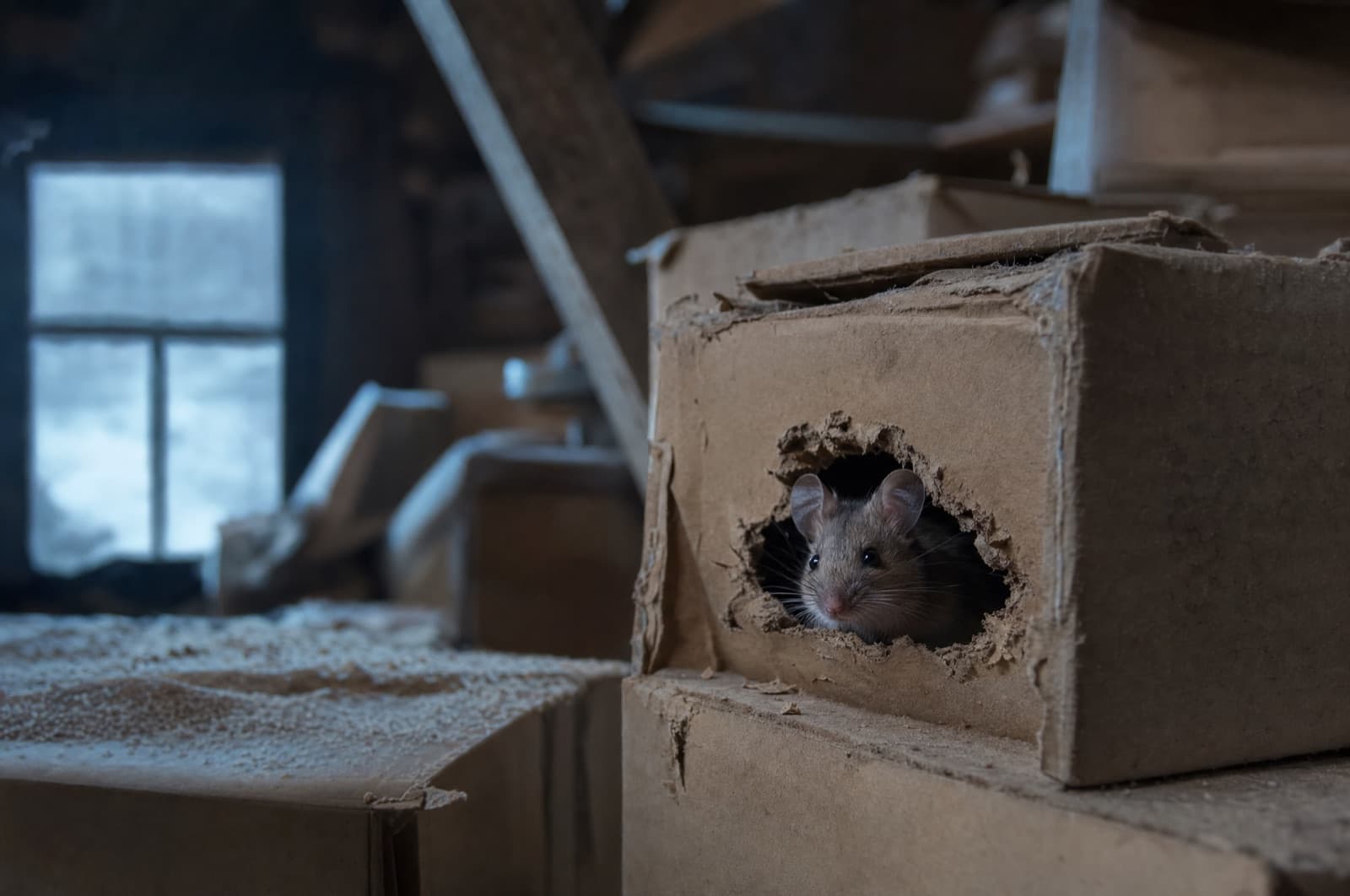
A house mouse in a gnawed cardboard storage box in a cold New Hampshire attic
Daniel Brady · NH-Licensed Pesticide Applicator · License #782664
Reviewed by Daniel Brady

What pests “overwinter” inside houses?

A census, not a scare list
This is a census, not a warning: a short, evidence-backed list of which pests actually spend the winter inside a heated New Hampshire home, ranked by how documented and established their presence is, not by how alarming they look.House mice and Norway rats top it, because they're active every day of winter and gnaw structural material. Clothes and pantry moths, cluster flies, several fall-invading beetles and bugs, and resident house spiders round out the list. This page is about identification — what's physically there. Our companion page, which pests to watch out for this winter, covers the separate question of where your attention and effort should actually go.

At a glance

  • The verdict: A census, not a scare list
The honest answer

The short of it

The verdict
A census, not a scare list

Five species groups genuinely overwinter inside a New Hampshire house. Ranked by how documented and established their presence is, the quiet rodent outranks the dramatic swarm of harmless lady beetles.

The roll-up

Ranked by what actually pays off

Pests that truly overwinter inside a heated New Hampshire home — meaning they spend the cold months indoors as an identifiable, ongoing presence, not pests that are merely found indoors occasionally year-round

Ranked by
how documented and established each pest's winter indoor presence actually is, from full-time active residents to dormant occasional visitors — not by how startling or numerous they appear
RankItemGradeWho does itNote
01House mice & Norway ratsDo firstYouThe only pest on this list that is active every single day of winter rather than dormant. Gnaws wiring, insulation and stored goods, and can breed indoors through the cold months. The one truly dangerous, non-dramatic entry on the list.
02Clothes moths & pantry (Indian meal) mothsWorth itYouLarvae keep developing all winter in a heated home because indoor warmth cancels the seasonal pause that would otherwise slow them. Damage is quiet, cumulative, and easy to miss until an item is already ruined.
03Cluster fliesSkip itYouTruly overwinter in large numbers in wall voids and attics, entering in fall specifically to shelter. Harmless and non-breeding indoors (a roost, not a nursery); vacuum the active ones, don't treat the void.
04Asian lady beetles, boxelder bugs & stink bugsSkip itYouDormant adults that entered in fall and are simply waiting out the winter, becoming visible on warm days. Not breeding, not multiplying, not damaging anything — a nuisance census entry, not a threat one.
05House & cellar spidersSkip itYouAlready indoor-established, year-round residents rather than winter arrivals. You notice them more in winter because that's when stored boxes and undisturbed corners finally get disturbed.
What people get wrong
Most lists that use the word "overwinter" lump in anything found indoors during the cold months, including pests that aren't actually seasonal at all — a German cockroach, for example, doesn't overwinter in any meaningful sense, because it's a year-round indoor resident whose presence has nothing to do with the calendar. The real overwintering census is these five, and even among them, the ranking people expect (loudest and most visible first) is backwards. A silent, rarely-seen mouse outranks a dramatic swarm of harmless lady beetles on a warm January windowsill, because it's the only one that damages the house and carries documented health risk. This page answers "what's actually there" — for "what deserves my attention," see our companion ranked list on which winter pests to watch out for.
In depth

The full picture

01

What counts as truly "overwintering," and what doesn't

Overwintering, used precisely, describes a pest that has a specific seasonal strategy for surviving the cold months — entering diapause, seeking indoor shelter specifically in fall, or otherwise adjusting its behavior around the season. That's a narrower category than "any pest found indoors in winter," which would also sweep in species that are simply present year-round regardless of season, like German cockroaches, and don't have a winter-specific behavior at all.

This list sticks to the narrower, more honest definition: pests with a documented, seasonal overwintering pattern specific to a New Hampshire home. That's why the ranking below covers five species groups rather than every pest that could theoretically turn up in a house during the cold months.

02

Why the ranking favors documentation over drama

It would be easy to rank this list by which pest shows up in the most dramatic numbers on a warm January afternoon — a wall void of a thousand cluster flies is visually striking in a way a single mouse dropping isn't. But visual drama and actual significance point in opposite directions here. Extension and CDC sources are consistent that rodents are active, gnawing, and potentially breeding all winter, while the visually dramatic overwinterers — cluster flies, lady beetles, stink bugs — are dormant, non-reproducing, and cause no structural or health damage.

Ranking by documented presence and behavior rather than by visibility is the entire point of doing this as a census rather than a scare list. It's also consistent with the honest grading used throughout this hub: rodent exclusion earns do_this_first because it's a real, evidence-backed priority, not because rodents are the scariest thing on the list.

03

How this differs from our watch-list page

This page and our companion page on which pests to watch out for in winter cover closely related ground, and it's worth being direct about how they differ rather than making you read both to figure it out. This page is a census: an honest inventory of what's actually present and overwintering inside a New Hampshire house right now, ranked by how documented and established each presence is.

The watch-list page asks a narrower, more action-oriented question: of everything that might be present, what actually deserves your ongoing attention and effort this winter? The two lists share the same underlying evidence and mostly agree on rodents at the top, but the watch-list page includes a health-relevant pest not on this census (cockroaches, where present) and frames every entry around what to do, not just what's there.

Key takeaways
5 points
  • Five species groups truly overwinter inside a New Hampshire home: rodents, clothes/pantry moths, cluster flies, several fall-invading beetles and bugs, and house spiders.
  • Rodents rank first because they're active every day of winter, not because they're the most visible.
  • Cluster flies, lady beetles, boxelder bugs and stink bugs are dormant and non-breeding indoors — visually dramatic, not actually risky.
  • "Overwintering" specifically excludes year-round residents like German cockroaches, which aren't seasonal at all.
  • This page answers what's physically present; our watch-list page answers what deserves your attention and effort.
New Hampshire context

What this census looks like in a Manchester-area home

Manchester's first hard frost, typically October 19 to 29 (NOAA), is roughly when this census becomes accurate for the season — it's the window when fall-invading insects have finished entering for shelter and rodent pressure toward structures is building. From that point through roughly March or April, a typical New Hampshire home may host all five entries on this list simultaneously: a mouse or two working the walls, moths quietly developing in a closet or pantry, and dormant clusters of flies, beetles, or stink bugs waiting out the cold in an attic or wall void.

That simultaneity is normal, not a sign of an unusually bad year. What varies home to home is whether the rodent entry is present at all, since that's the one reliably preventable through fall sealing — the insect overwinterers are much harder to fully exclude and, honestly, far less consequential if a few get through.

  • NH-licensed #782664

    Southern New Hampshire

  • Family-owned

    Since 2017

  • Honest routing

    Even when it isn’t us

We serve these communities

ManchesterNashuaConcordDerryBedfordSalemHudsonAmherst

Only one thing on this census is truly dangerous. Everything else is a vacuum job.

Moths, flies, beetles and spiders are yours to handle. Rodents are the one entry on this list where exclusion and removal are squarely ours.

Follow-up questions

Frequently asked

Sources & citations(4)
  1. UNH Cooperative Extension — Cluster Flies fact sheet

    Cluster flies as a documented New Hampshire fall/winter overwintering pest

    extensionverified 2026-07-16
  2. Ohio State University — Ohioline ENT-44 Multicolored Asian Lady Beetle

    Fall shelter-seeking and dormant overwintering behavior

    extensionverified 2026-07-16
  3. Internet Center for Wildlife Damage Management — House Mice

    Rodents remaining active and gnawing continuously through winter

    academicverified 2026-07-16
  4. UC Statewide IPM Program — Clothes Moths

    Heated buildings enabling continued clothes-moth development in winter

    extensionverified 2026-07-16

Written & reviewed by

Verified

Daniel Brady

NH-Licensed Pesticide Applicator · License #782664 (NHDAMF, RSA 430)

Daniel Brady is the New Hampshire–licensed applicator behind Anchor Pest Services, a family-owned pest control company serving the Manchester area since 2017.

Verify license

Last updated Jul 2026

Honest pest help for New Hampshire homes

We Won't Sell You a Treatment for a Dormant Bug.

Four of the five things on this list are harmless or handled with a vacuum. The fifth — rodents — is the real, evidence-backed reason winter is our busiest season, and we'll tell you honestly which category your situation falls into. Family-owned since 2017, NH license #782664, serving Manchester, Nashua, Concord and nearby towns.

  • Honest advice — most of this census doesn't need a service call
  • NH-licensed applicators (#782664) — free inspection, same-day service
  • Rodent exclusion and winter pest identification across southern and central New Hampshire

NH License #782664 · No obligation · We answer in person