
Skip to content
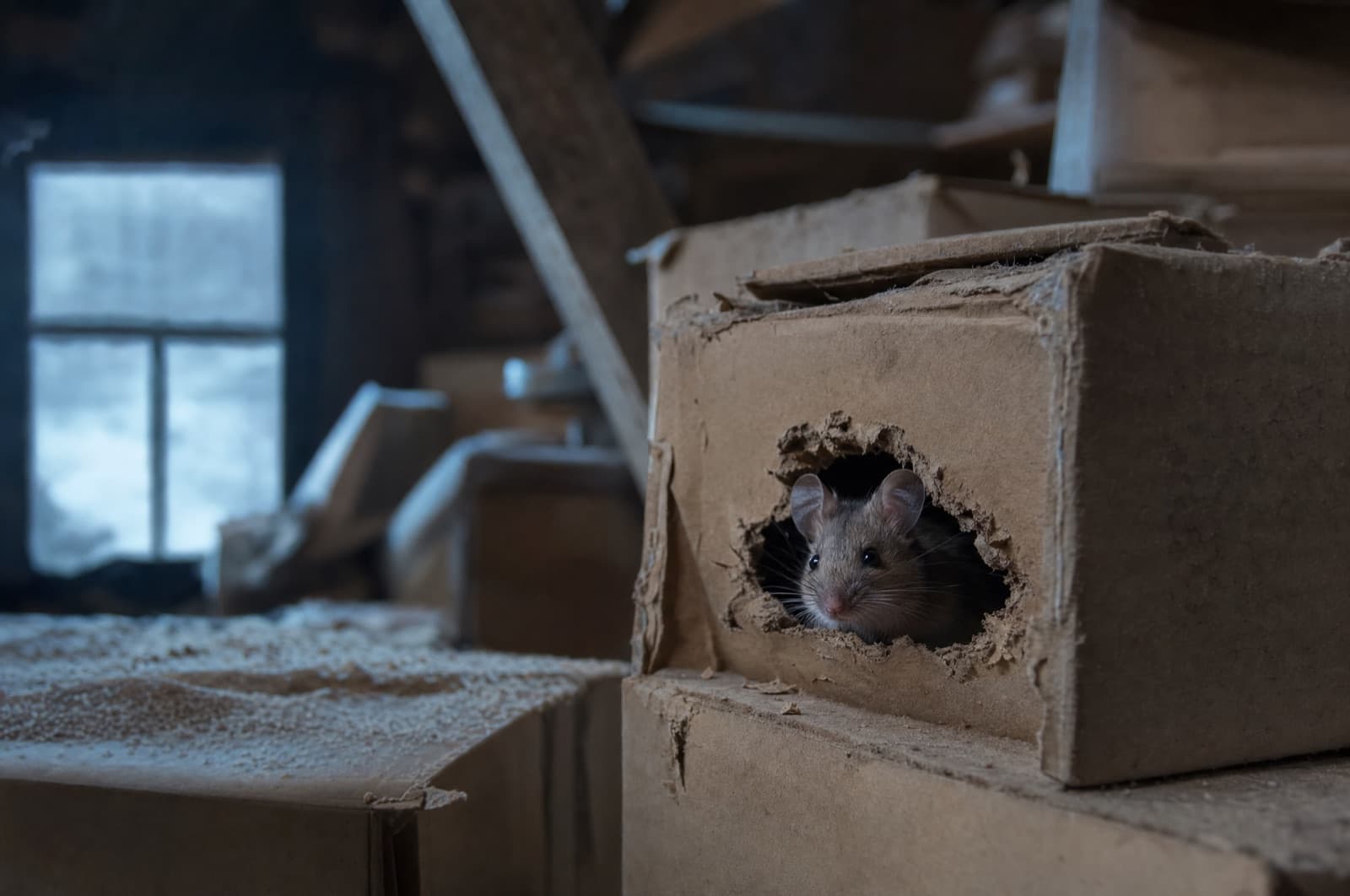
A house mouse in a gnawed cardboard storage box in a cold New Hampshire attic
Daniel Brady · NH-Licensed Pesticide Applicator · License #782664
Reviewed by Daniel Brady

What reporting or documentation should I keep after winter pest treatment?

Do this first
Do this first: request and keep the written record for every winter treatment visit.New Hampshire requires commercial pesticide applicators to log seven specific items for each application — including the site address, date and time, product name, EPA registration number, and amount applied — and to retain those records for at least two years, so a copy should already exist; you just have to ask for it. This document is what lets you enforce a warranty, prove what was actually done, and support an insurance claim if pest activity leads to a covered loss like a fire traced to chewed wiring.

At a glance

  • Verdict: Do this first
  • Who does it: You
  • Effort: Minutes
  • Payoff: High
The honest answer

The short of it

The verdict
Do this first

Keep the written service record — it's your legal receipt, your re-service proof, and your insurance evidence, and New Hampshire requires the applicator to keep one too.

The one question under all of them

Is this actually worth doing?

Every winter job lands somewhere on one honest scale — from what genuinely matters to what our own industry is selling you. Here is where this one lands.

The job being graded
Do this first

Requesting and keeping the written service record — the application log and any inspection findings — after every winter pest visit

The scale
Who does it
You
Effort
Minutes
Payoff
High
What it actually does

It creates a verifiable paper trail. New Hampshire's pesticide rules (Pes 901.02) require a commercial applicator to record seven items for every application — including the site, date and time, the product's brand name and EPA registration number, and the amount used — and to keep that record for at least two years. The EPA registration number lets you look up the actual product label later; the dated record establishes exactly when service happened, which matters if you ever need to prove a re-service window or a warranty claim.

The line

If it isn't written down, you can't enforce the warranty or prove the work.

Our honest lane

Anchor keeps and hands over this record as a matter of course — New Hampshire requires us to keep one regardless of whether a customer asks, so providing it proactively costs us nothing and gives you something concrete. If a company won't give you a copy of what was applied, when, and where, that alone is worth asking about before the next visit.

In depth

The full picture

01

What New Hampshire already requires your applicator to record

This isn't a courtesy a good company offers — it's a state requirement every commercial applicator already has to meet. NH administrative rule Pes 901.02 requires a daily record for each application covering the site and address, the date and time, the target pest, the product's brand name and its EPA registration number, the amount applied, and the applicator's name. That record has to be kept for at least two years.

Because the requirement exists independent of whether you ask, the honest move is simple: ask for your copy at the end of every visit, or request it retroactively for a treatment done earlier this season. A company with nothing to hide will produce it without friction.

02

What the record is actually good for

Three concrete things. First, it's the receipt that lets you enforce a warranty — if a company promises re-service within a window and you need to invoke that, the dated record is your proof of when the clock started. Second, it's insurance evidence: if rodent activity leads to a secondary covered loss, like an electrical fire traced to gnawed wiring, an adjuster will want to see what was found and treated and when. Third, it's a resale asset — buyers and home inspectors increasingly ask about pest history, and a paper trail beats a verbal assurance.

03

What to actually ask for, in plain language

Ask for the site and address, the date and time of the visit, the exact product name and its EPA registration number, the amount used, the target pest, and — separately, but ideally in the same document — any inspection findings such as entry points located or evidence observed. If a company gives you a vague summary ('treated for rodents') instead of these specifics, ask them to put the details in writing before the next visit.

New Hampshire context

How this plays out for a New Hampshire homeowner

This is a New Hampshire-specific answer, not a generic one. State administrative rule Pes 901.02 requires every commercial applicator working in New Hampshire to keep a daily record of seven items -- the site and address, date and time, target pest, product brand name, EPA registration number, amount applied, and the applicator's name -- and to retain it for at least two years. So the paperwork you want already exists by law for any licensed treatment done at your home; you're asking for a copy, not asking a company to create something new.

Timing matters locally too. Most winter rodent treatments in the Manchester area cluster around the first hard frost, which NOAA puts at roughly October 19 to 29 -- the stretch when cooling pushes mice toward warm structures. Because that's when the season's records get created, it's the natural moment to ask for your copy and start a dated file you can compare against next fall.

  • NH-licensed #782664

    Southern New Hampshire

  • Family-owned

    Since 2017

  • Honest routing

    Even when it isn’t us

We serve these communities

ManchesterNashuaConcordDerryBedfordSalemHudsonAmherst

Ask for the record. Every time.

It's your legal receipt, your re-service proof, and your insurance evidence if a secondary loss ever happens. If a company won't hand it over, that's worth knowing before the next visit.

Follow-up questions

Frequently asked

Sources & citations(3)
  1. NH Pes 901.02 — Daily Record Keeping

    The seven required application-record items and the two-year retention requirement for NH commercial applicators

    stateverified 2026-07-16
  2. UNH Extension — Record Keeping for Commercial Pesticide Applicators

    What NH applicators are expected to record and why

    extensionverified 2026-07-16
  3. EPA — Introduction to Pesticide Labels

    The EPA registration number identifies the product and its legally enforceable label

    govverified 2026-07-16

Written & reviewed by

Verified

Daniel Brady

NH-Licensed Pesticide Applicator · License #782664 (NHDAMF, RSA 430)

Daniel Brady is the New Hampshire–licensed applicator behind Anchor Pest Services, a family-owned pest control company serving the Manchester area since 2017.

Verify license

Last updated Jul 2026

Honest pest help for New Hampshire homes

We Hand You the Record — You Don't Have to Ask Twice.

New Hampshire requires us to keep a written application record regardless. We give you a copy as a matter of course, because a company confident in its work has nothing to hide in the paperwork. Family-owned since 2017, NH license #782664, serving Manchester, Nashua, Concord and nearby towns.

  • Honest advice — we'll tell you when a hardware-store fix or a phone question beats a service call
  • NH-licensed applicators (#782664) — free inspection, same-day service
  • Winter rodent exclusion across southern and central New Hampshire

NH License #782664 · No obligation · We answer in person