
Skip to content
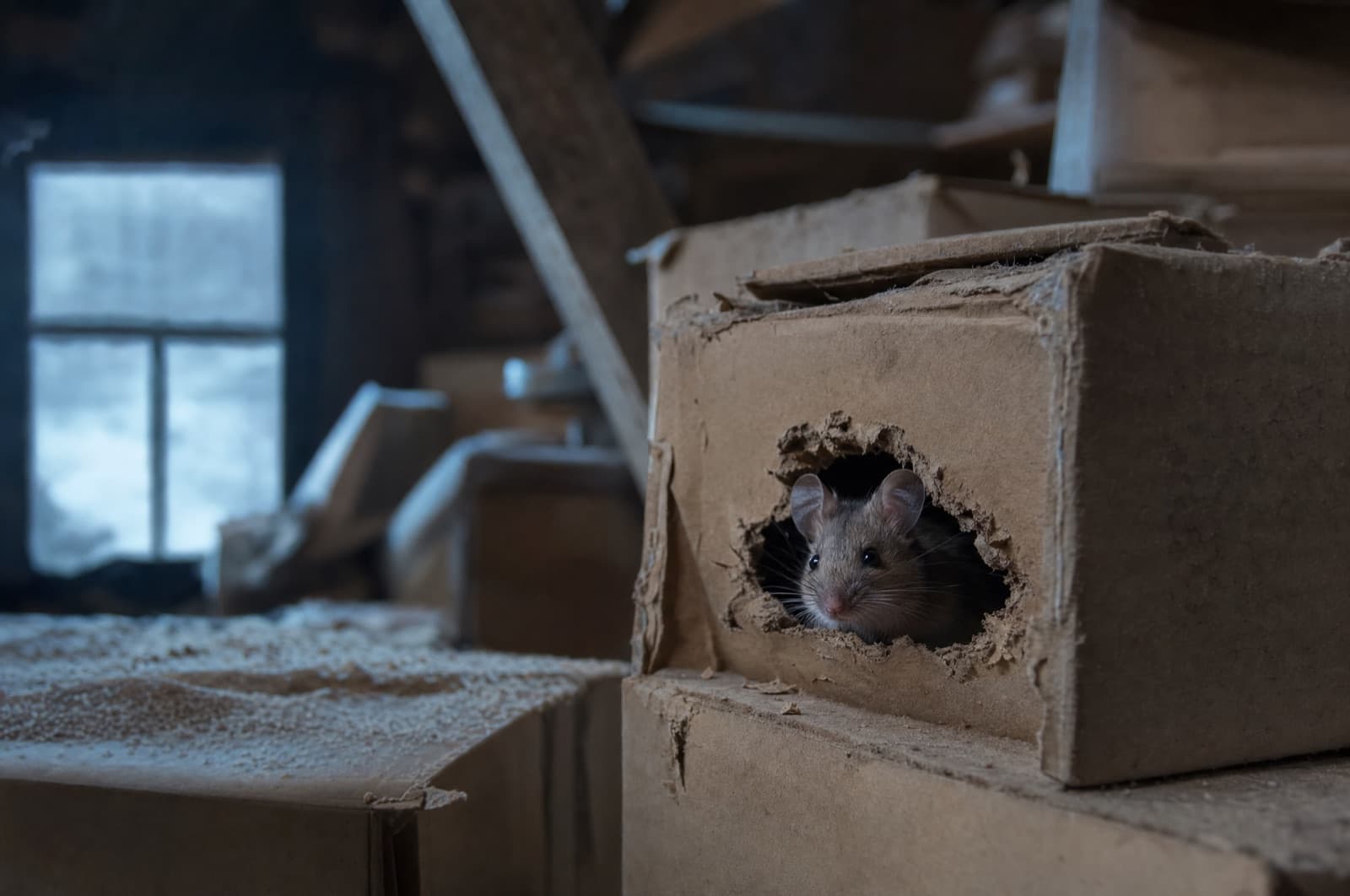
A house mouse in a gnawed cardboard storage box in a cold New Hampshire attic
Daniel Brady · NH-Licensed Pesticide Applicator · License #782664
Reviewed by Daniel Brady

What should I include in a winter pest inspection report?

Do this first
Do this first: insist on a written inspection report, not a verbal walk-through.A genuinely useful winter pest inspection report documents the specific entry points found and their locations, physical evidence such as droppings or gnaw marks, the conditions actually driving pressure — clutter, food storage, moisture, exterior vegetation or firewood against the foundation — and the recommended exclusion work. If a pesticide was applied, New Hampshire law separately requires the applicator to log the product, its EPA registration number, and the amount used. A company that can't hand you this in writing didn't really inspect your house.

At a glance

  • Verdict: Do this first
  • Who does it: You
  • Effort: Minutes
  • Payoff: High
The honest answer

The short of it

The verdict
Do this first

A written report is the backbone of honest service — insist on entry points, evidence found, conditions driving pressure, the recommended fix, and any required pesticide-application record.

The one question under all of them

Is this actually worth doing?

Every winter job lands somewhere on one honest scale — from what genuinely matters to what our own industry is selling you. Here is where this one lands.

The job being graded
Do this first

Obtaining and keeping a written inspection report that documents entry points, evidence, and recommended exclusion work — not just a verbal summary

The scale
Who does it
You
Effort
Minutes
Payoff
High
What it actually does

It turns a walk-through into an accountable, checkable record: a map of what needs sealing, evidence of what's actually present versus assumed, and — for any product applied — the state-required application log. Federal and extension exclusion guidance both treat the inspection as the step that identifies specific gaps, often as small as a quarter inch, rather than producing a generic 'we treated the perimeter' summary with nothing to verify against.

The line

If they can't hand you a written report, they didn't really inspect.

Our honest lane

Anchor provides a written report as standard practice, not an add-on — it costs us nothing extra, and it's the only way you can actually verify the work matches the diagnosis. If a company offers only a verbal recap, ask them to put the entry points and recommendation in writing before you agree to anything.

In depth

The full picture

01

What a report needs to name specifically

Three categories of specifics, not generalities: the entry points and their exact locations (a foundation gap by the utility line, a torn attic vent screen), the physical evidence found (droppings, gnaw marks on wood or wiring, grease trails along a baseboard, nesting material), and the conditions driving pressure — clutter that provides harborage, food or pet food stored in the wrong containers, moisture problems, and exterior vegetation or firewood stacked against the foundation. A report that says 'signs of rodent activity noted' without locations or specifics isn't verifiable.

02

The recommended fix, not just the visit

A genuine report ends with a specific recommendation — which gaps to seal and with what (metal or hardware cloth, not foam alone), not a vague suggestion to 'monitor' or an automatic recommendation for a recurring treatment plan. The distinction matters: an inspection that leads to an exclusion recommendation is addressing the actual entry point; one that leads straight to 'we'll come back and spray again' hasn't necessarily fixed anything.

03

The part New Hampshire actually requires

If any pesticide was applied during the visit, state rule Pes 901.02 separately requires the applicator to record the product's brand name and EPA registration number, the amount used, and the date, time and site — and to keep that record for at least two years. In practice, a thorough inspection report and the state-required application log often live in the same document, and you're entitled to a copy of both. See our companion page on what documentation to keep after treatment for the full recordkeeping picture.

New Hampshire context

What a winter inspection report should capture in a New Hampshire home

Timing shapes what an inspection report matters for here. Manchester's first hard frost typically lands October 19 to 29 (NOAA), and that's the window when cold pushes rodents toward heated structures -- so a fall report should specifically document the exterior entry points cold-driven mice and rats will test, not just interior signs. In wooded and rural NH properties, expect two different species: the house mouse (Mus musculus), the classic structure-invading commensal rodent active year-round, and the native white-footed mouse (Peromyscus leucopus) that moves indoors as temperatures drop. Wildlife-damage research (ICWDM) notes house mice most readily invade as temperatures cool, while Peromyscus don't hibernate but may go torpid for a few days in severe cold.

The species distinction belongs in the report because it affects cleanup guidance. Peromyscus is the hantavirus-relevant genus in New England (CDC), so if droppings or nests are noted in an attic or crawl space of a woods-adjacent NH home, a good report should flag that dry droppings must not be swept or vacuumed -- CDC advises ventilating and wet-cleaning to avoid aerosolizing the virus. A report naming the species, the entry points, and safe cleanup is doing the winter-specific work the season demands.

  • NH-licensed #782664

    Southern New Hampshire

  • Family-owned

    Since 2017

  • Honest routing

    Even when it isn’t us

We serve these communities

ManchesterNashuaConcordDerryBedfordSalemHudsonAmherst

No report, no proof it happened.

Insist on entry points, evidence found, and the recommended exclusion work in writing — not just a verbal recap of the visit.

Follow-up questions

Frequently asked

Sources & citations(4)
  1. NH Pes 901.02 — Daily Record Keeping

    Required application-record items when pesticide is part of the visit

    stateverified 2026-07-16
  2. UNH Extension — Record Keeping for Commercial Pesticide Applicators

    What a thorough NH application/inspection record should contain

    extensionverified 2026-07-16
  3. National Park Service — Rodent Exclusion Manual: Mechanical Rodent-Proofing Techniques

    Inspection checklist structure — entry points, evidence, sealing materials

    govverified 2026-07-16
  4. UNH Extension — What is Integrated Pest Management (IPM)

    Inspection as the first step in an IPM sequence

    extensionverified 2026-07-16

Written & reviewed by

Verified

Daniel Brady

NH-Licensed Pesticide Applicator · License #782664 (NHDAMF, RSA 430)

Daniel Brady is the New Hampshire–licensed applicator behind Anchor Pest Services, a family-owned pest control company serving the Manchester area since 2017.

Verify license

Last updated Jul 2026

Honest pest help for New Hampshire homes

A Real Inspection Ends With a Written Report.

We document entry points, evidence and the recommended fix in writing, as standard practice — not an upsell add-on. If a company only gives you a verbal summary, ask them to put it on paper before you sign anything. Family-owned since 2017, NH license #782664, serving Manchester, Nashua, Concord and nearby towns.

  • Honest advice — we'll tell you when a hardware-store fix or a phone question beats a service call
  • NH-licensed applicators (#782664) — free inspection, same-day service
  • Winter rodent exclusion across southern and central New Hampshire

NH License #782664 · No obligation · We answer in person