
Skip to content
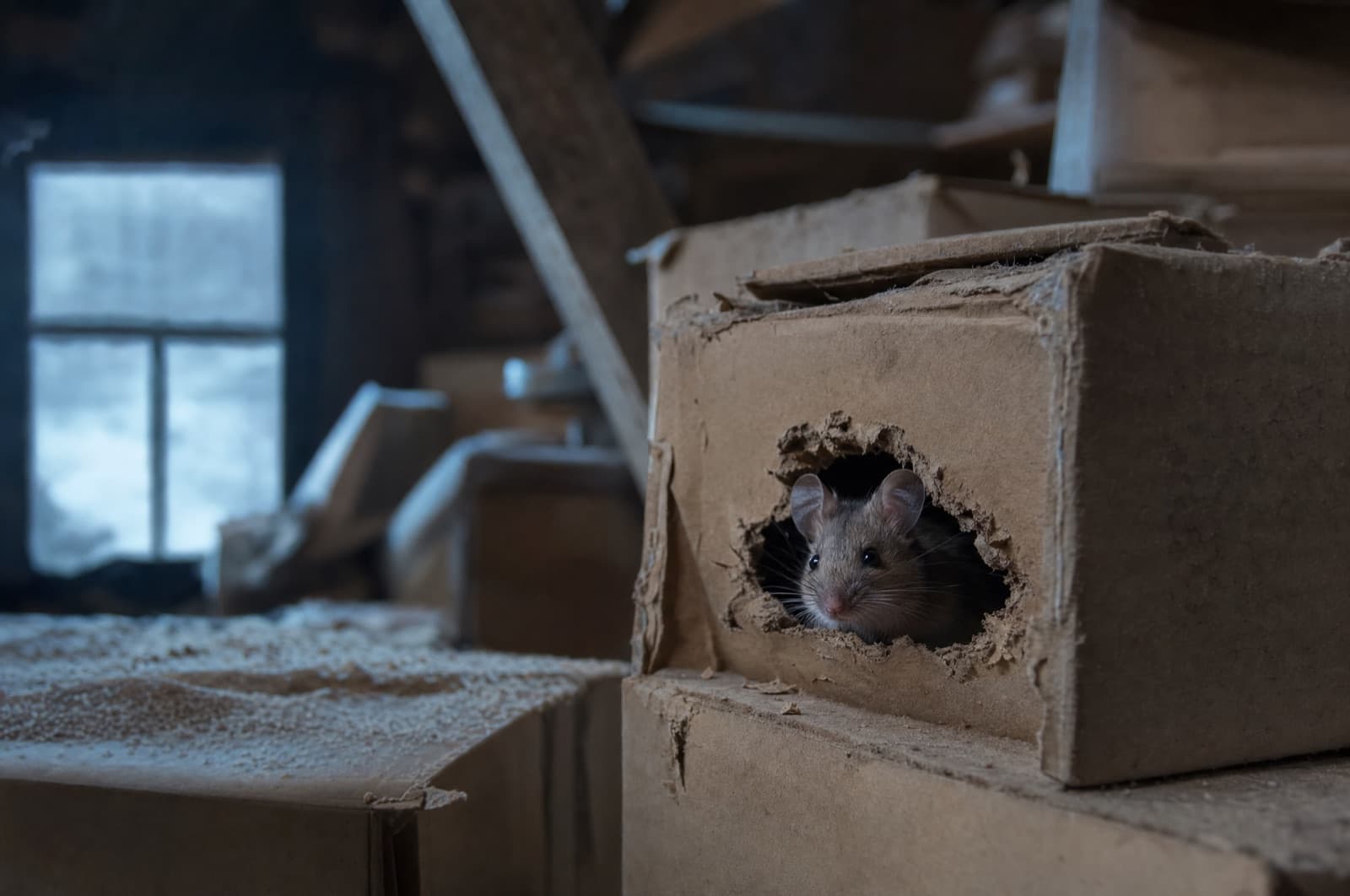
A house mouse in a gnawed cardboard storage box in a cold New Hampshire attic
Daniel Brady · NH-Licensed Pesticide Applicator · License #782664
Reviewed by Daniel Brady

What traps are effective for rodents in winter?

Do this first
Do this first: a plain snap trap, placed correctly, is the most effective and cheapest tool against winter rodents.University of California IPM calls trapping "the safest and most effective method for controlling rats and mice in and around homes." Glue boards mostly catch juveniles and fail once dust or cold reaches the adhesive, electronic traps work but cost far more for the same result, and rodenticide bait belongs outdoors in tamper-resistant stations, not loose indoors. Match trap size to the animal, since a mouse trap will not hold a rat.

At a glance

  • Verdict: Do this first
  • Who does it: You
  • Effort: An afternoon
  • Payoff: High
The honest answer

The short of it

The verdict
Do this first

The plain wooden snap trap, correctly placed, is the workhorse of winter rodent control -- skip glue boards and skip poison indoors.

The one question under all of them

Is this actually worth doing?

Every winter job lands somewhere on one honest scale — from what genuinely matters to what our own industry is selling you. Here is where this one lands.

The job being graded
Do this first

Setting multiple correctly placed snap traps along wall lines and known runways, instead of relying on glue boards, poison, or a single trap

The scale
Who does it
You
Effort
An afternoon
Payoff
High
What it actually does

A snap trap mechanically kills and retains the rodent at a known location, which is what makes it diagnostic as well as effective -- you find out where the activity actually is. Mice rarely range more than about 30 feet from a nest or food source, so UC IPM recommends spacing traps no more than roughly 10 feet apart along the walls and runways where droppings or rub marks appear, and using enough traps to make the effort short and decisive rather than dragging on for weeks. Rats are neophobic, meaning they avoid new objects on sight, so UC ANR guidance is to leave traps unset and pre-baited for several days first -- skip that step and you tend to catch only inexperienced juveniles while the breeding adults avoid the trap entirely. Glue boards lose effectiveness for a specific reason beyond squeamishness: adult rodents can often detect and avoid the glue, and cold, dust, and debris degrade the adhesive itself over a winter. Electronic (electrocution) traps work about as well as a snap trap but cost considerably more for the same outcome.

The line

A plain wooden snap trap outperforms the gadget and the poison -- the skill is in placement, not price.

Our honest lane

Anchor helps most with the inspection that tells you where to actually place traps, and with large, established, or in-wall infestations that DIY trapping alone will not clear. Rodent-control depth -- bait types, trap-buying specifics, exclusion after the fact -- belongs to our mice-and-rats guide; this page stays on the winter-specific question of which trap to use and where.

In depth

The full picture

01

Why the plain snap trap wins

It is tempting to assume a newer, more expensive device must work better, but the evidence runs the other way. UC Statewide IPM's guidance on the house mouse is unambiguous that trapping is "the safest and most effective method for controlling rats and mice in and around homes, garages, and other structures." A snap trap kills quickly, holds the animal for disposal, and tells you exactly where the activity is happening -- information a bait station or a repeller cannot give you.

Glue boards look like a cleaner, less violent option, but the research doesn't support that either. Adult rodents can often detect and avoid the glue outright, so what a glue board actually tends to catch is inexperienced juveniles, not the breeding adults driving the problem. Dust, cold, and moisture also degrade the adhesive over a winter, so a board set in October may be useless by December even if nothing has visibly changed.

02

The skill is placement, not the trap

House mice seldom venture more than about 30 feet from their nest and food supply, which is why UC IPM's practical advice is to space traps no more than roughly 10 feet apart along the walls, baseboards, and corners where you've already seen droppings or grease marks -- and to use enough of them that the job is short and decisive rather than a slow trickle of one catch a week.

Rats add a wrinkle mice don't: neophobia, an instinctive avoidance of anything new in their environment. UC ANR's guidance on managing rats with snap traps is to leave the trap unset and pre-baited in place for several days before setting it live. Skip that step and you will likely catch only younger, less cautious rats while the established, breeding adults keep clear of it -- which looks like success but isn't.

Size matters too, and it isn't a formality: a mouse trap's trigger and spring are calibrated for a mouse's weight, and a rat will either avoid it or spring it without being caught. Use a rat-sized trap for rat sign, a mouse-sized trap for mouse sign.

03

What to skip indoors, and the honest case against live-catch

Rodenticide bait is a separate product class from a trap, and it belongs outdoors in tamper-resistant stations under EPA's consumer-product restrictions -- not loose indoors, where pets and children can reach it and where a poisoned rodent can die inside a wall. This page names the product class and routes you to the label; it does not give dosing or placement instructions, because that is exactly what the label is for.

Live-catch traps have a genuine appeal -- nobody has to see a dead animal -- but the honest tradeoff is worth naming. A live, stressed rodent in a trap may urinate or defecate, and New York State Health's hantavirus guidance is specific that snap traps are preferred over glue or live traps partly for this reason: hantavirus spreads through airborne particles from disturbed rodent urine and droppings, and a distressed animal produces more of both. A quick, clean kill is not the callous option here; it is the one with a smaller aerosol footprint.

04

When trapping stops being enough

DIY trapping is squarely the right first move for an active, localized problem -- droppings in one or two rooms, a runway along one wall, a handful of catches over a week or two. It stops being the right tool once activity is heavy or spread across multiple rooms, once you suspect an in-wall or attic population you can't reach with a trap line, or once you simply don't want to handle carcasses, disposal, or the hantavirus precautions that come with cleanup. That is a fundamentally different job -- inspection to find the source and exclusion to close it -- and it's where a pro's inspection earns its keep rather than another round of traps.

Key takeaways
6 points
  • Trapping, not poison or gadgets, is what extension entomologists call the safest and most effective winter rodent control.
  • Space snap traps roughly 10 feet apart along walls and runways -- mice rarely range more than 30 feet from their nest.
  • Pre-bait rat traps unset for several days first; rats are neophobic and skipping this step catches only juveniles.
  • Glue boards lose their grip in cold and dust, and adult rodents often detect and avoid the adhesive outright.
  • A plain wooden snap trap outperforms the gadget and the poison -- the skill is in placement, not price.
  • Live-catch traps carry a real hantavirus consideration: a stressed, live-caught rodent may urinate or defecate, which is part of why health agencies favor a quick, clean kill.
New Hampshire context

Trapping season in a Manchester winter

Manchester's first hard frost lands around October 19 to 29 in a typical year (NOAA), which is roughly when indoor rodent activity in southern New Hampshire starts to climb as outdoor food gets scarce and cold raises the cost of staying outside. That makes late fall through late winter the window where trap lines earn their keep -- droppings and rub marks found in October are worth acting on immediately rather than waiting for spring.

If you're setting traps mid-winter and still seeing fresh sign after a week or two of consistent, well-placed traps, that persistence is itself information: it usually means the population is larger than a few individuals, or that trapping alone can't outpace an entry point that's still open.

  • NH-licensed #782664

    Southern New Hampshire

  • Family-owned

    Since 2017

  • Honest routing

    Even when it isn’t us

We serve these communities

ManchesterNashuaConcordDerryBedfordSalemHudsonAmherst

Traps not keeping up with the sign you're seeing?

A well-placed trap line handles a normal winter mouse problem. If the droppings keep coming after a week of consistent trapping, that's worth a professional inspection.

Follow-up questions

Frequently asked

Sources & citations(6)
  1. UC Statewide IPM Program — House Mouse

    Trapping as the safest and most effective control method; ~30-foot mouse range; ~10-foot trap spacing

    extensionverified 2026-07-16
  2. UC ANR — Rats and Mice: How to Manage Using Snap Traps

    Trap placement, pre-baiting rat traps, rat neophobia

    extensionverified 2026-07-16
  3. Penn State Extension — Is There a Mouse in the House? Eliminate Mice with IPM

    IPM-based trapping guidance for winter mouse control

    extensionverified 2026-07-16
  4. New York State Department of Health — Hantavirus Disease Fact Sheet

    Snap traps preferred over glue or live traps to limit hantavirus exposure from a stressed, live-caught rodent

    stateverified 2026-07-16
  5. University of Nebraska–Lincoln Extension — House Mouse (G1105)

    Gnaw-mark and monitoring detail supporting trap placement at active sign

    extensionverified 2026-07-16
  6. US EPA — Restrictions on Rodenticide Products

    Tamper-resistant bait-station requirements for rodenticide products

    govverified 2026-07-16

Written & reviewed by

Verified

Daniel Brady

NH-Licensed Pesticide Applicator · License #782664 (NHDAMF, RSA 430)

Daniel Brady is the New Hampshire–licensed applicator behind Anchor Pest Services, a family-owned pest control company serving the Manchester area since 2017.

Verify license

Last updated Jul 2026

Honest pest help for New Hampshire homes

Set Your Own Traps First. Call Us When They Stop Working.

A plain snap trap, placed correctly, is genuinely the best tool for an active winter mouse problem -- we'd rather tell you that than sell a service call for something a hardware-store trip solves. Where Anchor Pest Services is worth calling is the inspection that finds the entry point, and the larger or in-wall infestations trapping alone won't clear. Family-owned since 2017, NH license #782664, serving Manchester, Nashua, Concord and nearby towns.

  • Honest advice — we'll tell you when a trap line beats a service call
  • NH-licensed applicators (#782664) — free inspection, same-day service
  • Rodent inspection and exclusion across southern and central New Hampshire

NH License #782664 · No obligation · We answer in person