
Skip to content
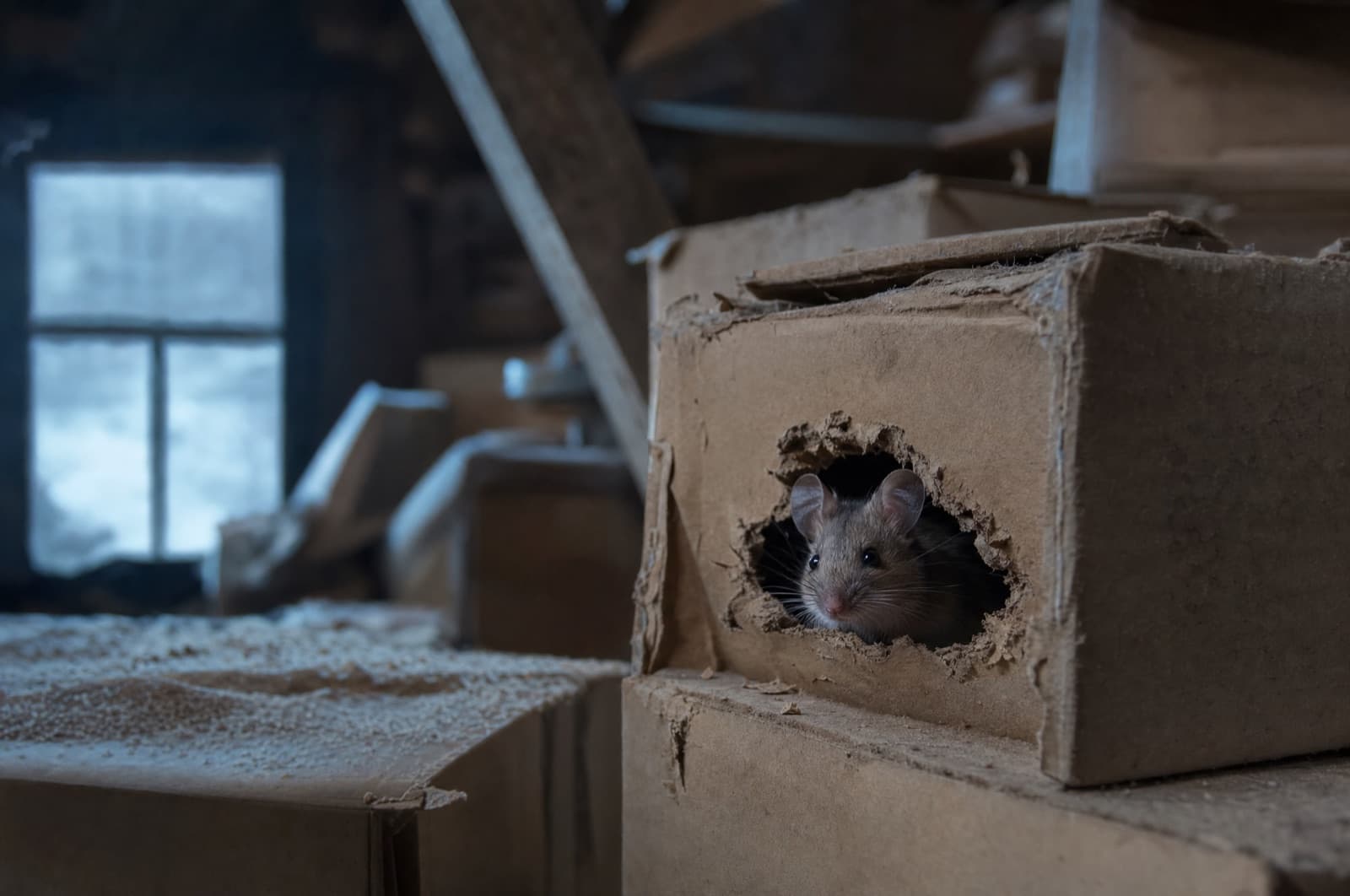
A house mouse in a gnawed cardboard storage box in a cold New Hampshire attic
Daniel Brady · NH-Licensed Pesticide Applicator · License #782664
Reviewed by Daniel Brady

What winter pest problems do older homes face?

Major risk factor — and partly, not fully, fixable
Major, and this is one of the better-documented risk factors in this hub.Older homes accumulate exactly the openings pests exploit: settled or cracked foundations, worn door sweeps and weatherstripping, gaps where the sill plate meets the foundation, open brick weep holes, and utility penetrations that were never sealed to modern standards. The EPA states gaps as small as a quarter inch — about the width of a pencil — let mice into wall cavities, and older "balloon-framed" construction has far more hidden air-leakage pathways than modern platform framing. You can't change the home's age, but sealing the envelope closes most of the gap.

At a glance

  • The verdict: Major risk factor — and partly, not fully, fixable
The honest answer

The short of it

The verdict
Major risk factor — and partly, not fully, fixable

Major and evidence-backed: an older home's settled foundation, worn weatherstripping, and looser framing are mouse highways, and exclusion retrofits close most — not all — of that gap.

Why your house

How much this factor matters

Age-related gaps, settling, and looser building envelope in older housing stockMajor factor
Why

The EPA's Indoor airPLUS pest-entry bulletin states plainly that gaps as small as a quarter inch — roughly the width of a pencil — are enough to let mice into wall cavities, and older homes accumulate far more of these openings than newer construction: settled or cracked foundations, worn door sweeps and weatherstripping, unsealed sill-plate-to-foundation seams, and open brick weep holes original to the era they were built. Building-science literature adds a structural dimension specific to older construction: many older houses use "balloon framing," which creates continuous, uninterrupted stud-bay cavities running from the basement to the attic, in contrast to the fire-blocked, compartmentalized platform framing used in modern homes. That difference matters in winter specifically because of the stack effect — warm air rising and exfiltrating high in the house while cold air infiltrates low near the foundation — which actively pulls outside air, and the pest cues riding on it, in at exactly the ground level where mice are traveling. Wet or decaying wood common in older structures also draws carpenter ants.

Partly
You can't change the home's age or its original framing method, but sealing substantially closes the practical gap between an older home and a newer one. Prioritize air-sealing the whole envelope — sill plate, foundation penetrations, door sweeps, and weep-hole covers — since the same leaks that waste heating energy are the pest highways. Use gnaw-resistant materials for any gap a rodent could exploit: hardware cloth or steel wool backed with sealant, not foam or caulk alone, since the EPA notes rodents readily chew through foam, wood, and some plastics. This is a systematic sealing project, best done as a single fall pass rather than a series of one-off patches.

Assessed from: EPA Indoor airPLUS Pest Entry Prevention bulletin; building-science literature on stack effect and balloon framing

In depth

The full picture

01

Why age itself becomes a pest problem

An old house wasn't built with pest exclusion in mind — it was built to a standard that predates the quarter-inch rule, weatherstripping innovations, and even, in many cases, a fully sealed sill plate. Over decades, settling adds cracks the original builder never intended, door sweeps wear down, and utility penetrations added over the years for plumbing, electrical, or HVAC work often go unsealed.

None of that is a maintenance failure in the usual sense — it's the accumulated effect of age on a structure, and it happens to every older home to some degree. The honest finding is that this accumulation adds up to real, measurable openings, not just an aesthetic or comfort issue.

02

The framing detail that makes this worse in winter specifically

Balloon framing — common in homes built before the mid-20th century — runs continuous stud cavities from the basement sill straight up to the attic, without the fire-blocking that modern platform framing builds in. That's relevant to pests because it creates uninterrupted internal pathways alongside the air-leakage pathways building scientists study.

Winter adds the stack effect on top of that: as warm air rises and leaks out near the roofline, it pulls replacement air in low, near the foundation — right where mice are already probing for gaps. An older, leakier envelope doesn't just have more openings; it actively draws outside air, and whatever's riding on it, further into the house than a tighter modern envelope would.

03

Where sealing closes the gap — and where it can't

The good news is that most of what makes an older home risky is addressable without touching its age or its framing. Sealing the sill plate, foundation penetrations, door sweeps, and weep holes with gnaw-resistant materials directly targets the same openings the EPA and building-science literature identify as the mechanism.

What sealing can't fully undo is the underlying structural reality — a balloon-framed house will always have more internal pathway potential than a platform-framed one, even after every visible gap is closed. That's why this risk factor is graded "partly" changeable rather than fully: the gap closes substantially, not completely.

Key takeaways
5 points
  • Older homes accumulate settled foundations, worn weatherstripping, sill-plate gaps, and open weep holes — real, documented pest entry points, not a scare.
  • The EPA states gaps as small as a quarter inch — a pencil's width — let mice into wall cavities.
  • Balloon framing, common in older construction, creates continuous stud-bay pathways that platform framing's fire-blocking interrupts.
  • Winter's stack effect pulls outside air (and pest cues) in low near the foundation, exactly where older homes have the most gaps.
  • You can't change the home's age, but a systematic sealing pass with gnaw-resistant materials closes most of the practical difference.
New Hampshire context

Older housing stock across southern and central New Hampshire

Manchester, Nashua, Concord, and the surrounding towns carry a large share of pre-war and even 19th-century housing stock, much of it balloon-framed with fieldstone or brick foundations that were never engineered to the quarter-inch standard. That's a real structural fact about the region's housing, not a knock against any particular home.

With Manchester's first hard frost typically landing October 19 to 29 (NOAA), older homes in the area benefit from starting the fall sealing pass earlier than newer construction might need, simply because there's more ground to cover before the cold sets the year's pest pressure in place.

  • NH-licensed #782664

    Southern New Hampshire

  • Family-owned

    Since 2017

  • Honest routing

    Even when it isn’t us

We serve these communities

ManchesterNashuaConcordDerryBedfordSalemHudsonAmherst

Old house, new seal — that's the honest fix.

The sealing pass is a homeowner-and-a-trade project. If gaps have already turned into an active rodent problem, that's where Anchor really helps.

Follow-up questions

Frequently asked

Sources & citations(4)
  1. EPA — Indoor airPLUS Technical Bulletin: Pest Entry Prevention

    Quarter-inch gaps let mice into wall cavities; rodents chew foam, wood, and some plastics; gnaw-resistant sealing materials

    govverified 2026-07-16
  2. DOE Building America Solution Center (PNNL) — Reduce Pest Intrusion

    Air-sealing the building envelope as pest exclusion strategy

    govverified 2026-07-16
  3. AIVC — Finding and Fixing Hidden Air Leaks

    Winter stack effect mechanism; balloon-framed older homes have more hidden air-leakage pathways than platform-framed modern homes

    academicverified 2026-07-16
  4. NOAA — Manchester, NH freeze climatology

    Manchester first hard frost typically ~Oct 19-29 — the seasonal deadline for a fall sealing pass

    govverified 2026-07-16

Written & reviewed by

Verified

Daniel Brady

NH-Licensed Pesticide Applicator · License #782664 (NHDAMF, RSA 430)

Daniel Brady is the New Hampshire–licensed applicator behind Anchor Pest Services, a family-owned pest control company serving the Manchester area since 2017.

Verify license

Last updated Jul 2026

Honest pest help for New Hampshire homes

We Can't Change Your Home's Age. We Can Seal What It's Grown.

Older homes in Manchester, Nashua, and Concord carry real, documented pest-entry risk — we won't pretend a single visit erases decades of settling. What Anchor Pest Services can do is inspect the sill plate, penetrations, and known weak points, and handle rodent exclusion before winter pressure peaks. Family-owned since 2017, NH license #782664.

  • Honest advice — we'll tell you what sealing can and can't undo
  • NH-licensed applicators (#782664) — free inspection, same-day service
  • Rodent exclusion and winter pest control across southern and central New Hampshire

NH License #782664 · No obligation · We answer in person