
Skip to content
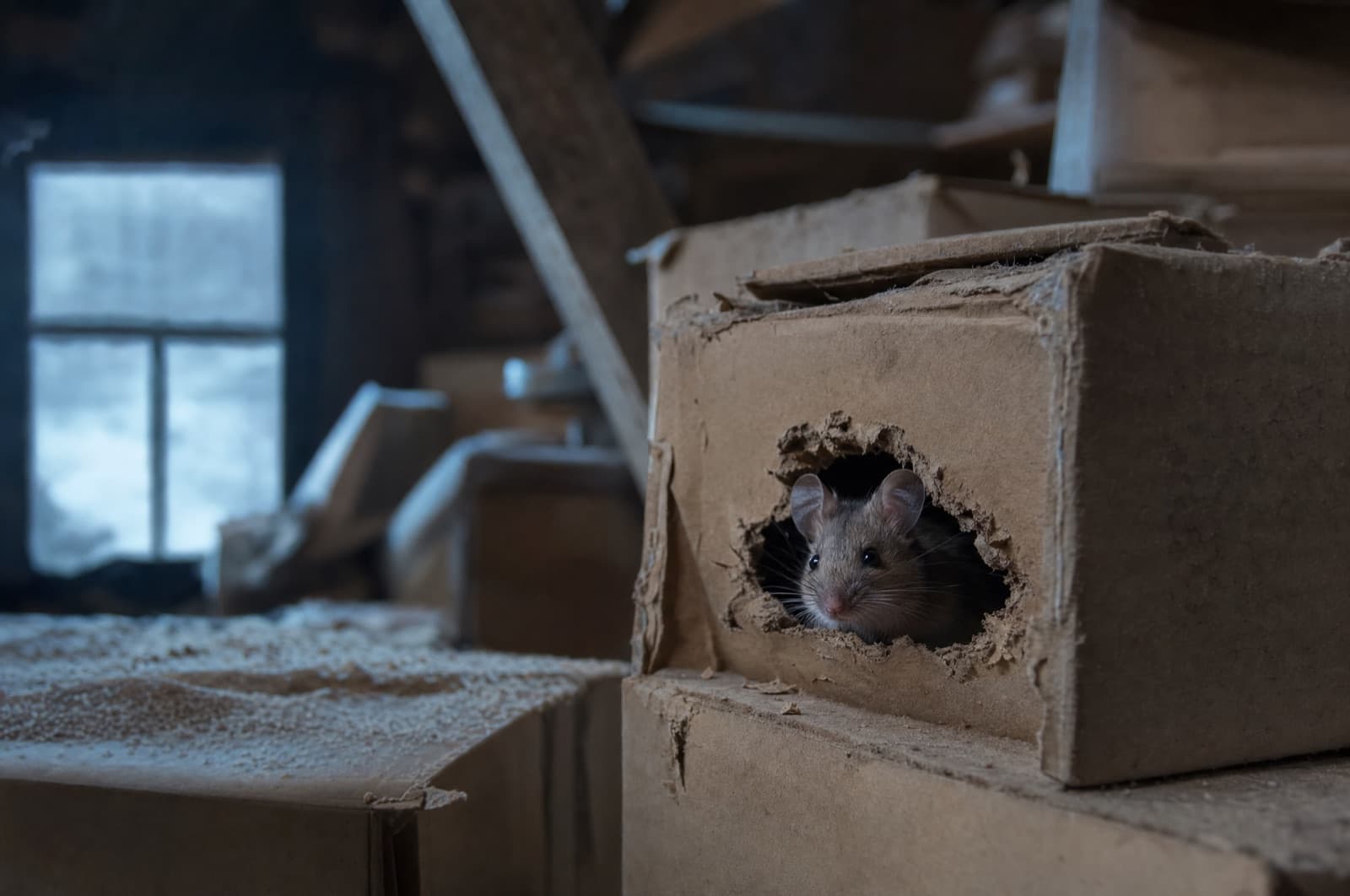
A house mouse in a gnawed cardboard storage box in a cold New Hampshire attic
Daniel Brady · NH-Licensed Pesticide Applicator · License #782664
Reviewed by Daniel Brady

What winter pest treatment options exist for properties?

Worth doing
Worth doing to understand before choosing anything.The real winter treatment options, ranked by how long each one actually lasts: exclusion — sealing entry points with durable materials, which university IPM programs call the most successful and permanent form of rodent control; trapping — snap traps and monitoring for the population already indoors; sanitation and habitat modification — removing food sources and harborage; and targeted pesticide or rodenticide product classes, used only where pests are actually present and always according to the label. No smart sensor or natural repellent replaces this sequence — they're either a monitoring aid or, in the case of repellents, largely unproven.

At a glance

  • Verdict: Worth doing
  • Who does it: You
  • Effort: An afternoon
  • Payoff: High
The honest answer

The short of it

The verdict
Worth doing

Every durable option is physical — the chemical is the smallest part.

The one question under all of them

Is this actually worth doing?

Every winter job lands somewhere on one honest scale — from what genuinely matters to what our own industry is selling you. Here is where this one lands.

The job being graded
Worth doing

Choosing which treatment approach a winter pest service should actually include

The scale
Who does it
You
Effort
An afternoon
Payoff
High
What it actually does

Exclusion physically stops entry and is the most durable option available. Trapping removes the residents already inside. Sanitation and habitat modification reduce what's attracting pests in the first place. Targeted product use knocks down a present population but doesn't seal anything and doesn't prevent reinvasion on its own. Ranked by how long the result actually holds, exclusion comes first, trapping second for immediate population control, sanitation third as an ongoing reduction in attraction, and product application last — useful in the moment, least durable without the other three.

The line

Every durable option is physical — the chemical is the smallest part.

Our honest lane

Anchor sequences these in the same order: inspection and exclusion first, trapping for anything already inside, sanitation guidance alongside, and targeted product use only where clearly warranted and always per label. No smart sensor or natural repellent from us, or anyone else, substitutes for physically sealing a gap — where a competitor's pitch centers on a device or a scent instead of this sequence, that's the part worth questioning.

In depth

The full picture

01

Exclusion — the most durable option

Sealing entry points with metal flashing, hardware cloth, or masonry repair — durable materials, not foam alone — is what university IPM programs describe as the most successful and permanent form of house mouse control, because it removes the mechanism of entry rather than temporarily reducing whatever population is currently inside. This is physical work: identifying gaps at the foundation, around utility penetrations, and along roof lines, then closing them with something a rodent can't gnaw or squeeze through. It's also the option most often skipped in favor of something that looks more like "treatment," because sealing a gap doesn't read as dramatically as spraying something.

02

Trapping — for the population already inside

Snap trapping and monitoring address rodents that have already entered, and extension guidance consistently recommends trapping as a safe, effective, non-chemical option for the indoor population. Trap placement and type matter — a trap sized for a mouse won't catch a rat, and vice versa — which is part of why professional placement, informed by an inspection, outperforms guessing. Trapping without exclusion, though, just removes the current occupants; without sealing the entry point, the position stays open for the next one.

03

Sanitation and habitat modification

Removing food sources, clutter, and harborage — the cardboard boxes, firewood against the foundation, pet food left accessible — reduces what's actively attracting pests to a structure in the first place. It's a genuine, ongoing part of the sequence, though on its own it doesn't stop an animal that's already found a way in, and it doesn't seal anything. It works best paired with exclusion, not as a substitute for it.

04

Targeted product use — and what it can't do alone

Where pests are genuinely present, targeted pesticide or rodenticide product classes have a real role, always applied according to the label — "the label is the law," as EPA puts it, and that principle rules out any discussion of specific dosages or mixing instructions here. What a product application can't do is seal a building or prevent the next rodent from a continuous surrounding population from finding the same unclosed gap. It's the most visible part of a treatment and the least durable one without the other three options alongside it.

One caveat worth naming directly: smart pest sensors and monitors can detect and alert to activity, which helps a technician place traps more precisely, but they do not by themselves control anything. Independent, peer-reviewed evidence for consumer-grade "smart" pest devices is thin — most published material is commercial engineering work, not efficacy trials — and any marketing implying a sensor alone keeps a home pest-free overstates what a monitoring device does.

Key takeaways
5 points
  • Exclusion — sealing entry points with durable materials — is the most permanent option and should be first, not last.
  • Trapping addresses the population already indoors; trap size and placement matter and are best informed by an inspection.
  • Sanitation and habitat modification reduce ongoing attraction but don't stop an animal already inside.
  • Targeted pesticide/rodenticide use, applied per label, has a real role but doesn't seal anything on its own.
  • Smart sensors are a monitoring aid at best — not a treatment, and not a substitute for sealing a gap.
New Hampshire context

Sequencing these options for a New Hampshire property

With Manchester's first hard frost landing around October 19 to 29 (NOAA), the honest sequence for a New Hampshire property ahead of winter is: inspect and seal entry points first, place traps for anything already inside, address sanitation and harborage around the foundation and garage, and reserve targeted product use for where activity is actually confirmed. A company that leads with a spray schedule and treats sealing as an afterthought has the sequence backwards.

  • NH-licensed #782664

    Southern New Hampshire

  • Family-owned

    Since 2017

  • Honest routing

    Even when it isn’t us

We serve these communities

ManchesterNashuaConcordDerryBedfordSalemHudsonAmherst

We sequence it the durable way.

Exclusion first, trapping for what's already inside, sanitation alongside, product use only where warranted.

Follow-up questions

Frequently asked

Sources & citations(4)
  1. UC IPM — House Mouse

    Exclusion as the most permanent form of house mouse control

    extensionverified 2026-07-16
  2. U.S. EPA — Introduction to Pesticide Labels

    The pesticide label is legally enforceable; product use must follow it

    govverified 2026-07-16
  3. NPIC — Rodents

    Integrated pest management approach to rodent control, prioritizing exclusion and sanitation

    npicverified 2026-07-16
  4. University of Nebraska-Lincoln — Rodent-Proof Construction and Exclusion Methods

    Exclusion materials and methods for durable rodent-proofing

    extensionverified 2026-07-16

Written & reviewed by

Verified

Daniel Brady

NH-Licensed Pesticide Applicator · License #782664 (NHDAMF, RSA 430)

Daniel Brady is the New Hampshire–licensed applicator behind Anchor Pest Services, a family-owned pest control company serving the Manchester area since 2017.

Verify license

Last updated Jul 2026

Honest pest help for New Hampshire homes

The Chemical Is the Smallest Part of Our Plan.

Exclusion, trapping, sanitation guidance, and targeted product use only where pests are actually present — in that order, because that's the order that actually lasts. Family-owned since 2017, NH license #782664, serving Manchester, Nashua, Concord and nearby towns.

  • Exclusion-first treatment sequencing, not spray-first
  • NH-licensed applicators (#782664) — free inspection, same-day service
  • Winter rodent treatment across southern and central New Hampshire

NH License #782664 · No obligation · We answer in person