
Skip to content
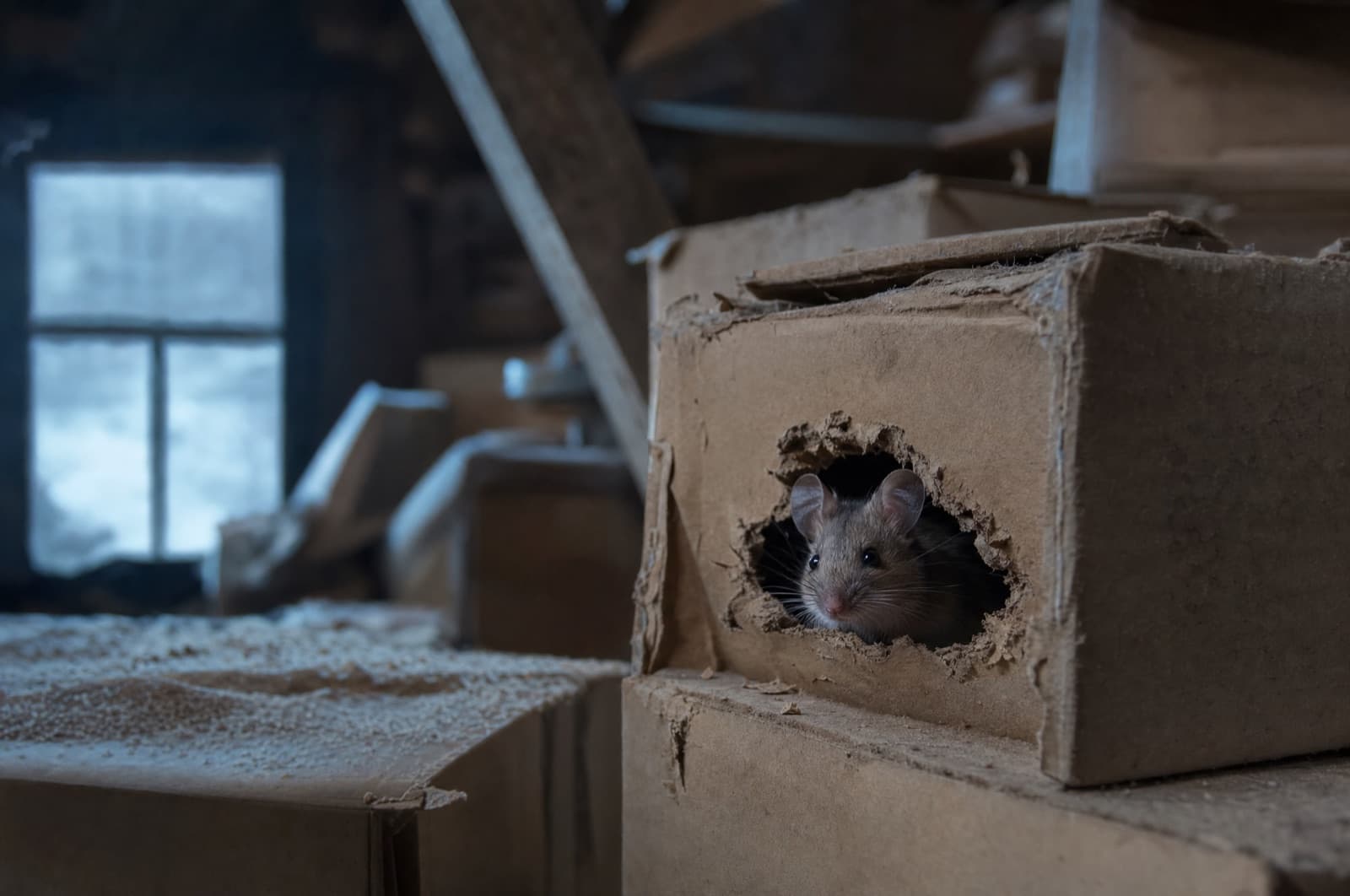
A house mouse in a gnawed cardboard storage box in a cold New Hampshire attic
Daniel Brady · NH-Licensed Pesticide Applicator · License #782664
Reviewed by Daniel Brady

Which pests do I need to watch out for in winter?

A watch-list, ranked by payoff of attention
This is a watch-list, not an inventory: a ranked answer to where your attention and effort should actually go this winter, ordered by evidence-backed payoff, not by which pest is most visible.The single pest worth genuine winter vigilance in a northern climate is the rodent — active every day, gnawing structural material, carrying documented health risk. Moths and, where present, cockroaches earn real but secondary attention. Everything else on the list — the dramatic winter swarms of lady beetles, cluster flies, boxelder bugs and stink bugs, plus resident spiders — is a manageable nuisance that doesn't need vigilance beyond a vacuum. Our companion census page covers the separate question of what's physically overwintering inside a house right now.

At a glance

  • The verdict: A watch-list, ranked by payoff of attention
The honest answer

The short of it

The verdict
A watch-list, ranked by payoff of attention

One pest genuinely deserves daily-life vigilance this winter. Ranked by evidence-backed payoff of your attention and effort, not by how startling it looks on a warm January windowsill.

The roll-up

Ranked by what actually pays off

Winter pests ranked by how much your attention and effort during the season actually pays off, for a typical New Hampshire home

Ranked by
evidence-backed payoff of watching for and acting on each pest this winter, not by how visible, numerous, or startling it is
RankItemGradeWho does itNote
01Mice & ratsDo firstYouActive all winter, can breed indoors, gnaw wiring and insulation, and carry documented pathogens. Watch for droppings, gnaw marks, and scratching sounds — this is the one item on the list worth daily-life vigilance.
02Clothes & pantry mothsWorth itYouLarvae quietly destroy wool and stored food in a heated home all winter. Periodically check closets and pantry shelves; damage is easy to miss until it's advanced.
03Cockroaches, where presentWorth itYouA health watch-item more than a structural one — documented asthma-trigger allergens. Worth monitoring if you have any established indoor population, regardless of season.
04Cluster flies, lady beetles, stink bugs & boxelder bugsSkip itYouHarmless overwinterers. Vacuum the ones you see; don't spray wall voids. Not worth ongoing vigilance beyond simple removal as they appear.
05House & cellar spidersSkip itYouBeneficial predators, already resident year-round. Not a genuine watch-list item — decluttering handles the mild nuisance.
What people get wrong
The expected watch-list leads with whatever's swarming a windowsill on a warm January afternoon — lady beetles, cluster flies, the visually dramatic ones. The honest watch-list leads with the pest you'll probably never actually see: droppings and gnaw marks from a rodent deserve genuine, ongoing attention that a harmless swarm of dormant beetles simply doesn't. Named busywork: reacting to a visible insect swarm as though it's an emergency. The boring thing that actually matters: knowing what a fresh mouse dropping looks like and checking for it periodically. This page ranks by where your attention pays off; our companion census page answers the separate question of what's physically present in a house over winter.
In depth

The full picture

01

What "watch out for" actually means here

This page answers a narrower, more practical question than a simple inventory of winter pests: given limited time and attention over a five-month New Hampshire winter, where should a homeowner's vigilance actually be directed? That's a different question from "what's present," and it produces a shorter, more decisive list — some very real winter pests don't make this watch-list at all, because watching for them doesn't change any outcome that matters.

The ranking below is built around a simple test: does noticing this pest early actually let you do something that prevents a worse outcome? For rodents, the answer is clearly yes. For a dormant cluster fly population in an attic wall void, the honest answer is no — there's nothing meaningfully different you'd do by noticing it in November versus February.

02

Why rodents alone earn genuine, ongoing vigilance

Rodents are the one entry on this list where early detection changes the outcome. A mouse or rat population detected in its first weeks — a few droppings, a faint gnaw mark, an unexplained scratching sound — is a fundamentally easier, cheaper, faster problem to resolve than the same population three months later, once breeding has compounded it and gnawing damage has spread. That's the practical case for genuine, periodic vigilance specifically for rodent signs: check the areas rodents actually use (along walls, behind appliances, in storage areas, near utility penetrations) every few weeks through the winter, not just when you happen to notice something.

No other pest on this list rewards that same level of ongoing attention, because no other pest on the list compounds the way an active, breeding rodent population does, or causes comparable structural and health risk if left unaddressed for a season.

03

Why the harmless overwinterers drop off a genuine watch-list

It might seem strange that cluster flies, lady beetles, boxelder bugs, and stink bugs — often present and sometimes numerous inside New Hampshire homes over winter — rank near the bottom of a page about what to watch for. The reason is specific: watching for them doesn't change anything actionable. They're already dormant and sheltering wherever they're going to shelter for the season by the time winter arrives; there's no early-detection benefit, because there's no escalating outcome to catch early. Vacuuming the ones that wander into living space on a warm day is the entire response, whether you notice them in November or March.

That's the honest distinction between a census (what's overwintering, covered on our companion page) and a watch-list (what deserves your attention this winter, covered here). A pest can truly be present in large numbers and still not belong on a list built around the payoff of vigilance.

Key takeaways
5 points
  • Mice and rats are the only pest on this list where genuine, ongoing winter vigilance changes the outcome.
  • Moths and cockroaches (where present) earn secondary, periodic attention — check closets, pantries, and any known indoor populations.
  • Cluster flies, lady beetles, boxelder bugs and stink bugs are often present but don't reward vigilance — there's no early-detection benefit for a dormant population.
  • House spiders are beneficial residents, not a watch-list item at all.
  • This page ranks by payoff of attention; our companion census page answers the separate question of what's physically overwintering.
New Hampshire context

What a realistic winter vigilance routine looks like in New Hampshire

For a Manchester-area home, the practical version of this list is simple: after the first hard frost (typically October 19 to 29, per NOAA), do a periodic check — every few weeks through the roughly five-month heating season — of the areas rodents actually use: along foundation walls, behind large appliances, in basements and attics near stored goods, and around utility penetrations. Look for droppings, gnaw marks, or the greasy rub marks rodents leave along frequently used paths.

Pair that with an occasional glance at closets and the pantry for moth activity, and — if your home has any known cockroach presence — routine attention to that population regardless of season. Everything else on this list can be handled reactively, with a vacuum, whenever it happens to appear.

  • NH-licensed #782664

    Southern New Hampshire

  • Family-owned

    Since 2017

  • Honest routing

    Even when it isn’t us

We serve these communities

ManchesterNashuaConcordDerryBedfordSalemHudsonAmherst

One item on this list rewards vigilance. Everything else rewards a vacuum.

A periodic rodent-sign check is yours to run all winter. If you find droppings or gnaw marks, that's exactly when a call is worth it.

Follow-up questions

Frequently asked

Sources & citations(4)
  1. Internet Center for Wildlife Damage Management — House Mice

    Rodent activity, breeding, and gnawing risk throughout winter

    academicverified 2026-07-16
  2. UC Statewide IPM Program — Clothes Moths

    Heated buildings enabling continued clothes-moth development in winter

    extensionverified 2026-07-16
  3. NEJM — Inner-City Asthma Study (Rosenstreich et al., 1997)

    Cockroach allergen exposure as a documented asthma-morbidity factor

    academicverified 2026-07-16
  4. UNH Cooperative Extension — Cluster Flies fact sheet

    Cluster flies as a dormant, harmless overwintering nuisance

    extensionverified 2026-07-16

Written & reviewed by

Verified

Daniel Brady

NH-Licensed Pesticide Applicator · License #782664 (NHDAMF, RSA 430)

Daniel Brady is the New Hampshire–licensed applicator behind Anchor Pest Services, a family-owned pest control company serving the Manchester area since 2017.

Verify license

Last updated Jul 2026

Honest pest help for New Hampshire homes

We'll Tell You What's Actually Worth Watching For.

Most of this watch-list is a vacuum job, not a service call. Rodents are the genuine exception — active all winter, and the reason this is our busiest season. We'll tell you honestly which category a sighting falls into before we sell you anything. Family-owned since 2017, NH license #782664, serving Manchester, Nashua, Concord and nearby towns.

  • Honest advice — most winter pest sightings don't need a service call
  • NH-licensed applicators (#782664) — free inspection, same-day service
  • Rodent inspection and exclusion across southern and central New Hampshire

NH License #782664 · No obligation · We answer in person