
Skip to content
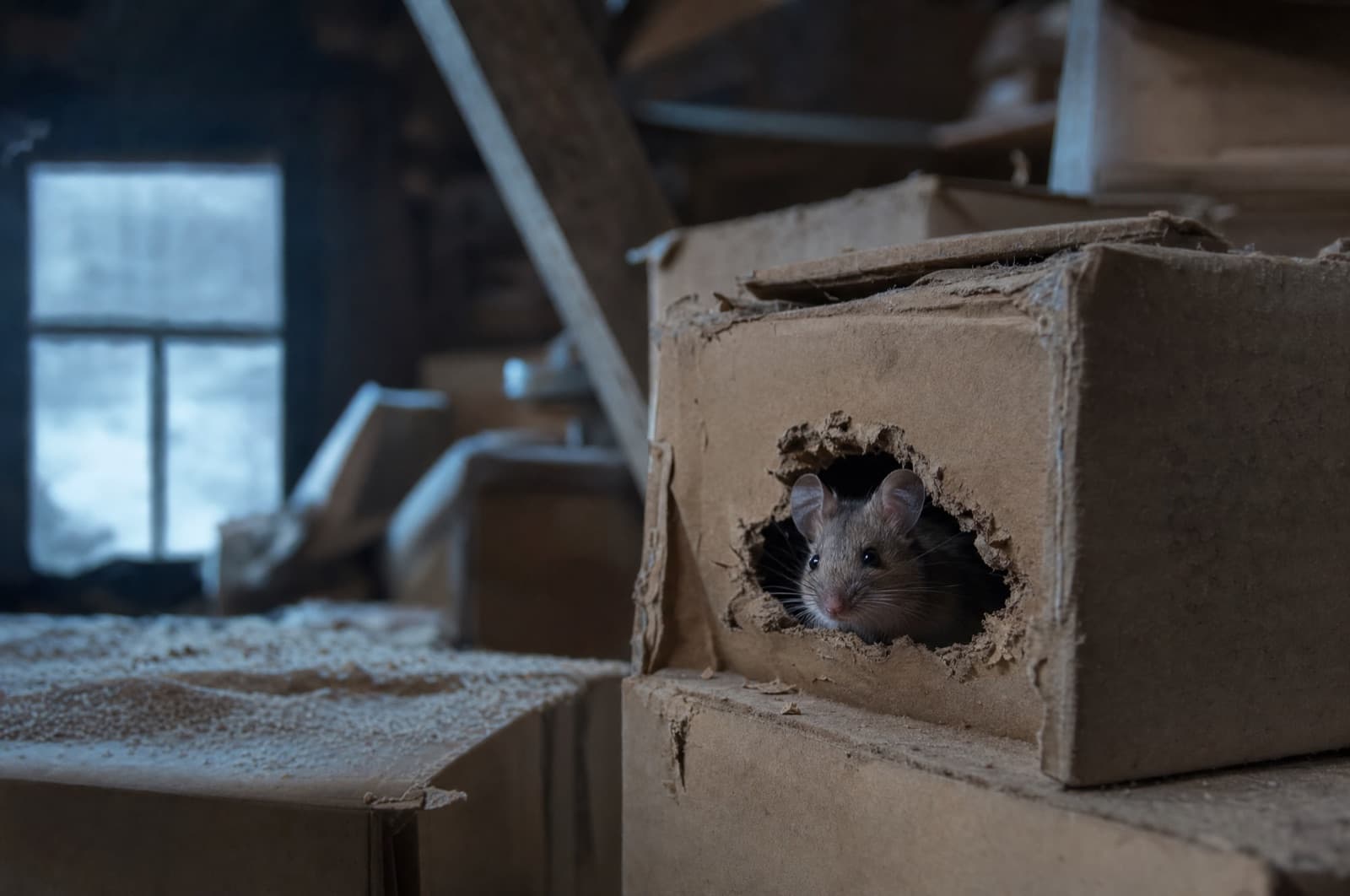
A house mouse in a gnawed cardboard storage box in a cold New Hampshire attic
Daniel Brady · NH-Licensed Pesticide Applicator · License #782664
Reviewed by Daniel Brady

Why do lady beetles and Asian ladybugs invade homes in fall?

Yes — and the winter question is different from the fall one
Yes, and for a specific, well-documented reason: the multicolored Asian lady beetle searches for sheltered overwintering sites once temperatures drop sharply toward freezing after a warm fall day, and a house looks a lot like the rock outcrops it evolved to shelter in.That entry happens in fall — the phase-by-phase mechanics and the sealing window belong to our fall-invaders guide. What matters for winter is simpler: once inside, they do not breed or feed, they cluster in wall voids and attics and wait, reappearing on warm days through the cold months.

At a glance

  • The verdict: Yes — and the winter question is different from the fall one
The honest answer

The short of it

The verdict
Yes — and the winter question is different from the fall one

The multicolored Asian lady beetle enters in fall looking for shelter, then simply waits out winter as a dormant adult. Every beetle you see indoors in January has been there since October.

What actually happens

The busted assumption

Yes

What people assume

"They're breeding in my walls — that's why I keep seeing more." They are not. Every beetle you see in a wall void, on a windowsill, or crawling across the ceiling in January arrived during that fall entry window and has been sheltering ever since. Numbers can look alarming precisely because they aggregate in one spot rather than spreading out, but it's the same population, not a growing one.

What actually happens

Multicolored Asian lady beetle adults are triggered to search for overwintering shelter on the first day above roughly 64°F following a sharp temperature drop toward freezing, typically in mid-to-late October in the northern range that includes New Hampshire. They use an aggregation pheromone that draws large numbers to the same sheltered spot, which is why a house that gets found once tends to get found again every year. Once inside a wall void or attic, they settle into a dormant state and simply wait, occasionally stirring and appearing in living spaces on unusually warm winter days when a sunlit wall or a furnace-warmed void rouses them briefly.

What it means for you
For the winter months specifically, the job is removal, not treatment: vacuum beetles as they appear rather than spraying wall voids, because killing large numbers inside a void just creates a food source that draws carpet and larder beetles, which then go after wool and stored food. The fall entry-point sealing that actually prevents this cycle is timing-dependent and is covered in full in our fall-invaders guide — this page's honest job is confirming what's happening once they're already in for the winter, not re-teaching when to seal.

Established from: Ohio State University Ohioline; University of Maryland Extension; PMC (Koch, H. axyridis biology review)

In depth

The full picture

01

What triggers the fall search, briefly

The multicolored Asian lady beetle (Harmonia axyridis) is a genuine, well-studied invader in North America, and its overwintering search follows a specific weather cue: adults are prompted to seek shelter on the first day the temperature climbs back above roughly 64°F after a sharp drop toward freezing. That pattern of a cold snap followed by a warm rebound is common in a New Hampshire fall, which is why beetle activity often seems to spike on a warm afternoon in mid-to-late October rather than gradually building all season.

The full mechanics of that entry window — how the phases stack up and when sealing actually helps versus when it's too late for the season — belong to our fall-invaders guide, which owns that timing question. This page's job is narrower: confirming what happens for the rest of the winter once they're already inside.

02

Why the wall void, and why it doesn't mean breeding

In their native range, Asian lady beetles overwinter in the crevices of rock cliff faces. A house offers the same basic shape of shelter — narrow voids, stable temperature, darkness — which is why attics, soffits, and wall cavities get chosen instead of a tree or a woodpile. An aggregation pheromone amplifies the effect: once a few beetles settle somewhere, the scent draws more of the same species to the identical spot, which is why an infestation tends to concentrate rather than spread evenly through a house.

That concentration is also why the numbers can look like a growing infestation when they're not. These beetles do not reproduce indoors during winter — they're dormant adults, not a breeding population, and the count you're seeing in February is the same beetles that arrived in October, just increasingly visible as they stir.

03

What to actually do about it in winter

Once beetles are already sheltering in a wall void for the winter, the honest options are limited and cheap. Vacuuming beetles as they appear on windows, ceilings, or walls is the recommended approach — it removes them without leaving carcasses inside the void. Spraying insecticide into a wall cavity to kill an aggregation is specifically discouraged by extension guidance, because the dead beetles become a food source that draws carpet beetles and larder beetles, which then move on to wool, stored food, and other fabric in the house.

Beyond vacuuming, there's genuinely nothing more to do until spring — no treatment reverses an aggregation that's already established for the season. The higher-payoff work is sealing entry points before the next fall's search begins, which is exclusion timing this hub covers elsewhere and our fall-invaders guide covers in full phase-by-phase depth.

Key takeaways
5 points
  • Yes — Asian lady beetles enter in fall seeking shelter, triggered by a warm day following a sharp cold snap.
  • They do not breed indoors during winter; every beetle you see has been sheltering since fall.
  • An aggregation pheromone concentrates them in one wall void or attic, which can look alarming but isn't a growing population.
  • Vacuum, don't spray wall voids — dead beetles attract carpet and larder beetles that then damage fabric and stored food.
  • The fall entry-timing and sealing window is owned by our fall-invaders guide; this page covers what happens once they're already in for winter.
New Hampshire context

What this looks like in a Manchester winter

Manchester's first hard frost typically arrives October 19 to 29 (NOAA), and the sharp cool-then-warm pattern around that window is exactly the trigger that sends Asian lady beetles searching for shelter. A house that gets found in one fall tends to get found again in following years, because the aggregation pheromone left behind draws new arrivals to the same spot.

Once winter has set in and beetles are established in a wall void, there's no local remedy beyond vacuuming as they appear on warm days. The higher-value New Hampshire-specific move is inspecting and sealing exterior gaps — soffits, siding seams, utility penetrations — before next fall's warm-after-cold trigger, which our fall-invaders guide covers in the depth this question deserves.

  • NH-licensed #782664

    Southern New Hampshire

  • Family-owned

    Since 2017

  • Honest routing

    Even when it isn’t us

We serve these communities

ManchesterNashuaConcordDerryBedfordSalemHudsonAmherst

Beetles already in a wall void just need patience and a vacuum.

The fall sealing window is the real fix, and our fall-invaders guide covers that timing in full. For an inspection of where they're getting in, that's well worth a call.

Follow-up questions

Frequently asked

Sources & citations(3)
  1. Ohio State University — Ohioline ENT-44 Multicolored Asian Lady Beetle

    64°F trigger following a sharp temperature drop; aggregation pheromone behavior

    extensionverified 2026-07-16
  2. University of Maryland Extension — Multicolored Asian Lady Beetle

    Aggregation in attics, wall voids and living areas; no indoor reproduction

    extensionverified 2026-07-16
  3. PMC — Koch, biology and ecology of Harmonia axyridis review

    Native rock-crevice overwintering behavior; buildings as analog shelter sites

    academicverified 2026-07-16

Written & reviewed by

Verified

Daniel Brady

NH-Licensed Pesticide Applicator · License #782664 (NHDAMF, RSA 430)

Daniel Brady is the New Hampshire–licensed applicator behind Anchor Pest Services, a family-owned pest control company serving the Manchester area since 2017.

Verify license

Last updated Jul 2026

Honest pest help for New Hampshire homes

Vacuuming Beats Spraying the Wall Void. We'll Tell You That First.

Killing an aggregation in place with insecticide just feeds carpet beetles later — vacuuming is the honest fix for winter. What we're most useful for is finding and sealing the entry points before next fall's warm-after-cold trigger sends another wave in. Family-owned since 2017, NH license #782664, serving Manchester, Nashua, Concord and nearby towns.

  • Honest advice — we'll tell you vacuuming beats spraying a wall void
  • NH-licensed applicators (#782664) — free inspection, same-day service
  • Exterior exclusion inspections across southern and central New Hampshire

NH License #782664 · No obligation · We answer in person