
Skip to content
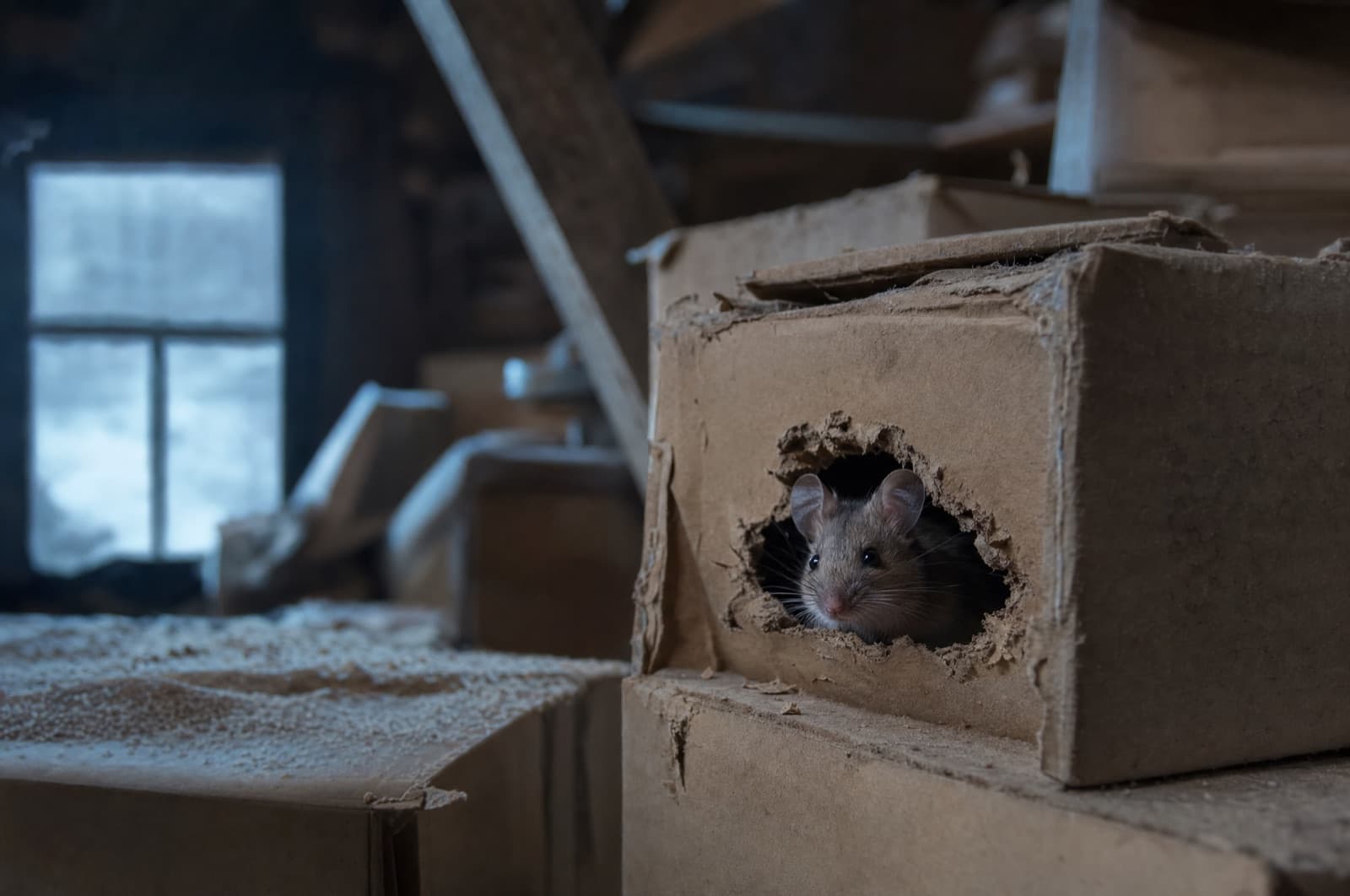
A house mouse in a gnawed cardboard storage box in a cold New Hampshire attic
Daniel Brady · NH-Licensed Pesticide Applicator · License #782664
Reviewed by Daniel Brady

Why do pests prefer attics and crawlspaces in winter?

Yes — they're selecting these spaces on purpose
Yes, and the preference is deliberate, not accidental.Attics, wall voids, and crawlspaces offer the combination overwintering pests need: relative stability of temperature compared to the outdoors, darkness, and freedom from disturbance. For insects like the Asian lady beetle, these cavities substitute for the rock crevices they use for shelter in their native range. For rodents, they're quiet, undisturbed spaces near the warmth of the living areas below. Different pests, but the same underlying selection logic — stable, dark, and left alone.

At a glance

  • The verdict: Yes — they're selecting these spaces on purpose
The honest answer

The short of it

The verdict
Yes — they're selecting these spaces on purpose

Attics, wall voids and crawlspaces offer stable shelter, darkness and freedom from disturbance, exactly what overwintering insects and rodents are built to seek out. They aren't picked at random.

What actually happens

The busted assumption

Yes

What people assume

"They picked the attic at random, or just happened to end up there." They didn't. Every species covered in this hub that overwinters in an attic or crawlspace is selecting for specific, identifiable conditions — a stable, undisturbed cavity that substitutes for whatever shelter it would use in a non-human environment — not stumbling into the first opening it finds.

What actually happens

Research on the multicolored Asian lady beetle documents that in its native habitat, this species aggregates in the cracks and crevices of rock cliff faces to overwinter; in North America, aggregation sites are described as "often homes or other buildings," concentrated on warm upper stories and in wall voids — the built-environment equivalent of the rock crevice it evolved to use. Cluster flies show the same upper-story preference, concentrating in attics closely enough that they're commonly called "attic flies." Rodents select attics and crawlspaces for a related but distinct reason: these spaces are quiet, largely undisturbed by daily household activity, and close enough to a heated structure to offer real thermal benefit without direct human presence.

What it means for you
Because the selection is deliberate and tied to specific conditions, exclusion work is most efficient when it targets the features that make these spaces attractive in the first place: upper-story gaps, soffits, vents, and the sun-facing sides of the house for insects, and ground-level foundation gaps and crawlspace vents for rodents. The full biology of where each specific pest physically goes and how it behaves once established is owned by our winter-pests-shift guide; this page's job is the action angle — focus your exclusion effort on these specific zones rather than treating the whole exterior as equally at risk.

Established from: Ohio State University Ohioline; PMC (Koch, H. axyridis review); UNH Cooperative Extension

In depth

The full picture

01

For overwintering insects: a substitute for the shelter they evolved to use

The clearest documented case is the multicolored Asian lady beetle. In its native range, this species overwinters by aggregating in the cracks and crevices of rock cliff faces — a specific, narrow, stable microhabitat. North American buildings happen to offer an almost identical shape of shelter: narrow voids, stable temperature relative to the outdoors, and darkness. Research on the species' biology describes North American aggregation sites as concentrated in homes and other buildings, on warm upper stories and in wall voids specifically, which mirrors the rock-crevice pattern closely enough to be described as an analog habitat rather than a coincidence.

Cluster flies show a related pattern, concentrating in upper-story spaces and attics closely enough that "attic fly" is a widely used common name for the species. The pattern across these overwintering insects is consistent: they're not settling for whatever opening they find first, they're oriented toward a specific kind of cavity, and attics and wall voids happen to match it closely.

02

For rodents: quiet, undisturbed, and thermally advantageous

Rodents select attics and crawlspaces for a related but distinct set of reasons. These spaces are typically among the least-disturbed parts of a house — homeowners enter an attic occasionally for storage and a crawlspace rarely at all, which makes both ideal for a nesting rodent that needs to avoid detection and disturbance to survive and reproduce. They're also close enough to a heated structure to offer meaningful thermal benefit: an attic just above insulated ceiling joists, or a crawlspace beneath a heated floor, is measurably milder than the outdoors even without being heated itself.

That combination of quiet and relative warmth is the same logic driving rodents toward structures generally in winter, just applied at the scale of choosing a specific room within the house rather than choosing the house itself over the outdoors.

03

Why this changes where exclusion effort should go

Because the selection for these spaces is deliberate and tied to specific, identifiable features, exclusion work pays off more when it targets those features directly rather than treating the entire exterior of a house as equally vulnerable. For overwintering insects, that means upper-story gaps, soffits, roof vents, and — echoing the pattern covered elsewhere in this hub — the sun-facing walls where insects congregate before finding an entry point. For rodents, it means ground-level foundation gaps, sill-plate seams, and crawlspace vents, which are the entry routes that lead toward exactly the quiet, undisturbed space a rodent is looking for.

The biology of what each pest actually does once it's established in one of these spaces — how long it stays, whether it breeds, how it moves through the structure — belongs to our winter-pests-shift guide, which covers that depth per species. This page's honest contribution is narrower: confirming that the preference for attics and crawlspaces is real, deliberate, and worth designing your exclusion effort around.

Key takeaways
5 points
  • Yes — pests select attics and crawlspaces deliberately, for stable temperature, darkness, and freedom from disturbance.
  • Asian lady beetles use buildings as a substitute for the rock crevices they overwinter in naturally.
  • Cluster flies concentrate in attics closely enough to be commonly called "attic flies."
  • Rodents choose these spaces for quiet and thermal benefit relative to the outdoors, not warmth alone.
  • Exclusion is most efficient when targeted at upper-story gaps (insects) and ground-level foundation gaps (rodents), not the whole exterior equally.
New Hampshire context

What this looks like in a New Hampshire attic or crawlspace

A typical New Hampshire attic, separated from heated living space by insulation, is genuinely colder than the rooms below but still milder and far more stable than the outdoors — exactly the kind of relative shelter overwintering insects and denning rodents are drawn to. Crawlspaces beneath a heated floor offer a similar, if smaller, thermal buffer, combined with the near-total lack of human disturbance that makes them attractive to a nesting rodent.

Manchester's first hard frost, typically October 19 to 29 (NOAA), is roughly when both patterns intensify — insects finishing their fall shelter-seeking and rodents beginning to feel real pressure from cooling, food-scarce conditions outside. Inspecting upper-story vents and soffits alongside ground-level foundation gaps before that window closes addresses both patterns at once.

  • NH-licensed #782664

    Southern New Hampshire

  • Family-owned

    Since 2017

  • Honest routing

    Even when it isn’t us

We serve these communities

ManchesterNashuaConcordDerryBedfordSalemHudsonAmherst

Attics and crawlspaces aren't picked at random. Neither should your inspection be.

Checking soffits, vents, and foundation gaps is a homeowner-feasible weekend project. If you're finding signs of activity already established, that's well worth a call.

Follow-up questions

Frequently asked

Sources & citations(3)
  1. Ohio State University — Ohioline ENT-44 Multicolored Asian Lady Beetle

    North American aggregation sites concentrated on warm upper stories and wall voids

    extensionverified 2026-07-16
  2. PMC — Koch, biology and ecology of Harmonia axyridis review

    Native rock-crevice overwintering behavior as the analog for building aggregation sites

    academicverified 2026-07-16
  3. UNH Cooperative Extension — Cluster Flies fact sheet

    Cluster flies concentrating in upper stories and attics

    extensionverified 2026-07-16

Written & reviewed by

Verified

Daniel Brady

NH-Licensed Pesticide Applicator · License #782664 (NHDAMF, RSA 430)

Daniel Brady is the New Hampshire–licensed applicator behind Anchor Pest Services, a family-owned pest control company serving the Manchester area since 2017.

Verify license

Last updated Jul 2026

Honest pest help for New Hampshire homes

We'll Tell You Which Vent Actually Matters.

Not every gap in an attic or crawlspace is equally worth sealing — we'll point you to the ones that actually match what pests are selecting for, and we're most useful when activity is already established in one of these spaces. Family-owned since 2017, NH license #782664, serving Manchester, Nashua, Concord and nearby towns.

  • Honest advice — not every vent or gap is an equal priority
  • NH-licensed applicators (#782664) — free inspection, same-day service
  • Attic and crawlspace inspection across southern and central New Hampshire

NH License #782664 · No obligation · We answer in person