Skip to content
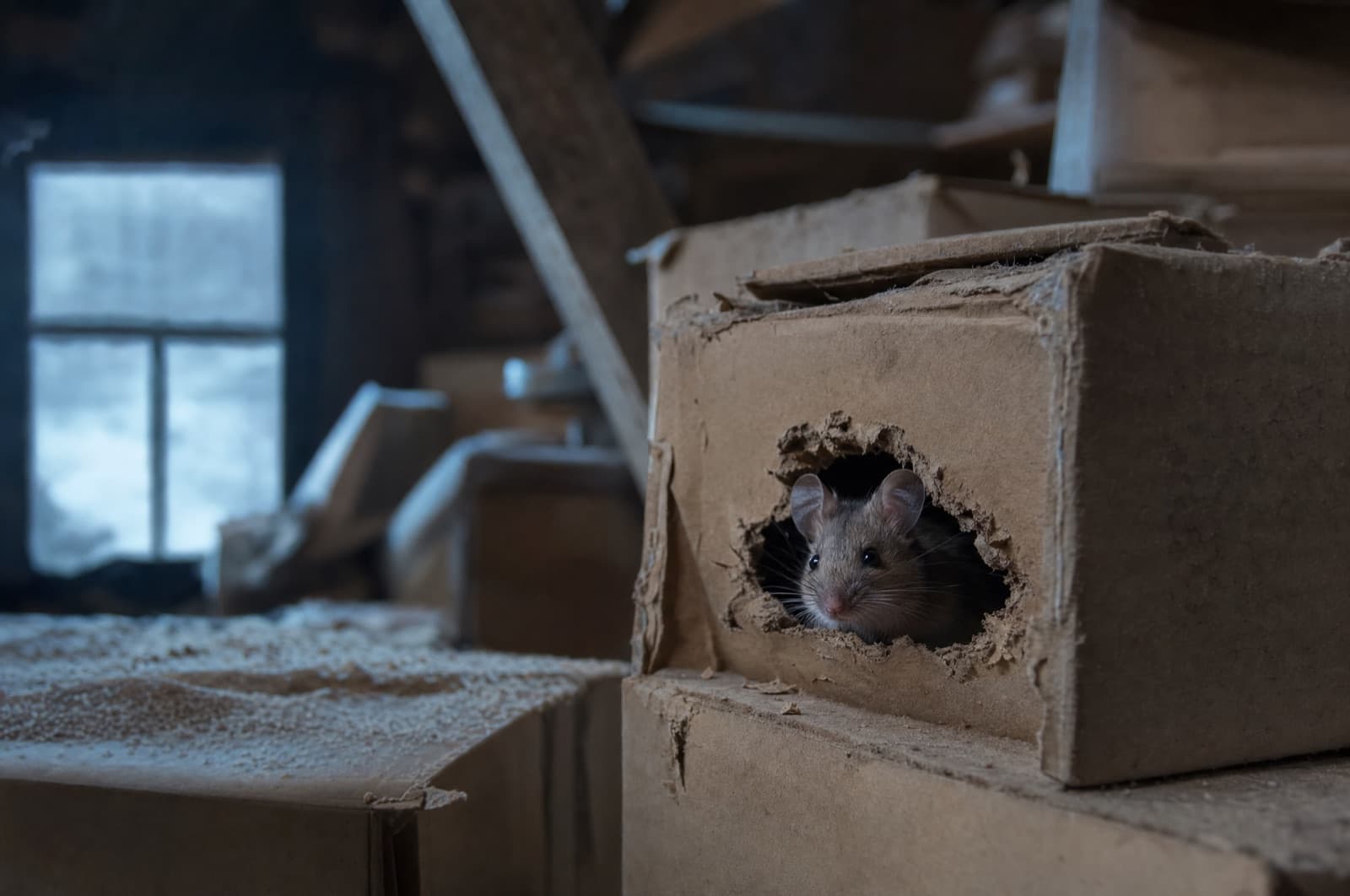
A house mouse in a gnawed cardboard storage box in a cold New Hampshire attic
Daniel Brady · NH-Licensed Pesticide Applicator · License #782664
Reviewed by Daniel Brady

Why do some homes have more winter pest issues than others?

Ranked by evidence-backed payoff, not by how scary the pest sounds
Some homes face far more winter pest pressure than others because of a stack of factors — location relative to woods or water, building envelope condition, moisture, and attractants like firewood or exposed food — that varies enormously from house to house.Ranked by evidence-backed reduction in winter pest entry, sealing the building envelope before frost is the single highest-payoff action a homeowner can take, moving firewood and storing food properly follow close behind, and the flashiest offerings — winter sprays and smart-home gadgets — rank at the bottom. The honest ranking orders these by what actually reduces entry, not by how alarming the pest sounds.

At a glance

  • The verdict: Ranked by evidence-backed payoff, not by how scary the pest sounds
The honest answer

The short of it

The verdict
Ranked by evidence-backed payoff, not by how scary the pest sounds

Some homes get hammered by a stack of location, envelope, and moisture factors that vary enormously between houses — and ranked honestly, the boring envelope work beats every spray and gadget.

The roll-up

Ranked by what actually pays off

The eleven most-discussed winter pest risk factors and interventions for a New Hampshire home, ranked against each other by demonstrated payoff.

Ranked by
Evidence-backed reduction in winter pest ENTRY per unit of homeowner effort or cost — stated openly, and explicitly not ranked by how alarming or scary the pest sounds.
RankItemGradeWho does itNote
01Seal the building envelope before frost (the quarter-inch rule)Do firstYouCDC and EPA both confirm gaps as small as a quarter inch admit mice — exclusion is the single action that actually stops entry rather than just reducing attractants.
02Move firewood off the house and elevate itDo firstYouRemoves a documented rodent and insect staging area at essentially zero cost — one of the best-evidenced fixes in extension literature.
03Store food, including pet food, in metal, glass, or hard plasticDo firstYouRemoves the attractant directly — rodents readily chew soft plastic and paper bags, so the container material is what actually matters.
04Control basement or crawlspace moistureWorth itYouCuts the habitat that draws camel crickets, sowbugs, and centipedes, and the damp wood carpenter ants seek — a project, not a single spray.
05Trim vegetation touching the structure or rooflineWorth itYouRemoves documented physical bridges past every ground-level defense — branches and shrubs in contact with the house are a genuine entry route.
06Clean guttersWorth itYou + a ladderPrevents the wood-rot habitat carpenter ants seek and removes roofline nesting debris — real, but a secondary benefit rather than a direct barrier.
07Schedule a pre-frost professional exterior treatmentWorth itA pest proEffective only if timed before pests enter, typically September into early October — the value disappears entirely once winter arrives.
08Declutter basement and storage areasWorth itYouReduces harborage and speeds up detection of an existing problem — real, but it doesn't stop entry on its own.
09Switch to warm, low-UV exterior bulbsWorth itYouMeasurably reduces night-flying insect attraction, but the payoff is mostly a warm-season one and does nothing for winter's real problem, which is mice.
10Winter lawn-perimeter sprayUpsellA pest proWrong-season timing — by winter, the target insects are already inside the walls, and residual insecticide degrades in days regardless.
11Ultrasonic or essential-oil repellent devicesSkip itNobodyFTC-flagged for unsupported efficacy claims since 2001; no reliable evidence these devices control insects or reduce rodent activity.
What people get wrong
Most homeowners expect a ranked list like this to top out with a 'winter treatment plan' or a plug-in gadget, because those feel like decisive, purchasable action. The evidence says the opposite: the boring, unsellable basics — a tube of sealant, a length of hardware cloth, and moving the woodpile — stop more winter pests than any product applied after the cold has already arrived. Location and building age, both largely outside a homeowner's control, explain a large share of the difference between homes, which is exactly why the controllable items that remain — sealing, firewood placement, food storage — carry so much of the honest ranking's weight.
In depth

The full picture

01

The factors that make one house worse off than the next

Two houses on the same street can have wildly different winter pest experiences, and the difference usually traces to a specific, nameable set of factors rather than luck. Location relative to woods, fields, or water sets a baseline that's largely outside anyone's control — a home bordering a tree line simply sits next to a larger source population of mice and overwintering insects than one in a denser, paved neighborhood.

Building envelope condition and age add another layer: older homes accumulate settled foundations, worn weatherstripping, and sill-plate gaps that younger construction hasn't had time to develop. Moisture, clutter, and attractants like firewood or exposed pet food stack on top of those structural factors, and the combination — not any single cause — is what produces the wide variation homeowners notice between houses.

02

Why the ranking looks different from what people expect

It's tempting to rank pest-prevention actions by how serious or scary the associated pest sounds, which tends to put sprays and professional treatments at the top and unglamorous fixes like moving a woodpile near the bottom. The evidence doesn't support that ordering.

The actions that actually reduce entry — sealing the quarter-inch gaps mice exploit, removing the firewood staging area, storing food where it can't be chewed into — are inexpensive, homeowner-executable, and rank at the top precisely because they address the mechanism directly. Professional treatments and gadgets rank lower not because they're inherently bad, but because their genuine effectiveness depends heavily on timing and, in some cases, doesn't hold up to scrutiny at all.

03

What this means for prioritizing a limited weekend

If time or energy is limited, this ranking is meant to be used directly: start at the top. Sealing the envelope, moving firewood, and switching food storage to metal or glass address more of a home's winter pest risk in a single weekend than any service visit scheduled after the fact.

The items further down the list aren't worthless — moisture control, vegetation trimming, and gutter cleaning are all worth doing — but they're honestly secondary to the top three, and the bottom two items exist on this list specifically so homeowners can recognize them as low-value or mistimed before spending money on either.

Key takeaways
5 points
  • The difference between homes is a stack of factors: location, envelope condition, moisture, and attractants — not luck.
  • Ranked by actual entry-reduction payoff, sealing the envelope, moving firewood, and metal/glass food storage top the list — and all three are homeowner-doable at essentially no cost.
  • Location (proximity to woods or water) and home age explain much of the variance and are largely outside homeowner control — which is exactly why the controllable items carry so much weight.
  • Professional exterior treatments are worth doing only when timed pre-frost; the same idea sold as a winter service is the cluster's clearest upsell.
  • Ultrasonic and essential-oil repellent devices rank last — the FTC has flagged unsupported efficacy claims for these products since 2001.
New Hampshire context

Applying this ranking to a New Hampshire property

With Manchester's first hard frost typically landing October 19 to 29 (NOAA), the top three items on this list — sealing, firewood placement, and food storage — are worth completing before that date, since they address the exact window when pest pressure toward structures peaks. Homes near woods, water, or with older, balloon-framed construction common across the region should treat the top of this list as higher priority still, given the larger baseline pressure those factors create.

Items further down — gutter cleaning, vegetation trimming, moisture control — are reasonable fall projects but carry less urgency relative to the top three.

  • NH-licensed #782664

    Southern New Hampshire

  • Family-owned

    Since 2017

  • Honest routing

    Even when it isn’t us

We serve these communities

ManchesterNashuaConcordDerryBedfordSalemHudsonAmherst

Start at the top of the list. It's free.

Sealing, firewood, and food storage cover most of your risk before winter starts. If mice are already established, that's where we help.

Follow-up questions

Frequently asked

Sources & citations(5)
  1. CDC — How to Seal Up to Prevent Rodents

    Quarter-inch gap standard for mouse exclusion; food storage in metal or thick plastic; attractant distances

    govverified 2026-07-16
  2. EPA — Indoor airPLUS Technical Bulletin: Pest Entry Prevention

    Quarter-inch gaps let mice into wall cavities; air-sealing as pest exclusion strategy

    govverified 2026-07-16
  3. University of Kentucky Entomology — EF416 Asian Lady Beetle Infestation of Structures

    Perimeter treatment timing — effective only before pest entry, ineffective by late winter

    extensionverified 2026-07-16
  4. FTC — Warns Manufacturers/Retailers of Ultrasonic Pest-Control Devices

    Warning letters regarding unsupported ultrasonic pest-control device efficacy claims

    govverified 2026-07-16
  5. NOAA — Manchester, NH freeze climatology

    Manchester first hard frost typically ~Oct 19-29 — the seasonal deadline for the top-ranked actions

    govverified 2026-07-16

Written & reviewed by

Verified

Daniel Brady

NH-Licensed Pesticide Applicator · License #782664 (NHDAMF, RSA 430)

Daniel Brady is the New Hampshire–licensed applicator behind Anchor Pest Services, a family-owned pest control company serving the Manchester area since 2017.

Verify license

Last updated Jul 2026

Honest pest help for New Hampshire homes

The Top of This List Is Free. We're Here for What's Left.

Sealing the envelope, moving the firewood, and switching food storage cost nothing but time, and they do more than any service visit scheduled after the fact. Anchor Pest Services is genuinely useful for the harder part — rodent exclusion once pests have found a way in, and correctly-timed exterior treatment before frost. Family-owned since 2017, NH license #782664, serving Manchester, Nashua, Concord and nearby towns.

  • Honest ranking — we'll tell you which fixes are free and which are ours to help with
  • NH-licensed applicators (#782664) — free inspection, same-day service
  • Rodent exclusion and winter pest control across southern and central New Hampshire

NH License #782664 · No obligation · We answer in person