
Pest Control in Bristol: What's Actually Different Here?
Is Bristol pest control actually different?
The verdict on Bristol
something real, and documented
a real but minor factor
pests don't read town lines
Bristol is genuinely different: it's the strongest local-difference story we cover, and it's about vacancy, not biology.
The real difference
The specific, sourced local factor that changes the answer here — and what a homeowner should actually do about it.
That Bristol has its own unique 'lake town' pests — some special species particular to Newfound Lake that only a local specialist would know.
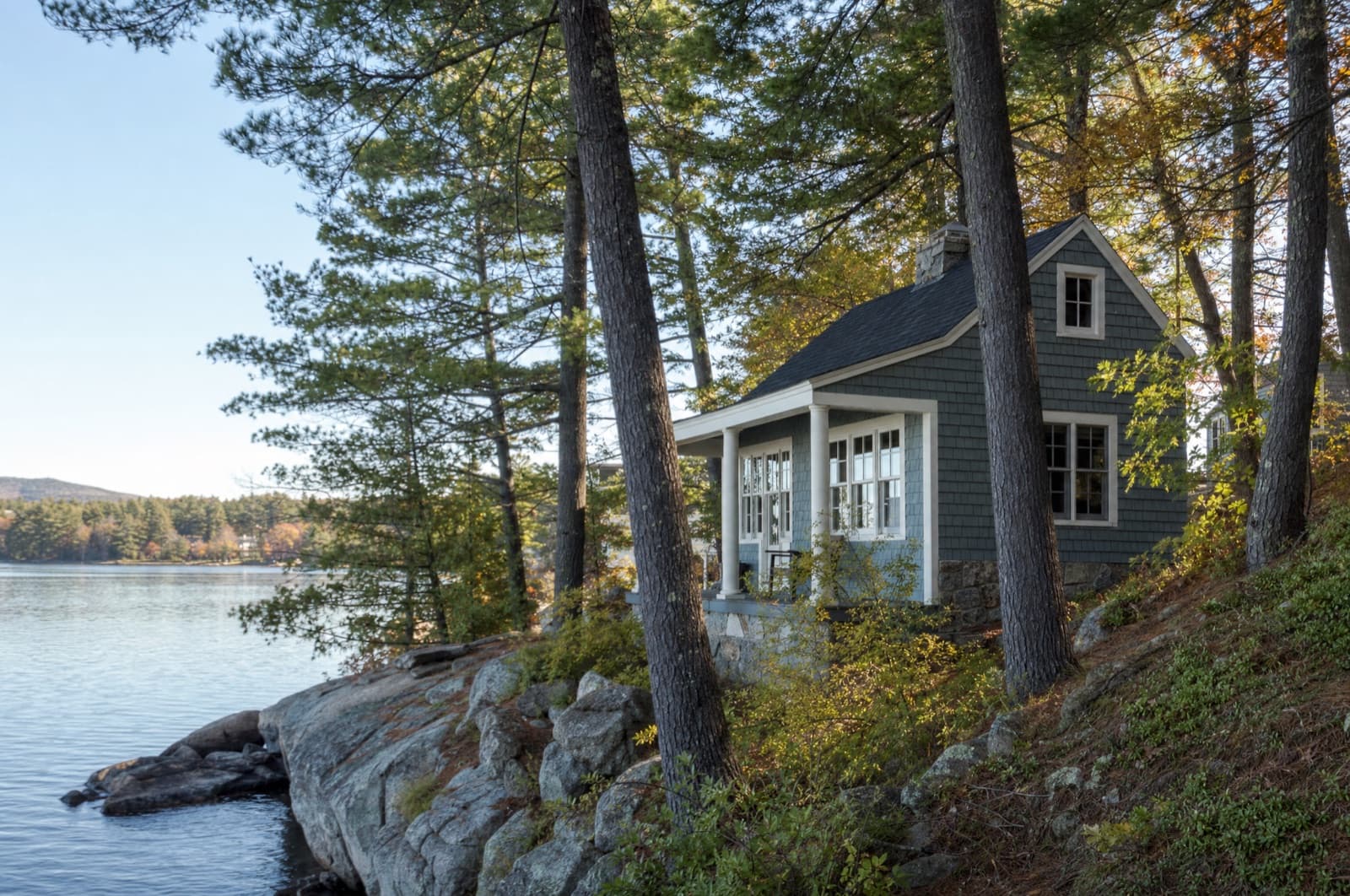
The species around Newfound Lake are the same regional set found across New Hampshire — deer mice, white-footed mice, the usual tick and fall-invader picture. What's genuinely different is Bristol's occupancy pattern: this is Lakes Region seasonal-camp country, and the town's own Master Plan describes Bristol's housing stock as seasonal in nature, noting the long-standing local understanding that the town's population effectively doubles in summer around Newfound Lake.
A large share of Bristol's housing units — historically documented at roughly 48% vacant, with the overwhelming majority of those vacant units used for seasonal or recreational purposes — are lake camps and cottages closed for roughly six months of the year, from around October to May.
Deer mice and white-footed mice specifically enter vacated cabins and camps, build nests, and cache food undisturbed for months at a time, according to wildlife-damage extension research — a pattern that a year-round, heated home simply doesn't create. That means the effective response for a Bristol seasonal property is different in timing and kind: exclusion work (sealing gaps to about a quarter-inch, rodent-proofing stored soft goods and food) done BEFORE closing up for the season matters far more here than mid-season treatment does for a year-round home. Accumulated rodent droppings in a long-closed structure also carry a documented hantavirus risk when disturbed, which is worth knowing before opening up a camp in spring.
Source: Town of Bristol Master Plan, Population and Housing chapter (bristolnh.gov); US Census 2010 housing vacancy data (data.census.gov); extension.org — White-footed and Deer Mice (wildlife-damage-management.extension.org)
Most of what shapes a home's pest pressure isn't the town line — it's the house and its surroundings:
The honest town profile
Census housing age, density and geography — the fields that genuinely predict pest pressure. Only documented facts appear.
Grafton
A mix of historic New England housing, seasonal lake cottages, and modern single-family homes. Census 2010 data recorded roughly 48% of Bristol's housing units as vacant, with the large majority of those vacant units used for seasonal or recreational purposes.
Bristol includes the lower two-thirds of Newfound Lake, one of New Hampshire's deepest and cleanest lakes, plus the Pemigewasset, Newfound and Smith Rivers; roughly a quarter of the town's area is water.
A large seasonal-camp housing stock predicts high rodent turnover in closed cottages specifically — the honest local difference this page is built around. Its limit: Bristol's year-round village housing behaves like any other small New Hampshire town, and this driver doesn't apply to it.
Town of Bristol Master Plan, Ch. IV — bristolnh.gov · US Census 2010 housing vacancy data — data.census.gov · NH Dept. of Environmental Services — Newfound Watershed Master Plan
The pests actually here
The real Southern-NH species picture — we name them and link the full profiles rather than re-teach identification, and we correct the ones that don't live here at all.
This is the Lakes Region picture, weighted toward Bristol's seasonal-camp housing — the underlying species are the same regional set found across New Hampshire.
- White-footed mouse and deer mouseThe genuine Bristol story: these species specifically move into vacated camps and cabins, nesting and caching food undisturbed for the six months a camp sits closed.Species profile
- Blacklegged tick and other regional ticksWooded lakeside lots carry the same tick exposure as any wooded property in the region.Related guide
- MosquitoesLake and river frontage adds standing-water breeding habitat, a regional water-adjacency factor.Related guide
- Cluster fliesRural, farm-adjacent soils in the surrounding countryside support the region's usual fall cluster-fly aggregations.Related guide
Our service area — including when it's not us
Bristol is about 50 miles / roughly an hour north of our Manchester office via I-93 — well outside our core service counties, though we've confirmed we cover it.
Seasonal-camp closing and opening service — pre-closure exclusion work and spring rodent-damage assessment — alongside standard structural pest control for Bristol's year-round housing.
Service Area Map
Southern New Hampshire
The answer
Why Bristol is the strongest local-difference story we have
Most towns in this hub get an honest 'not different' verdict, and that's the point of the whole project. Bristol is the exception, and it's worth being specific about why, because our own old Bristol page didn't mention it at all — it talked about 'stunning natural landscapes' and said nothing about the one fact that's actually true and actually local: Newfound Lake's seasonal camps.
Bristol's own Master Plan describes the town's housing stock as seasonal in nature, and Census data backs that up in hard numbers: as of the 2010 count, roughly 48% of Bristol's housing units were vacant, and the overwhelming majority of those vacant units were seasonal or recreational — cottages and camps around the lake, not empty houses for sale. For regional context, seasonal homes make up about a quarter of housing in Grafton County generally and roughly 9% statewide; Bristol sits well above even that elevated county average.
What six months of vacancy actually does
A camp closed from October to May isn't just an empty building — it's an unheated, unoccupied structure sitting through a New Hampshire winter with nobody checking it. Deer mice and white-footed mice specifically exploit exactly that condition: extension wildlife-damage research documents them entering vacated cabins and camps, building nests in insulation and furniture, and caching food stores, all undisturbed for as long as the building stays closed. A year-round, heated home simply doesn't offer that window.
That changes what actually works. For a Bristol seasonal property, the highest-value moment isn't a mid-season treatment call — it's exclusion work done before you close up in the fall: sealing gaps down to about a quarter-inch (the size a mouse needs to get in), storing soft goods and food in rodent-proof containers, and doing a thorough check before locking up for the winter. It's also worth knowing that accumulated rodent droppings in a long-closed structure carry a documented hantavirus risk when disturbed — a reason to ventilate carefully and avoid dry-sweeping when you open a camp back up in spring, rather than a reason for alarm.
Key takeaways
- Bristol is the strongest genuinely_different verdict in our coverage area — and it's about vacancy, not bug biology.
- Roughly 44% of Bristol's housing units are seasonal/recreational (Census 2010) — cottages and camps closed roughly October to May.
- Deer mice and white-footed mice specifically move into vacated camps and nest undisturbed for months — a documented pattern, not speculation.
- The highest-value work is pre-closure exclusion in the fall, not mid-season treatment.
- Bristol is outside our core service counties (Grafton County, ~50 miles north) — we've confirmed we serve it, and we say so plainly.
Closing up a Bristol camp for the season?
Pre-closure exclusion work is the single highest-value thing you can do for a Newfound Lake seasonal property. We do it before you lock up, and we're honest about the drive it takes to get there.
Frequently asked
Sources & further reading(4)
- [1]Town of Bristol Master Plan — Population and Housing (Ch. IV)
Bristol's housing stock described as seasonal in nature; the local understanding that Bristol's population effectively doubles in summer
govverified 2026-07-16 - [2]US Census 2010 — Housing vacancy data, Bristol town, Grafton County, NH
Roughly 48% of Bristol's 2,488 housing units vacant; 1,089 of those vacant units for seasonal/recreational use (~44% of all units)
censusverified 2026-07-16 - [3]NH Dept. of Environmental Services — Newfound Watershed Master Plan
Newfound Lake watershed geography and seasonal second-home population context for Bristol and neighboring towns
stateverified 2026-07-16 - [4]extension.org — White-footed and Deer Mice
Deer mice and white-footed mice entering and nesting in vacated cabins and structures
extensionverified 2026-07-16
Written & reviewed by
VerifiedDaniel Brady
NH-Licensed Pesticide Applicator · License #782664 (NHDAMF, RSA 430)
Daniel Brady is the New Hampshire–licensed applicator behind Anchor Pest Services, a family-owned pest control company serving the Manchester area since 2017.
Last updated July 2026
Compare a neighbor
Same honest instrument, town by town — most read “not different,” and that's the point.
Honest pest help for New Hampshire's Lakes Region
Bristol's Real Story Is Six Months of Vacancy
Nearly half of Bristol's housing is seasonal camps closed October to May — and that's exactly when rodents move in undetected. We treat that, sourced to Census data and Bristol's own Master Plan. Family-owned since 2017, NH license #782664, based at 700 Harvey Rd in Manchester.
- NH-licensed applicators (#782664) — free inspection, same-day service
- We say plainly that Bristol is an outlier stop, not core territory
- Seasonal-camp exclusion timed to the closing season, not just mid-summer
NH License #782664 · No obligation · We answer in person