
Skip to content
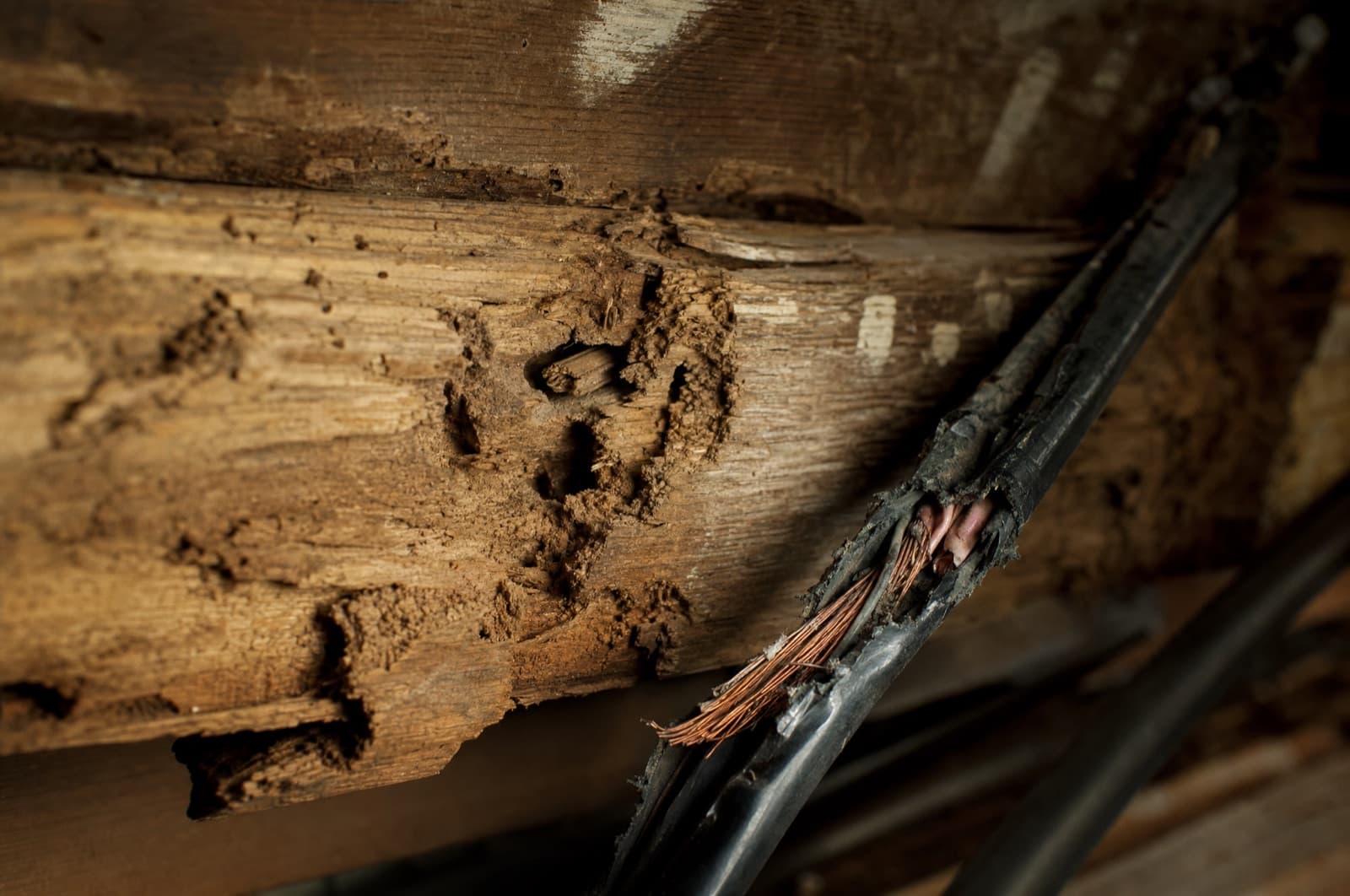
Pest damage evidence — a gnawed structural beam and a chewed electrical wire
Daniel Brady · NH-Licensed Pesticide Applicator · License #782664
Reviewed by Daniel Brady

Can pest damage impact business buildings too?

Documented — plus a distinct regulatory exposure homes don't face
Yes. Commercial buildings are vulnerable to the same structural and functional pest damage as houses — rodent gnawing on wiring, termite and carpenter-ant activity in framing, wildlife roof entry. But businesses, especially food handlers, carry a distinct additional exposure: under federal law, food held under insanitary, pest-contaminated conditions can be deemed adulterated and subject to recall or closure, independent of whether any physical building damage occurred at all. What's overstated is the idea that a single insect sighting triggers an automatic shutdown — the real trigger is a documented insanitary condition, not one bug.

At a glance

  • Hype: Overstated
  • Evidence: Well documented
  • Who fixes it: Pest pro first
  • December 2025

    FDA recall of all products at a facility where inspectors found rodent excreta, urine, and bird droppings

    FDA — Gold Star Distribution, Inc. Recall (December 2025)

The honest answer

The short of it

The verdict
Documented — plus a distinct regulatory exposure homes don't face

Yes — commercial buildings face the same physical pest damage as homes, and food-handling businesses carry an additional, well-documented regulatory risk: contamination alone can make product legally adulterated, no structural damage required.

The correction

What they claim vs. what the evidence supports

One shared severity track, two markers. The span between them is the hype delta — named out loud.

The claim — the idea that any pest sighting can instantly close a business

That a single insect or rodent spotted in a commercial building can trigger an immediate shutdown, recall, or ruinous regulatory action — 'one bug and you're shut down.'

Where the claim comes from: Pest-marketing copy aimed at commercial clients, and viral anecdotes about restaurant closures that skip the actual regulatory trigger.

Severity, 0–100
Hype says75
55Evidence says
Hype delta20point gapWell documented
The evidence

The regulatory exposure is real and well documented, but it's triggered by a documented insanitary condition, not a single sighting. Under the Federal Food, Drug, and Cosmetic Act, food is adulterated if it is 'prepared, packed, or held under insanitary conditions whereby it may have become contaminated with filth' (21 U.S.C. §342(a)(4)). FDA enforcement actions bear this out at scale: a December 2025 recall covered FDA-regulated products at a facility where inspectors found rodent excreta, rodent urine, and bird droppings in storage areas, and a 2024 warning letter cited rodent excreta pellets 'too numerous to count' near ready-to-eat produce.

The gap

The regulatory risk for food handlers is genuinely serious and well documented — this isn't a manufactured fear. What's overstated is the trigger: it's a documented insanitary condition found on inspection, not one insect that happens to be spotted by a customer.

Repair scope

Who actually fixes this

Scope, not dollars — the honest answer to “how expensive is it,” routed to the right trade.

Who fixes it
Pest pro first
Effort
A trade visit

For a commercial or food-handling building, resolving the pest and documenting that resolution is the step that actually protects against both structural damage and regulatory exposure — it has to come before any repair or inspection sign-off matters.

The right order
  1. 1
    Identify and resolve the pest activity, with documentation suitable for a health inspector or auditor
  2. 2
    Correct the conducive condition — sealed entry points, sanitation gaps, moisture sources
  3. 3
    Route any resulting structural or system repair to the relevant trade separately from the pest treatment
Route by symptom
  • Licensed contractorStructural framing, roofing, or building-envelope damage is confirmed alongside the pest activity
  • Licensed electricianRodent gnawing has affected wiring in mechanical rooms, kitchens, or storage areas
Do not
  • Don't wait for a customer complaint or a regulatory inspection to address a known pest condition — documented, proactive management is the stronger position
  • Don't assume a pest-control contract alone satisfies food-safety compliance obligations — sanitation and structural upkeep matter just as much
Where we help — and where we don't

Anchor provides commercial pest management and documentation across southern and central New Hampshire. We do not perform health-code compliance audits or represent a business to a regulator — that's the role of your own compliance team or counsel, and we'll say so plainly.

Economics

What it does to value

Whether pest activity in a commercial building carries a real financial and operational risk beyond ordinary structural repair.

Documented
What is documented

Commercial buildings face the identical structural and functional pest damage classes as homes: rodent gnawing on wiring and insulation, termite and carpenter-ant activity in framing, and wildlife roof or vent entry. On top of that, food-handling businesses carry a distinct regulatory layer. The Federal Food, Drug, and Cosmetic Act (§402(a)(4), 21 U.S.C. §342(a)(4)) deems food adulterated when held under insanitary conditions that may render it contaminated with filth. FDA enforcement demonstrates this is not theoretical: a December 26, 2025 recall of FDA-regulated products from a Minneapolis-area facility followed inspectors finding rodent excreta, rodent urine, and bird droppings in storage areas, and a June 21, 2024 FDA warning letter to a frozen-food facility cited 'apparent rodent excreta pellets in numbers too numerous to count' near ready-to-eat produce as grounds for an adulteration finding.

Just a talking point

That a pest-control service contract 'guarantees' zero business interruption, or that a single insect sighting alone triggers an automatic recall or shutdown. Prevention genuinely lowers risk; it cannot promise zero regulatory exposure, and the actual FDA trigger is a documented insanitary condition on inspection, not an isolated sighting.

Disclosure

Commercial leases and sale agreements often carry their own inspection and maintenance obligations around pest conditions, separate from residential real-estate disclosure law — a commercial tenant or buyer should confirm those terms with legal counsel rather than assume residential disclosure rules apply.

Insurance

Commercial property insurance generally mirrors homeowners policy exclusion language, treating vermin, insect, and rodent damage as preventable maintenance rather than a covered peril. Business-interruption coverage typically does not treat a pest-driven closure as a covered event either, which makes prevention and documented pest management the primary financial protection, not a policy.

FD&C Act §402(a)(4) [21 U.S.C. §342(a)(4)]; FDA Gold Star Distribution recall (December 2025); FDA Frozen Food Development Inc. warning letter (June 2024); commercial property policy exclusion language

In depth

The full picture

01

The same physical damage, in a different building

Commercial buildings are made of the same materials as houses, and pests treat them accordingly. Rodents gnaw wiring and insulation in a warehouse mechanical room the same way they do in a residential basement. Subterranean termites and carpenter ants attack commercial framing on the same slow, moisture-linked timeline documented elsewhere in this hub. A raccoon or bird finding its way into a rooftop HVAC unit causes the same kind of functional damage whether the building is a home or a storefront. None of the physical mechanics change just because the building has a different purpose.

02

The layer that homes don't have: food-safety adulteration

What genuinely distinguishes commercial exposure — particularly for any business that handles food — is a federal regulatory layer with no residential equivalent. Under the Federal Food, Drug, and Cosmetic Act, food is legally adulterated if it is 'prepared, packed, or held under insanitary conditions whereby it may have become contaminated with filth, or whereby it may have been rendered injurious to health.' That standard doesn't require proof that a customer was actually harmed — a documented insanitary condition is enough to trigger action.

FDA enforcement shows this playing out at real scale. A December 26, 2025 recall covered all FDA-regulated products held at a Minneapolis-area facility after inspectors found rodent excreta, rodent urine, and bird droppings in storage areas. A June 21, 2024 warning letter to a frozen-food facility cited rodent excreta pellets 'too numerous to count' near ready-to-eat produce as the basis for an adulteration finding. These aren't hypothetical scare stories — they're the actual enforcement record.

03

What's overstated: the 'one bug and you're closed' framing

Where commercial pest-marketing overreaches is implying that a single insect spotted by a customer is itself the trigger for a shutdown. It isn't. The FDA's adulteration standard and actual enforcement actions are built around documented insanitary conditions found on inspection — accumulated droppings, contaminated storage areas, evidence of an established infestation — not an isolated sighting. That distinction matters for how a business should actually respond: the goal is documented, ongoing pest management and sanitation, not panic over any single incident.

04

Insurance doesn't change here either

Commercial property insurance generally carries the same exclusion logic as homeowners policies: damage from vermin, insects, or rodents is treated as preventable maintenance, not a covered accidental loss. Business-interruption coverage typically doesn't step in for a pest-driven closure either. That makes documented prevention and prompt professional resolution the actual financial protection for a commercial building — not a policy sitting in reserve.

Key takeaways
5 points
  • Commercial buildings face the identical structural and functional pest damage classes as homes — nothing about the physical mechanics changes.
  • Food-handling businesses carry a distinct regulatory layer: the FD&C Act deems food adulterated when held under insanitary, pest-contaminated conditions, no structural damage required.
  • Real FDA enforcement — a 2025 recall and a 2024 warning letter — shows documented rodent/bird contamination triggering action, not a single insect sighting.
  • The 'one bug and you're shut down' framing overstates the trigger; the actual standard is a documented insanitary condition found on inspection.
  • Commercial property insurance generally excludes pest/vermin damage as preventable maintenance, mirroring residential policy language.

Commercial pest management, documented for compliance.

Anchor provides ongoing commercial pest management across southern and central New Hampshire, with the documentation your compliance program needs.

Follow-up questions

Frequently asked

Sources & citations(2)
  1. FDA — Gold Star Distribution, Inc. Recall (December 2025)

    Real-world FDA enforcement example: rodent excreta, rodent urine, and bird droppings found in storage triggering a recall of FDA-regulated products

    govverified 2026-07-16
  2. NFPA Research — Home Fires Caused by Electrical Failure or Malfunction (R. Campbell, 2019)

    Arcing is the leading factor in home electrical-failure fires — the primary-source basis for the rodent-gnawed-wiring ignition mechanism (and for the absence of any rodent factor in fire-cause data)

    fireverified 2026-07-16

Written & reviewed by

Verified

Daniel Brady

NH-Licensed Pesticide Applicator · License #782664 (NHDAMF, RSA 430)

Daniel Brady is the New Hampshire–licensed applicator behind Anchor Pest Services, a family-owned pest control company serving the Manchester area since 2017.

Verify license

Last updated Jul 2026

Honest pest help for New Hampshire businesses

We Manage the Pest Risk. Compliance Is Still Your Program.

Anchor provides commercial pest management and documentation, but we are not a substitute for your own food-safety compliance program or legal counsel. Family-owned since 2017, NH license #782664, serving Manchester, Nashua, Concord and nearby towns.

  • Honest scope — we manage pests, not your compliance program
  • NH-licensed applicators (#782664) — free inspection, same-day service
  • Commercial pest management across southern and central New Hampshire

NH License #782664 · No obligation · We answer in person