Skip to content
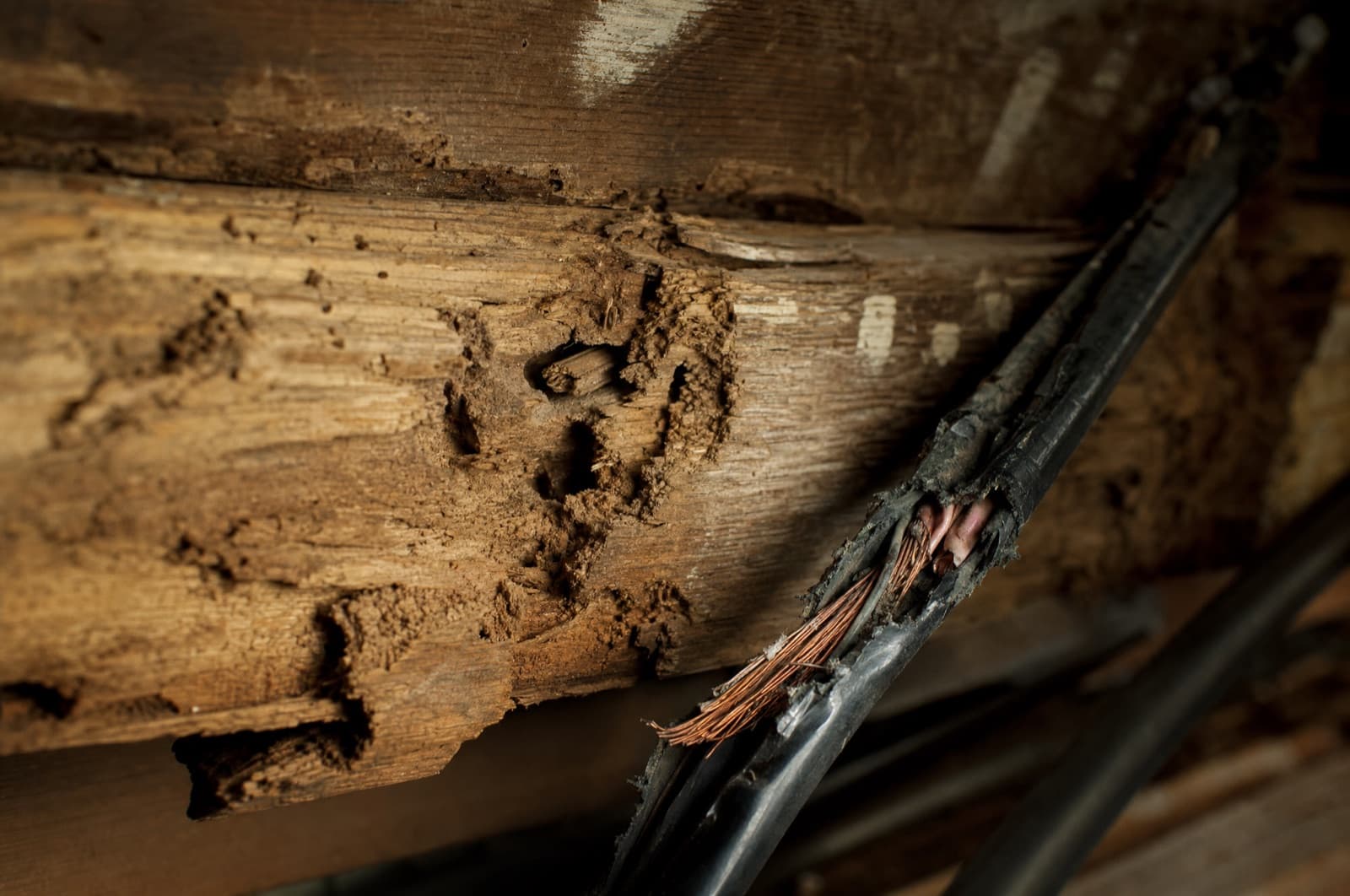
Pest damage evidence — a gnawed structural beam and a chewed electrical wire
Daniel Brady · NH-Licensed Pesticide Applicator · License #782664
Reviewed by Daniel Brady

What kind of damage do rodents cause in homes?

Ranked by evidence-backed severity, not scariness
Rodents in homes cause damage across four honest categories: contamination of food, insulation, and indoor air with droppings and urine (the most under-rated harm, and a genuine health risk); functional damage to wire insulation, plastic plumbing, and appliances; cosmetic gnaw holes in drywall and wood trim; and a real but uncommon electrical-fire pathway from gnawed wiring, whose famous 20-to-25-percent statistic is fabricated even though the underlying mechanism is genuine. Ranked by evidence-backed severity to the building and to health — not by how frightening each one sounds — contamination and health risk actually outrank the fire scare that usually gets top billing.

At a glance

  • Who fixes it: Pest pro first
The honest answer

The short of it

The verdict
Ranked by evidence-backed severity, not scariness

Rodent damage in homes is mostly functional and cosmetic — wiring, plastic, insulation, drywall — plus a genuine but under-discussed health and contamination risk, and a real but uncommon and unquantified electrical-fire pathway.

Repair scope

Who actually fixes this

Scope, not dollars — the honest answer to “how expensive is it,” routed to the right trade.

Who fixes it
Pest pro first
Effort
A trade visit

Every category on this ledger starts the same way: the rodents have to be excluded first, or whatever repair follows just gives them fresh material to work on again.

The right order
  1. 1
    Anchor: exclude and remove the rodents and seal every entry point with materials they cannot chew through
  2. 2
    Identify which damage category applies — contamination, wiring, plumbing, insulation, drywall, or stored goods
  3. 3
    Route to the correct trade for that category: electrician, plumber, remediation service, or a simple DIY patch
Route by symptom
  • Qualified remediationDroppings or urine have accumulated heavily in insulation, ductwork, or a confined space
  • Licensed electricianAny wire shows gnaw marks or exposed conductor
  • PlumberA PEX or PVC supply line has been gnawed or you find unexplained dampness near a run
Do not
  • Don't dry-sweep or vacuum rodent droppings — wet-clean per CDC guidance, or call remediation for a heavy accumulation
  • Don't repair or replace any damaged system while rodents are still active — it's simply fresh material for them
  • Don't rank this list by fear rather than evidence — the fire pathway is real but the contamination risk is the more common, better-documented concern
Where we help — and where we don't

Anchor's work is exclusion and removal — the step every one of these repair categories depends on. We do not do the electrical, plumbing, insulation, or large-scale cleanup work the damage itself requires, and we'll route you to the right trade rather than quote you for it.

The ledger

The ranked damage ledger

The categories of rodent damage New Hampshire homeowners genuinely encounter, ranked by evidence-backed consequence to the building and to health.

Ranked by
Evidence-backed severity to the building and to occupant health, combined with how well each category is documented — never by dollar cost, and never by which category sounds the most alarming.
RankPestClassWhat it wrecksWho fixes itEvidence
01

Droppings and urine contamination (food, insulation, indoor air)

The most under-rated rodent harm in this hub. Deer mice can carry hantavirus, and droppings should never be dry-swept or vacuumed (CDC) — wet-clean or call remediation for a heavy accumulation. This ranks above the fire pathway because it's both more common and better documented.

FunctionalStored food, attic and wall insulation, and indoor air quality when disturbedQualified remediationWell documented
02

Wire-insulation gnawing (electrical/fire pathway)

The gnawing-to-arc mechanism is real and documented — but the widely repeated '20-25% of house fires' figure has no source in NFPA, USFA, or NFIRS data. Treat exposed wiring as a genuine hazard; treat the statistic as marketing.

FunctionalBranch wiring, cords, and any energized conductor a rodent can reachLicensed electricianWell documented
03

Plastic plumbing gnawing

A gnawed supply line can leak slowly for weeks before it's found, and that's a genuine risk worth taking seriously. Copper and steel pipe are not at risk — rodents test rigid pipe and move on.

FunctionalPEX and PVC water-supply lines and foam pipe insulationPlumberPlausible, under-documented
04

Insulation shredding and compaction

Compaction genuinely reduces performance locally, but every specific R-value-loss percentage traces to insulation-contractor marketing, not independent measurement. Contamination, not thermodynamics, is the honest reason heavily soiled insulation gets removed.

FunctionalAttic and wall insulation loft, cleanliness, and R-value in nested areasQualified remediationPlausible, under-documented
05

Drywall and wood gnaw holes

Ugly and worth patching, but not structural — a mouse-sized hole doesn't weaken a stud or compromise the wall's integrity.

CosmeticWall surfaces, baseboards, and trimYou — a DIY patchWell documented
06

Stored-item and pantry-food damage

Contaminated food should be discarded outright. Irreplaceable stored belongings are often the real, hard-to-quantify loss here, more than any repair cost.

FunctionalPantry food, pet food, and stored belongings in attics, garages, and basementsYou — wipe it upWell documented
What people get wrong
Readers expect this list to open with fire — "rodents burn houses down" is the story that gets the most attention online. The honest #1 is contamination and the health risk it carries, which is more common, better documented, and genuinely under-discussed by comparison. The fire pathway is real in mechanism but rare in occurrence and carries an invented statistic that this hub corrects on its own dedicated pages. Over-feared: fire, in the specific inflated-percentage sense. Under-rated: hantavirus exposure and the true cost of contaminated insulation and food, which rarely make it into the popular narrative at all.
In depth

The full picture

01

Why this list isn't ranked the way you'd expect

Most articles on rodent damage lead with fire, because it's the most dramatic possible outcome. This ledger ranks by evidence-backed severity and how well-documented each category actually is — and by that standard, contamination and the health risk it carries outranks the fire pathway. That's not because fire isn't real; gnawed wire insulation exposing a live conductor to arc is a genuine, physically sound ignition mechanism. It's because contamination is both more common in day-to-day rodent activity and better supported by primary health data (CDC hantavirus guidance) than the specific fire-percentage claim that circulates almost everywhere else, which traces to an uncited 2012 pest-industry magazine article rather than any NFPA, USFA, or NFIRS dataset.

02

The functional core: wiring, plumbing, and insulation

The bulk of routine rodent damage is functional — it breaks a system rather than weakening the building itself. Wire insulation, PEX and PVC supply lines, and attic or wall insulation are the three systems rodents most reliably affect, all through the same underlying mechanism: a rodent's incisors grow continuously and must be worn down, so any accessible edge or seam on these materials becomes a target. Copper pipe, steel, cured concrete, and glass are not at risk — a rodent tests a hard, edgeless surface and moves on, which is exactly why exclusion materials like adequate-gauge hardware cloth work as well as they do.

03

The cosmetic tier, and why it matters less than it looks

Gnaw holes through drywall and wood trim are the most visually alarming everyday damage, and they're genuinely ugly — but they're cosmetic, not structural. A mouse-sized hole through drywall doesn't touch the stud behind it, and it's a straightforward diy_patch once the rodents are gone. This is one of the clearest places this hub corrects an over-inflated fear: seeing a gnawed hole in your wall is not evidence your house is structurally compromised.

04

The part nobody leads with: contamination and health

Rodent droppings and urine contaminate food, insulation, and — when disturbed — indoor air, and this is the category the popular narrative most consistently under-rates. Deer mice specifically can carry hantavirus, and CDC guidance is unambiguous that droppings should never be dry-swept or vacuumed, since that risks aerosolizing the virus; wet-cleaning or a qualified remediation service is the correct approach for anything beyond a light accumulation. This category ranks first on this ledger precisely because it combines real frequency with strong primary-source documentation — the opposite of the fire statistic's profile.

Key takeaways
5 points
  • Ranked by evidence, contamination and health risk outrank fire — the opposite of what most articles lead with.
  • Wiring, plumbing, and insulation gnawing are functional damage: real, common, and repairable once rodents are excluded.
  • Drywall gnaw holes are cosmetic, not structural — a mouse hole doesn't weaken a stud.
  • The rodent-fire ignition mechanism is real, but the '20-25% of house fires' statistic attached to it is fabricated.
  • Every repair category on this list starts with the same first step: exclude the rodents before repairing anything.

Not sure which kind of rodent damage you're dealing with?

Anchor identifies the active rodent presence first, then points you to the right repair for whatever's actually damaged.

Follow-up questions

Frequently asked

Sources & citations(4)
  1. Internet Center for Wildlife Damage Management — House Mouse Damage Identification

    The range of rodent damage to wiring, insulation, plumbing, and stored goods

    extensionverified 2026-07-16
  2. CDC — About Hantavirus

    Deer-mouse hantavirus transmission risk from rodent droppings

    govverified 2026-07-16
  3. CDC — Hantavirus Prevention

    Do-not-dry-sweep guidance; safe wet-cleaning of rodent droppings

    govverified 2026-07-16
  4. NFPA Research — Home Fires Caused by Electrical Failure or Malfunction (R. Campbell, 2019)

    Arcing as the leading ignition factor in home electrical-failure fires; no rodent factor identified — basis for correcting the circulating fire-percentage claim

    fireverified 2026-07-16

Written & reviewed by

Verified

Daniel Brady

NH-Licensed Pesticide Applicator · License #782664 (NHDAMF, RSA 430)

Daniel Brady is the New Hampshire–licensed applicator behind Anchor Pest Services, a family-owned pest control company serving the Manchester area since 2017.

Verify license

Last updated Jul 2026

Honest pest help for New Hampshire homes

We Exclude the Rodents. We'll Tell You Who Fixes the Rest.

Every category of rodent damage on this page starts with the same first step, and it's genuinely Anchor's work: excluding the rodents and sealing every entry point. From there, we route you honestly to an electrician, plumber, or remediation service — never a flat quote for work that isn't ours to do. Family-owned since 2017, NH license #782664, serving Manchester, Nashua, Concord and nearby towns.

  • Honest routing — we name the right trade for each damage category
  • NH-licensed applicators (#782664) — free inspection, same-day service
  • Rodent exclusion across southern and central New Hampshire

NH License #782664 · No obligation · We answer in person