
Skip to content
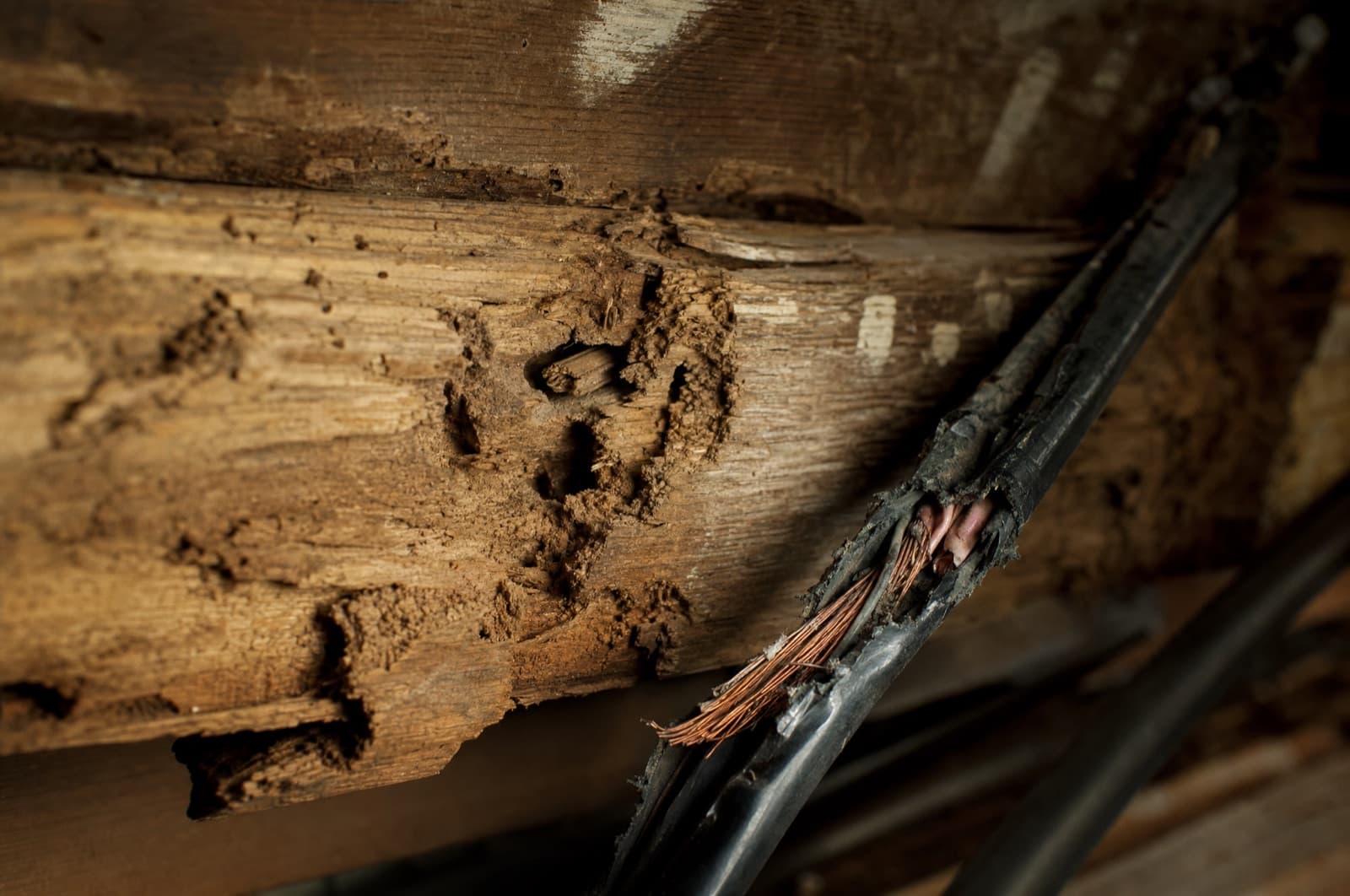
Pest damage evidence — a gnawed structural beam and a chewed electrical wire
Daniel Brady · NH-Licensed Pesticide Applicator · License #782664
Reviewed by Daniel Brady

Can pest infestations affect home resale value?

Documented — through inspection and disclosure, not a devaluation curse
Pests affect resale value through two real channels, not one vague one. First, wood-destroying-insect activity — termites, carpenter ants, powderpost beetles — is a standard inspection finding that buyers and lenders routinely negotiate on or require treated before closing. Second, a disclosed infestation history, even one that caused no lasting physical damage, can create stigma that measurably lengthens time-on-market. What's overstated is the idea that any pest sighting drags down a home's worth by some fixed, quotable amount — there is no such general figure, and most minor pest encounters never reach either channel at all.

At a glance

  • Hype: Wildly overstated
  • Evidence: Well documented
  • Who fixes it: Pest pro first
The honest answer

The short of it

The verdict
Documented — through inspection and disclosure, not a devaluation curse

Yes, but through two honest channels — a genuine wood-destroying-insect inspection finding, and stigma from a disclosed infestation history — not because a pest sighting sets a fixed 'value hit' on your home.

The correction

What they claim vs. what the evidence supports

One shared severity track, two markers. The span between them is the hype delta — named out loud.

The claim — pest infestations tanking a home's resale value

That any infestation — seen once, resolved years ago, or currently active — drags down what a home is worth, often framed as a steep, near-automatic value hit that follows the house.

Where the claim comes from: Pest-company blog copy and real-estate listicles repeating a 'devalues your home' line without a cited figure or study behind it.

Severity, 0–100
Hype says85
45Evidence says
Hype delta40point gapWell documented
The evidence

The real channel is narrower and better documented than the marketing line implies: a genuine wood-destroying-insect finding becomes a real inspection and negotiation item, and a disclosed infestation history measurably lengthens time-on-market through stigma. But there is no fixed, general devaluation figure, and the overwhelming majority of pest sightings — an ant trail, a single mouse, a wasp nest removed last summer — never reach either channel.

The gap

The channel is real — inspections and stigma genuinely affect a sale — but the specific 'this pest costs you a chunk of your home's value' line people repeat is invented. Nobody has measured a general figure, and for most pest encounters, there's no resale effect to measure at all.

Repair scope

Who actually fixes this

Scope, not dollars — the honest answer to “how expensive is it,” routed to the right trade.

Who fixes it
Pest pro first
Effort
A trade visit

If a wood-destroying-insect finding is what's actually affecting a sale, resolving the pest and documenting the treatment is the single most persuasive thing a seller can bring to a negotiation — and it's genuinely Anchor's lane.

The right order
  1. 1
    Get a wood-destroying-insect inspection before listing, not after a buyer's inspector finds activity first
  2. 2
    Resolve any confirmed termite or carpenter-ant activity and keep the treatment documentation
  3. 3
    Route any resulting structural repair to a licensed contractor separately from the pest treatment
Do not
  • Don't wait for a buyer's inspector to find active termite or carpenter-ant activity first — a seller-ordered inspection and documented treatment beforehand is the stronger negotiating position.
Where we help — and where we don't

Anchor performs termite and carpenter-ant inspections and treatment that a real-estate transaction may call for, and documented treatment is exactly the kind of record a negotiation benefits from. We do not handle the structural repair a finding might trigger, and we are not a substitute for your real-estate agent or attorney on disclosure law.

Economics

What it does to value

Whether pests in a home's present state or documented history will hurt what it's worth or how fast it sells.

Documented
What is documented

Wood-destroying-insect activity is a standard finding in a buyer's home inspection, and many mortgage lenders require a dedicated wood-destroying-insect inspection before closing — a confirmed termite or carpenter-ant finding routinely becomes a real repair-scope or price-negotiation item. Separately, the peer-reviewed stigmatized-property literature finds general consensus that a disclosed stigma, pest history included, reduces a property's sale potential and lengthens its time on market, independent of whether any physical damage remains by the time it's sold.

Just a talking point

That any pest sighting — a few ants, one mouse, a wasp nest treated last season — automatically knocks a fixed, quotable amount off a home's value. There is no credible general devaluation figure for pest history, and outside a genuine wood-destroying-insect finding, the 'infestations tank your home value' framing is an unfalsifiable sales line, not a measured result.

Disclosure

New Hampshire sellers and their agents carry statutory disclosure duties for known material physical conditions under RSA 331-A:25-b, with no affirmative duty to go looking for problems that aren't apparent — but a known, active infestation is a condition a seller may not conceal once known. New Hampshire has no bed-bug-specific disclosure statute, which is one reason that particular story runs almost entirely on stigma rather than a legal duty.

Insurance

Standard homeowners policies, including the widely used ISO HO-3 form, exclude damage from birds, vermin, rodents, or insects as preventable maintenance rather than a covered accidental loss. That matters directly here: a buyer cannot assume an insurance claim will backstop pre-existing pest damage discovered after closing, which is the opposite of what pest-marketing copy sometimes implies when it suggests coverage will simply handle it.

NH RSA 331-A:25-b; ISO HO-3 exclusion language (Texas Department of Insurance); Springer, Journal of Housing and the Built Environment (2019)

In depth

The full picture

01

The two honest channels: inspection findings and stigma

Ask ten people whether pests hurt a home's resale value and most will say yes without being able to say exactly how. There are, in fact, two specific and different mechanisms, and they behave very differently depending on which pest is involved.

The first is structural and procedural: wood-destroying-insect activity — subterranean termites, carpenter ants, powderpost beetles — is a standard checkpoint in a home sale. Many mortgage lenders require a dedicated wood-destroying-insect inspection before closing, and a confirmed finding becomes a concrete negotiation item — treat-before-close, price adjustment, or a seller credit for repair. This channel is well documented because it's baked into how real-estate transactions and financing already work.

The second is psychological and market-based: stigma. The peer-reviewed literature on stigmatized properties finds a general consensus that disclosed stigmas — a documented pest history among them — reduce a property's sale potential and lengthen time-on-market, even where no physical damage remains. This is real, but it's a softer, harder-to-quantify effect than an inspection line item, and it applies differently to a termite history than to, say, a resolved ant problem nobody would ever ask about.

02

What New Hampshire disclosure law actually requires

New Hampshire places a statutory duty on sellers and their agents to disclose known material physical conditions under RSA 331-A:25-b — but that duty is triggered by actual knowledge, not an obligation to go investigate. In practice, that means a seller who knows about an active infestation cannot conceal it, but there's no requirement to hire an inspector proactively before every showing. New Hampshire also has no bed-bug-specific disclosure statute, which is a meaningful distinction: a documented termite history intersects with lender-required inspections and general material-defect disclosure, while a past bed-bug problem is governed by the same general disclosure duty but carries no structural inspection requirement behind it at all — one more reason that story is almost entirely about buyer perception rather than a legal or structural fact.

03

The insurance myth this cluster keeps correcting

It's worth stating plainly, because it comes up constantly in this context: standard homeowners insurance does not cover pest damage, and that matters for a resale conversation specifically. The widely used ISO HO-3 policy form excludes damage caused by birds, vermin, rodents, or insects as preventable maintenance rather than a sudden, accidental loss. A buyer who discovers pre-existing pest damage after closing cannot expect an insurance claim to pay for it, and a seller shouldn't imply otherwise during a sale. The entire resale-value conversation, in other words, plays out without an insurance safety net on either side — which is exactly why a documented wood-destroying-insect inspection, not a policy, is the real protective step.

04

Why bed bugs are a different story than termites

It's worth being precise here, because lumping every pest into one resale-value story is itself a version of the overstatement this page corrects. Termites and carpenter ants can genuinely damage the structure a buyer is purchasing, which is why their resale-value story is grounded in inspections, lender requirements, and repair negotiations — a documented channel. Bed bugs, by contrast, cause no structural or material damage to a house at all; any resale effect they have is entirely about stigma and buyer aversion, not a damaged asset. That distinction matters enough that it gets its own dedicated page in this hub, because collapsing 'pests hurt resale value' into a single blanket claim erases exactly the honest difference a homeowner needs to know.

Key takeaways
5 points
  • Resale impact runs through two real channels: a wood-destroying-insect inspection finding, and stigma from a disclosed infestation history — not a general 'pests devalue your home' rule.
  • There is no credible fixed figure for how much any given infestation lowers a home's value; the specific-percentage version of this claim is a sales talking point.
  • New Hampshire law requires disclosing known material conditions (RSA 331-A:25-b) but does not require sellers to go investigate for pests proactively.
  • Standard homeowners insurance excludes pest and vermin damage as preventable maintenance — a buyer cannot count on a policy to backstop pre-existing pest damage.
  • Termite and carpenter-ant findings are a documented resale factor; a minor, resolved pest sighting almost never is.
New Hampshire context

What this means for an NH home sale

Because the Eastern subterranean termite is established across southern New Hampshire, a wood-destroying-insect inspection is a routine and genuinely useful step before listing here, not an overcautious extra. Sellers who address a confirmed termite or carpenter-ant finding and keep the treatment paperwork are typically in a stronger negotiating position than sellers who let a buyer's inspector find it first. Ordinary seasonal pest pressure — fall rodent activity, a summer wasp nest — carries no comparable disclosure or inspection requirement and is not the resale-value story this page is about.

  • NH-licensed #782664

    Southern New Hampshire

  • Family-owned

    Since 2017

  • Honest routing

    Even when it isn’t us

We serve these communities

ManchesterNashuaConcordDerryBedfordSalemHudsonAmherstAuburnGoffstownHooksettLitchfieldLoudonMilfordBristol

Service Area Map

Southern New Hampshire

BristolPop. 3,200LoudonPop. 5,500ConcordPop. 43,900HooksettPop. 14,800GoffstownPop. 18,000AuburnPop. 5,700ManchesterPop. 115,600BedfordPop. 23,300LitchfieldPop. 8,500AmherstPop. 11,300DerryPop. 34,500MilfordPop. 15,700HudsonPop. 25,600NashuaPop. 91,100SalemPop. 30,000HQCityHover for info

Selling soon? Get ahead of a wood-destroying-insect finding.

A documented termite or carpenter-ant inspection before you list is the strongest thing you can bring to a negotiation.

Follow-up questions

Frequently asked

Sources & citations(4)
  1. New Hampshire RSA 331-A:25-b — Real Estate Brokerage Disclosure

    NH seller and agent disclosure duty for known material physical conditions

    govverified 2026-07-16
  2. Texas Department of Insurance — Five Things Your Home Policy Won't Cover

    Confirmation of standard ISO HO-3 exclusion for vermin, rodent, and insect damage as preventable maintenance

    govverified 2026-07-16
  3. Journal of Housing and the Built Environment — Stigmatized Properties and Housing Values (Springer, 2019)

    Peer-reviewed finding that disclosed property stigma reduces sale potential and lengthens time-on-market

    academicverified 2026-07-16
  4. Penn State Extension — Eastern Subterranean Termites

    Basis for why wood-destroying-insect inspection is a genuine, routine NH real-estate step

    extensionverified 2026-07-16

Written & reviewed by

Verified

Daniel Brady

NH-Licensed Pesticide Applicator · License #782664 (NHDAMF, RSA 430)

Daniel Brady is the New Hampshire–licensed applicator behind Anchor Pest Services, a family-owned pest control company serving the Manchester area since 2017.

Verify license

Last updated Jul 2026

Honest pest help for New Hampshire homes

We Document What Matters for a Sale. We Won't Sell You Fear.

Anchor performs the termite and carpenter-ant inspections and treatment that genuinely affect a New Hampshire home sale, with documentation you can hand to a buyer or agent. We are not a substitute for your real-estate agent or attorney on disclosure law. Family-owned since 2017, NH license #782664, serving Manchester, Nashua, Concord and nearby towns.

  • Honest framing — no fixed 'value hit' scare numbers
  • NH-licensed applicators (#782664) — free inspection, same-day service
  • Wood-destroying-insect inspection and treatment across southern and central New Hampshire

NH License #782664 · No obligation · We answer in person