
Skip to content
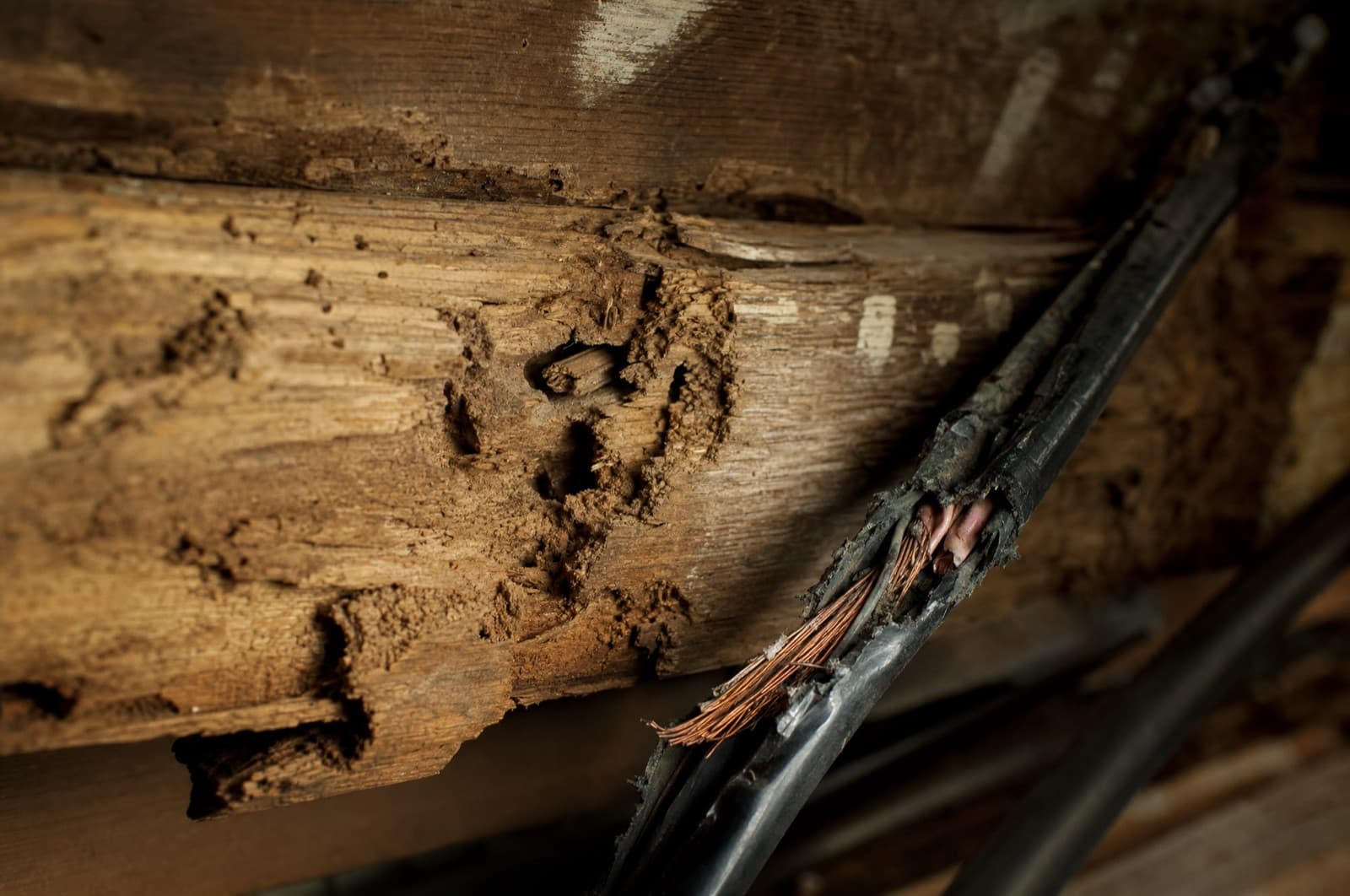
Pest damage evidence — a gnawed structural beam and a chewed electrical wire
Daniel Brady · NH-Licensed Pesticide Applicator · License #782664
Reviewed by Daniel Brady

Can wasp nests damage siding or drywall?

Cosmetic — with one genuine exception
Rarely, and only in one specific scenario. A paper wasp or hornet nest attached to the outside of your siding is dried, inert paper pulp — it does not eat, dissolve, or degrade siding material of any kind. The genuine exception is a yellowjacket colony that establishes inside a wall void: as the colony grows, workers can thin the paper facing of the interior drywall to enlarge their cavity, occasionally leaving only a layer of paint between the nest and the room. That distinction matters — most wasp-nest-on-my-house situations are purely cosmetic, and only an active interior colony is worth a professional's attention.

At a glance

  • Can it?: Rarely
  • How common: Routine
  • Hype: Overstated
  • Evidence: Plausible, under-documented
The honest answer

The short of it

The verdict
Cosmetic — with one genuine exception

An aerial paper nest glued to your siding does no damage at all — the real, uncommon exception is a yellowjacket colony nesting inside a wall void, which can thin the drywall from the inside.

The correction

What they claim vs. what the evidence supports

One shared severity track, two markers. The span between them is the hype delta — named out loud.

The claim — wasp and yellowjacket nests attached to or built inside home exteriors

That a wasp nest on your house is actively 'damaging your siding' or 'eating into your walls,' treating any visible nest — regardless of whether it's an exterior paper globe or an interior void colony — as an equally urgent property threat.

Where the claim comes from: Pest-control marketing copy and viral home-maintenance posts that use 'damage' language for any nest sighting to create urgency, without distinguishing where the nest actually is.

Severity, 0–100
Hype says62
28Evidence says
Hype delta34point gapPlausible, under-documented
The evidence

An exterior nest is chewed wood fiber and saliva, dried into an inert shell once construction stops for the season — no source documents wasps degrading vinyl, wood, fiber-cement, or aluminum siding. The one legitimate exception is a yellowjacket colony established inside a wall void, where growing worker populations can thin or excavate the interior paper facing of drywall to expand the nest cavity, and trapped workers may chew through wallboard if an entrance is sealed while the colony is still alive.

The gap

The common case — a paper nest stuck to your fascia or eave — never gets past a faint stain. The uncommon case — a yellowjacket colony living inside your wall — is genuinely worth a professional call. Flattening those two into one 'wasp nests damage your house' claim overstates the first and, if anything, undersells how specifically the second one matters.

Damage assessment

What is actually harmed

Damage verdict
Cosmetic — with one genuine exception
CosmeticCan it?Rarely
The specimen
Pest
Paper wasps, hornets, and yellowjackets — nests attached to exterior surfaces or built inside wall voids
What is in question
Vinyl, wood, fiber-cement, or aluminum siding (exterior nests) and interior drywall (wall-void colonies)
How common
Routine
Evidence
Plausible, under-documented
Mechanism

An exterior nest is built from chewed wood fiber mixed with saliva, dried into a papery shell attached to a surface by a thin stalk or footprint of the same material — it does not dissolve, corrode, or physically break down whatever it's attached to. The one mechanism with real consequence is different: when yellowjackets nest inside an existing wall-cavity gap, the colony can expand its nesting space by chewing into the paper facing on the interior side of the drywall, thinning it from the inside as the population grows through the season. If that void entrance is then sealed while the colony is still alive, trapped workers may chew through the wallboard trying to escape toward light and warmth — which usually means into the room, not back outside.

Actually at risk3
  • Cosmetic staining or discoloration on painted siding or eaves where an exterior nest has been attached for a season
  • The interior paper facing of drywall directly behind an active wall-void colony — occasionally down to just the paint layer
  • Small existing gaps around utility penetrations, vents, and soffits that a colony may slightly enlarge to move in and out
Not at risk — despite the myth4
  • Vinyl, wood, fiber-cement, or aluminum siding material itself — no evidence supports wasps or yellowjackets degrading, eating, or corroding any siding type
  • Wall framing, studs, or sheathing — the mechanism, even in the wall-void exception, never reaches structural lumber
  • Interior drywall anywhere a colony is not actively nesting inside that specific void
  • Homes with only an exterior nest and no interior wall-void colony — that scenario carries no drywall risk at all
Worst realistic case
A yellowjacket colony establishes inside a wall void unnoticed, grows through the season, and thins the drywall's interior paper facing enough that only the paint film separates the nest from the room — occasionally breaking through if the void entrance is sealed while the colony is still active. That is a real, if uncommon, exception worth a professional visit. The common case — an aerial paper nest glued to fascia or siding — never progresses past a faint cosmetic stain.

Assessed from: eXtension Ask an Expert (yellowjacket colonies in structural voids); UNH Cooperative Extension wasp/hornet guidance; NC State Extension bald-faced hornet nest biology

The compounding clock

Does it get worse if you ignore it?

Over time
Self-limiting — it ends

Self-limiting — the colony, and any risk to the wall, ends when cold weather arrives; New England wasps and yellowjackets don't reuse old nests.

The timeline
3 stages
  1. WeeksReversible

    A young colony expands the nest and forages. An exterior nest is still small and purely cosmetic; an interior wall-void colony, if present, is still contained and not yet a drywall concern.

  2. MonthsReversible

    Population peaks in late summer to early fall. An exterior nest may reach the size of a basketball but remains inert glued-on paper. A wall-void colony, if present, is at its largest and this is when interior drywall thinning is most likely to become noticeable.

  3. One seasonReversible

    The colony collapses at the first hard frost — historically mid-to-late October around Manchester, per NOAA. Workers die off and the nest, whether exterior or inside a void, is permanently abandoned.

What stops the clock
The first hard frost ends the colony on its own, or a pest professional can resolve an active wall-void colony sooner. Either way, the nest is never reoccupied the following year, and any cosmetic staining or interior thinning stops accumulating the moment the colony is gone.
Repair scope

Who actually fixes this

Scope, not dollars — the honest answer to “how expensive is it,” routed to the right trade.

Who fixes it
Pest pro first
Effort
A trade visit

Any active colony — especially one inside a wall void — needs to be professionally resolved before anyone touches the wall. Opening the cavity or sealing the entrance with a live colony inside drives workers toward the nearest exit, which is frequently into the living space rather than back outdoors.

The right order
  1. 1
    Confirm whether the nest is exterior-only (cosmetic) or has an entry point into a wall void (a genuine functional concern)
  2. 2
    Have the colony professionally resolved — never seal the entrance first while wasps are active inside
  3. 3
    Wash or scrape any cosmetic staining off siding with mild detergent and water
  4. 4
    Only after the void is confirmed empty, patch or repaint the drywall face if it was thinned
Route by symptom
  • You — a DIY patchThe nest was purely exterior and cosmetic — a hose, mild detergent, and a scraper handle the stain once the nest itself is removed
  • Licensed contractorA wall-void colony genuinely thinned or breached the drywall and the wallboard itself needs patching or replacing
Do not
  • Don't seal a wall-void entrance while the colony is still alive — trapped workers will chew toward light and warmth, and that usually means your room, not the outdoors
  • Don't spray an over-the-counter aerosol into a void opening — it agitates the colony without reliably reaching it and can push workers deeper into the wall instead of out
Where we help — and where we don't

Wasp and yellowjacket nests — including the wall-void kind — are squarely Anchor's work. We do not do the drywall patch or siding cleanup ourselves; once the colony is resolved, that finishing step is a homeowner or contractor task.

In depth

The full picture

01

What an exterior wasp nest actually does to your siding

The paper globe or gray comb you see attached to an eave, fascia, or porch ceiling is chewed wood fiber and saliva, dried into a rigid shell once construction slows for the season. It's glued on, not grown into the surface — there's no mechanism by which that material eats, dissolves, or corrodes vinyl, wood, fiber-cement, or aluminum siding. The worst realistic outcome from an exterior nest is a faint discoloration where it's been attached for a season, which washes or scrapes off once the nest is removed.

This is worth being direct about, because 'wasp nest on my house' searches return a lot of copy implying active structural risk regardless of where the nest is. An exterior nest, by itself, simply isn't that — it's a cosmetic issue and, more relevantly, a sting-risk issue depending on where it sits relative to doors and walkways.

02

The real exception: a colony inside the wall

The scenario that genuinely deserves a homeowner's attention is different: yellowjackets — more than paper wasps or hornets — readily nest inside existing gaps in wall voids, soffits, and similar cavities rather than building an exposed exterior nest. Once established, a colony can grow considerably through a single season, and as it expands, workers may chew into the interior paper facing of the drywall to enlarge their nesting space from the inside. In a well-developed void colony, that thinning can progress until only the paint layer separates the nest from the room.

The risk compounds if that void's entrance gets sealed while the colony is still active — trapped workers, unable to reach their usual exit, will chew toward the nearest light and warmth, which is frequently the interior of the house rather than back outside. This is the one part of the 'wasp nests damage your home' claim that's genuinely earned, and it's specific to an active interior colony, not to any nest you can see from the yard.

03

Why the two scenarios keep getting flattened together

It's an easy mistake to make: both situations start with 'there's a wasp nest on my property,' and pest-marketing copy has an incentive to treat every sighting as equally urgent. But the mechanism, the material at risk, and the appropriate response are completely different depending on where the nest actually is.

An exterior nest calls for, at most, a decision about sting risk near high-traffic areas — the siding underneath needs nothing. A wall-void colony calls for professional resolution specifically because opening or sealing that cavity incorrectly can turn a hidden nest into an active breach. Getting this distinction right, rather than treating every visible nest as a structural emergency, is the honest answer to this question.

Key takeaways
5 points
  • An exterior wasp or hornet nest attached to your siding is inert dried paper — it causes no damage to siding of any kind.
  • The one genuine exception is a yellowjacket colony nesting inside a wall void, which can thin interior drywall as it grows.
  • Never seal a wall-void entrance while the colony is still active — it can push workers into your living space instead of out.
  • Both scenarios are self-limiting: the colony dies at the first hard frost and New England wasps don't reuse old nests the following year.
  • The repair, when there is one, is a drywall patch after the colony is professionally resolved — Anchor handles the pest, not the wallboard.
New Hampshire context

What this looks like in New Hampshire homes

Southern and central New Hampshire homes with older siding, gaps around utility penetrations, or unsealed soffit vents are the classic entry points for a yellowjacket colony to establish inside a wall void, and activity typically becomes noticeable from midsummer onward as the colony grows. Most calls Anchor sees for wasp or hornet nests, though, are the exterior kind — an eave, porch ceiling, or shed corner — which need attention only if they're near a doorway or walkway. Either way, the timeline ends the same way: the colony collapses with the season's first hard frost, historically mid-to-late October around Manchester (NOAA), and the nest is not reused.

  • NH-licensed #782664

    Southern New Hampshire

  • Family-owned

    Since 2017

  • Honest routing

    Even when it isn’t us

We serve these communities

ManchesterNashuaConcordDerryBedfordSalemHudsonAmherstAuburnGoffstownHooksettLitchfieldLoudonMilfordBristol

Service Area Map

Southern New Hampshire

BristolPop. 3,200LoudonPop. 5,500ConcordPop. 43,900HooksettPop. 14,800GoffstownPop. 18,000AuburnPop. 5,700ManchesterPop. 115,600BedfordPop. 23,300LitchfieldPop. 8,500AmherstPop. 11,300DerryPop. 34,500MilfordPop. 15,700HudsonPop. 25,600NashuaPop. 91,100SalemPop. 30,000HQCityHover for info

Nest on the siding? Probably nothing. Colony in the wall? Call first.

Anchor resolves wall-void wasp and yellowjacket colonies the right way — before anyone seals an opening with the colony still alive.

Follow-up questions

Frequently asked

Sources & citations(3)
  1. eXtension Ask an Expert — Yellowjacket Nests in Structures

    Yellowjacket colonies nesting inside wall voids and structural cavities; drywall/void interaction

    extensionverified 2026-07-16
  2. UNH Cooperative Extension — Controlling Wasps, Bees and Hornets

    New Hampshire wasp and yellowjacket nest behavior, seasonal biology, and non-reuse of nests

    extensionverified 2026-07-16
  3. NC State Extension — Bald-faced Hornets

    Paper nest construction and material; colony seasonal collapse at frost

    extensionverified 2026-07-16

Written & reviewed by

Verified

Daniel Brady

NH-Licensed Pesticide Applicator · License #782664 (NHDAMF, RSA 430)

Daniel Brady is the New Hampshire–licensed applicator behind Anchor Pest Services, a family-owned pest control company serving the Manchester area since 2017.

Verify license

Last updated Jul 2026

Honest pest help for New Hampshire homes

We Handle the Colony. We'll Tell You When Your Siding Doesn't Need Us.

An exterior wasp nest is cosmetic and often doesn't need professional removal at all unless it's a sting risk. A colony inside a wall void is different — it genuinely needs to be resolved correctly, and sealing it up yourself can push wasps into your living space. Anchor Pest Services handles both the sting-risk call and the wall-void colony; the drywall patch afterward is a homeowner or contractor job. Family-owned since 2017, NH license #782664, serving Manchester, Nashua, Concord and nearby towns.

  • Honest advice — we'll tell you when an exterior nest doesn't need removal at all
  • NH-licensed applicators (#782664) — free inspection, same-day service
  • Wasp and yellowjacket nest removal, including wall-void colonies, across southern and central New Hampshire

NH License #782664 · No obligation · We answer in person