
Skip to content
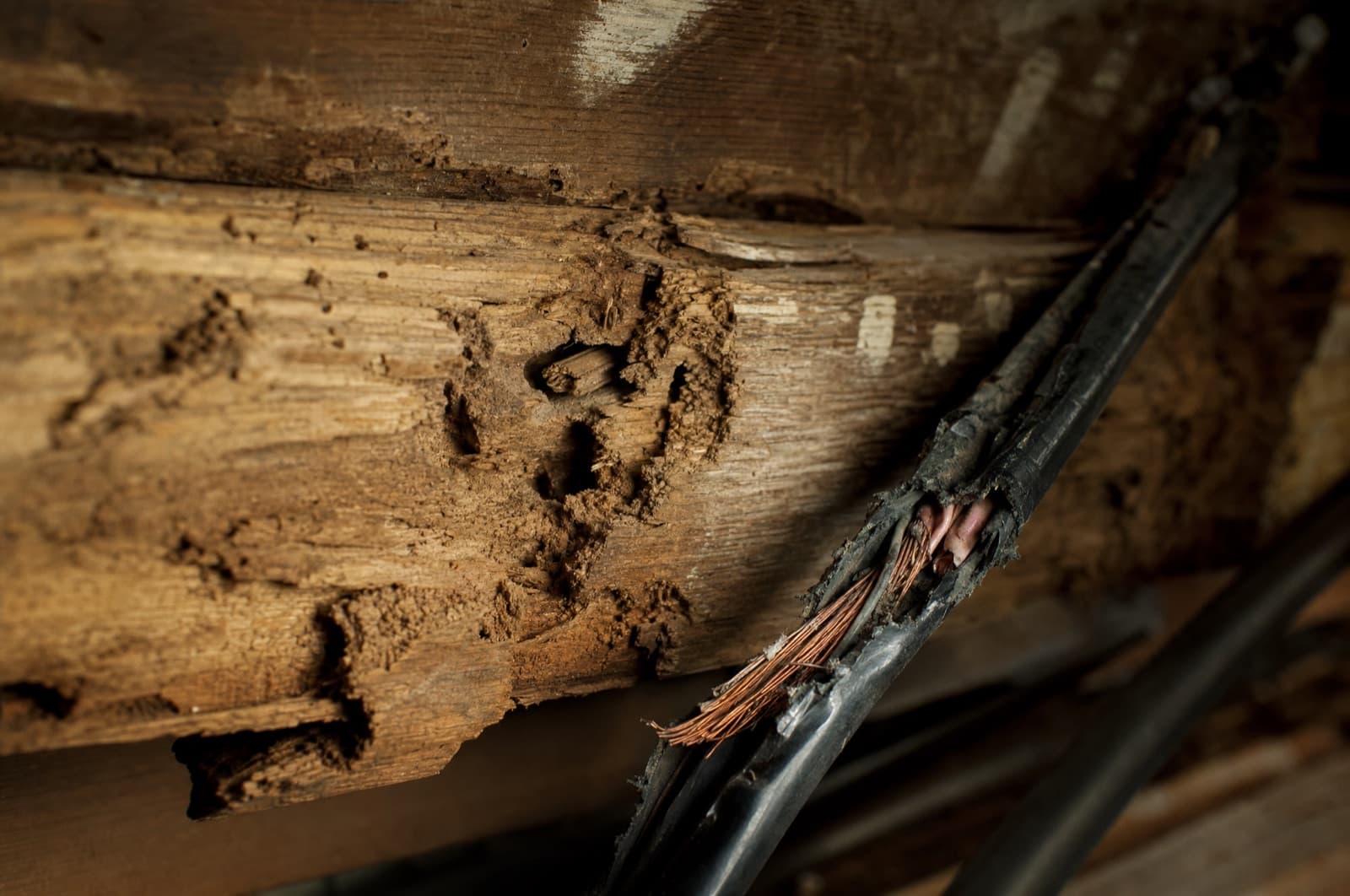
Pest damage evidence — a gnawed structural beam and a chewed electrical wire
Daniel Brady · NH-Licensed Pesticide Applicator · License #782664
Reviewed by Daniel Brady

Do ticks harm property or only animals?

No property damage — none at all
No — ticks cause no property damage whatsoever. They are arachnids and obligate blood-feeders, meaning they require a live animal host's blood to survive and develop, and they have no biological mechanism for chewing, boring into, or degrading wood, fabric, wiring, or any other building material. They don't nest in your pantry, gnaw your walls, or stain your ceiling. The entire real risk ticks carry is medical — Lyme disease and other tick-borne infections — and New Hampshire has among the highest Lyme incidence rates in the country, which is exactly why the health answer, not a property answer, is the one worth taking seriously.

At a glance

  • Can it?: No
  • How common: Rare
  • Hype: Wildly overstated
  • Evidence: Well documented
The honest answer

The short of it

The verdict
No property damage — none at all

No. Ticks damage zero property — they are obligate blood-feeders with no chewing, boring, or excavating biology. The entire genuine risk is health, specifically Lyme disease, which New Hampshire has in serious measure.

The correction

What they claim vs. what the evidence supports

One shared severity track, two markers. The span between them is the hype delta — named out loud.

The claim — ticks damaging property versus posing a risk only to animals and people

That ticks are a household infestation pest worth treating like termites or rodents — showing up in generic 'signs of infestation' checklists and pest-company blog copy that folds ticks into the same property-threat framing used for genuinely damaging pests.

Where the claim comes from: Pest-control marketing that bundles ticks into whole-property treatment pitches rather than describing what's actually being sold: yard and perimeter risk reduction aimed at exposure, not damage.

Severity, 0–100
Hype says45
3Evidence says
Hype delta42point gapWell documented
The evidence

Ticks are arachnids, not insects, and are obligate blood-feeders — per UNH Extension, they 'require an animal host to survive and develop.' They have no chewing mouthparts adapted to any building material, no digestive capacity for wood or fiber, and no excavating or gnawing behavior of any kind. There is no property-damage mechanism to document, full stop.

The gap

Ticks damage nothing you own. Treating them as a property-threat pest is manufactured framing, and it actively buries the real danger, which is entirely medical — Lyme disease and the other tick-borne illnesses New Hampshire sees every season.

Damage assessment

What is actually harmed

Damage verdict
No property damage — none at all
No property damageCan it?No
The specimen
Pest
Ticks encountered in New Hampshire, primarily the blacklegged (deer) tick and the American dog tick
What is in question
None — there is no material or system a tick acts on
How common
Rare
Evidence
Well documented
Mechanism

Ticks are arachnids, more closely related to spiders and mites than to insects, and their entire biology is organized around finding a host animal and drawing a blood meal, not consuming or degrading materials. They have no chewing mouthparts suited to wood, fabric, or building material, no digestive enzymes for cellulose or fiber, and no gnawing or excavating behavior at all. Indoors, a tick's only 'activity' is waiting near a likely host's path — along a baseboard, in pet bedding, on upholstery — for an opportunity to attach to skin. It never acts on the surface or material itself, which is why there is no damage pathway to describe, let alone measure.

Actually at risk2
  • Nothing material — the only thing a tick can act on is a blood meal from a live host, which is not a possession
  • At most, pet bedding or upholstery a tick-carrying pet has rested on may warrant a wash to reduce how many ticks make it back indoors — a precaution, not damage
Not at risk — despite the myth6
  • Wood framing, siding, and trim
  • Wiring, insulation, and any building system
  • Drywall, plaster, masonry, and concrete
  • Fabric, upholstery, carpet, and stored belongings — ticks do not eat or degrade any of them
  • Food and pantry goods
  • The structural integrity of the building in any scenario involving ticks alone
Worst realistic case
Laundering pet bedding or vacuuming upholstery to reduce the number of ticks a pet has carried indoors — a cleaning precaution, not a repair. There is no version of a tick-only scenario that escalates into property damage of any kind.

Assessed from: UNH Extension 'Tick Talk'; ScienceDirect, Biology of Ticks

The compounding clock

Does it get worse if you ignore it?

Over time
Static — never worsens

Static — there is no property clock, because there is no property damage to progress.

Now
Ever

Ticks don't consume, weaken, contaminate, or stain any material, so there is nothing for time to make worse on the property side. A tick found indoors today is exactly as much of a property risk a year from now: none. The only genuine clock involving a tick is medical — how long an attached tick has been feeding — and that is a health question, not a damage one.

What stops the clock
Nothing needs to be stopped on the property side, since nothing is progressing. What actually matters is checking yourself and pets for ticks after time outdoors and removing any attached tick promptly, because that timing affects disease-transmission risk, not property risk.
Repair scope

Who actually fixes this

Scope, not dollars — the honest answer to “how expensive is it,” routed to the right trade.

Who fixes it
Nobody — nothing to repair
Effort
Minutes

There is nothing to repair. Ticks leave no material behind to clean, chew nothing, and stain nothing — the entire concept of a repair simply doesn't apply here.

Route by symptom
  • You — wipe it upA pet has brought ticks indoors and you want to launder bedding or vacuum upholstery as a precaution
Do not
  • Don't let anyone frame a tick sighting as a structural or 'infestation' issue the way termites or rodents are — the biology doesn't support it
  • Don't delay removing an attached tick while worrying about property — remove it promptly and watch for symptoms; that's the genuine risk
Where we help — and where we don't

Anchor can provide yard and perimeter tick-risk reduction if you'd simply like fewer ticks reaching your property line — but the honest message on this page is that there is no property damage to fix, and we won't invent one to sell a visit. If Lyme risk is your real concern, that's a health question for your doctor, and a fuller topic at /ticks-fleas-faq.

Health risk

The health angle

Lyme disease, transmitted by the blacklegged (deer) tick — New Hampshire has one of the highest Lyme disease incidence rates in the country. Other tick-borne risks documented in New Hampshire include anaplasmosis, babesiosis, Powassan virus, and Borrelia miyamotoi disease.

See a doctor or vet
Who is at risk
  • Anyone spending time in wooded, brushy, or tall-grass areas across New Hampshire, including in your own yard
  • Pets that go outdoors, which can carry ticks back into the home
  • Children and outdoor workers, who tend to have more skin exposure time in tick habitat
Precautions
  • Check yourself, children, and pets for ticks after any time outdoors, including in your own yard
  • Remove an attached tick promptly with fine-tipped tweezers, pulling straight out at the skin
  • Shower soon after coming indoors and put outdoor clothing in a hot dryer
  • Talk to your veterinarian about tick prevention options for pets
Do not
  • Don't wait for symptoms before mentioning a tick bite to your doctor
  • Don't use folk removal methods like matches or petroleum jelly — use fine-tipped tweezers only
When to seek care

See a doctor if you develop a rash, fever, fatigue, or joint pain in the weeks after a tick bite, or if you're unsure how long a tick was attached. New Hampshire residents can also submit ticks for free identification through the NH Department of Agriculture, Markets & Food and UNH's Tick Testing Service.

Health guidance from: NH DHHS — Tickborne Diseases; NH DHHS Health Alert on Lyme & Tick-Borne Diseases

In depth

The full picture

01

The honest answer: no, and here's the biology behind it

Ticks are arachnids, not insects — closer relatives of spiders and mites than of ants or beetles — and every part of their biology is built around one thing: finding an animal host and drawing blood. UNH Extension describes them plainly as 'obligate blood feeders,' meaning they require a host to survive and develop at every life stage. Nothing in that biology involves chewing wood, boring into a wall, gnawing wiring, or digesting fabric or paper. A tick has no equipment for any of it. This is one of the cleanest 'none' verdicts a pest can earn, and it's worth stating at full confidence rather than hedging it into a false middle ground.

02

Why the property-threat framing shows up anyway

The claim that ticks threaten property tends to come from generic pest-marketing checklists that lump every crawling arthropod into the same 'signs of infestation' language used for termites, carpenter ants, or rodents — pests that genuinely do have a damage mechanism. Ticks get swept into that framing by association, not by evidence. It's also worth separating ticks from bed bugs here: bed bugs are a genuine indoor-infesting pest that can establish a sustained household population. Ticks are fundamentally different — they typically arrive on a host (a person or pet returning from the outdoors) rather than colonizing a structure, and UNH Extension's tick guidance describes their indoor presence in exactly those host-associated terms.

03

What actually happens when a tick gets inside

A tick that makes it indoors is almost always riding in on a person or a pet, not invading on its own. Once inside, it either finds a host to attach to or it doesn't — there's no nest-building, no egg-laying colony establishing itself in your baseboards, and no material being consumed while it waits. The only property-adjacent action worth taking is precautionary: washing pet bedding or vacuuming upholstery where a tick-carrying pet has rested, simply to reduce how many ticks are around, not because anything has been damaged.

04

The real risk is entirely medical — and New Hampshire's is real

This is the part of the page that deserves the weight the property question doesn't. New Hampshire has recorded among the highest Lyme disease incidence rates in the United States, and state health surveillance has found more than half of sampled deer ticks in some New Hampshire counties carrying the Lyme bacterium. That's a genuine, serious health risk — it's just not a property one. The honest move is to take the health risk seriously (tick checks, prompt removal, a doctor's visit if symptoms appear) and to stop looking for a property angle that doesn't exist. For the full health picture, see /ticks-fleas-faq.

Key takeaways
5 points
  • No property damage of any kind — none, full stop. Ticks have no chewing, boring, or excavating biology.
  • Ticks are obligate blood-feeders: their whole biology exists to reach a host, not to act on a material or structure.
  • Unlike bed bugs, ticks don't establish a sustained indoor-infesting population — they typically arrive on a host.
  • The entire genuine risk is health: Lyme disease and other tick-borne infections, and New Hampshire's incidence is genuinely high.
  • There is nothing to repair here — the only honest routing is a doctor for health exposure, not a repair trade.
New Hampshire context

Where New Hampshire's real tick risk lives

Southern and central New Hampshire's wooded edges, tall grass, and leaf litter are classic blacklegged-tick habitat, and ticks are active across a longer stretch of the year than many residents expect — including on unseasonably mild winter days. State health data has repeatedly ranked New Hampshire among the top few states nationally for Lyme disease incidence, with surveillance finding a majority of sampled deer ticks in some counties carrying the Lyme bacterium. None of that changes the property verdict on this page — it's exactly why the real conversation about ticks in New Hampshire belongs at /ticks-fleas-faq and with a doctor, not with a property-damage checklist.

  • NH-licensed #782664

    Southern New Hampshire

  • Family-owned

    Since 2017

  • Honest routing

    Even when it isn’t us

We serve these communities

ManchesterNashuaConcordDerryBedfordSalemHudsonAmherstAuburnGoffstownHooksettLitchfieldLoudonMilfordBristol

Service Area Map

Southern New Hampshire

BristolPop. 3,200LoudonPop. 5,500ConcordPop. 43,900HooksettPop. 14,800GoffstownPop. 18,000AuburnPop. 5,700ManchesterPop. 115,600BedfordPop. 23,300LitchfieldPop. 8,500AmherstPop. 11,300DerryPop. 34,500MilfordPop. 15,700HudsonPop. 25,600NashuaPop. 91,100SalemPop. 30,000HQCityHover for info

Want fewer ticks reaching your yard? That's risk reduction, not repair.

Anchor offers yard and perimeter tick treatment purely to lower exposure. There's no property damage to fix, and we'll say so.

Follow-up questions

Frequently asked

Sources & citations(4)
  1. UNH Extension — Tick Talk

    Ticks are arthropods (arachnids), obligate blood-feeders; UNH Tick Testing Service

    extensionverified 2026-07-16
  2. NH DHHS — Tickborne Diseases

    NH tick-borne disease list; tick removal timing; free tick identification via NH Dept. of Agriculture, Markets & Food

    govverified 2026-07-16
  3. NH DHHS — Health Alert: Lyme & Tick-Borne Diseases

    New Hampshire's high Lyme disease incidence and deer-tick infection surveillance data

    govverified 2026-07-16
  4. ScienceDirect — Biology of Ticks

    Ticks as obligate blood-feeders; tick life-cycle biology

    academicverified 2026-07-16

Written & reviewed by

Verified

Daniel Brady

NH-Licensed Pesticide Applicator · License #782664 (NHDAMF, RSA 430)

Daniel Brady is the New Hampshire–licensed applicator behind Anchor Pest Services, a family-owned pest control company serving the Manchester area since 2017.

Verify license

Last updated Jul 2026

Honest pest help for New Hampshire homes

No Property Damage Here — the Real Risk Is Health.

Ticks don't damage property, and we're not going to pretend otherwise to sell you a service. If you'd like fewer ticks reaching your yard and family, Anchor Pest Services offers perimeter tick treatment as an exposure-reduction option — family-owned since 2017, NH license #782664, serving Manchester, Nashua, Concord and nearby towns.

  • Honest advice — we say 'none' for property damage when the evidence says none
  • NH-licensed applicators (#782664) — free inspection, same-day service
  • Yard and perimeter tick-risk reduction across southern and central New Hampshire

NH License #782664 · No obligation · We answer in person