
Skip to content
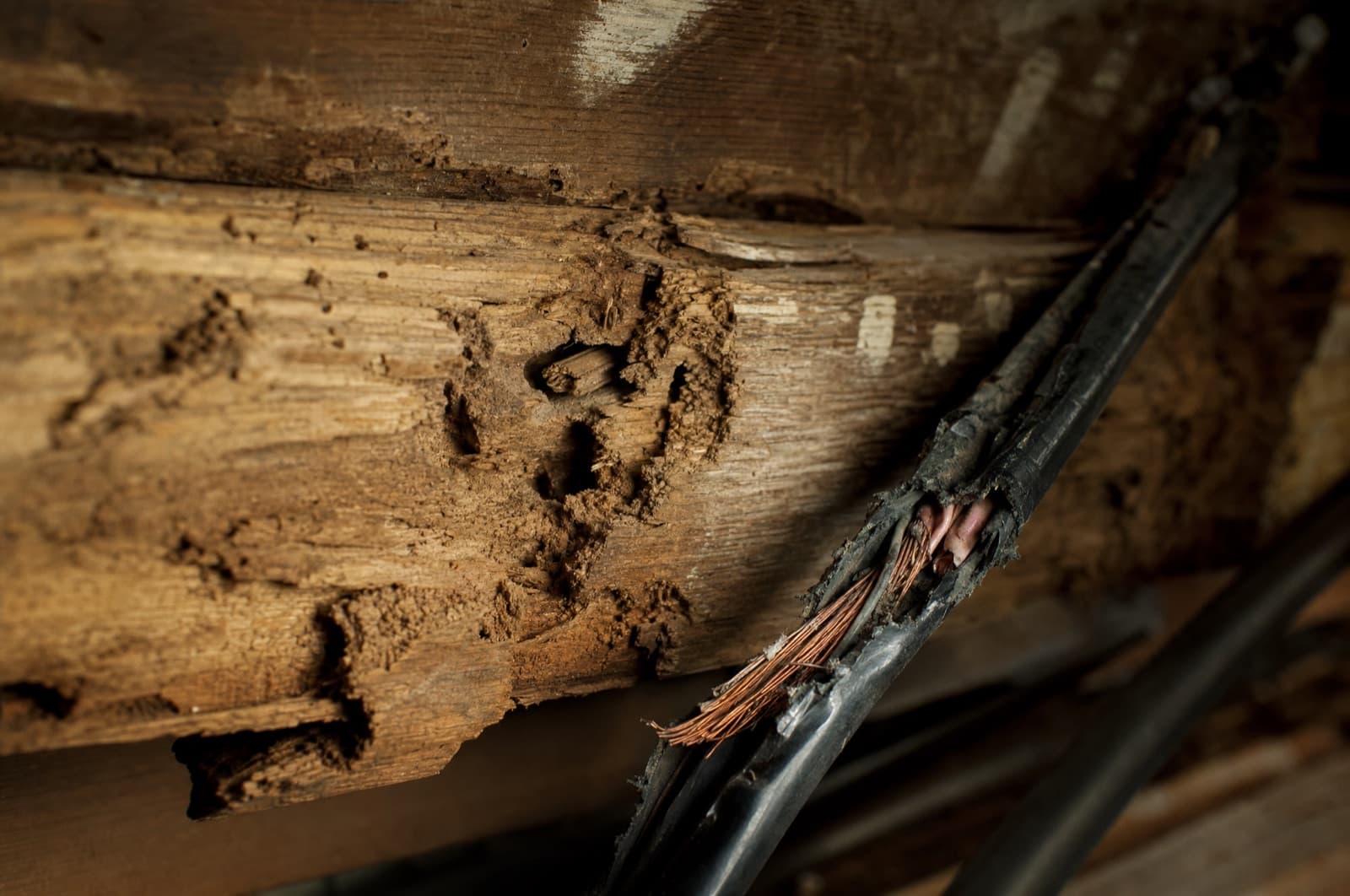
Pest damage evidence — a gnawed structural beam and a chewed electrical wire
Daniel Brady · NH-Licensed Pesticide Applicator · License #782664
Reviewed by Daniel Brady

Do weevils ruin pantry products?

Functional loss to infested product — real, and close to fair
Yes, for the infested food specifically. Rice, granary, and maize weevils (Sitophilus species) lay eggs inside whole kernels, and the larva develops entirely concealed within the grain, hollowing it out before chewing its way free as an adult. That renders infested rice, wheat, corn, pasta, or dried beans unpalatable and unfit for use. But the damage is confined to susceptible stored dry goods — weevils do not damage your house, your health from incidental exposure, or any canned or sealed food. Discard the infested package and seal what remains.

At a glance

  • Can it?: Yes
  • How common: Occasional
  • Hype: About right
  • Evidence: Well documented
  • 300-400 eggs

    Eggs a single female weevil lays, one per kernel she chews into

    Texas A&M AgriLife

  • ~1 month

    Time for a full weevil generation to complete inside stored grain

    Texas A&M AgriLife

The honest answer

The short of it

The verdict
Functional loss to infested product — real, and close to fair

Yes — rice, granary, and maize weevils develop inside whole kernels and genuinely ruin the infested product. This is one of the rare pages where the internet is close to right.

The correction

What they claim vs. what the evidence supports

One shared severity track, two markers. The span between them is the hype delta — named out loud.

The claim — weevils infesting and ruining an entire pantry

That weevils infest and ruin your whole pantry, treating one infested bag as a threat to everything nearby.

Where the claim comes from: Pest-marketing blog copy that generalizes a single infested package into a whole-pantry crisis.

Severity, 0–100
Hype says60
48Evidence says
The hype is fairWell documented
The evidence

Weevils genuinely ruin the specific product they infest — this is one of the honest, well-documented harms in this cluster, not an overstatement — and adults can fly to nearby open dry goods and start new infestations. But the loss is limited to susceptible foods and is stopped completely by discarding the source and sealing what remains; canned and glass-sealed goods are never at risk.

The gap

This is one of the pages where the internet is close to right. Weevils really do ruin the food they infest — the overstatement is only in implying a whole-pantry or health catastrophe. Sealed and canned goods are fine, and the loss stops at the affected package.

Damage assessment

What is actually harmed

Damage verdict
Functional loss to infested product — real, and close to fair
FunctionalCan it?Yes
The specimen
Pest
Rice weevil, granary weevil, and maize weevil (Sitophilus species)
What is in question
Whole grains, rice, wheat, corn, pasta, dried beans, birdseed, and ornamental corn
How common
Occasional
Evidence
Well documented
Mechanism

Female weevils lay 300 to 400 eggs, typically one per cavity, chewed directly into whole kernels. The larva develops entirely concealed inside the grain, hollowing it out from within before the adult chews an exit hole to emerge. Per Texas A&M AgriLife's field guide, a generation can complete in about a month under warm conditions, which is why an infestation can spread from one package to nearby open dry goods relatively quickly once adults start emerging and flying.

Actually at risk3
  • Whole grains, rice, wheat, corn, pasta, and dried beans
  • Birdseed and ornamental corn stored in the home
  • Adjacent open or thin-packaged dry goods once adults emerge and disperse
Not at risk — despite the myth3
  • The building itself, in any sense
  • Canned or glass-sealed food, which weevils cannot penetrate
  • Your health from accidentally ingesting a few weevils or larvae — the FDA's tolerated-baseline standard applies here, and there is no documented health hazard from this level of exposure
Worst realistic case
An infestation spreading kernel-to-package across an unsealed pantry over the course of a season — a real, if contained, loss of multiple items, not a whole-home event.

Assessed from: University of Maryland Extension rice/granary weevils; Texas A&M AgriLife Field Guide (Rice Weevil); Oklahoma State EPP-7101; FDA Food Defect Levels Handbook

The compounding clock

Does it get worse if you ignore it?

Over time
Compounds

It compounds while infested product stays in the pantry — a full generation completes in about a month.

The timeline
2 stages
  1. WeeksReversible

    Adults emerging from an infested package fly or crawl to nearby open dry goods, seeding new infestations beyond the original bag.

  2. One seasonReversible

    Repeated generations, each completing in about a month under warm conditions, can spread the infestation across multiple unsealed packages over the course of a season.

What stops the clock
Discarding the infested product and sealing remaining dry goods in glass or hard plastic — weevils can't start a new infestation in a package they can't get into.
Repair scope

Who actually fixes this

Scope, not dollars — the honest answer to “how expensive is it,” routed to the right trade.

Who fixes it
You — wipe it up
Effort
An afternoon

The fix is finding and discarding the infested product and sanitizing the shelf — there's no structural repair involved, and the standard advice is genuinely to throw the item out rather than try to salvage it.

The right order
  1. 1
    Locate and discard the infested package or packages
  2. 2
    Vacuum shelf cracks and corners where larvae or adults may be hiding
  3. 3
    Re-store remaining dry goods in sealed glass or hard plastic containers
Route by symptom
  • Pest pro firstA broader stored-product infestation has spread well beyond a single package and keeps recurring despite sealing and discarding
Do not
  • Don't try to salvage a heavily infested package by picking out visible weevils
  • Don't spray insecticide on food or food-contact shelving
Where we help — and where we don't

This is mostly a homeowner sanitation fix — find it, toss it, seal the rest. Anchor helps when a stored-product infestation is established more broadly across a pantry, but there's rarely a service call needed for one infested bag of rice.

In depth

The full picture

01

How weevils ruin food from the inside out

Rice, granary, and maize weevils belong to the genus Sitophilus, and their reproductive strategy is what makes them genuinely destructive to the food they infest. A female weevil lays 300 to 400 eggs over her lifetime, typically depositing one egg per cavity she chews directly into a whole kernel. The larva then develops entirely concealed inside that single kernel — invisible from the outside — hollowing it out as it grows before the adult chews its way free.

That internal development is why an infested bag of rice or wheat can look completely normal on the shelf while a significant portion of it is already ruined. Per Texas A&M AgriLife's field guide, a full generation can complete in about a month under warm household conditions, which explains how quickly a single infested package can seed a broader problem once adults start emerging.

02

Why this is one of the honest ones

Most pages in this hub exist to correct an overstated fear. This one is different, and it's worth saying so plainly: weevils really do ruin the specific product they infest. The claimed severity of roughly 60 on a 100-point scale and the evidence-supported severity of roughly 48 are close enough that the honest label here is about_right, not overstated — a rare, deliberate departure from this hub's usual correction, because in this case the fear matches the evidence.

What still doesn't hold up is the leap from "this bag of rice is ruined" to "my whole pantry is at risk" or "my family's health is threatened." Sealed cans and jars are completely untouched, adjacent packages are only at risk once adult weevils actually reach them, and the FDA's own tolerated-baseline standard means accidentally ingesting a weevil or two poses no documented health hazard.

03

What actually stops it

The standard, correct advice is refreshingly simple: find the infested package, throw it away, and don't try to salvage it by picking out visible insects — the internal larval development means a package can be far more infested than a visual check reveals. Vacuum the shelf where it sat to catch any adults or larvae that have wandered out, and store the remaining dry goods you want to protect in sealed glass or hard plastic rather than their original paper or thin-plastic packaging, which weevils can enter but which sealed containers stop outright.

This is a homeowner sanitation task in the overwhelming majority of cases — there's no repair to perform, no structure involved, and rarely a reason to call a pest professional unless the infestation has clearly spread across multiple products and keeps returning despite sealing everything properly.

Key takeaways
5 points
  • Yes — weevils genuinely ruin the infested grain, rice, or pasta by developing inside the kernel itself.
  • This is one of the rare 'about_right' pages in the hub — the fear here largely matches the evidence.
  • The loss is confined to susceptible dry goods; canned and glass-sealed food is untouched.
  • There is no documented health hazard from accidentally ingesting a weevil or two.
  • The fix is discard, vacuum, and seal in glass or hard plastic — a homeowner task, not a repair.

Weevil infestation spreading beyond one bag of rice?

If it's just the one package, toss it and seal the rest. If it keeps recurring across your pantry, that's when Anchor can help.

Follow-up questions

Frequently asked

Sources & citations(4)
  1. University of Maryland Extension — Rice and Granary Weevils

    Sitophilus host range and internal larval development

    extensionverified 2026-07-16
  2. Texas A&M AgriLife Field Guide — Rice Weevil

    300-400 eggs per female; internal larval development; generation completing in about a month

    extensionverified 2026-07-16
  3. Oklahoma State EPP-7101 — Stored Grain Insect Pests That Feed Inside Kernels

    Internal feeding mechanism and exit-hole emergence

    extensionverified 2026-07-16
  4. FDA — Food Defect Levels Handbook

    Trace insect fragments as a tolerated, non-hazardous baseline in commercial food

    govverified 2026-07-16

Written & reviewed by

Verified

Daniel Brady

NH-Licensed Pesticide Applicator · License #782664 (NHDAMF, RSA 430)

Daniel Brady is the New Hampshire–licensed applicator behind Anchor Pest Services, a family-owned pest control company serving the Manchester area since 2017.

Verify license

Last updated Jul 2026

Honest pest help for New Hampshire homes

Sometimes the Fear Is Right — We'll Still Tell You Straight.

Weevils genuinely ruin the grain, rice, or pasta they infest — this is one of the few claims in this hub we don't have to correct. Most of the time, this is a discard-and-seal fix you can do yourself. Anchor steps in when a stored-product infestation is genuinely established across your pantry. Family-owned since 2017, NH license #782664, serving Manchester, Nashua, Concord and nearby towns.

  • Honest advice — we say when a fix doesn't need a professional
  • NH-licensed applicators (#782664) — free inspection, same-day service
  • Stored-product pest control across southern and central New Hampshire

NH License #782664 · No obligation · We answer in person