
What Pests Are Commonly Linked to Heating Systems?
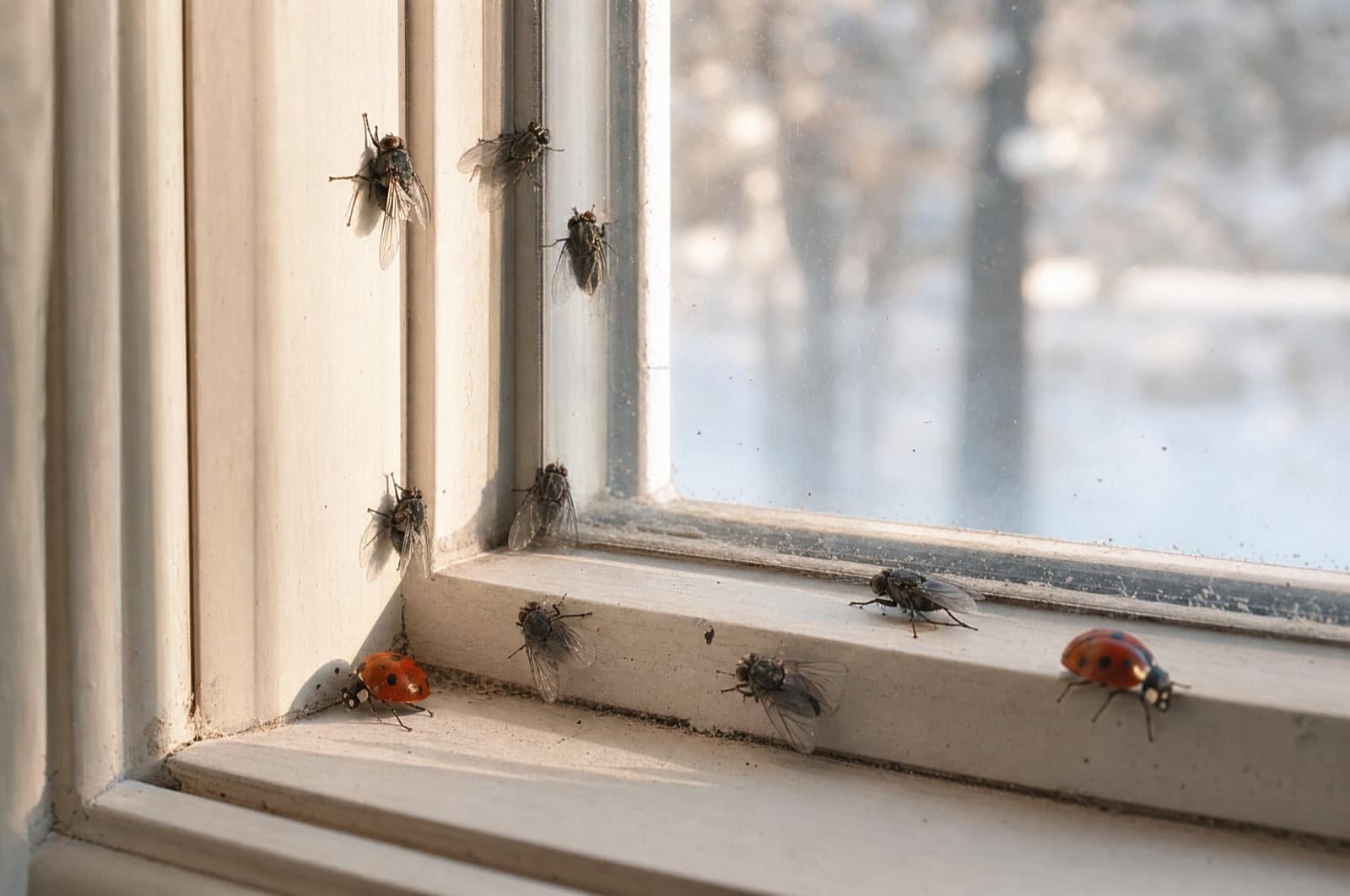
Four genuinely distinct links exist: warmth wakes overwintering insects already inside (cluster flies, lady beetles, boxelder bugs); warmth draws rodents toward the structure; firebrats actively seek out the hot microclimate around equipment; and rodents that get into ductwork can gnaw wiring and insulation.
Mostly nuisance-level. The rodent-in-duct or wiring item is worth fixing, not a sign your house is about to catch fire — moisture-driven basement pests like camel crickets and silverfish are NOT genuinely heating-linked and shouldn't be blamed on the furnace.
At a glance
- The mechanism: Heat wakes them up
- Who fixes it: You
- The rest lives at: Mice & Rats FAQ — rodent-specific control
Four genuinely distinct links exist: warmth wakes overwintering insects already inside (cluster flies, lady beetles, boxelder bugs); warmth draws rodents toward the structure; firebrats actively seek out the hot microclimate around equipment; and rodents that get into ductwork can gnaw wiring and insulation.
Mostly nuisance-level. The rodent-in-duct or wiring item is worth fixing, not a sign your house is about to catch fire — moisture-driven basement pests like camel crickets and silverfish are NOT genuinely heating-linked and shouldn't be blamed on the furnace.
Heat doesn't spawn pests — it changes what you notice
The season and the building set the stage before the thermostat ever comes on. Here's the honest chain of events, spelled out.
What's really happening
Each pest connects to the heating system differently: warmth breaks dormancy in overwintering insects, prompting them to move toward living spaces; warmth is a documented draw for rodents seeking shelter as outdoor temperatures drop; firebrats seek out the specific hot, dry microclimate directly around boilers, furnaces, and hot pipes, thriving above roughly 90°F; and rodents that nest in warm ductwork may gnaw nearby wiring and insulation, since rodent incisors grow continuously and gnawing is how they wear them down.
Source:Virginia Cooperative Extension— Silverfish and Firebrats (ENTO-537) — firebrats prefer higher temperatures, found near boilers, furnaces, hot pipes, and heated areas
Is this an HVAC problem or a pest problem?
Who actually fixes it
You
Which fixer applies depends on the pest — vacuuming handles overwintering insects yourself, while rodents and persistent firebrat or cockroach activity need a licensed professional.
Rodents are suspected in ducts or wiring damage is possible → an hvac_tech should inspect the equipment side; any active electrical concern → a licensed electrician; ongoing rodent activity of any kind → a pest_pro.
This hub owns the heating-system angle
General winter behavior, rodent control, and equipment-damage severity live in siblings that already earn them. Here's exactly where.
This page owns which pests connect to the heating system and how. Rodent-specific control steps, the full equipment/wiring damage severity ledger, and species-by-species overwintering-insect detail all belong to the hubs listed above.
How this calibrates for NH
In New Hampshire, the overwintering-insect group — cluster flies especially — and the fall rodent migration indoors are the two dominant heating-season associations homeowners report; firebrats are a real but smaller, equipment-specific niche mostly confined to basements and utility rooms.
NH-licensed applicator #782664 (NHDAMF, RSA 430) · NEPMA member · family-owned since 2017.
Frequently asked
Sources(5)
- [1]Virginia Cooperative Extension
Silverfish and Firebrats (ENTO-537) — firebrats prefer higher temperatures, found near boilers/furnaces/hot pipes
- [2]UNH Cooperative Extension
Cluster Flies fact sheet — overwintering insect fall entry and winter wake-up
- [3]University of Kentucky Entomology
Control of Mice (ENTFACT-617) — fall migration indoors for warmth, food, shelter
- [4]CDC
Controlling Wild Rodent Infestations — rodent gnawing behavior to maintain tooth length
- [5]University of Maine Cooperative Extension
Camel Cricket — accidental invader attracted to cool, dark, moist, humid areas, not heat
Written & reviewed by
VerifiedDaniel Brady
NH-Licensed Pesticide Applicator · License #782664 (NHDAMF, RSA 430)
Daniel Brady is the New Hampshire–licensed applicator behind Anchor Pest Services, a family-owned pest control company serving the Manchester area since 2017.
Anchor Pest Services
Have a different pest question?
This one may be an HVAC call, not a pest job — but if you're facing something that is, we serve Southern New Hampshire with a free inspection and same-day service.
- NH-licensed applicator
- Same-day service
- Pet & family-conscious
NH License #782664 · No obligation · We answer in person