
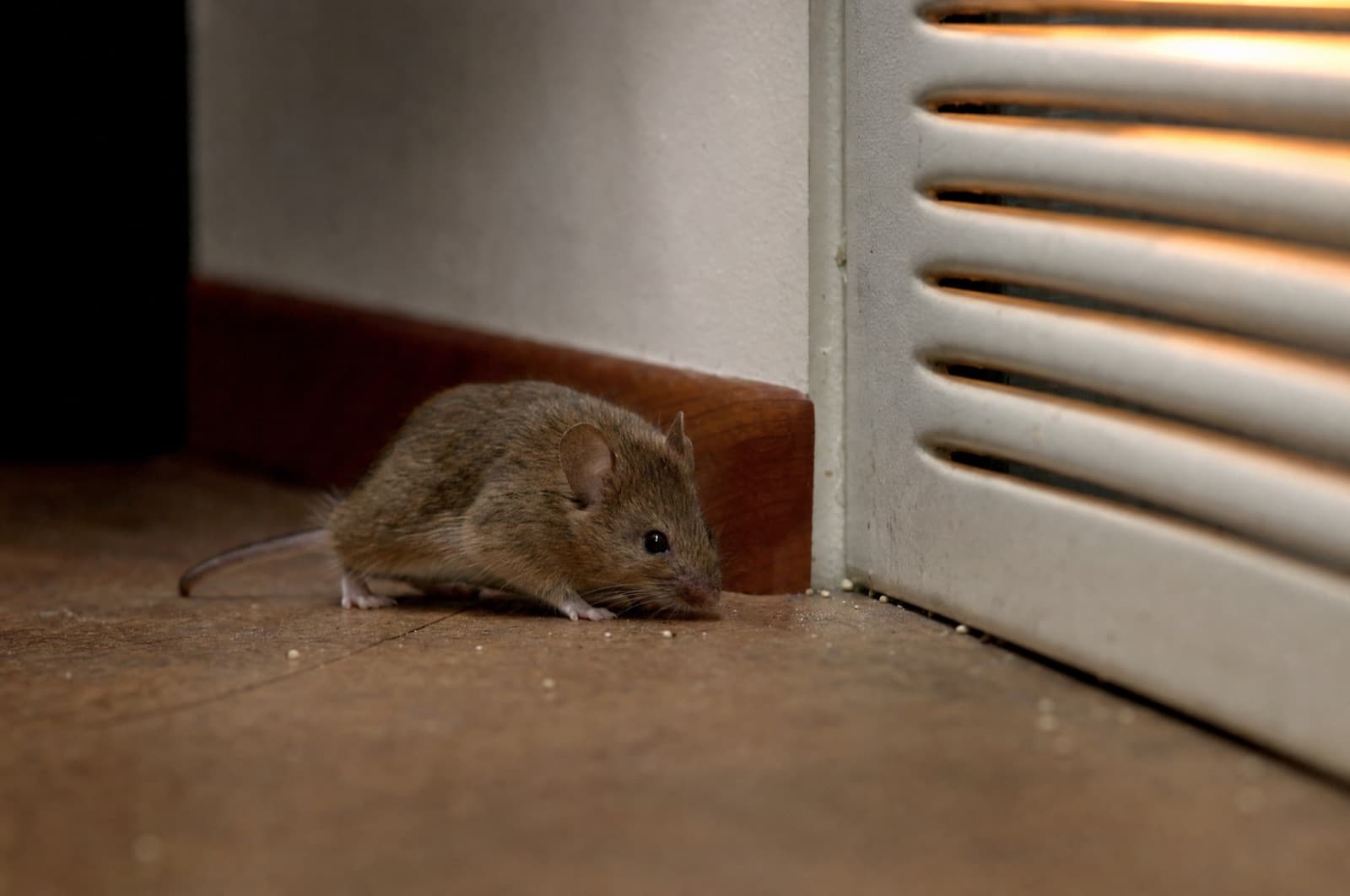
Why Do Mice Come Out When the Heat Is On?
Two true things combine: mice genuinely move toward warmth, and a warm, quiet house is when you finally notice animals that were already there.
The furnace didn't conjure mice. Warmth concentrates them near heat sources and makes them active — so 'coming out when the heat is on' is part real attraction, part you finally noticing.
At a glance
- The mechanism: Heat draws them in
- Who fixes it: A licensed pest pro
- The rest lives at: Mice & rats FAQ — control and prevention
Two true things combine: mice genuinely move toward warmth, and a warm, quiet house is when you finally notice animals that were already there.
The furnace didn't conjure mice. Warmth concentrates them near heat sources and makes them active — so 'coming out when the heat is on' is part real attraction, part you finally noticing.
Heat doesn't spawn pests — it changes what you notice
The season and the building set the stage before the thermostat ever comes on. Here's the honest chain of events, spelled out.
What's really happening
Mice indoors seek their thermoneutral zone (about 26-34°C), which house temperatures fall below, so they move toward and linger near warm spots — radiators, heat registers, and appliances — whenever the heating runs. Lab work shows a mouse will quickly leave a cooled spot to find another warm one, so 'coming out when the heat is on' is the animal tracking warmth, not the heat creating mice.
Source:eLife— ThermoMaze study — mouse thermotaxis and thermoneutral zone (26-34°C)
Is this an HVAC problem or a pest problem?
Who actually fixes it
A licensed pest pro
Seeing or hearing mice means they are already established indoors — that is the point to inspect and control, which a licensed pest professional handles (Anchor can quote).
Activity centers on the furnace, ductwork, or heating equipment — coordinate with an HVAC technician so exclusion doesn't damage the system.
This hub owns the heating-system angle
General winter behavior, rodent control, and equipment-damage severity live in siblings that already earn them. Here's exactly where.
This page owns the heat-and-visibility explanation — why you see mice when the heat comes on. The actual control and prevention playbook is owned by our mice & rats FAQ.
How this calibrates for NH
During New Hampshire's heating season the indoor-outdoor temperature gradient is steep — a heated interior sits 40-60°F above a frozen yard — so warm interior microhabitats near registers and appliances are especially attractive relative to outdoors, reinforcing the 'they head for the warm rooms' pattern homeowners notice from December through March.
NH-licensed applicator #782664 (NHDAMF, RSA 430) · NEPMA member · family-owned since 2017.
Frequently asked
Sources(3)
- [1]eLife
ThermoMaze study — mouse thermotaxis; thermoneutral zone 26-34°C; leaves cooled spots for warm ones
- [2]PLOS One (Gaskill et al.)
Mice prefer ambient temperatures around 30°C
- [3]University of Kentucky Entomology
ENTFACT-617 — mice noticed in winter following fall migration indoors for warmth, food, shelter
Written & reviewed by
VerifiedDaniel Brady
NH-Licensed Pesticide Applicator · License #782664 (NHDAMF, RSA 430)
Daniel Brady is the New Hampshire–licensed applicator behind Anchor Pest Services, a family-owned pest control company serving the Manchester area since 2017.
Anchor Pest Services
Worth a professional pest inspection?
We've protected Southern New Hampshire homes since 2017. Free inspection, same-day service — we tell you what's actually there before we treat anything.
- NH-licensed applicator
- Same-day service
- Pet & family-conscious
NH License #782664 · No obligation · We answer in person