
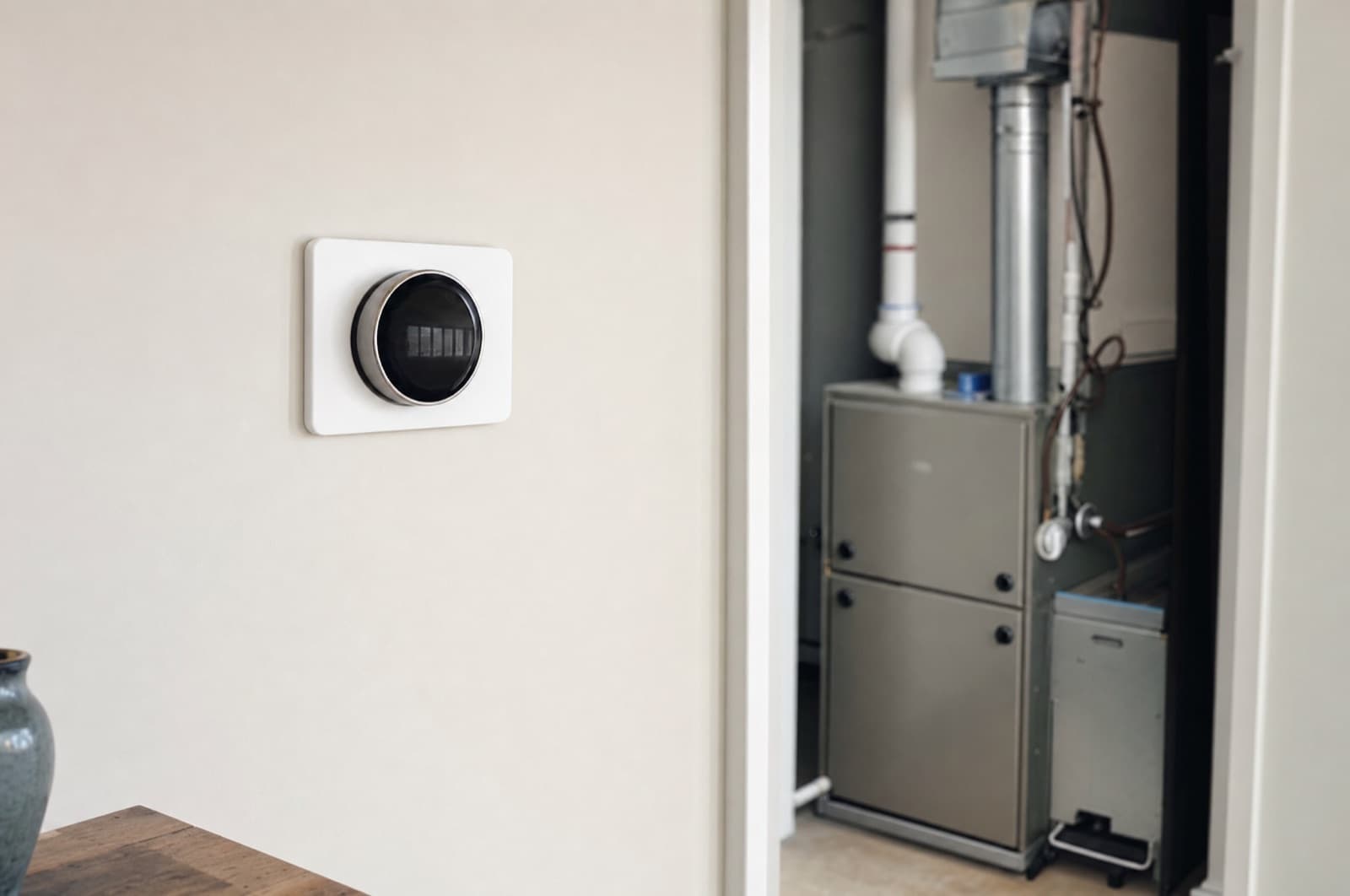
Do Rats Move Indoors Once Heating Is Turned On?
Rats do move indoors seasonally as it gets cold, but there's no evidence that switching the furnace on is the trigger. It's the falling outdoor temperature and shrinking outdoor food supply doing the work, not the thermostat.
No fear-mongering needed. If a home has rats, it's because of cold, food, and an available way in — not because someone turned the heat on.
At a glance
- The mechanism: Not actually the heat
- Who fixes it: A licensed pest pro
- The rest lives at: Do rats move indoors during cold weather?
Rats do move indoors seasonally as it gets cold, but there's no evidence that switching the furnace on is the trigger. It's the falling outdoor temperature and shrinking outdoor food supply doing the work, not the thermostat.
No fear-mongering needed. If a home has rats, it's because of cold, food, and an available way in — not because someone turned the heat on.
Heat doesn't spawn pests — it changes what you notice
The season and the building set the stage before the thermostat ever comes on. Here's the honest chain of events, spelled out.
What's really happening
Autumn cold arrives and outdoor food becomes scarce, so Norway rats that have been living in exterior burrows or peripheral voids start seeking stable shelter. They exploit foundation gaps, utility penetrations, and low entry points to establish themselves in basements and crawl spaces. The thermostat switching on is simply coincident with the season — it happens around the same time, but it isn't what pulls the rat toward the building. Norway rats are also strongly neophobic, cautious of new objects and changes in their environment, which is why their movement into a structure tends to be deliberate and seasonal rather than a sudden response to indoor warmth.
Source:eLife— "The Natural History of Model Organisms: The Norway rat" — neophobia, ground-burrowing habit, seasonal biology
Correcting the premise
The myth: Once you turn the heat on, rats move indoors — as if the furnace itself were the signal that draws them in.
What's actually happening: Rats move toward shelter because outdoor temperatures have dropped and outdoor food has become scarce — the same seasonal cue that makes a homeowner turn the heat on in the first place. The furnace firing up isn't a rat magnet; it's simply happening at the same time of year as the actual driver. Correcting entry points and food access matters far more than anything about the heating system itself.
Is this an HVAC problem or a pest problem?
Who actually fixes it
A licensed pest pro
Rat exclusion, burrow assessment, and control are professional work — a licensed pest professional identifies entry points and existing activity, and Anchor offers a free quote and same-day service.
Gnaw damage to heating wiring, gas lines, or ductwork is found — bring in an HVAC technician, and for any exposed or energized damaged wiring, a licensed electrician.
This hub owns the heating-system angle
General winter behavior, rodent control, and equipment-damage severity live in siblings that already earn them. Here's exactly where.
This page owns the narrow question — does turning the heat on bring rats in — and the honest answer is no, season and food do. Rat biology, exclusion, and control belong to our mice & rats FAQ; the broader seasonal-movement pattern is covered on our winter pests hub.
How this calibrates for NH
In New Hampshire, Norway rats are more of an urban and suburban issue — concentrated around Manchester, Nashua, and Concord, along with agricultural structures like barns and dumpsters — than a rural-woods problem, where native mice dominate instead. Seasonal indoor pressure builds as NH nighttime lows fall through the 40s in September and October, well before most households have their furnace running consistently.
NH-licensed applicator #782664 (NHDAMF, RSA 430) · NEPMA member · family-owned since 2017.
Frequently asked
Sources(3)
- [1]eLife
"The Natural History of Model Organisms: The Norway rat" — neophobia, burrowing, seasonal biology
- [2]Internet Center for Wildlife Damage Management
Norway Rat Biology — ground-burrowing habit, seasonal movement
- [3]UNH Cooperative Extension
"How Can I Get Rid of the Mice in My House?" — seasonal exclusion guidance applicable to rodents generally
Written & reviewed by
VerifiedDaniel Brady
NH-Licensed Pesticide Applicator · License #782664 (NHDAMF, RSA 430)
Daniel Brady is the New Hampshire–licensed applicator behind Anchor Pest Services, a family-owned pest control company serving the Manchester area since 2017.
Anchor Pest Services
Worth a professional pest inspection?
We've protected Southern New Hampshire homes since 2017. Free inspection, same-day service — we tell you what's actually there before we treat anything.
- NH-licensed applicator
- Same-day service
- Pet & family-conscious
NH License #782664 · No obligation · We answer in person