
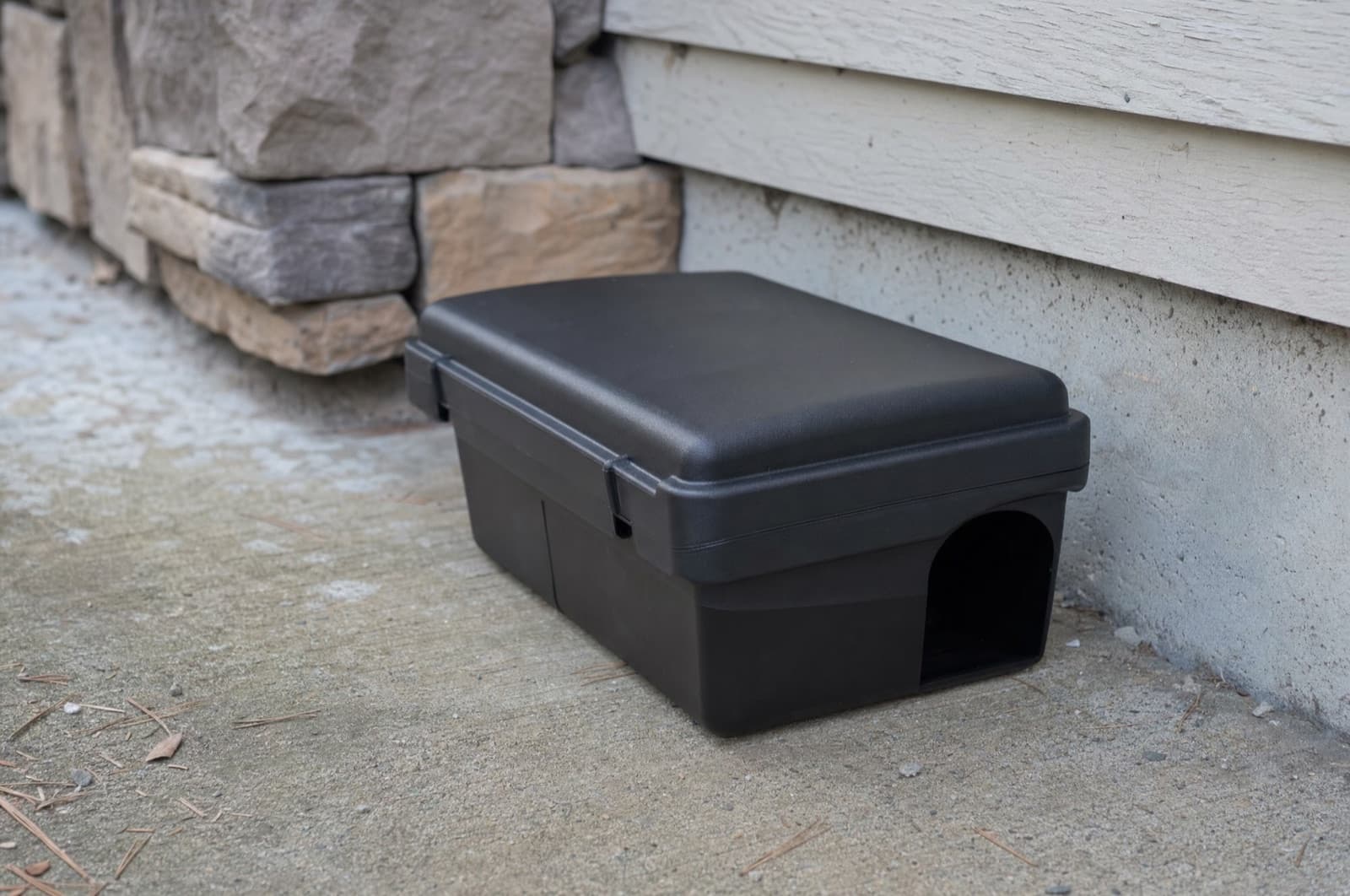
How to Use Final Rodenticide Blox with Brodifacoum by Bell Laboratories
At a glance
- Efficacy: Workhorse
- Best job: Severe rat cleanouts in the hands of a licensed applicator, where high palatability and single-feeding potency are needed
- Format: Cog-shaped extruded bait block ('BLOX') with a center hole for securing on a rod inside an anchored, tamper-resistant station; labeled for Norway rats, roof rats, and house mice
- Technique: Finicky technique
Does this product actually work?
Extremely effective and extremely persistent — the single highest secondary-poisoning-risk bait in this cluster, reserved for licensed cleanouts.
Brodifacoum is extremely effective and highly palatable — capable of a lethal dose in a single feeding, with first deaths around 4-5 days later — which is why it earns a workhorse grade for what it's built to do. But of the common rodenticide actives, brodifacoum carries the documented highest secondary-poisoning risk to predators and scavengers because it persists in tissue longer than the others, which is exactly why it's restricted from general consumer sale and belongs in a licensed applicator's carcass-management program, not a homeowner's toolkit.
Best for
Severe rat infestations and commercial-scale cleanouts run by a licensed applicator with a carcass search-and-removal plan.
Skip it for
Any consumer use, and any site where hawks, owls, foxes, or pets could scavenge a poisoned rodent — that's exactly the pathway brodifacoum's persistence makes dangerous.
What it is — and what it's really for
The label is the law. Here's the honest read on the format, the one job it does well, and the job people wrongly buy it for.
The technique walkthrough
Where DIY succeeds or fails is in the placement, patience, and the small pro moves the label never mentions. Follow the label; these are the technique details on top of it.
The bait technique is the same discipline as any anchored-station anticoagulant, but the carcass-management step matters more here than anywhere else in this cluster.
Confirm runway activity
Identify walls, corners, and concealed places rodents actually travel before placing any station.
Secure BLOX in an anchored, tamper-resistant station
Thread the cog-shaped block onto the interior rod of a locked station and anchor the station so it can't be moved or opened by anything but the key.
Common mistakeUsing loose bait or an unanchored station — illegal under the label and the primary non-target exposure pathway.CautionNo broadcasting or burrow-baiting.Maintain a fresh, uninterrupted supply
Check regularly and keep bait available until feeding stops.
Actively search for and remove carcasses
Walk the treatment area regularly looking for dead rodents near stations, and dispose of them properly rather than leaving them where a predator or pet could scavenge them.
Pro moveCarcass search-and-removal is part of responsible brodifacoum use, not an optional extra.CautionLeaving dead rodents in place where raptors or pets can scavenge them is the main way this active causes secondary poisoning.Pair with sanitation and exclusion
Remove competing food and seal entry points — the highest-efficacy bait still doesn't fix why rodents are getting in.
Do & don't
- Use only in anchored, tamper-resistant stations.
- Keep bait fresh and continuously available.
- Actively search for and remove carcasses.
- Document every placement.
- Pair with sanitation and exclusion.
- Don't broadcast or burrow-bait.
- Don't use loose bait or an unanchored station.
- Don't leave dead rodents where predators or pets can reach them.
- Don't treat this as a casual consumer purchase.
- Don't skip exclusion.
Where it works vs. where it fails
No product fixes everything. This is the honest boundary — the situations it genuinely handles, and the ones it simply won't.
Where it works
- A licensed applicator is running a severe rat cleanout with anchored, tamper-resistant stations
- A carcass search-and-removal routine is part of the program
- Fresh bait supply is maintained continuously
- Sanitation and exclusion are addressed alongside baiting
Where it fails
- Used as a casual DIY purchase — it isn't sold in consumer channels for good reason
- Predators or scavengers (hawks, owls, foxes, pets) have access to the treatment area and carcasses aren't retrieved
- Placed loose or in an unanchored station
- Entry points remain unsealed
Mistakes that waste the product
Leaving carcasses in place
Brodifacoum's tissue persistence means a poisoned carcass remains a hazard to any predator or pet that scavenges it, for longer than other actives.
Using it outside a locked, anchored station
Loose or unanchored placement is illegal under the label and the main non-target exposure pathway.
Letting bait supply lapse
Interrupted feeding under-doses rodents and can build bait shyness.
Skipping exclusion
The most effective bait doesn't touch the entry point letting new rodents in.
What to expect — and when
Brodifacoum can kill in a single feeding, but a full, responsible cleanout includes the time it takes to search for and remove carcasses.
First few days
Rodents locate and begin feeding on properly placed, anchored stations.
About days 4-5
First deaths typically occur.
1-2 weeks
Sign declines as the population is reduced, assuming continuous supply, carcass retrieval, and exclusion work are all in place.
When to stop DIY & call a pro
This is a professional/severe-infestation tool from the outset — the honest signal to call rather than attempt DIY:
You're dealing with rats, especially in numbers, rather than an occasional mouse
This active is built for severe rat cleanouts, which need licensed placement density and inspection depth.
The property has predators, scavengers, or free-roaming pets that could reach a carcass
Brodifacoum's persistence makes unretrieved carcasses a real secondary-poisoning pathway that needs active management.
You can't commit to actively searching for and removing carcasses
Without that step, this is the highest secondary-poisoning-risk active in the cluster.
Activity continues despite what looks like correct baiting
That typically signals an entry-point or scale issue beyond baiting alone.
Final Rodenticide Blox is a severe-infestation tool Anchor's licensed NH technicians are trained to apply and manage responsibly — including the carcass search-and-removal work that keeps its secondary-poisoning risk in check. Free inspection, same-day service across southern and central New Hampshire.
Facing a severe rat problem?
Is it safe for pets & kids?
The short version lives here; the full per-species verdict lives on this product's pet-safety page.
Brodifacoum is a second-generation anticoagulant with the highest documented secondary-poisoning risk of the common rodenticide actives — a pet, hawk, or owl that eats a poisoned rodent carcass is genuinely at risk. Vitamin K1 is the antidote, administered by a vet or doctor, never at home. This product must stay in a locked, anchored, tamper-resistant station at all times, and carcasses must be actively retrieved.
Re-entry: Keep stations locked, anchored, and fully out of reach; search for and remove rodent carcasses promptly rather than leaving them in place.
Why this is usually a licensed job in New Hampshire
Brodifacoum's professional-channel restriction and secondary-poisoning risk mean most southern and central NH households encounter Final Blox through a licensed treatment, not a retail purchase. Anchor's technicians reserve it for severe rat cleanouts, with the carcass search-and-removal and exclusion work that makes it safe for the birds of prey and pets sharing the property — across Manchester, Nashua, Concord, and the surrounding towns.
Service area
Southern New Hampshire
Anchor Pest Services · NH license #782664 · NEPMA member · family-owned since 2017.
Frequently asked
Sources & further reading(4)
- [1]EPA Registered Product Label — Final Rodenticide Blox (Reg. No. 12455-89)
Verified active (brodifacoum 0.005%), tamper-resistant station requirement, target pests
epa_labelverified 2026-07-14 - [2]ePestControl — Bell Final Blox product listing
Cog-shaped block format facts (facts only, not the efficacy verdict)
manufacturerverified 2026-07-14 - [3]EPA — Rodent Control Pesticide Safety Review
Second-generation anticoagulant secondary-poisoning risk to non-target wildlife
govverified 2026-07-14 - [4]NPIC — Rodenticides General Fact Sheet
Brodifacoum persistence and secondary-poisoning mechanism versus other anticoagulants
npicverified 2026-07-14
Written & reviewed by
VerifiedDaniel Brady
NH-Licensed Pesticide Applicator · License #782664 (NHDAMF, RSA 430)
Daniel Brady is the New Hampshire–licensed applicator behind Anchor Pest Services, a family-owned pest control company serving the Manchester area since 2017.
Last updated July 2026
Related products in this category
Same shelf, different jobs — the dot shows each product's honest efficacy verdict at a glance.
Professional Pest Control
Potent Control, Managed Responsibly
Final Rodenticide Blox is highly effective and carries real secondary-poisoning risk without careful carcass management. Anchor Pest Services applies professional-grade rodenticides with the anchored-station discipline and retrieval work that keeps predators and pets safe across southern and central New Hampshire. Family-owned since 2017, NH license #782664.
- Licensed application with carcass search-and-removal
- NH-licensed applicators (#782664)
- Free inspection — same-day service across southern NH
NH License #782664 · No obligation · We answer in person
Your next step
- Book a NH pro
Rodent Control
Book now - Book a NH pro
Pest Control Services
Licensed, family-owned pest control across southern NH.
Book now - What to do next
Is Final Rodenticide Blox with Brodifacoum Safe for Pets?
Read the answer - What to do next
Is Contrac All-Weather Blox Rodenticide Safe for Pets?
Read the answer - Also relevant
Is Final Rodenticide Blox with Brodifacoum Safe for Pets?
Read the answer - Also relevant
Chemical Rodent Control: Rodenticides, Risks & the Rules
Read the answer