
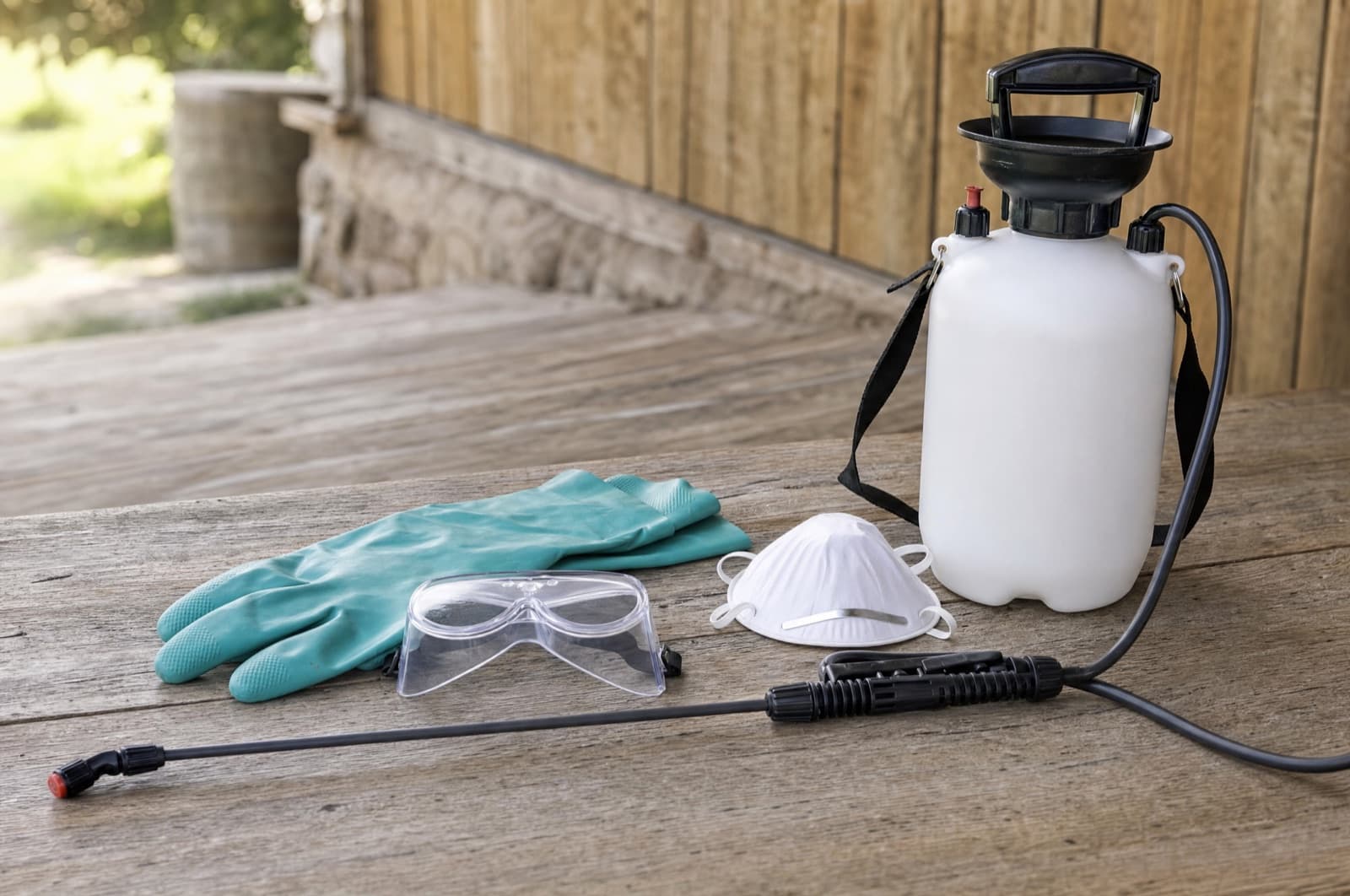
How to Use Zenprox EC Insecticide by Zoecon
At a glance
- Efficacy: Workhorse
- Best job: Broad-spectrum contact knockdown via crack-and-crevice, spot, or broadcast treatment, especially where ester-pyrethroid resistance is a concern
- Format: Professional dilutable emulsifiable concentrate (EC) — mixed with water per label rate; not sold ready-to-use
- Technique: Finicky technique
Does this product actually work?
A genuine professional contact-kill workhorse — broad-spectrum and resistance-aware — but its short residual means it treats what it hits today, not what shows up next week.
Etofenprox's ether-pyrethroid structure gives broad-spectrum, non-repellent-leaning contact activity that helps where insects have built resistance to standard ester pyrethroids — a real professional strength worth the workhorse grade. The honest limit is residual: this is built for contact kill, not for holding a line for weeks, so a single application without a labeled retreatment schedule will under-deliver against reinfestation. Like other professional concentrates, it's powerful chemistry that depends entirely on correct dilution and even coverage — not a beginner's product.
Best for
Trained applicators wanting broad-spectrum contact control of cockroaches, fleas, bed bugs, ants, and spiders via crack-and-crevice, spot, or broadcast treatment, especially where pyrethroid resistance is a worry.
Skip it for
Anyone expecting a long-lasting residual barrier from one application, and untrained DIY use of a dilutable concentrate.
What it is — and what it's really for
The label is the law. Here's the honest read on the format, the one job it does well, and the job people wrongly buy it for.
The technique walkthrough
Where DIY succeeds or fails is in the placement, patience, and the small pro moves the label never mentions. Follow the label; these are the technique details on top of it.
This product does one job very well — broad-spectrum contact kill — and the technique is entirely about accurate dilution, even coverage, and planning for retreatment rather than expecting a one-and-done barrier.
Read the label and mix to the exact rate
Mix to the labeled dilution ratio for your specific target pest and site.
CautionThe label is the law — no dosages are provided here; follow the printed dilution rate exactly.Mix correctly in the sprayer
Partially fill the sprayer with water, add the measured concentrate, then top off per the label's mixing directions.
Pro moveAgitate a pre-mixed batch before reuse to keep the emulsion evenly suspended.Apply even coverage
Use a fan spray on open surfaces and a pin stream directed into cracks and crevices where pests hide.
Common mistakeUneven or incomplete coverage that misses harborage the pest is actually using.Keep people and pets out until dry
Restrict access to the treated area until the application has fully dried per the label.
Plan labeled retreatment rather than expecting a long residual
Because the residual is short by design, schedule follow-up applications per the label instead of assuming one treatment will hold.
Common mistakeExpecting a long residual and skipping retreatment, which lets pest pressure rebuild.
Do & don't
- Follow the label dilution exactly.
- Agitate a stored pre-mixed batch before reuse.
- Cover cracks and crevices evenly, not just open surfaces.
- Retreat on the label's schedule rather than relying on one application.
- Pair with a labeled IGR for flea or bed bug programs.
- Don't use it outdoors — the label is indoor-focused.
- Don't expect weeks of residual protection.
- Don't apply near electrical short-circuit hazards.
- Don't over-apply beyond the label rate.
- Don't guess the dilution ratio.
Where it works vs. where it fails
No product fixes everything. This is the honest boundary — the situations it genuinely handles, and the ones it simply won't.
Where it works
- It's applied indoors by a trained applicator with even crack-and-crevice, spot, or broadcast coverage
- It's used to support control of pyrethroid-resistant populations
- It's paired with a labeled insect growth regulator for flea or bed bug programs
- Labeled retreatment is scheduled rather than relying on a single application
Where it fails
- It's expected to hold a long residual line like a barrier concentrate
- It's applied outdoors, which the label doesn't support
- Coverage is uneven or misses actual harborage
- The dilution ratio is mixed incorrectly
Mistakes that waste the product
Assuming a long residual and skipping retreatment
Because the product is built for contact kill with a short residual, pest pressure rebuilds once that window closes if no follow-up is scheduled.
Uneven or incomplete coverage
Missed cracks, crevices, and harborage mean the pests living there never contact the product at all.
Mixing to the wrong dilution
Too weak underperforms against the target pest; too strong wastes product and can violate the label.
What to expect — and when
Judge this on fast contact kill of what's treated today, with a built-in expectation of retreatment rather than lasting protection.
Immediately to a few hours
Quick contact knockdown of insects exposed to the treated surfaces.
Following days
Residual activity fades — this product is built for contact kill, not a long-lasting barrier, so declining protection is expected, not a failure.
Per the retreatment schedule
Follow-up applications per the label maintain control against ongoing or reinfesting pressure.
When to stop DIY & call a pro
This is itself a professional-only product — needing it is often the signal to hire a licensed applicator rather than DIY:
You're weighing this concentrate for an established roach, flea, or bed bug problem
These pests typically need a coordinated program — correct dilution, coverage, retreatment timing, and often an IGR — that a single DIY application won't replicate.
You need retreatment scheduling and don't have the equipment or time to manage it
The short residual by design means missed or late retreatments let pest pressure rebuild between applications.
You're unsure about mixing ratios or indoor-only label restrictions
Off-label use (like outdoor application) or an inaccurate mix wastes product and can violate the label — professional application removes that risk.
Anchor's licensed NH technicians already have the training, equipment, and scheduling discipline to apply and retreat professional-grade concentrates like this correctly. Free inspection, same-day service across southern and central New Hampshire.
Managing a resistant or recurring pest problem?
Is it safe for pets & kids?
The short version lives here; the full per-species verdict lives on this product's pet-safety page.
Keep people and pets off treated surfaces until fully dry, avoid applying near locations where electrical short circuits could result, and follow all label PPE directions when mixing and applying.
Re-entry: Keep people and pets off treated surfaces until the application is fully dry.
Professional contact-kill programs in New Hampshire
A short-residual, broad-spectrum contact product like Zenprox EC is exactly the kind of tool a licensed NH applicator schedules into a retreatment plan rather than a one-time application — the scheduling discipline is as important as the chemistry itself. If you're dealing with fleas, bed bugs, or resistant roach activity in a Manchester, Nashua, Concord, or nearby-town home, Anchor Pest Services provides that ongoing, correctly-timed program directly.
Service area
Southern New Hampshire
Anchor Pest Services · NH license #782664 · NEPMA member · family-owned since 2017.
Frequently asked
Sources & further reading(3)
- [1]Zoecon — Zenprox EC (product page)
Etofenprox + PBO formulation, EC format, labeled pest list (facts only, not the efficacy verdict)
manufacturerverified 2026-07-14 - [2]DoMyOwn — Zenprox EC Product Label (SDS/label PDF)
Mixing directions, indoor-use restriction, short-residual technical notes
manufacturerverified 2026-07-14 - [3]Knockout Pest Control — Zenprox EC Label (PDF)
Full labeled use directions and site restrictions (facts only, not the efficacy verdict)
manufacturerverified 2026-07-14
Written & reviewed by
VerifiedDaniel Brady
NH-Licensed Pesticide Applicator · License #782664 (NHDAMF, RSA 430)
Daniel Brady is the New Hampshire–licensed applicator behind Anchor Pest Services, a family-owned pest control company serving the Manchester area since 2017.
Last updated July 2026
Related products in this category
Same shelf, different jobs — the dot shows each product's honest efficacy verdict at a glance.
Professional Pest Control
Contact-Kill Chemistry, Applied on Schedule
Zenprox EC is strong contact-kill chemistry, but its short residual means results depend on a correctly timed retreatment plan. Anchor Pest Services manages that schedule across southern and central New Hampshire. Family-owned since 2017, NH license #782664.
- Correctly timed retreatment scheduling
- NH-licensed applicators (#782664)
- Free inspection — same-day service across southern NH
NH License #782664 · No obligation · We answer in person
Your next step
- Book a NH pro
Pest Control Services
Licensed, family-owned pest control across southern NH.
Book now - What to do next
Is Zenprox EC Insecticide by Zoecon Safe for Pets?
Read the answer - What to do next
Is Suspend SC Insecticide Concentrate by Bayer Safe for Pets?
Read the answer - What to do next
Is Precor IGR Concentrate for Fleas by Zoecon Safe for Pets?
Read the answer - Also relevant
Is Zenprox EC Insecticide by Zoecon Safe for Pets?
Read the answer - Also relevant
Chemical Control for Roaches, Silverfish, Crickets & Termites
Read the answer