
How to Use Transport Mikron Insecticide by FMC
At a glance
- Efficacy: Workhorse
- Best job: Broad-spectrum knockdown plus residual control on perimeters, cracks and crevices, and harborage in trained hands, including some pyrethroid-resistant situations
- Format: Professional dilutable liquid concentrate (microemulsion) — mixed with water in a sprayer per label rate; not sold ready-to-use
- Technique: Finicky technique
Does this product actually work?
A genuine professional workhorse — pairing a non-repellent knockdown active with a residual pyrethroid — but the chemistry only performs if the dilution and coverage are done right.
Pairing a non-repellent neonicotinoid with a residual pyrethroid is a recognized professional strategy: the non-repellent lets insects walk through and contact a lethal dose without being warned off first, while the pyrethroid keeps working after the initial application. That combination genuinely earns a workhorse grade in trained hands, and it's built to support control even where pyrethroid resistance is a concern. The catch is entirely technique: this ships as a concentrate you dilute yourself with no ready-to-use safety net, so mixing to the wrong ratio or missing even coverage is the difference between a professional-grade result and a wasted, potentially non-compliant application.
Best for
Trained applicators needing broad-spectrum knockdown plus lingering residual on perimeters, cracks and crevices, and harborage — including some pyrethroid-resistant populations, thanks to the non-repellent acetamiprid component.
Skip it for
Untrained DIY use — a dilutable concentrate is easy to mis-mix, and dilution or coverage errors waste product, invite resistance, or violate the label.
What it is — and what it's really for
The label is the law. Here's the honest read on the format, the one job it does well, and the job people wrongly buy it for.
The technique walkthrough
Where DIY succeeds or fails is in the placement, patience, and the small pro moves the label never mentions. Follow the label; these are the technique details on top of it.
This is professional-grade chemistry that rewards precision — the dilution ratio and coverage evenness decide the entire outcome, not brute force or extra product.
Read the label and mix to the exact rate
Mix the concentrate to the labeled dilution ratio for your specific target pest and site.
CautionThe label is the law — follow the printed dilution rate exactly; no dosages are provided here.Measure the treatment area first
Calculate the area you're actually treating so you mix only what you need rather than guessing a batch size.
Apply an even film, not a soak
Treat targeted surfaces, cracks, crevices, voids, and perimeter bands where pests travel and harbor with a consistent, even application.
Pro moveTreat harborage and travel lines evenly rather than blasting baseboards — even distribution maximizes the chance an insect contacts a lethal dose.Common mistakeSoaking surfaces to runoff, which wastes product and doesn't improve kill rate over an even film.Keep it separate from any bait program
Never apply near ant or roach bait placements you're relying on for colony control.
CautionThe residual pyrethroid component can repel insects from bait and contaminate it, undoing a baiting program's effectiveness.Let treated surfaces dry before re-entry
Keep people and pets off treated surfaces until the application is fully dry, and don't over-apply 'for good measure.'
Common mistakeEyeballing the dilution or doubling up the mix, both of which the label prohibits and waste product.
Do & don't
- Follow the label dilution ratio exactly.
- Measure the treatment area before mixing.
- Apply an even film across cracks, crevices, and harborage.
- Let treated surfaces dry fully before people or pets return.
- Keep application separate from any bait placements.
- Don't guess the mixing ratio.
- Don't soak surfaces to runoff.
- Don't spray over or near bait zones.
- Don't use it where the label doesn't allow.
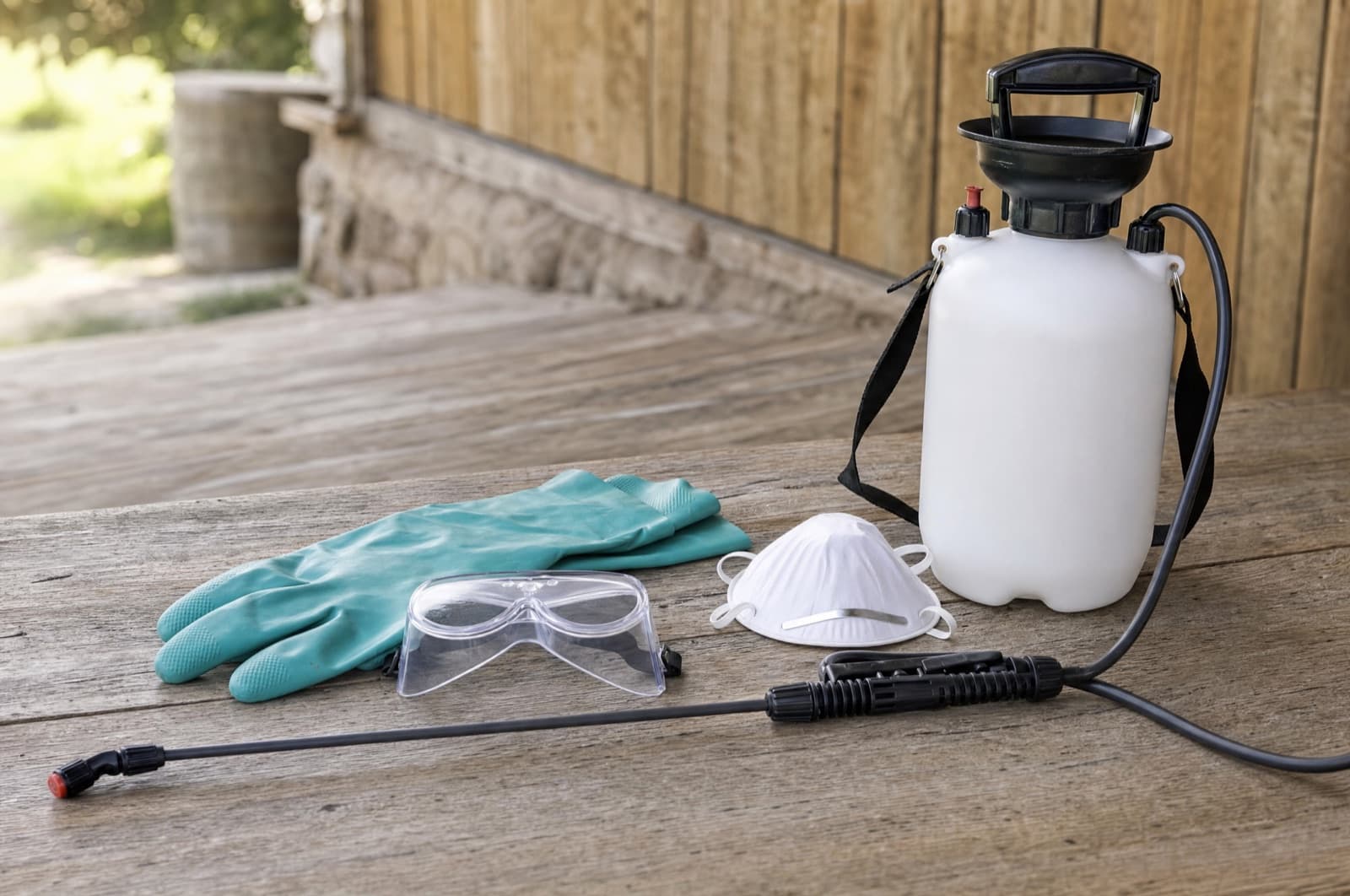
- Don't attempt this without the right sprayer and PPE.
Where it works vs. where it fails
No product fixes everything. This is the honest boundary — the situations it genuinely handles, and the ones it simply won't.
Where it works
- It's diluted to the exact label rate and applied as an even film by someone with proper equipment
- It's used on perimeters, cracks and crevices, and harborage where pests actually travel
- It's supporting control of pyrethroid-resistant populations, where the non-repellent acetamiprid component helps
- It's kept entirely separate from any bait program in use nearby
Where it fails
- The dilution is wrong — too weak underperforms, too strong wastes product and violates the label
- Coverage is uneven or the surface is soaked instead of evenly filmed
- It's sprayed over or near bait, contaminating it and repelling insects from the bait
- It's used by someone without the training or equipment to mix and apply it correctly
Mistakes that waste the product
Guessing or eyeballing the dilution ratio
An inaccurate mix either underperforms against the target pest or wastes product and violates the label — the entire product depends on getting this number right.
Soaking surfaces instead of applying an even film
Excess product doesn't improve kill rate, increases runoff and residue, and can violate label application limits.
Spraying near an active bait program
The residual pyrethroid component repels insects from bait and can contaminate it, undoing the colony-level control a bait program is designed to achieve.
What to expect — and when
Judge results on fast knockdown plus a fading residual, and expect the residual window to depend heavily on the surface and weather exposure.
First few hours
Rapid knockdown of insects contacting the treated surface, driven largely by the non-repellent acetamiprid component.
Following weeks
Residual protection from the bifenthrin component continues working on treated surfaces, with duration depending on surface porosity, UV exposure, and weather.
Beyond the residual window
Protection fades and reapplication per the label's interval becomes necessary if pest pressure continues.
When to stop DIY & call a pro
This is itself a professional-grade product — its use case is often the signal to hire out rather than DIY:
You're weighing this concentrate for an established roach, ant, or multi-pest problem
Correct dilution, sprayer equipment, and even coverage are a genuine skill most homeowners don't have — a licensed applicator already has both the training and the equipment.
You're unsure about mixing ratios or application equipment
An inaccurate mix wastes product, underperforms, or risks a label violation — professional application removes that guesswork.
The infestation persists after a correctly applied treatment
Continued activity despite correct dilution and coverage usually points to a source or conducive condition that needs professional inspection to identify.
Anchor's licensed NH technicians already have the training, equipment, and product access to apply professional-grade concentrates like this correctly and safely. Free inspection, same-day service across southern and central New Hampshire.
Considering a professional concentrate yourself?
Is it safe for pets & kids?
The short version lives here; the full per-species verdict lives on this product's pet-safety page.
Keep people and pets off treated areas until fully dry, and follow all label PPE and use directions when mixing and applying this concentrate.
Re-entry: Keep people and pets off treated surfaces until the application is fully dry.
Professional-grade concentrates in New Hampshire pest programs
Products like Transport Mikron are the kind of chemistry licensed NH applicators already carry, mix, and apply correctly as part of a routine visit — accurate dilution equipment and training are exactly what separates a professional treatment from a DIY attempt with the same active ingredients. If you're considering a product like this for a persistent ant, roach, or general pest problem in Manchester, Nashua, Concord, or the surrounding towns, Anchor Pest Services provides that expertise directly.
Service area
Southern New Hampshire
Anchor Pest Services · NH license #782664 · NEPMA member · family-owned since 2017.
Frequently asked
Sources & further reading(3)
- [1]ePestControl — Transport Mikron Insecticide (product listing)
Acetamiprid + bifenthrin dual-active formulation and format (facts only, not the efficacy verdict)
manufacturerverified 2026-07-14 - [2]Target Specialty Products — Professional Ant Control Products: FMC Transport Mikron Insecticide
Professional use context and the non-repellent-plus-residual pairing strategy
independentverified 2026-07-14 - [3]UC IPM — Cockroaches (Home & Landscape)
University framing on residual insecticide use and resistance considerations
extensionverified 2026-07-14
Written & reviewed by
VerifiedDaniel Brady
NH-Licensed Pesticide Applicator · License #782664 (NHDAMF, RSA 430)
Daniel Brady is the New Hampshire–licensed applicator behind Anchor Pest Services, a family-owned pest control company serving the Manchester area since 2017.
Last updated July 2026
Related products in this category
Same shelf, different jobs — the dot shows each product's honest efficacy verdict at a glance.
Professional Pest Control
Professional-Grade Chemistry, Applied Correctly
Transport Mikron is genuinely effective chemistry, but dilution errors and uneven coverage waste it fast. Anchor Pest Services applies professional-grade products correctly across southern and central New Hampshire. Family-owned since 2017, NH license #782664.
- Accurate dilution and even coverage, done right
- NH-licensed applicators (#782664)
- Free inspection — same-day service across southern NH
NH License #782664 · No obligation · We answer in person
Your next step
- Book a NH pro
Pest Control Services
Licensed, family-owned pest control across southern NH.
Book now - What to do next
Is Transport Mikron Insecticide by FMC Safe for Pets?
Read the answer - What to do next
Is CB-80 Aerosol Insecticide Safe for Pets?
Read the answer - Also relevant
Is Transport Mikron Insecticide by FMC Safe for Pets?
Read the answer - Also relevant
Chemical Control for Roaches, Silverfish, Crickets & Termites
Read the answer - Related guide
How to Use Zenprox EC Insecticide by Zoecon
Read the answer