
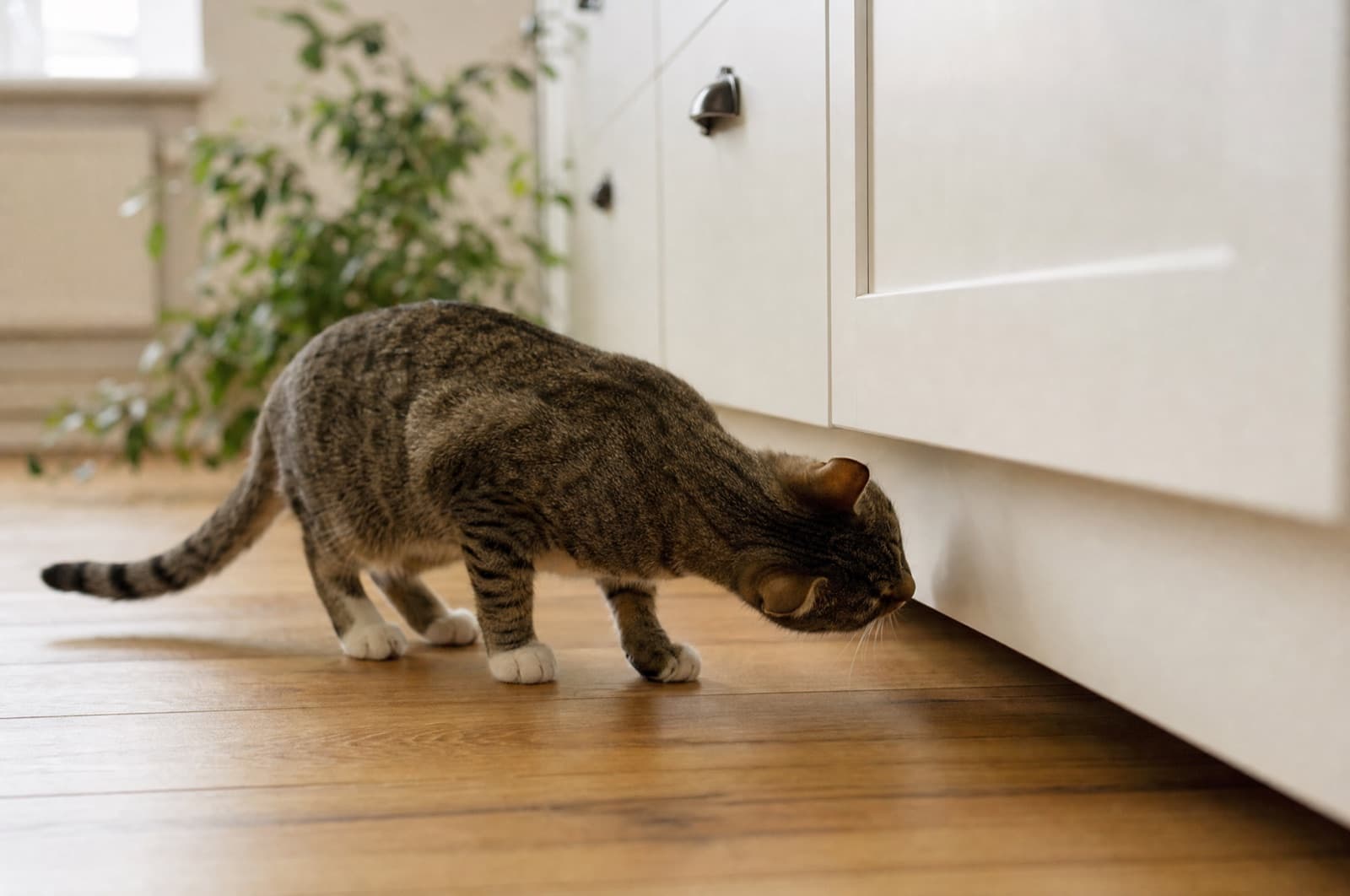
Is Raid Essentials Multi-Insect Killer Spray Safe for Pets?
At a Glance
- Product: Essentials Multi-Insect Killer Spray by Raid · Raid
- Active ingredient: Geraniol 1.50%, Lemongrass Oil 0.10%
- Re-entry: Follow the product label; the wipe-if-damp instruction implies a shorter window than a full pyrethroid dry-time, but still give the room time to air out.
- Cat owners: Cats differ — read the cat card below
The short, honest answer
The score rolls up every per-species verdict below, weighted by the honest exposure that matters — a chewed-open tube, not a hidden dab — and is checked against the EPA label and veterinary toxicology.
Gentler than pyrethroid Raid sprays — but plant-based still isn't harmless for cats.
This is a genuinely different Raid formula: geraniol (1.50%) and lemongrass oil (0.10%), both plant-derived actives, not the pyrethroids found in Raid's classic Ant & Roach line. SC Johnson markets it as safe around people and pets when used as directed, and that's a meaningfully lower-risk profile for dogs. But cats process concentrated plant oils poorly, and birds' sensitive respiratory systems warrant the same removal-before-spraying habit as any aerosol. Let sprayed surfaces dry and wipe anything still damp.
General information, not veterinary advice. For a suspected exposure, contact your veterinarian or a pet-poison hotline. Verdict checked 2026-07-13 against the EPA label and veterinary toxicology.
It's not one answer — it's one per animal
Cats, birds, and fish routinely differ sharply from dogs. That contrast is the whole point of this scorecard, and no manufacturer page draws it.
- DogsSafe
- CatsCaution
- Small mammalsCaution
- BirdsAvoid
- FishCaution
The gentlest Raid spray for dogs once it's dry
Geraniol and lemongrass oil are low-concentration botanical actives with a lower mammalian-toxicity profile than the pyrethroids in Raid's classic sprays. Wipe any surface that's still damp and let the room air out before your dog is back.
Merck Veterinary Manual — Plant-Derived Insecticide Toxicosis in Animals; SC Johnson product listing
'Plant-based' isn't 'harmless' — keep cats off wet surfaces
Cats have limited liver capacity to process concentrated essential/plant oils like geraniol and lemongrass oil, and their grooming habit means any wet residue on fur or paws gets ingested. Keep cats out of the room during spraying and off surfaces until they're fully dry.
Merck Veterinary Manual — Toxicoses From Essential Oils in Animals; Pet Poison Helpline — Essential Oils and Cats
Keep enclosures off treated surfaces until dry
Rabbits, guinea pigs, and similar pets have a high surface-area-to-body-weight ratio and often live at floor level where residue settles first. Move their enclosure out of the room during application and until surfaces are dry.
Merck Veterinary Manual — Toxicoses From Essential Oils in Animals
Remove birds before spraying, even for this gentler formula
Birds' respiratory systems are extraordinarily sensitive to airborne particulates and volatile oils of any kind, botanical or synthetic. Take birds out of the room before spraying and ventilate thoroughly before they return.
Merck Veterinary Manual — avian respiratory sensitivity to airborne toxicants
Cover tanks during and after spraying
Botanical oils are generally lower-risk to fish than synthetic pyrethroids, but they are still an active ingredient — cover aquariums and avoid overspray near water as a precaution.
SC Johnson product listing; general aquarium-safety guidance
What's in it — and what it does to pets
A plant-derived oil used as a contact insecticide. It has a lower mammalian-toxicity profile than synthetic pyrethroids, but concentrated plant oils can still cause drooling, GI upset, or skin/respiratory irritation, especially in cats, which metabolize these compounds less efficiently than dogs.
Merck Veterinary Manual — Toxicoses From Essential Oils in Animals
A citronella-family plant oil used alongside geraniol for broader insect knockdown. Same class-level caution as other essential oils — cats are the most sensitive pet, and concentrated exposure can cause vomiting, lethargy, or wobbliness (ataxia).
Pet Poison Helpline — Essential Oils and Cats
How to use it safely around pets
SC Johnson markets this as safe around people and pets when used as directed — a meaningfully lower-risk formula than a pyrethroid spray. But 'plant-based' still means an active ingredient, so the same drying and ventilation habits apply.
Remove pets before spraying
Move pets — especially cats and any caged birds — out of the room before you spray, the same as with any insecticide.
Spray the insect or surface directly
Apply as directed on flies, gnats, mosquitoes, moths, wasps and hornets, or lightly on surfaces where they travel.
Wipe damp surfaces and let the room air out
The label directs wiping surfaces if damp — do this before pets are allowed back, then ventilate the space.
Store sealed and out of reach
Keep the can upright, sealed, and out of pets' reach, away from heat.
Keep pets off sprayed surfaces until they're dry, and wipe any surface that's still damp before pets return.
Follow the product label; the wipe-if-damp instruction implies a shorter window than a full pyrethroid dry-time, but still give the room time to air out.
Cats and birds warrant the most caution despite the gentler formula.
Want flying-insect control without any spray to manage?
Anchor's licensed NH technicians handle flies, gnats, and wasps with pet-conscious methods.
Symptoms to watch for
A sign, its urgency, and what to do — never a diagnosis. When in doubt, the emergency panel below is one tap away.
- Moderate
Drooling or hypersalivation
Often the first sign after oral contact with concentrated plant oil
- Moderate
Vomiting
- Mild
Lethargy
- Moderate
Wobbliness or lack of coordination (ataxia)
More pronounced in cats
- Mild
Skin or respiratory irritation
- Mild
Excessive pawing at the mouth
Act now — call a vet or a pet-poison line
Do not induce vomiting unless told to
If your pet ate, licked, or walked through this product, act now — bring the can or a photo of the label when you call. This page is general information, not veterinary advice — for a suspected exposure, contact your veterinarian or ASPCA Animal Poison Control (888-426-4435) right away.
What each situation calls for
Your pet licked or walked through wet product
Wipe the residue off paws or fur with a damp cloth, then call your vet or a pet poison hotline if you notice drooling, vomiting, or wobbliness. Do not induce vomiting unless a professional tells you to.
A bird was in the room during spraying
Move the bird to fresh air immediately and contact an avian vet or a pet poison hotline — even a gentler botanical aerosol is an inhalation concern for birds.
Your cat seems wobbly or is drooling after contact
Treat this as urgent — cats process concentrated plant oils poorly. Call your vet or ASPCA Animal Poison Control and bring the can or a photo of the label.
In the next 60 seconds
- Get your pet away from the treated area and any wet product.
- Gently wipe wet residue off paws and fur to stop grooming ingestion.
- Do NOT induce vomiting unless a veterinarian or poison expert tells you to.
- Have the product name and EPA registration number (from the can) ready.
- Call your veterinarian or one of the hotlines below.
ASPCA Animal Poison Control
(888) 426-4435
24/7; a consultation fee may apply
Pet Poison Helpline
(855) 764-7661
24/7; a per-incident fee applies
Northern New England Poison Center
(800) 222-1222
24/7 human poison control — for household/child exposure context; call a vet or the pet lines above for pet guidance
Safer pet-friendly alternatives
Honest options that reduce or remove pet-toxicity — no affiliate hype, real caveats included.
Mechanical traps (swatters, sticky/UV traps)
SaferNon-chemical
Zero pesticide exposure for pets — physical capture only.
Best for low-level flying-insect pressure, not a heavy infestation.
Sanitation and exclusion
SaferNon-chemical
Removing standing water, ripe fruit, and screening entry points removes what draws flies, gnats, and mosquitoes in the first place, with no pet toxicity at all.
Slower than a spray and needs consistency.
Non-toxicant food-based lure traps
SaferNon-toxicant attractant
A food-based liquid lure, not an insecticide — essentially no toxicological risk to pets.
Targets small flying pests like fruit flies, not the broader pest list this spray covers.
Professional pet-conscious treatment (Anchor Pest Services)
SaferLicensed professional service
Licensed applicators choose and place products with pets in mind instead of homeowner guesswork.
A service, not a product — ask for a pet-safety-focused plan.
Pet-safe flying-insect control in New Hampshire
Flies, gnats, and wasps peak in New Hampshire's brief warm season, and a botanical multi-insect spray is a common go-to. A homeowner may use a general-use retail can on their own property, but under RSA 430 any pest control performed for hire in New Hampshire must be done by an applicator licensed by the NH Department of Agriculture, Markets & Food (NHDAMF) Division of Pesticide Control. Anchor Pest Services is NH-licensed (#782664) and provides pet-conscious treatment across Manchester, Nashua, Concord, and the surrounding towns.
NH-licensed applicator #782664 (NHDAMF, RSA 430) · NEPMA member · family-owned since 2017.
Service Area Map
Southern New Hampshire
Frequently asked questions
Sources(5)
- [1]SC Johnson — Raid Essentials Multi Insect Killer 29 (What's Inside)
Verified actives (geraniol 1.50%, lemongrass oil 0.10%), pet-safe-as-directed marketing claim
manufacturerverified 2026-07-13 - [2]Merck Veterinary Manual — Toxicoses From Essential Oils in Animals
Cat sensitivity to concentrated plant/essential oils; clinical signs
veterinaryverified 2026-07-13 - [3]Merck Veterinary Manual — Plant-Derived Insecticide Toxicosis in Animals
Lower mammalian-toxicity profile of botanical actives vs. synthetic pyrethroids
veterinaryverified 2026-07-13 - [4]Pet Poison Helpline — Essential Oils and Cats
Cat-specific essential-oil toxicity mechanism and symptoms
pet_poisonverified 2026-07-13 - [5]Raid — Essentials Multi Insect Killer 29 product page
Product use directions and pest list
manufacturerverified 2026-07-13
Written & reviewed by
VerifiedDaniel Brady
NH-Licensed Pesticide Applicator · License #782664 (NHDAMF, RSA 430)
Daniel Brady is the New Hampshire–licensed applicator behind Anchor Pest Services, a family-owned pest control company serving the Manchester area since 2017.
Last updated 2026-07-13
Pet-Safe Professional Pest Control
Even a Gentler Spray Still Needs a Drying Window
DIY sprays — even botanical ones — put the pet-safety burden on you. Anchor Pest Services treats flying and crawling pests with targeted, pet-aware methods across southern and central New Hampshire. Family-owned since 2017, NH license #782664.
- Pet-conscious targeted treatment
- NH-licensed applicators (#782664)
- Free inspection — same-day service across southern NH
NH License #782664 · No obligation · We answer in person
Your next step
- Book a NH pro
Pest Control Services
Licensed, family-owned pest control across southern NH.
Book now - What to do next
How to Use Essentials Multi-Insect Killer Spray by Raid
Read the answer - What to do next
How to Use Ant & Roach Killer Spray by Raid
Read the answer - Also relevant
Chemical Fly Control: A Supplement, Not the Fix
Read the answer - Also relevant
Chemical Wasp & Hornet Control: Aerosols, Timing & Allergy Safety
Read the answer - Related guide
Is Raid Ant & Roach Killer Spray Safe for Pets?
Read the answer