
How to Use Essentials Multi-Insect Killer Spray by Raid
At a glance
- Efficacy: Situational
- Best job: Killing an insect you can see, on direct contact, with a lower-tox botanical formula
- Format: Ready-to-use (RTU) trigger-spray liquid — a botanical formula, not a pressurized synthetic-pyrethroid aerosol; no mixing
- Technique: Easy technique
Does this product actually work?
A real, fast kill on direct contact — not a residual barrier, and not a shortcut past an established infestation.
This is an EPA 25(b) minimum-risk formula — geraniol and lemongrass oil, not a synthetic pyrethroid — and it does what its label promises: kill an insect you spray directly. What it doesn't do is leave the kind of lasting residual a synthetic aerosol does, so 'protects the crack after it dries' isn't really on the table. Use it for real-time, direct-contact knockdown and pair it with sanitation; an established infestation still needs baiting or a professional, regardless of how 'natural' the can is.
Best for
Killing a visible bug on contact with a lower-tox, plant-oil formula, in homes that want to limit synthetic pyrethroid use.
Skip it for
Lasting residual protection on cracks, or ending a German cockroach or ant colony problem — the label requires a direct hit, and the oils evaporate within hours.
What it is — and what it's really for
The label is the law. Here's the honest read on the format, the one job it does well, and the job people wrongly buy it for.
The technique walkthrough
Where DIY succeeds or fails is in the placement, patience, and the small pro moves the label never mentions. Follow the label; these are the technique details on top of it.
The whole mechanism here is direct contact — this product rewards spraying the bug in real time far more than it rewards treating a surface and walking away.
Clear food and food-contact items first
Remove or cover food, dishes, and utensils before spraying — this is a kitchen-adjacent product but not one for food-prep surfaces.
Aim at the insect itself, not just the area
Shake the bottle, hold it about 12 inches from the target, and spray the insect directly — the label states insects must be sprayed directly to be killed.
Pro moveUse it in real time, when you actually see the bug — that's the whole mechanism, unlike a residual pyrethroid that keeps working after it dries.Common mistakeTreating a baseboard or counter and walking away expecting a lasting barrier — once the oils flash off, the protection is largely gone.Treat cracks and harborage where you've seen activity
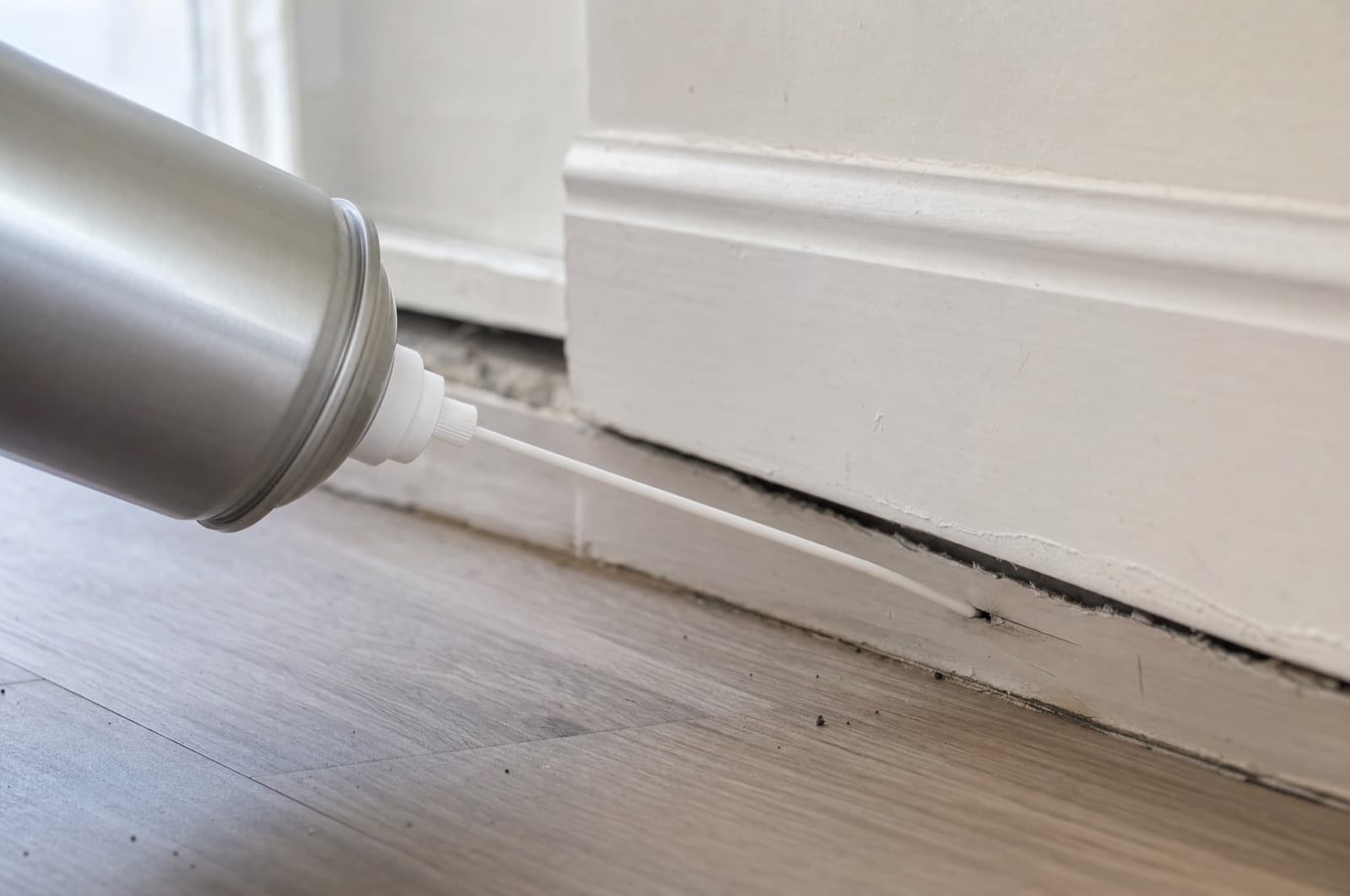
Spray directly into cracks, crevices, baseboards, and around appliances where you've actually seen pests — not just open, visible surfaces.
Wipe the excess
Wipe down treated surfaces after use; it can leave floors slippery and may affect some finishes.
CautionTest an inconspicuous spot on wood or plastic surfaces first.Ventilate and reassess
Air out the room after use. If pests keep appearing, that's the cue that a direct-contact spray has hit its ceiling and the source needs a different tool.
Common mistakeAssuming 'plant-based' means more effective — it's a safety trade-off, not a potency upgrade over a residual synthetic.
Do & don't
- Spray insects directly, in real time — that's the whole mechanism.
- Treat cracks, crevices, and harborage where you've seen activity.
- Ventilate the room and test surfaces before broad use.
- Pair it with sanitation — remove the food or water sources pests are drawn to.
- Don't expect a lasting residual barrier — the botanical oils evaporate quickly.
- Don't use it on food-prep surfaces.
- Don't fog a room hoping the mist reaches hidden bugs.
- Don't assume 'plant-based' means it solves an infestation a synthetic can't.
Where it works vs. where it fails
No product fixes everything. This is the honest boundary — the situations it genuinely handles, and the ones it simply won't.
Where it works
- A visible fly, spider, ant, or roach needs knocking down in the moment
- You want a lower-tox spot option in a home with kids or pets, used as directed
- Small, occasional nuisance sightings — not an established population
- You can get a direct hit on the insect, which is the label's whole mechanism
Where it fails
- You're relying on it for lasting residual protection on a treated crack — it evaporates in hours, not weeks
- German cockroaches or an ant colony are established and reproducing out of sight
- You can't get a direct hit on the insect — the label's mechanism requires contact
- You expect the 'plant-based' formula to outperform a synthetic pyrethroid against a real infestation — it's a safety trade-off, not a potency upgrade
Mistakes that waste the product
Buying it expecting residual, barrier-style protection
Geraniol and lemongrass oil are volatile botanicals that evaporate and degrade quickly, so the 'keeps protecting' story a synthetic pyrethroid offers isn't really there.
Fogging a room instead of targeting the insect
The label's mechanism requires the spray to directly contact the pest — misting the air over a general area wastes product and rarely reaches hidden bugs.
Skipping sanitation
A contact-only spray with minimal residual can't compete with an ongoing food or moisture source drawing pests back.
Assuming 'plant-based' means 'stronger'
The botanical actives are a safety and tolerability trade-off, not a performance upgrade — expecting it to out-perform a synthetic pyrethroid against a real infestation sets up disappointment.
What to expect — and when
This is a fast, real-time knockdown tool with almost no lasting residual — judge it on the bug you just sprayed, not on whether pests stop coming back.
On contact
A direct hit drops the sprayed insect within minutes — the genuine strength of this product.
Hours after application
The oils flash off and evaporate — surface protection fades quickly, unlike a synthetic residual.
Days to weeks
If pests keep appearing in the same spots, that's a sign the population or source is beyond what a contact-only spray can reach.
When to stop DIY & call a pro
A lower-tox contact spray has the same structural ceiling as any contact spray. These are the honest signals it's time to escalate:
Roaches or ants keep appearing after a few rounds of correct direct-contact spraying
This is a contact-only product with minimal residual — it was never built to reach a reproducing population behind a wall or in a void.
You see German cockroaches during the day or find egg cases
That's a sign of an established colony; contact sprays across the board, synthetic or botanical, fail against reproducing German-roach populations.
An ant trail keeps returning to the same spot
A colony outside or in a void keeps sending foragers faster than direct-contact spraying can knock them down.
You want lower-tox pest control around kids and pets but the problem keeps recurring
The safety profile doesn't change the DIY ceiling — an established infestation still needs baiting or targeted professional treatment.
If a lower-tox spray isn't holding the line, Anchor's licensed NH technicians can identify the real source and treat it with targeted, professional methods. Free inspection, same-day service across southern and central New Hampshire.
Spray not holding the line?
Is it safe for pets & kids?
The short version lives here; the full per-species verdict lives on this product's pet-safety page.
This is a botanical formula (geraniol + lemongrass oil) that EPA treats as a minimum-risk 25(b) active class — but it's still a pesticide. Keep kids and pets off treated surfaces until dry, and ventilate the room during and after use.
Re-entry: Keep children and pets off treated surfaces until fully dry and the room is ventilated.
A lower-tox option for NH's real pest pressure
Southern and central New Hampshire's dominant indoor pests — German cockroaches, which survive only inside heated structures, and carpenter ants — both require reaching a hidden, reproducing population, which a direct-contact botanical spray was never built to do. Raid Essentials is a reasonable choice for spot-killing a stray bug in a kitchen with kids or pets around, but if activity keeps recurring, especially into the fall ingress season, Anchor's licensed technicians can treat the actual source across Manchester, Nashua, Concord, and the surrounding towns.
Service area
Southern New Hampshire
Anchor Pest Services · NH license #782664 · NEPMA member · family-owned since 2017.
Frequently asked
Sources & further reading(5)
- [1]Raid / SC Johnson — Essentials Multi Insect Killer 29 product page
Verified actives (geraniol 1.50%, lemongrass oil 0.10%), trigger-spray format, direct-contact directions, labeled pest list (facts only, not the efficacy verdict)
manufacturerverified 2026-07-14 - [2]EPA — Minimum Risk Pesticides / Active Ingredients Allowed in Minimum Risk Pesticide Products
Geraniol and lemongrass oil are on EPA's 25(b) minimum-risk active-ingredient list, exempting the formula from standard EPA registration
govverified 2026-07-14 - [3]UC IPM — Cockroaches (Home & Landscape)
Insecticide sprays alone will not eliminate cockroaches, regardless of active ingredient class
extensionverified 2026-07-14 - [4]Gordon et al., Journal of Economic Entomology (2024) — common consumer residual insecticides vs. German cockroach
Class-level evidence that consumer contact sprays underperform against established German cockroach populations
academicverified 2026-07-14 - [5]UNH Cooperative Extension — Carpenter Ants Fact Sheet
Carpenter ants nest in structural wood — a call-a-pro escalation, not a contact-spray target
extensionverified 2026-07-14
Written & reviewed by
VerifiedDaniel Brady
NH-Licensed Pesticide Applicator · License #782664 (NHDAMF, RSA 430)
Daniel Brady is the New Hampshire–licensed applicator behind Anchor Pest Services, a family-owned pest control company serving the Manchester area since 2017.
Last updated July 2026
Related products in this category
Same shelf, different jobs — the dot shows each product's honest efficacy verdict at a glance.
Professional Pest Control
When a Lower-Tox Spray Hits Its Ceiling
A direct-contact spray — plant-oil or synthetic — kills only what it touches. Anchor Pest Services treats the actual source with targeted, licensed methods across southern and central New Hampshire. Family-owned since 2017, NH license #782664.
- Targeted source treatment, not just spot spraying
- NH-licensed applicators (#782664)
- Free inspection — same-day service across southern NH
NH License #782664 · No obligation · We answer in person
Your next step
- Book a NH pro
Pest Control Services
Licensed, family-owned pest control across southern NH.
Book now - What to do next
Is Raid Essentials Multi-Insect Killer Spray Safe for Pets?
Read the answer - What to do next
Is Raid Ant & Roach Killer Spray Safe for Pets?
Read the answer - Also relevant
Is Raid Essentials Multi-Insect Killer Spray Safe for Pets?
Read the answer - Also relevant
Natural Ant Control: Why Bait Beats Spray, Even the Organic Kind
Read the answer - Related guide
How to Use Ant & Roach Killer Spray by Raid
Read the answer